Continue with onX Maps
 Sign in with Facebook






Best Mostly-Gear-Protected Face Climbs


|
|
Salamanizer, So nice to hear someone appreciating Black Primo!
I don’t think it’s even on MP I also think a “trad” climb that gets ruthlessly dialed by hanging on top rope is more of a sport climb, even if there are no protection bolts. |
|
|
if its g rated and all bolts its a sport climb regardless of top down or GU. is what it is. if it was established GU and is mixed then its a trad climb. run out slab is run out slab. just like roofing but you don't get paid. |
|
|
Rewritten from another forum post a long time ago... . In the beginning, rock-climbing was a development of Alpinism so naturally the accepted style of climbing was ground-up. Ropes were useless other than for giving the second a good tug and protection didn’t exist. In the UK, cliffs are small, so the occasional crafty top-rope or abseil inspection is quite easy to rig up and was used on the quiet from quite early on. The fractured nature of the rock meant that many routes had some natural protection so, as gear was developed, an anti-piton and then anti-bolt ethic arose to maintain the challenge. By the 1970s the supply of new routes was perceived as drying up and more obscure crags were developed. In case north American readers are not aware, it rains quite often in the UK and cliff vegetation is frequently prolific, so this sometimes required heroic gardening with crowbars and yard brushes. Not something that can be done ground-up. Additionally, the growth of sea-cliff climbing inverted usual practice: you frequently start at the top and abseil down your route to start. The effect of this was that abseil cleaning and inspection became widespread, which lead fairly rapidly to checking holds and the sneaky practicing of sections from the rap. rope. By the early 80s this kind of ‘cheating’ was widespread. Sport climbing came along and ‘cheating’ was out in the open and codified. Pre-inspection and practicing was already accepted in the local traditional form but bolts were not, so the difference between trad. climbing and sport climbing was perceived as being bolts. Battles raged in the 1980s between the bolters and non-bolters but eventually everyone agreed to get along (mostly). In the UK, sport climbing means bolts; trad. climbing means no bolts. . In the beginning, rock-climbing was a development of Alpinism so naturally the accepted style of climbing was ground-up. Ropes were useless other than for giving the second a good tug and protection didn’t exist. In the USA, cliffs are big, so top-rope or abseil inspection is usually damn hard to arrange and people generally didn’t bother. The un-fractured nature of the rock meant that many routes had little natural protection so, as gear was developed, the use of pitons and bolts was accepted if placed ground-up to maintain the challenge. By the 1970s ground-up climbing reached its zenith, fearsome routes were climbed with epic drilling from tiny stances. As standards rose, routes got steeper and drilling on lead got harder and harder. Ethics were stretched to permit drilling from hooks or other forms of aid, so long as it was ground-up. By the early 80s this kind of ‘cheating’ was widespread. Sport climbing came along and ‘cheating’ was out in the open and codified. Bolting was already accepted in the local traditional form, but preparing and practicing was not, so the difference between trad. climbing and sport climbing was whether you climbed ground-up or practiced the route. Battles raged in the 1980s between the hang-dogging tricksters and the ground-uping traditionalists but eventually everyone agreed to get along (mostly). In the US, trad climbing means going ground-up; sport climbing means top-down preparation and practice. Or this used to be the case. These two different types of trad. climbing evolved from a common ancestor, like Darwin’s finches, adapting to their local habitats. With globalisation, climbing habitats are no longer isolated and the UK definition of trad.climbing seems to have outcompeted the US one. Survival of the fittest! |
|
|
Back on track, what crags specialize in this style? The Gunks, NC (Eg: Shortoff and Moore's), and Red Rock are the obvious standout US areas in my mind, but I'm sure there's plenty of others - I assume Chattanooga has some amazing trad-protected face routes. The Gunks has so many good face climbs it's hard to recommend one, but I'll put in another vote for doubleissima. Just sublime. Edit: of course the semantic arguments continue below. Never let a good discussion get in the way of a bad argument. |
|
|
Fake news. sport climb is G rated completely bolt protected climbing. how the bolts got there dose not matter in the slightest. I have even installed 1/2 inch glue in bolts on lead because of the big roof at the top made rap bolting too much work. It was 100% a sport climb when it was finished. have installed sport climbs lead rope solo. they are still sport climbs. 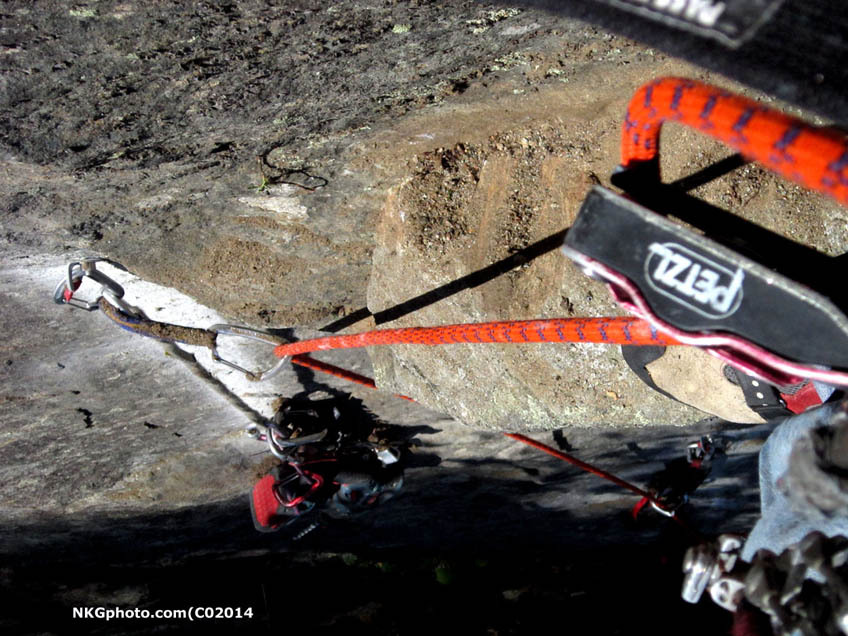 |
|
|
This is too good of a thread to derail into the definition of trad climbing for the 10th time this year. Just leave it at best gear protected face climbs and take the trad definition to one of the other 100 threads where we've discussed it. We have a bunch of gear protected face climbs in the Midwest and it's one of my favorite styles but we definitely don't have the best out here. |
|
|
Windy Arm Buster, Sams Throne AR. Lots of others there as well. |

|
Wasatch > Big Cottonwood Canyon > Strone Crag > Le Rap Et Tap (hot DOG!) Uintas > Hayden Peak > Sun & Steel (neighbor to Where Vultures Dare, also mentioned above, but I liked S&S even better, despite a lot of bolts on the P4 thin face) Wasatch > Big Cottonwood Canyon > Glass Ocean > High Dive Red Rock Canyon > Windy Peak > The Lovely Bones (combines nicely with Diet Delight) Red Rock Canyon > Mescalito > The Next Century (adding a vote for this one, which was already mentioned above) Red Rock Canyon > Ginger Buttress > Sugar (honorable mention for this one, despite also having many bolts on the P3 thin face) Red Rock Canyon > Black Velvet > Whiskey Peak > Only the Good Die Young (ok, also plentiful bolts, but so good!) Edited to add votes for: Red Rock Canyon > Mescalito > Slot Machine and Red Rock Canyon > Mescalito > Risky Business! Keep 'em comin, y'all ... my to-do list is growing :) |
|
|
Bryanwrote: Agreed. Thanks to Gote Man for revising the title to better capture the intention of this thread - gear protected face climbing. While "trad-bolted" face climbing is certainty a thing, its not the same experience as questing up a purely (or even just mostly) gear protected face, wondering where your next piece will be. There is also a certain magic when a face climb still allows enough natural protection to be safely led. It seems so unlikely, but it still goes. It seems like most of the examples named so far are on quartzite and sandstone. Gunks, Red Rock, etc... This is unsurprising and appropriate, of course, but there's some great examples on granite also: One neat sub-genre of "gear" protected face climbing is granite face with chickenheads/knobs to sling. Two that come to mind locally as stand-out examples are Over Easy and Candyland at Phantom Spires. Both are spectacular face climbs, with huge knobs that provide good holds and good protection. Good fun. It seems that Cochise has some great climbs in this style also. 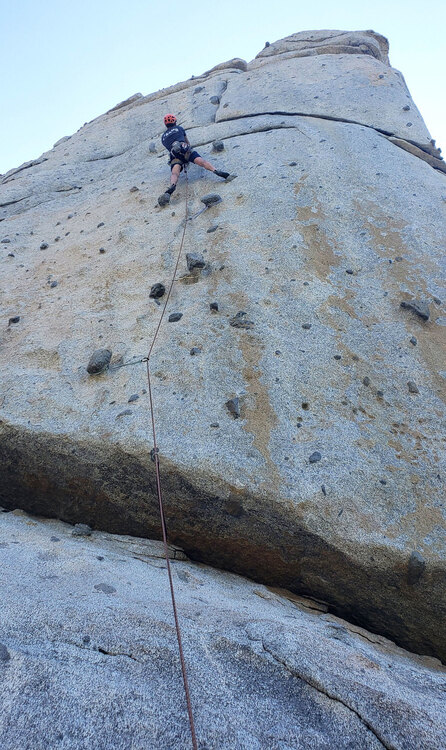 Another weird and wonderful granite micro-genre is the eyebrow climbing at Looking Glass. Check out these eyebrows. 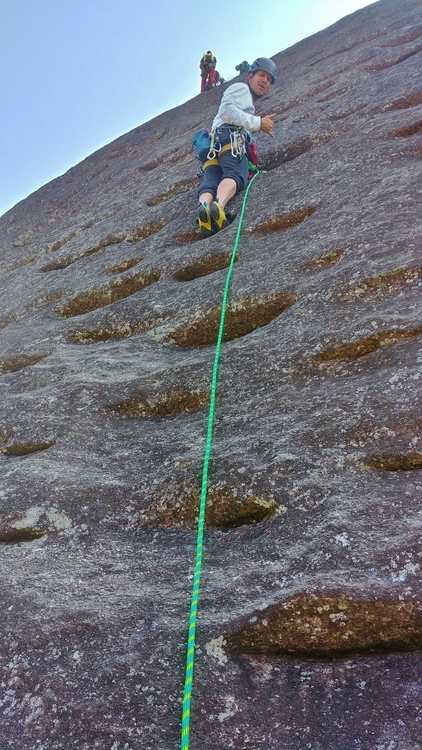 The absolute best route I've climbed in this style though, again on granite, is The Oracle in Squamish. Incredibly good rock quality, with intricate face climbing and just enough (tricky) gear to make it reasonable. Near the top you get a bomber #2 Camalot, then run it out 20 feet on smooth, sculpted jugs. Its wild, and perfect. More generally, the Murrin Park sector of Squamish has great gear-protected granite face climbing. 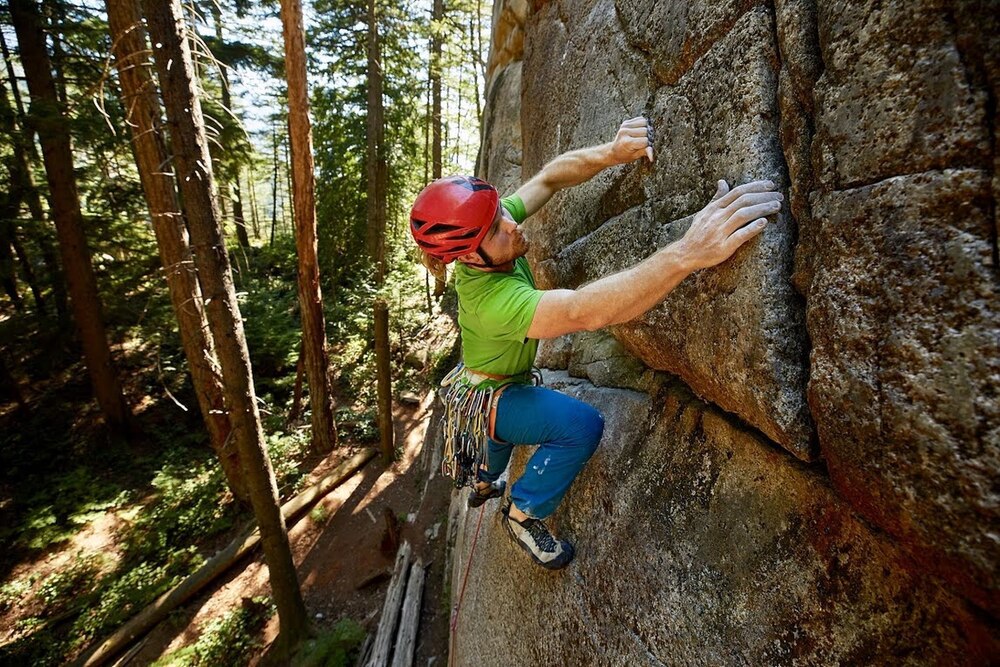 (image credits to the MP posters on the linked pages) |
|
|
Other note: Ya'll need to post more photos in this thread! |
|
|
JCMwrote: I'm a little lost. What is a "face climb"? I guess I have never really bothered to ask myself this before. But these examples with "huge knobs" or "eye brows" feels more like "jug haul" to me (which in my narrow mind is not face climbing). Is a stemming corner a "face climb"? If you stem two far-apart corners as at Devils Tower (or a wide chimney), is this a "face climb"? Is laybacking or bear-hugging an arete a "face climb"? Eldo has a lot of gear-protected face climbs. Also, surprisingly well protected (often G or PG) if you enjoy caressing yer small nuts. There's plenty of thin cracks that take small nuts (think #3-#5 BD size), which is too thin to use as holds. |
|
|
I consider a face climb something that's primarily on a single plane with primarily holds that you are grabbing (crimps, jugs, slopers, etc. - not jams or slab smear climbing). I think of face climbing as generally having positive holds although I don't think that's a necessity (edging and crimping are the two characteristics that come to mind for me when I think of face climbing). I don't call stemming corners face climbs because they don't climb a single face, they climb a corner. I don't call an arete climb a face climb because you're climbing the intersection of 2 faces. |
|
|
On a similar note I love easier face climbing with gear but insane run-outs. I'm sure there are other examples but the one place that I've repeatedly done this is the flatirons. Pretty fun to be on 5.5-5.7 thin but very positive slab 50-100 feet above your last piece. It's basically free solo but you probably won't tumble off the whole mountain if you blow a move, only 100'+ of cheese grating and tumbling and the chances are incredibly low if you are calm and methodical. And you often get a few ledges between pieces to collect yourself. |
|
|
Christopher Smithwrote: Sounds like the Flatirons to me... Which to note for this thread, is amazing for lower-grade gear protected (though sparsely at times) face climbing. Re: question above about defining face climbing (i.e. does jug hauling count?). I take a fairly broad definition of face climbing - including basically anything that climbs primarily on face holds. These can be thin crimps or big jug knobs. Thin face climbing is one type of face climbing, but not the only type. |
|
|
I would check out Custer state park in SD and Gallatin canyon in MT. Custer has a ton of exactly what you're looking for plus a bunch of super cool tower climbs. There is other really good climbing in the surrounding area near Rushmore. Gallatin canyon is a bit less of what you're looking for specifically but some of the faces have exactly what you want. It's also a really nice area overall and worth a pass through at the very least. If you're willing to go to the east coast I would check out the gunks NY, daks NY, seneca WV, and chatt TN |
|
|
The NRG seems to be filled with these, the video for color blind is pretty inspiring! https://www.youtube.com/watch?v=k6GWrq8WMcM Alan Rubinwrote: The CT traprock scene is for sure another good example, lots of bold climbing has been done in the past of course. This sadly doesn't feel as healthy as some of the other contemporaries you have mentioned with many of these routes being lead on gear later removed, or I've even heard stories of people using hanging fixed lines as pro until they could reach the actual gear. Still feel like there is potential with people doing things like silver meteor, but i'll quote the MP page and let you decide if that sounds like a trad lead or a climb that should have a few bolts if they weren't going to be chopped a day after installation. "It's possible to take much of the danger out of this route by stick clipping the first piece, pre-placing protection on rappel, and then using one preplaced 2' sling and one 4' sling to allow clips before crux sequences (the style that I used)." edit: for those interested on the previous mention of hanging fixed lines, see volcanic eruption at east peak. "Could be one of the best mixed lines in New England if it had fixed protection on the lower half. It was recently lead (as ugly as it sounds) with a static rope hanging from the top with fixed loops to clip into for protection for the lower section. The upper section after the rest was lead on gear. It is unfortunate it had to be led this way, but desperate times called for desperate measures. " |
|
|
Ciarán Lynchwrote: Pink points are just sport climbs. |

|
There’s too many at the NRG to list. The lower meadow alone has a good handful that are great (by the way I did your mom comes to mind) |
|
|
What about zoom at index? Tbh I've never lead it cause I'm a weenie, but it's an amazing knob climb that isn't entirely bolted. |
|
|
F r i t zwrote: If that fingers or gear but not both you attempted at City counts, there's plenty more of that sort there! For me? Not hard at all stuff has been the most fun. Suncup slab you know, but for a huge challenge, look at the Clamshell if you like crazy scary no gear hard stuff! Suncup on steroids and cranky! The front side of Bath rock is long, a top out, easy peasy....and fun!! Maybe 3 bits of gear for 200 feet? I greatly enjoyed the whimsy of following, simuling, and cleaning...next to nothing. The Bingham book mentions rather a lot of opportunity for "adventure" climbing at COR. Betcha our resident friend could steer you to really obscure stuff, too! Best, Helen |