Continue with onX Maps
 Sign in with Facebook






Rappelling without extension


|
|
Bob Gaineswrote: Hey, Bob, As someone who recommends educational resources to newer climbers frequently is there a reason you would recommend one over the other, or what are the differences between these two books exactly? Also will there be an updated SPI manual at some point? Lots of people seem to want to use that as a reference. Cheers! |

|
Ricky Harlinewrote: Both have similar content. For newer climbers I'd recommend How To Rock Climb, 6th edition. It's very comprehensive and the most up to date (416 pages with over 500 photos). |
|
|
Bob Gaineswrote: Appreciate you, Bob. Thanks! |
|
|
perhaps we should promote "not flipping upside down when we are rapelling." think of all the lives that could be saved. |

|
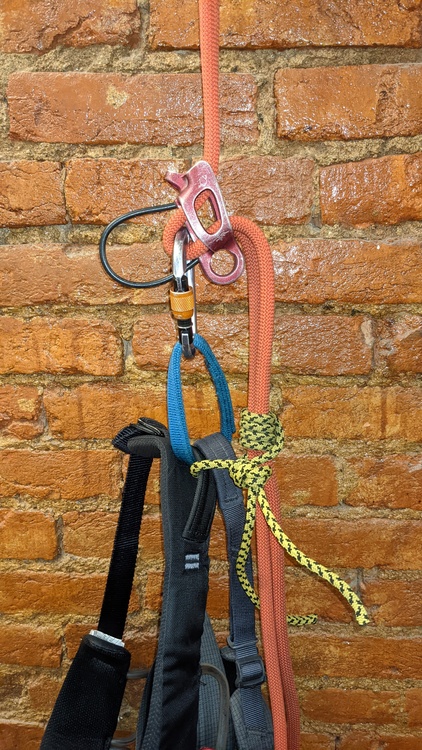
slimwrote: Haha. A person knocked unconscious by rockfall isn't in a position (to coin a term) to enact such a precaution. And I've twice seen an inexperienced person rappelling from an unavoidably low anchor slip and invert. They didn't have an autoblock and didn't die because this was in the days before autoblocks when not letting go with the brake hand was a matter of life and death drilled into novices. Nowadays the brake hand is rather more optional and beginners can and do let go, often just because they are swinging a little and they put the brake hand out to keep from bumping into the wall. Maybe folks should decide what exactly their autoblock backup is for. Is it so you can easily go hands-free to untangle the rope or scrub moss from an overhang? Or is the purpose to prevent loss of control if the rappeller is rendered unconscious? What rigging you consider appropriate depends to some extent on the answer. I might add that the now more standard extended rappel has the autoblock managed by the non-brake hand. This means that if something knocks your brake hand off the brake strand, or if in some panic situation, you let go with the brake hand, the autoblock is unlikely to function because the natural panic reaction to grip the rope with the other autoblock-managing hand will guarantee that the autoblock slides down with the falling rappeller. This failure mode can be corrected by keeping the non-brake hand above the autoblock rather than gripping it, pushing the autoblock down the heel of the hand. There's a lot of electronic and print information out there that doesn't mention this, nor does most of it clarify what the autoblock is really supposed to do. The autoblock-on-a-leg-loop-rap-device-on-the-belay-loop, in spite of its other failure modes, does not have the particular issue of the autoblock not functioning if the brake hand is removed, because in this configuration it is the brake hand that manages the autoblock. |
|
|
RG you can al so get your 5mm or 6mm cord dialed to the perfect length for your setup and do an extra wrap so that it may be a little bit annoying to rappel with but it will not fail. I do extra wrap whenever i think the rappel may be dangerous for whatever reason. |
|
|
Ricky Harlinewrote: Yes, it's definitely time for an update. Should happen in the next year or two. |
|
|
Eric Mosswrote: That's the only reason I posted the pic from the manual. So other people can see what the OP had read. The whole 3/4 invert tests failing thing... and him still being comfortable because it was in the book... yeah. Does not compute. At least he is reconsidering. |
|
|
J Ewrote: That's a weird way to spell grigri, Jared... :P |
|
|
Brent Kellywrote: Well. If you want all the things I said plus not have to lug around a tagline or do a biner block lol |
|
|
Benefits of the leg loop third hand: - It works somewhat - You get to prove to everybody that you've been climbing since the 80/90's, before it was cool Benefits of the extended rappel, third hand off belay loop - It work almost all the time - It makes multi-rappels simple, depending how you set it up, utilizing it as a tether - Less likely for hair to get caught in an extended device - Easier for going over overhangs or lips - Basically any third hand works, no need to get specific other than rope diameter. |
|
|
Eric Mosswrote: I have been looking at this picture and realized ,your belay device seems threaded on the wrong side. If you pass your rap station would you not want to use the device to help ascend the rope? |
|
|
Will Mwrote: Idk about you, but the extension brings the device much closer to my hair. |
|
|
Agreed, catching hair is more likely with the rap extension. Catching clothing is more likely with the device on the belay loop. |
|
|
Walt Peterswrote: if you weigh 145 lbs *(like me), the high friction mode sucks for the first 50 ft. makes the rap jerky. if you want to orient your device so you can clip it back to you in guide mode, i would highly suggest you start with an extended device. |
|
|
curt86irocwrote: Fair enough. Maybe you need thinner rope? |
|
|
rgoldwrote: Catch 22! |
|
|
Walt Peterswrote: Maybe, but the main criterion should be catching lead falls. Rappel systems can adjust to fatter ropes, starting with low-friction mode (that's what it's for). I would much rather ascend on 2 prusiks after passing a rap station than be belayed on a rope thin enough for light climbers to rappel on in high-friction mode. If the ascending method they now teach is causing ATC users to climb on thinner ropes where a fat rope would otherwise work, that's putting the cart before the horse. |
|
|
Tradibanwrote: That’s some catch! |
|
|
Just to update: I'm still using the method with the third hand helical knot through the tie in points tied with an edk - just have to ensure the edk is nice and tight. I'm loving it, and I carry one fewer biner which bumps me up three grades to 5.4. I played around with the surgeons knot instead of edk, but the surgeons knot deforms and doesn't inspire confidence. I've seen people extend the device with an extra locker, i thought that was pretty slick too |