
 Continue with onX Maps
 Sign in with Facebook






New and Experienced Climbers over 50 #32



|
Idaho Bobwrote: When I first visited Zion in 1962 there was a metal scaffolding frame going up the side of the Landing. Inside were metal steps for ascending. I enjoyed climbing up the outside of the frame. Back then there was more concern for the safety of the visitor. In Grand Teton Park it was illegal to solo, and the climbing rangers made assessments of skill when you registered for a climb. |
|
|
John Gillwrote: What you noticed back in 1962 was a NPS that was still being managed by the old guard from a somewhat earlier period in which it was felt necessary to justify a sort of middleman between nature and the teeming suburban masses. Remember , this time was not all that far removed from a generation that tilled the soil and traversed the wilderness in covered wagons. Where were the "rangers" then? In fact the term "ranger" itself was hitherto confined often to dudes who were armed to the teeth and tracked down wild West serial killers. An old timer once told me that when he was a kid in Iowa, he and his buddies often walked to school carrying their .22 rifles which they stored in the classroom closet. After school they would shoot rabbits for the local farmers earning a dime apiece. In those times ordinary folk were far more trusted , and much more self-reliant. It was hard , at first, to convince ,all but the highly urbanized masses, that they needed dudes in funny hats to protect them from bears and give them ersatz lessons in wilderness behavior. ( My favorite Ranger of all time was the great Aldo Leopold. " A Sand County Almanac") Anywho. |
|
|
Colden Darkwrote: You got me before I could correct it. Wanna keep being my editor? I could use one |
|
|
Jan. I absolutely do care about the quality of the route that I leave behind for others to climb. It's not just about me claiming an FA and getting my name in the book. It's about making a good contribution to the community that is asthetic, climbs well and is exciting but reasonably protected. I do ground up where it makes sense or is required and top down when that makes sense but either way the route is as close to what my vision of perfect is when I consider it finished. That is clean and properly equipped. I won't report it if I still need to go up and fix a bolt or anchor etc. that being said the last few climbs I have put up were not reported to anyone other than my inner circle. I like the guide book author and he does a great job but some places simply don't need to be known.. |

|
John Gillwrote: I started climbing about a decade after John ( mid-60s) and there were still quite a few rules and 'paperwork' involved if you wanted to climb in various areas under NPS jurisdiction. In the Tetons you initially had to 'register' as a climber at Jenny Lake--which involved filling out a form which included listing prior climbing experience, then had to sign out there for each route ( and back in upon returning). My understanding is that the rangers did this to keep track of who was 'up there' in case they didn't return in a timely manner leading to possible SAR operations. I recall being told by a ranger that they didn't have the authority to prevent people from doing any climb, but did use the registration information to help 'guide' people to appropriate routes for their experience level. My memory is that Yosemite also 'required' climbers to sign out for routes, but that rule was generally ignored by most. I presume that other Parks that offered climbing ( RMNP, Rainier, etc) had similar requirements. Devil's Tower, at that time, had the most elaborate policies. Prior to it becoming a 'Monument', the Tower had been climbed many times by the old 'cowboy ladder' from the 1890s--which had long since rotted away. When Fritz Weissner then requested permission to climb it in the 1930s (now under NPS jurisdiction) he was initially turned down. It was only after a year of political 'wrangling' that he was finally permitted to climb it. By the mid-60s folks wanting to climb the Tower had to apply in writing in advance including providing a 'climbing resume' for all members of the party--who all had to be at least 18. Additionally all climbers were required to climb the Durrance before being allowed to climb any other route ( not that there were that many others) on the formation. Finally, upon arrival you had to have you and your gear get a final 'inspection and approval' from a ranger who clearly had never climbed and had only the most basic knowledge of what was involved ( "you should bring along some of them 'big things' "). Fortunately, by the end of that decade such 'rules' had either been revoked or were just ignored by everyone and, other than camping limitations, we had the benefit of a several decade relatively laissiez faire period. Now, however, largely due to 'numbers', it appears that we are entering a new period of registration, regulation, and requirements. Sigh!!!! |
|
|
Jan Mcwrote: Maybe it is caring about the people to come not being smashed with potentially life altering injuries rather than overly glorifying ones own experience and wanting everyone else to glorify it. Remember, plenty of ground up ascents were done by dumb asses, while coked up, or with bolts placed in unfortunate spots because they didn't know what was coming up, or they simply didn't read the line well. I don't think we should be altering people's routes lightly or trying to make them all G rated by any means, but if someone was completely incompetent with their placements, holds changed altering the natural line and the community has a reasonable consensus, I don't have a problem with routes having their fixed gear retroed. Ultimately, I think respect for the FA's vision is a good rule, but it should not be completely dogmatic. Respect is earned. I also like different areas having different approaches like Ward and others have said., so people can find what they are looking to experience. I personally think the Bachar-Yerian is an ego driven botch job, but obviously some people like to challenge themselves on it. When I have rebolted routes, I have no issue moving a bolt placement some if the previous one was in a bad spot. If I know it will cause a big stink, I won't bother with the route, or if it really needs to be done, I'll take the heat, but I am not going to put a nice new glue-in right back in a bad spot. |
|
|
Idaho Bobwrote: There was actually another route like that on a bigger peak, nps removed it and all that remains is some red dots and an occasional hole in the rock. |
|
|
M Spraguewrote: I often wondered about this, and there’s been more than one time I thought “dumbass” then decided that placing my own protection and climbing trad routes was a better alternative. |
|
|
Alan Rubinwrote: When I climbed the tower the first time in the early 70’s you not only had to do the durrance route you had to come down to the visitor center to sign out and rest for two hours before you could do another route. It was also a good idea to bring old beat up gear for them to inspect as new gear might prove you were new climbers and didn’t know what you were doing. One of the reasons for the rules was the monument superintendent had been there for decades and made most of the rules and the park service just kept them so they would not have to think up new ones. The tower got more climbers when the stores at the entrance lobbied for a change as climbers stayed longer and bought more beer. |
|
|
The retrobolting exceptions that Nick and M Sprague describe sound very reasonable to me, and while still 'retrobolting', they are considerably different from the retrobolting involving simply adding a bolt(s) to a route to make it 'safer', or into 'modern' (sport) bolting practices. The latter is the practice that I think is generally inappropriate and unacceptable- this is the 'erosion' I have been concerned about in well established, historic climbing areas. I wonder about how much longer places like Tahquitz & Suicide will retain their historic character and protection style, and I wonder if others who frequent similar historic areas are seeing any movement like this...and if anything can, or should be done about it. And if so, how? |
|
|
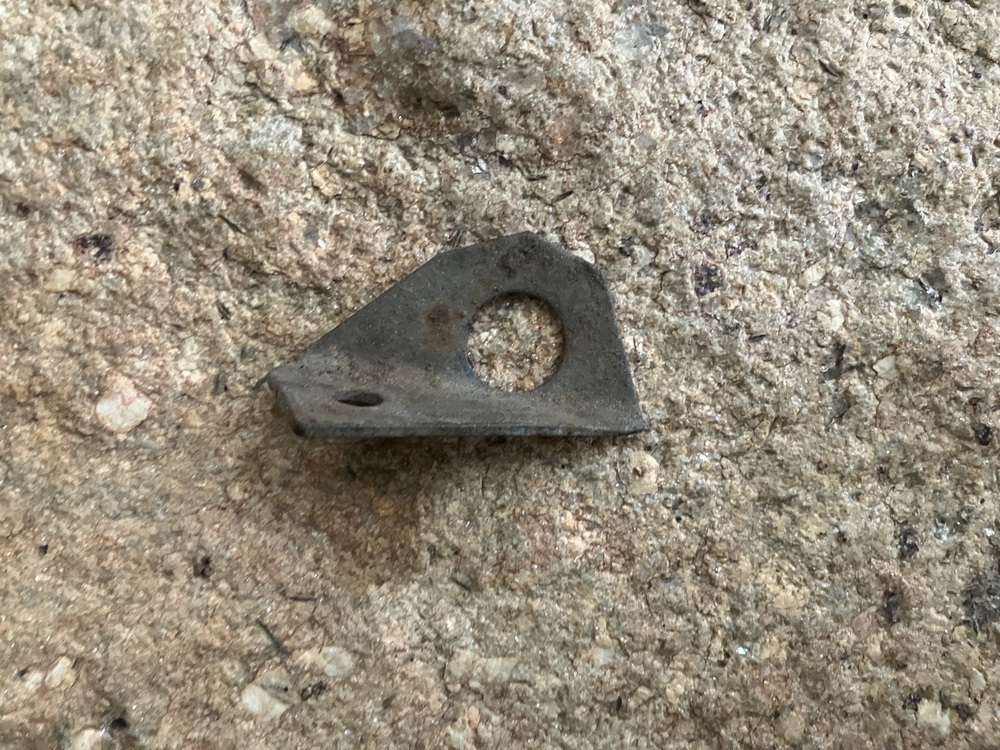 That’s a Leeper hanger from the 1st route I ever put up that used bolts. It was a long time ago and while I wasn’t “coked up” I was a dumbass and almost certainly had been smoking weed all morning when I placed it. The route was stupid run out not because I couldn’t afford bolts or because there were no stances or I was racing a storm to the summit. It was stupid run out because I wanted my friends to say “wow”. It was not cutting edge or ground breaking it was stupid. My friends convinced me to fix it a few years back and we retro bolted it on lead with more and better hardware and I’m glad we did. |
|
|
Weed is different (at least if you are used to it). I've never been a coke head, finding it repulsive, but I think it was popular with some during the 80s while doing run out slabs. You are more likely with weed to put an extra bolt in a random chalk spot you thought was a mark for a bolt than run it out hugely. |
|
|
Alan Rubinwrote: In the 1950s no one was allowed to attempt the Diamond on Longs Peak. Then, in the summer of 1960, the Superintendent decided to lift the ban. My old friend, Dave Rearick (RIP) was summer Longs Peak ranger at the time (I think, I believe he told me this several months ago). A number of climbers had submitted requests to make the FA, but none were available at the time, so Dave and his climbing partner, another old friend, Bob Kamps (RIP), were the lucky recipients of the offer. After the climb Dave was annoyed by a Time reporter writing that Dave had told him, "We burned our bridges behind us". Dave didn't say this. |
|
|
Bob Gaineswrote: I really should remember who said it. Normally I tell my friends "There's this old guy, like a famous climber, that's like been climbing for hundreds of years, like, you know, at the birth of Yosemite or whatever, that's on the mountainprojectnewandexperiencedclimbersoverfifty thread (that bits always said really quickly because it's such a mouthful - CURSE you Lori!!), that says top roping is the purest form of climbing (this is where they snigger like I'm telling a joke). And then I go on to explain your reasons.
I do apologise for attributing the wisdom to others and/or some 'random old guy'.. |
|
|
Carl Schneiderwrote: none of us are old Carl, most especially Bob. if only you could watch him climb! I think we are all rewriting the definition of old. I hope you won’t take offense at this Carl, but for some reason I have carried with me the image of your wife, Cindy, clobbering you during a fight and whatever the row you got into was a real doozy. I decided all Australian women are like that and I aspire to be the same. In a few days, you got over it and everything seemed to be back to normal. Why are we so polite here? It was cathartic just for me to hear about your fight. Of course, I also believe that every household in Australia has a boxing roo Banging up against windows and daring you to come outside. If it’s not like this, I don’t want to know. |
|
|
Carl Schneiderwrote: Didn’t Lynn Hill once say something like, “Never turn down a top rope if offered.” ? |
|
|
she probably said that when she was young and did not have chronic training injuries ;) She did offer me a top rope once at the gunks but I was too intimidated by the route they had set up. I had no clue who she was but thought she was nice. The next day we saw her again and my climbing partner told me she was one of the best climbers in the world as was her BF Kevin.. hey she smiled at me :) It's dumping pretty hard right now at my house.  |
|
|
I know many of you have lost people to the mountains. I am really struggling. While I’ve known people who have died climbing, this is the first time it’s someone really close to me. One of the climbers missing in NZ, Kurt Blair, is a best friend of ours. I’ve known him since I was 20 and he was Jim’s 1st climbing partner. Don’t know what I’m asking for, but what has helped you with this type of grief? I know I have to feel it and it will get better. But I don’t even want to believe this is happening. I keep imagining what his last moments might have been like - even though we don’t really know what happened. I hope it was peaceful for him in the end. And it looks like he was in a beautiful place. |
|
|
Erika, So sorry to hear about Kurt, my sincere condolences to you, family and friends. Tad |
|
|
Prayers and condolences |


