Continue with onX Maps
 Sign in with Facebook






Photos of BEAUTIFUL HARDWARE


|
|
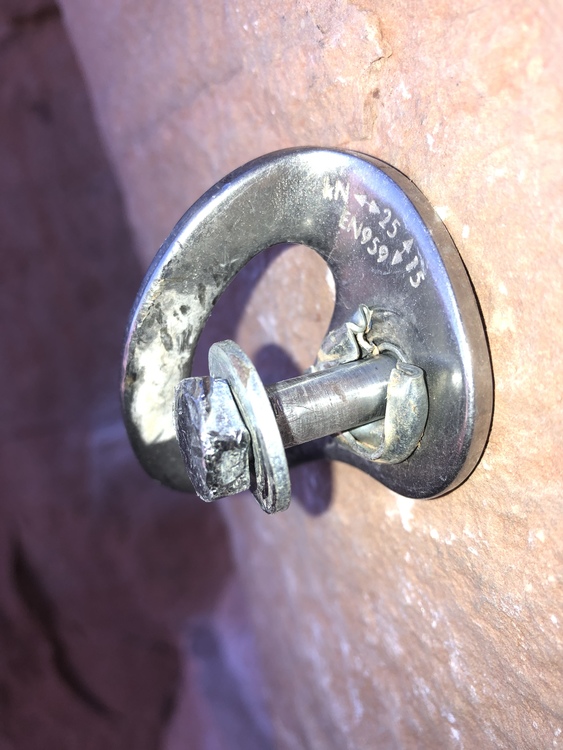
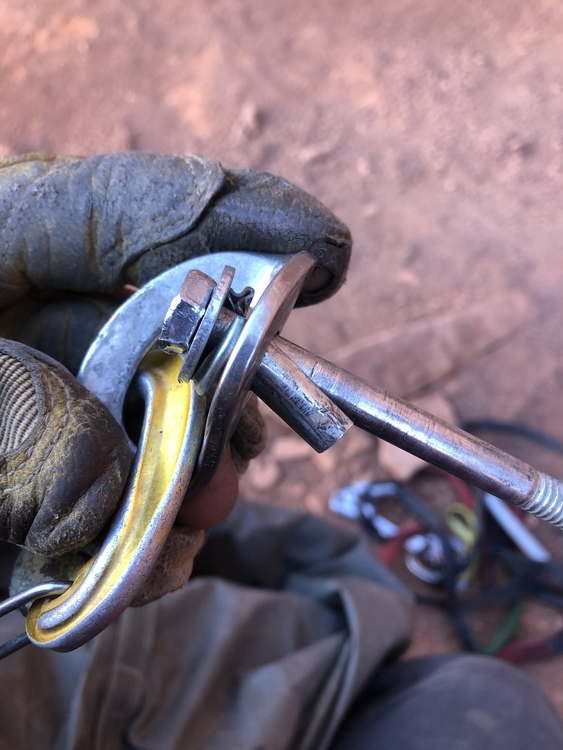
I had that happen once with an older drill bit/ didn’t taper the start of my hole out enough. The sleeve can bind too much, and it starts to bunch up like that, rather than go into the hole. At least that’s what I found in my circumstance. |

|
Scoot Bankwrote: I'm thinking that happened while installing/hammering in the bolt. No way would you be able to torque enough to deform like that. I had a similar thing happen but I noticed the blue spacer deformed/broke so I was able to stop and correct my mistake. If I had kept wailing on it with a hammer the same thing as pictured here may have happened. But man... you would have to really give er. The mistake I made was that I prethreaded the cone on too far and the sleeve was starting to expand and started to dig into the side of the hole (I think). I suppose a hole that is too small could do about the same thing. |
|
|
Could it have been from using a worn out bit that drilled an undersize hole? As the bolt has pounded in, it reached a point where the hole was too small for the sleeve to fit? |
|
|
It has also happened to me - user error. Once you do it once you’ll never do it again. Like Colby said, it is caused by a worn bit/small hole. It could also happen if you attempt to insert the bolt with the cone screwed on too tight and already engaging with the sleeve slightly. You go to hammer the bolt and the edge of the sleeve catches on the edge of the hole and as you hammer the sleeve just bunches up like that. Initially it just feels like a stubborn bolt/tight hole and if you’re not expecting it or didn't take precautions you may not notice until it’s too late! |
|
|
Josh Janeswrote: I also just referred back to the bolt head on the first image, you can see they beat the shit out of the bolt to keep driving it in. Yikes! |

|
I had a similar problem with a 5 piece bolt and a worn bit. The bolt would not tighten down. When the bolt would not tighten down I decided to funk it out rather than continuing to hope that it would work. I think the hole was such a diameter that the edge of the cone did not slip into the sleeve, rather it just ran into the edge of the sleeve and pulled the sleeve up. Trying to tighten that enough would get the results in the pictures above. |
|
|
You can also damage the sleeve like that just by pounding the bolt in at the wrong angle - the sleeve can jam up on one side of the hole. Did that once with a stubby 4-piece, noticed the bending/bunching sleeve right away. Just had to clip a draw to the bolt and one quick funk removed it, then blew out the hole again and placed another - extra careful to drive the bolt straight in! I've also seen something similar with wedge bolts - drive them in at an angle, and it's possible to catch the sleeve on the edge of the hole and jam it off - usually the sleeve got stuck in the edge of the hole. Also 1/4" buttonheads - pound them in at an angle and they can jam/bend/fold. |
|
|
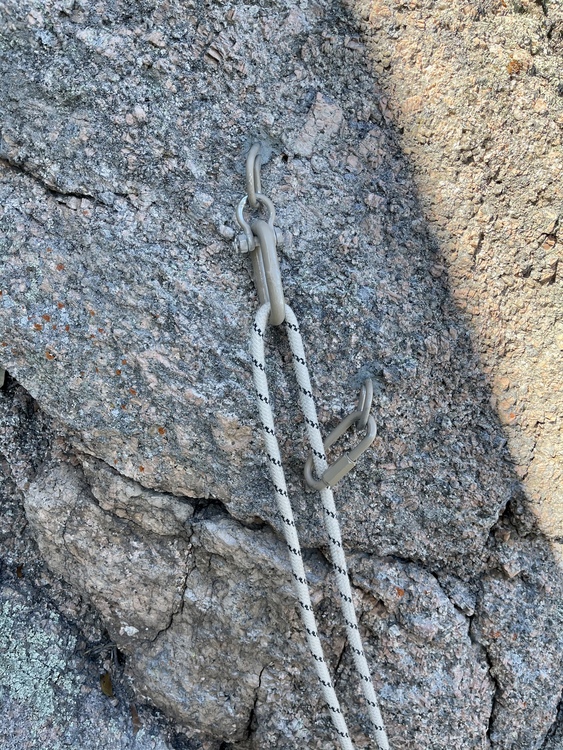 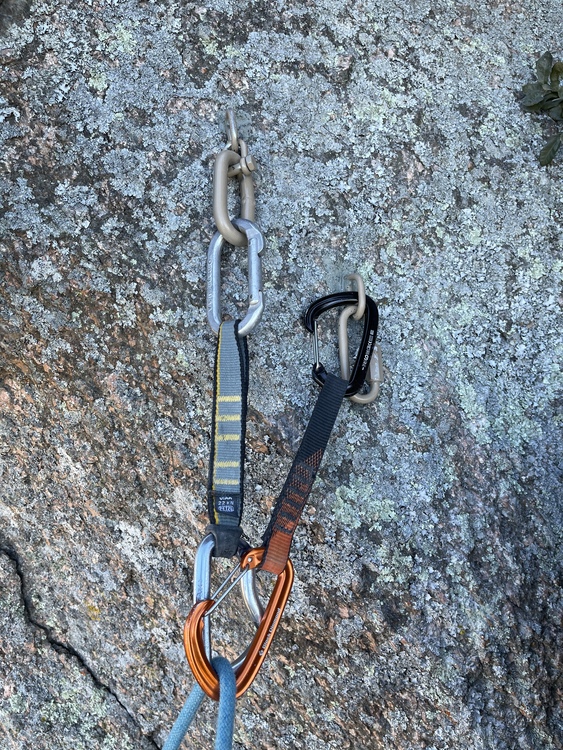 Entirely 316SS. 6mm Twists in A7+, 12mm chain link to take the wear. Shackle is entirely SS including the cotter pin. Nut was tightened and red locktite applied AND the threads have paint all over them so I guess 4 things keep that nut in place. |
|
|
These little shackles have always spooked me. I know they are strong, but unlike a quick link once they come open they have zero holding power. Where an open quicklink would still function as an open hook with some strength. |
|
|
PatMaswrote: These little shackles have always spooked me. I know they are strong, but unlike a quick link once they come open they have zero holding power. Where an open quicklink would still function as an open hook with some strength. True but one would hope the person is checking both the shackle and the QL before using! The shackle has two security methods employed to keep the nut in place. The cotter pin and red locktite. These are a first use test to see how the shackle holds up. Mind you I've seen these broadly used in places like Squamish without hearing of any issues on heavily traveled routes like the Apron raps. |
|
|
mattmwrote: I’m not as sure about that. So what’s the advantage of the U shackle? Are they cheaper than a quicklink? |
|
|
PatMaswrote: These little shackles have always spooked me. I know they are strong, but unlike a quick link once they come open they have zero holding power. Where an open quicklink would still function as an open hook with some strength. Thats what the backup is for. |
|
|
Drew Neviuswrote: Cheaper. I am not a great fan of them either. The cotter pins are pretty wire like and can catch things and get bent (don't know how much that would actually occur). Not as useful as an extra place to clip things also. I'll be interested in how you find they hold up, Matt. They do make a more compact anchor. |
|
|
I have personally come across several shackle setups where the nut was completely loose and only the pin was holding it on. It’s easy enough to inspect but it seems less favorable than the standard quick link. |
|
|
Evan Kirkwrote: I think it is fine if the nut is loose as long as the keeper cotter pin is in good shape to contain it. That is where I see a potential problem in the less controlled environment vs a shop. The cotter pins don't seem like they would take much abuse. |
|
|
I've installed around 300 of them with no issues for the past 15 years, it's hard to see how the nut can come loose if they are tightened properly. |
|
|
Good to know, Jim |
|
|
I see zero advantage to using a shackle in place of a quick link. No reason to reinvent the wheel, or cause any additional “inspections” before use. |
|
|
Colby Wanglerwrote: Would need a really thick quick link to have a big enough opening for that size ring. Shackle has a bigger opening per diameter. Probably a few dollars difference, but at scale it adds up. |
|
|
I've only used shackles once in an anchor replacement where I re-used the holes and the bolt location made it so the quicklinks would be loaded over an edge but the shackles made made it so that the chain went over the edge (the original anchor was just chain on the bolts with big washers). That being said, as a mechanical engineer, I see absolutely no problem with them from a safety standpoint. Cotter pins may not look very substantial, but they are exceptionally tough and can take way more abuse than you would ever realize. Other than rusting away to nothing, I can't think of anything that could happen in a climbing scenario that would make it so that a cotter pin no longer kept the nut from coming unthreaded. |