
 Continue with onX Maps
 Sign in with Facebook






Let’s talk hydration


|
|
What’s the preferred method for bringing fluids with you on a multi pitch? I did my first one the other day and the dude I was with had a little Camelback hydration backpack, but that would be problematic if he needed to put his back against the rock. I clipped a Nalgene bottle to my harness, and it worked, but was kind of a PITA. Soft bladders are generally frowned upon in the alpine due to their propensity to freeze, leak or rupture. In fact I just had one leak all over my sleeping bag. So what works for you? |
|
|
Mike Schreinerwrote: 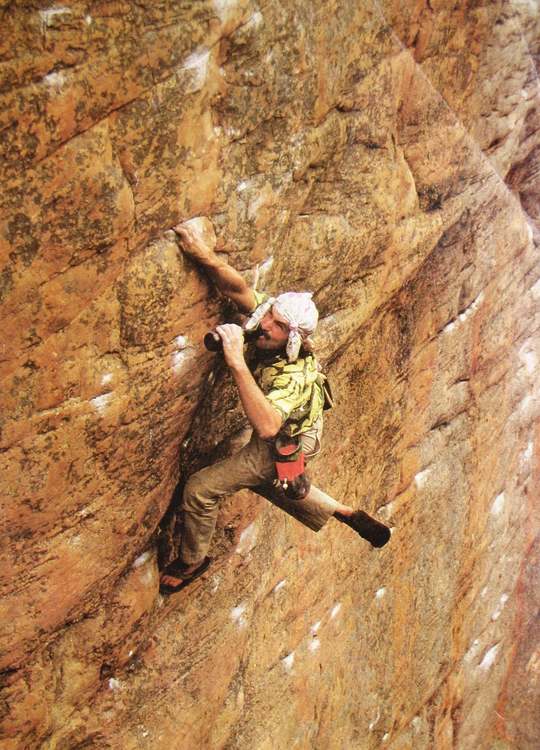 |

|
 |

|
Skratch Labs Hyper Hydration---the secret weapon! |
|
|
Mike Schreinerwrote: I don't do alpine stuff, but for general rock climbing I bring a ~20L backpack with a bladder that the follower wears. For sections of chimney or whatever you can just dangle the pack on a 30cm sling between your legs. I don't like the extra weight of a full nalgene on my harness. |
|
|
I have a half size nalgene bottle that I clip to my harness. It is much lighter and smaller profile and .5L seems to be enough water for multi pitches in the 5-8 pitch range. |
|
|
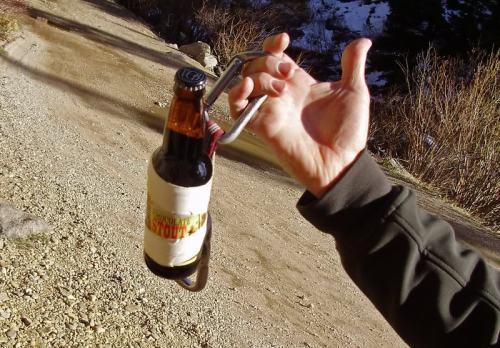
For long/high climbs, remember to dehydrate your beer into whiskey before starting out. |
|
|
Dan Cookseywrote: Well that didn't take long. Legendary. I don't even care that he was tethered to a bolt. This is a guy who doesn't take himself too seriously. And he stays hydrated. vermphoto.com/ |
|
|
Mike Schreinerwrote: For anyone clipping bottles, make sure the clip-in point on the bottle is MUCH sturdier than the weenie little plastic strap that attaches the lid. I saw a 1L bottle come flying down a cliff with a broken "strap" once. A deadly projectile. |
|
|
sandrockwrote: Everybody is different, I guess, but that wouldn’t be enough water for me on that number of pitches even if it was chilly. If we’re talking non freezing conditions and the standard full-day on route, plus approach + descent, I bring 3L in a 15/20L pack with an extra layer, snacks, and maybe a summit beer or smoke. Running out of water for whatever reason can turn a casual outing into an epic. |
|
|
There's a Peter Croft interview where he more or less says "if you start drinking tons of water a few days before, you can do most long climbs with just 1L of water." I've been trying that and have liked it so far. For my actual vessel, I got a gatorade bottle and some replacement shoelaces, clove-hitched a shoelace around each bottle in two places (the neck and around the middle), then duct-taped the laces down and knotted them together to make a clip-in point. So far so good (& very lightweight). |
|
|
I live in high elevation desert and it’s quite hot in Idaho, so my partner and I pack a little heavier even in the summer. We have a 16l currently that BARELY fits 2 pairs of shoes, a liter of water each, a few bars each and a small first aid kit. For shoulder seasons and winter we’ll use a ~25 liter to include the above plus room for layers. Follower carries and as others have noted that can sling it below them for chimneys. This is for 2-5 pitches. Longer than that and I’ll bump up to include an extra liter each (again, I live in the desert). |
|
|
Stonathon Olives wrote: I think this might have been said as something of a joke, but curious whether people find this to work. I've tried this a few times recently, and have found it to actually be counterproductive vs just drinking a normal amount of water before climbing. Anyone else? The idea from Peter Croft about drinking lots for days before going does seem like it might be better, though. Will have to try that instead of just slamming water in the parking lot. |
|
|
Chris Stockingwrote: If your body is working correctly, excess water will just be urinated out. If you drink too much water, your electrolytes will be imbalanced and that's just as bad (or worse) as being dehydrated. If you're a little on the dehydrated side, then getting your % H2O up will definitely help. The trick is maintaining that balance during activity. I eat a pretty healthy diet and think I get plenty of electrolytes from food, so I will usually start with plain water, and then switch to an electrolyte drink (I like Nuun) after the first L or so. On long hikes or bike rides I aim to drink 250mL every 15-30 min depending on level of exertion and heat/humidity. Climbing is a little more stop and start and with varying levels of exertion. Anyway, lots of good info here as always. |
|
|
I have become a firm believer in hydration pack for long days out. It honestly doesn't suck too much in easy chimneys, and if you are doing some sustained harder wide climbing, trailing it isn't the worst in the world (tuck the cords inside). Both follower and leader carry their own... so it doesn't suck too much for either :P |
|
|
B Donovanwrote: this is just what I bring on the wall. Not including water on the approach or descent. |
|
|
Sport multipitch I always take a camelback style hydratation system. Its convenient and you can always stay hydrated as you go. Mountaineering/ trad multipitch is a different story. I always take soft bottles (usually 1.5 liter) because it will not freeze up as much and also because its way more burly and easier to refill on the go. When alpine climbing its a good excuse to take a break, take the pack off and have a few sips. |
|
|
Thinking about my first multipitch climb ever doing Looking Glass in Moab when I clipped a 48oz Nalg to my harness cuz I thought id need all that |
|
|
Just clip a nalgene to your harness and pre hydrate. A pack is ridiculous for most routes. |
|
|
J Gwrote: Would not reccomend the 48oz lunker Nalg. the 16 or 32 will suffice |
|
|
Mike Swrote: Nailed it- you can only absorb about 250 mL every 15 minutes or so, the rest gets urinated out.
|


