|
|
Jeff Constine
·
Sep 21, 2019
·
California
· Joined Sep 2019
· Points: 6
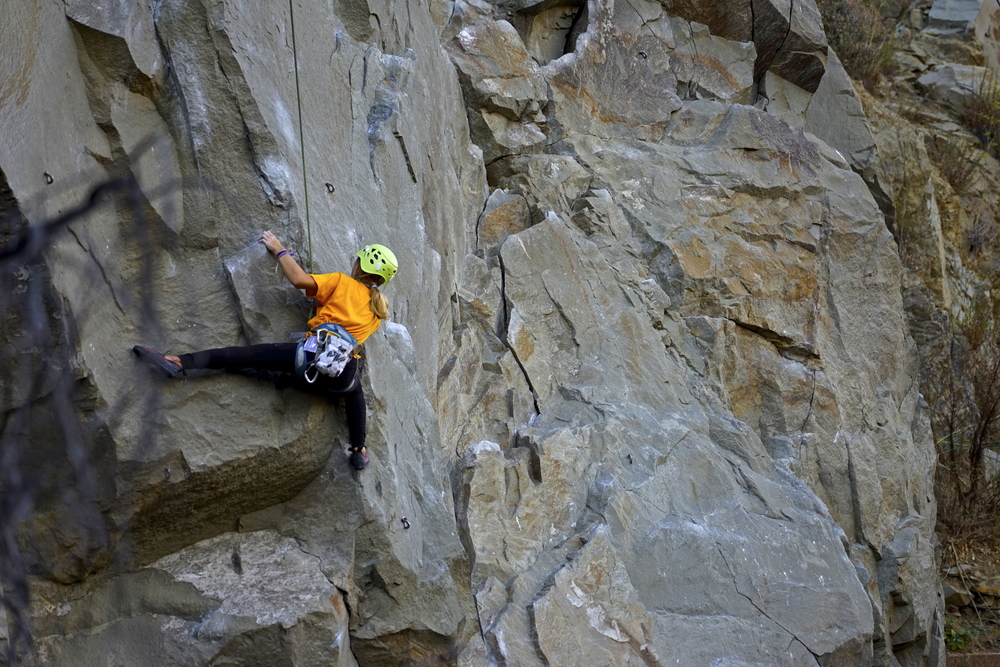
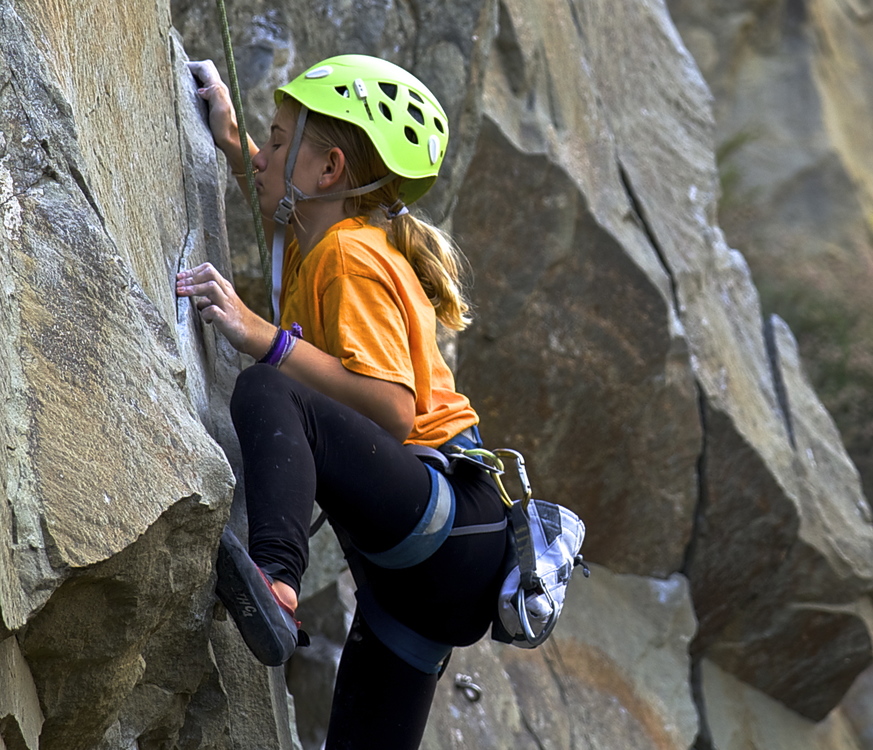
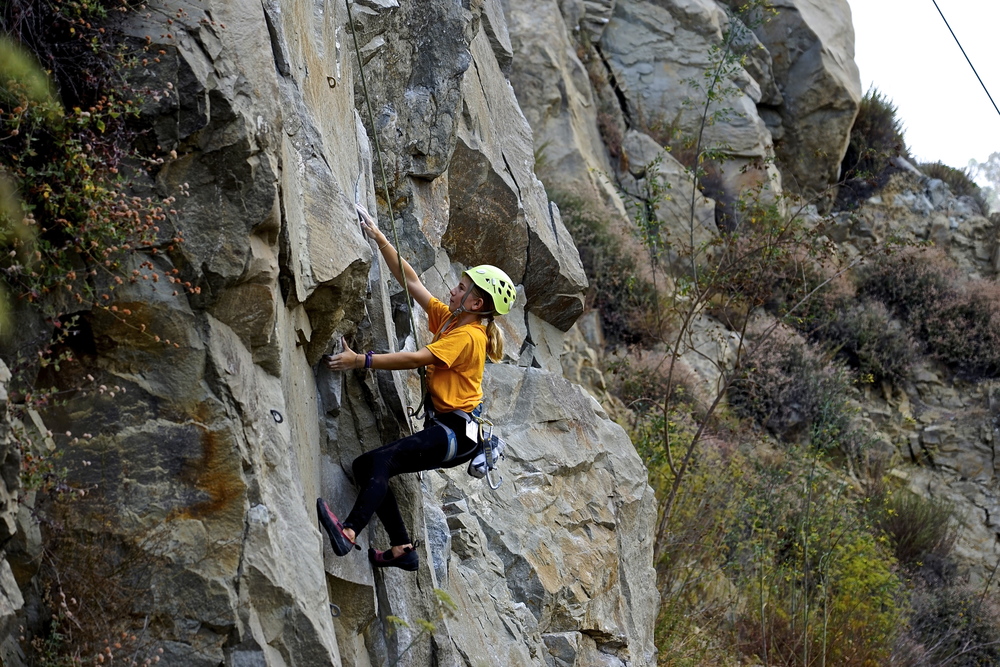
Climb on my friends, glad everyone is out having a good time! I have been busy teaching climber Paige again she is now working on the 5.12c at my local area she is 12 years young. She has been climbing 4 years now started her at 8 years old.
|
|
|
Lori Milas
·
Sep 21, 2019
·
Joshua Tree, CA
· Joined Apr 2017
· Points: 250
wendy weiss wrote: Lori, this is the little devil on my shoulder speaking, but that quote of Pat Ament's could have been written by Fern Aspenwillow.
https://www.climbing.com/people/unsent-point-counterpoint-the-grade-debate/ (from the right side of the MP home page)
Maybe the next time around we should call this thread New and Experienced Snowflakes Over 50. That's a beautiful link, Wendy. I can use all the encouragement and support getting back to the deeper meaning and purpose of climbing... we all need it... and nothing snowflake about it. Funny because rgold, Senor, and even Jeff remind us of delight on the rock, and climbing for the sheer joy of climbing. All the rest is not worthy of comment, imho.
|
|
|
Randy
·
Sep 21, 2019
·
Lassitude 33
· Joined Jan 2002
· Points: 1,285
Lori Milas wrote: Working on a wish list for upcoming trip. I'm on the fence about bouldering, even in Joshua Tree. What I'd like to know is if there is a discrepancy in boulder grading, as there is in the gym. In gym I can easily work up a V0-V2. Would the same hold for routes in Josh?
I would love to have suggestions on 5.8-5.10b favorite routes. I feel like a kid in a candy store. I would like to spend some time on Hemingway, also...
Is there any way to safely rig a top rope on Sidewinder? I see a bolt midway that could serve as a directional.
A little traverse would be lovely.
Bouldering outside varies dramatically from area to area, but figure that bouldering in the Gym will not be similar to, nor will ratings correlate, with bouldering at Josh. Different types of holds, and ratings likely more difficult at Josh. Make sure to have an experienced spotter in addition to bouldering pads. I'll throw out some routes that I think are good in the 5.8 to 5.10b range.
LOST HORSE/HEMINGWAY AREA
Upper Freeway Wall -
Cake Walk 5.8 is good.
Sig Alert 5.10b/c (sport-like) is good.
Tiny Tots Rock - across from Upper Freeway
Tinker Toys 5.10b OK
Dinkey Doinks 5.8 OK
IRS Wall - Just through the notch and corridor from Tiny Tots Rock
Tax Man 5.10a Excellent and a Must Do
Rock Garden Valley - - very near (same parking) as Freeway Wall, et. al.
Spitwad 5.9 Good
Euthyphro 5.8+ Good
Young Lust 5.8 Good
Smithereens 5.8+ Good
Rock Candy 5.9 Very Good
Double Dogleg 5.7 Good
Hemingway Buttress Overseer 5.9 A Must Do White LIghtning 5.7+ Awkward OK Poodles Are People Too 5.10b Classic
Feltonian Physics 5.8 OK
Prepackaged 5.10a Excellent
Head Over Heals 5.10a Classic
Avoid Dairy Queen Wall - Overcrowded
Jam or Slam Rock
Fire or Retire 5.10b Good, but a bit strenous
REAL HIDDEN VALLEY
Tumbling Rainbow Formation
Run For Your Life 5.10b CLASSIC
The Sentinel
Ball Bearing 5.10a Excellent
Western Saga 5.9 Good
Illusion Dweller 5.10b Classic Must Do
Savvy Dome
Savwafare Ist Everywhere 5.8+ Overlooked Classic
Brown Wall
Brownies In Motion 5.10a/b OK
Jerry Brown 5.10b Excellent
Hidden Tower (often crowded)
Wild Wind 5.9 Good
Sail Away 5.8 Very Good, crowded
Sports Challenge Rock
Sphincter Quits 5.9+ Very Good
Ride A Wild Bago 5.10a Good
Avoid The Thin Wall at all costs.
STEVE CANYON
Sidewinder 5.10b Classic
[In answer to your question, yes you can TR the route, but really only with a belayer on top, and perhaps a directional in the crack under the roof. The belayer has to move from climber's right to left as the climber ascends. Getting to the top involves easy 5th class. Best to have someone lead this and follow.
Grain Surgery 5.10a/b Great, but a little bold at top. easy TR
Decompensator of Lhasa 5.10c Great and can be TR'd
Super Roof 5.9 Fun and surprisingly easier than it looks.
The Hot Tub (outside Steve Canyon)
Elier 5.10a/b Good
Amanda 5.10a Very Good
Watanobe Wall 5.10a Very Good
LOTS MORE TO RECOMMEND, But this will get you started.
Be safe and have fun.
|
|
|
Jeff Constine
·
Sep 21, 2019
·
California
· Joined Sep 2019
· Points: 6
Randy, you forgot Nobody Walks in LA 5.9 Freeway wall. Anacram is good too.
|
|
|
Dallas R
·
Sep 21, 2019
·
Traveling the USA
· Joined May 2013
· Points: 191
rgold wrote:
Sounds as if you don't understand some part of what I said. You can't get it "too short or too long" with what I described, it is always just right. I was too long or too short because of what I was doing not what you described, but I did go back an reread what you wrote. Which brought up a couple of questions for me. Forgive me if I understand this a little different than what you intended. You are on top of the pitch, your climber is below you. You are tied into one end of the rope climber is tied into the other end of the rope. Anchor is back from the ledge, sport or trad, You set up an anchor cordellette with a master point properly equalized. The master point is D feet from the edge of the ledge. You take the rope that is tied to you and clove hitch it to the master point or a shelf on the anchor cordellete, measure out the correct distance to the edge of the ledge.
Now this is the part I didn't quite understand; Clip the masterpoint with your rope, walk out to the edge and sit down, clove the rope back to you, and use a harness belay.
Or better than a harness belay but almost the same, clip the device direct to your tie-in loop (not the harness belay loop), make sure your clove-hitched anchor strand is nice and tight, and belay as you would for a harness belay. I am understanding this to say that you clip the climber directly to you (belay loop or rope tie in loop) and not directly to the anchor.
I am thinking the climbers rope needs to the anchor and then to you. When the climber falls the force goes to the anchor. If the climbers rope is clipped directly to you, when the climber falls the force goes to you.
I know this is difficult to communicate with just written words. I think I understand.
|
|
|
Carl Schneider
·
Sep 21, 2019
·
Mount Torrens, South Australia
· Joined Dec 2017
· Points: 0
|
|
|
Andrew Rice
·
Sep 21, 2019
·
Los Angeles, CA
· Joined Jan 2016
· Points: 11
Dallas R wrote: I was too long or too short because of what I was doing not what you described, but I did go back an reread what you wrote. Which brought up a couple of questions for me. Forgive me if I understand this a little different than what you intended.
You are on top of the pitch, your climber is below you. You are tied into one end of the rope climber is tied into the other end of the rope. Anchor is back from the ledge, sport or trad, You set up an anchor cordellette with a master point properly equalized. The master point is D feet from the edge of the ledge. You take the rope that is tied to you and clove hitch it to the master point or a shelf on the anchor cordellete, measure out the correct distance to the edge of the ledge.
Now this is the part I didn't quite understand;I am understanding this to say that you clip the climber directly to you (belay loop or rope tie in loop) and not directly to the anchor.
I am thinking the climbers rope needs to the anchor and then to you. When the climber falls the force goes to the anchor. If the climbers rope is clipped directly to you, when the climber falls the force goes to you.
I know this is difficult to communicate with just written words. I think I understand. It's okay to belay the climber right off your harness, Dallas. YOU and the rope between you and the master point ARE the anchor.
|
|
|
rgold
·
Sep 21, 2019
·
Poughkeepsie, NY
· Joined Feb 2008
· Points: 526
Dallas R wrote: I was too long or too short because of what I was doing not what you described, but I did go back an reread what you wrote. Which brought up a couple of questions for me. Forgive me if I understand this a little different than what you intended.
You are on top of the pitch, your climber is below you. You are tied into one end of the rope climber is tied into the other end of the rope. Anchor is back from the ledge, sport or trad, You set up an anchor cordellette with a master point properly equalized. The master point is D feet from the edge of the ledge. You take the rope that is tied to you and clove hitch it to the master point or a shelf on the anchor cordellete, measure out the correct distance to the edge of the ledge. No, this is where you've gone wrong. I think that any rigging method that requires you to estimate how much rope will be needed for the next step is a flawed method. You take the rope tied to you and clip it to the master point but don't make any kind of knot. With the rope running through the master point pulley-fashion, you walk out to the edge and sit down, in effect "lowering" yourself back to the edge. Then you clove hitch the rope back to yourself. There are two ways to do this. One is to put a carabiner through your rope tie-in loop (not the harness belay loop) and clove hitch to that. Another is to tie an overhand loop in your rope just in front of your tie-in loop, put a carabiner in that and clove hitch to it. The second method makes it easier to escape the belay. You'll need a bit more than 2D feet of slack in the rope in order to make it to the edge of the cliff
So the anchor rope goes from you back to the anchor and then back to you and is clove-hitched to you either directly into your rope tie-in loop or an overhand loop just in front of it. The clove hitch can be adjusted so that the anchor line is perfectly snug and you're ready to belay. For the belay, clip your ATC or Grigri or whatever to the rope tie-in loop and install the rope leading to the second. If the second weights the rope, the load is transmitted direct to the anchor.
If there is any discomfort about walking back to the edge and sitting down before completing the anchor, you can immediately put a carabiner into your rope tie-in loop or into an overhand knot just in front of the tie-in loop and put a munter hitch on that, so that you have a self-belay while walking from and back to the back of the ledge.
|
|
|
Bob Gaines
·
Sep 21, 2019
·
Joshua Tree, CA
· Joined Dec 2001
· Points: 8,686
Good tip rgold! Another method I often use is to clip in to the master point, proceed to the edge (you can stay on belay for this, or, like you said, lower yourself) then tie a BHK (overhand on both starnds) about arm's length above you (toward the anchor). Now you're tied-off and can do a rope direct belay off this extended masterpoint with a Grigri or autoblocking device.
To give a really good belay, it's important to have a visual on your second. That way, as they make a move, you're right there with them, taking in the slack smoothly, and they're not getting slapped with the rope in their face, or looking at too much slack at an inopportune time.
Dallas, I know this sounds confusing, but it's actually fairly simple to rig. If you're interseted, I wrote a book called Advanced Rock Climbing (available on amazon) that explains (with pictures and detailed captions) the pros and cons of the indirect belay, redirected bvelay, rope direct belay, and direct belay.
|
|
|
dragons
·
Sep 22, 2019
·
New Paltz, NY
· Joined Aug 2011
· Points: 978
rgold, Dallas, Bob,
Dallas' description of setting up the belay is how my bf and I do it on Whitehorse slab routes, usually. Like this (assume a 2-bolt anchor, not always the case):
0) Reach anchors. Test bolts to be sure they won't drop off when tugged.
1) Clip 1 bolt with a quickdraw, clove to it. Not off belay yet, but it's probably bomber.
2) Set up cordelette on 2 bolts, with a master point.
3) Yard out an armful of rope from the belayer.
4) You've got a length of rope in front of you, about 1-2 yards between your belay loop and your hand which is holding the yard of rope. Move your hand up to the master point and clove in there. Make sure the clove is good and secure. Now both ends of the clove will be pointing down.
5) Lower yourself down the yard or two of rope until your rope is taut on the anchor.
6) Yell "off belay", wait for belayer to acknowledge, haul up rope from belayer's side if any is left, until rope is taut to belayer, who yells "that's me".
7) Clip rope from belayer's end into grigri.
8) Reach up above master point with the grigri, and clip the grigri into the shelf above master point. Make sure you've clipped it so that If one anchor blows, the grigri is still secure.
9) Now the leader is facing up to the anchor, but can twist back and see the belayer (I agree, turning around to see the follower is not ideal).
10) The ideal part is that I can now reach way up towards the grigri, grab the rope going to the follower, and then lean back on the anchor, pulling down. This allows me to use the least effort to haul down on the follower's side of the rope, keeping slack out of the rope as my follower climbs.
On Whitehorse slab, it's often the case that your follower will be moving fast, so fast that they have to wait for you to pull in slack. This setup reduces that problem, and helps you move as fast as possible when climbing routes there. Since your follower is never over a ledge below you, you don't have to pay much attention to how far you are from the anchors. You just want to be close enough so that it's easy to get to the grigri or master point if you need to.
Does anyone see a problem with this setup? It is second nature to me now, but I could be convinced to switch to something else.
rgold, you mentioned a couple of times clipping to the rope's tie in, not the belay loop. What's the reason for that? I've done things the way you and Bob mention when I want to see my belayer over a ledge. Usually, I attach the grigri between me and the anchor above me, because I find it easier to lean back and haul down rope off the anchor when pulling in slack, similar to what I do on Whitehorse. But if I belay from my body, I always clip the belay device to my belay loop. I recall seeing that some people recommend attaching the belay device to the rope's tie in, but don't know the reason.
[Edit: PS, I don't feel confident in a clove hitch when one end of the rope is running opposite the other end, so when using rgold's method, I don't clove, but use an overhand or figure-8 on a bight]
|
|
|
Lori Milas
·
Sep 22, 2019
·
Joshua Tree, CA
· Joined Apr 2017
· Points: 250
Randy wrote: Bouldering outside varies dramatically from area to area, but figure that bouldering in the Gym will not be similar to, nor will ratings correlate, with bouldering at Josh. Different types of holds, and ratings likely more difficult at Josh. Make sure to have an experienced spotter in addition to bouldering pads. I'll throw out some routes that I think are good in the 5.8 to 5.10b range.
LOST HORSE/HEMINGWAY AREA
Upper Freeway Wall -
Cake Walk 5.8 is good.
Sig Alert 5.10b/c (sport-like) is good.
Tiny Tots Rock - across from Upper Freeway
Tinker Toys 5.10b OK
Dinkey Doinks 5.8 OK
IRS Wall - Just through the notch and corridor from Tiny Tots Rock
Tax Man 5.10a Excellent and a Must Do
Rock Garden Valley - - very near (same parking) as Freeway Wall, et. al.
Spitwad 5.9 Good
Euthyphro 5.8+ Good
Young Lust 5.8 Good
Smithereens 5.8+ Good
Rock Candy 5.9 Very Good
Double Dogleg 5.7 Good
Hemingway ButtressOverseer 5.9 A Must Do White LIghtning 5.7+ Awkward OK Poodles Are People Too 5.10b Classic
Feltonian Physics 5.8 OK
Prepackaged 5.10a Excellent
Head Over Heals 5.10a Classic
Avoid Dairy Queen Wall - Overcrowded
Jam or Slam Rock
Fire or Retire 5.10b Good, but a bit strenous
REAL HIDDEN VALLEY
Tumbling Rainbow Formation
Run For Your Life 5.10b CLASSIC
The Sentinel
Ball Bearing 5.10a Excellent
Western Saga 5.9 Good
Illusion Dweller 5.10b Classic Must Do
Savvy Dome
Savwafare Ist Everywhere 5.8+ Overlooked Classic
Brown Wall
Brownies In Motion 5.10a/b OK
Jerry Brown 5.10b Excellent
Hidden Tower (often crowded)
Wild Wind 5.9 Good
Sail Away 5.8 Very Good, crowded
Sports Challenge Rock
Sphincter Quits 5.9+ Very Good
Ride A Wild Bago 5.10a Good
Avoid The Thin Wall at all costs.
STEVE CANYON
Sidewinder 5.10b Classic
[In answer to your question, yes you can TR the route, but really only with a belayer on top, and perhaps a directional in the crack under the roof. The belayer has to move from climber's right to left as the climber ascends. Getting to the top involves easy 5th class. Best to have someone lead this and follow.
Grain Surgery 5.10a/b Great, but a little bold at top. easy TR
Decompensator of Lhasa 5.10c Great and can be TR'd
Super Roof 5.9 Fun and surprisingly easier than it looks.
The Hot Tub (outside Steve Canyon)
Elier 5.10a/b Good
Amanda 5.10a Very Good
Watanobe Wall 5.10a Very Good
LOTS MORE TO RECOMMEND, But this will get you started.
Be safe and have fun.
Randy...
This is SO generous. Thank you so much! I didn't expect a full itinerary... but I can just run with this one. Thank you! All I have to do is add 2 weeks to my 2 week stay.
Considering it took me a full 55 minutes to find my way up Loose Lady, and that was at my WARP SPEED... but I'll see if I can't pick up the pace a little bit on these routes.
And you included some Poodle Routes! It has been my desire to climb all the Poodle routes before I die... and since that will never happen, that we make it a community project.
Thanks, Jeff. I added Nobody Walks In LA. Wish you would make an appearance and climb with me... that would be really something special.
PS. I do not see Illusion Dweller in my near future. And especially with my shoulder so angry... but it's the route I've stared at a hundred times and wondered "Can I do this?" :-)
|
|
|
Walt Heenan
·
Sep 22, 2019
·
New Paltz, NY
· Joined May 2014
· Points: 50
Dragons,
The approach rgold describes is superior. rgolds approach never introduces slack into the system thereby minimizing the chance of shock loading the anchor. Also, it is very difficult to accurately estimate the amount of rope needed between the master point and where you will belay from.
|
|
|
Dallas R
·
Sep 22, 2019
·
Traveling the USA
· Joined May 2013
· Points: 191
Learned something new last night, if you take a really long time to write a post the page will time out and when you hit submit nothing happens and your post is lost.
So I will try again this morning.
Rgold, Bob Gaines, and Senor giving me advise, thank you very much. I feel like the pee wee football kid who has the local starring quarterback show up at my practice.
Rgold I think I have it. It's a loop that goes from your tie in to the master point back to belay loop, cloved in at the belay loop. Then you can belay off of the belay loop, tie in loop, or both. Indirect Belay.
Bob, I have your book, I kind of skimmed over pages 202-207 when I first read it because the direct tie in method has worked so well for me. Dragons uses a direct tie in, but she is smart enough and knows her crag well enough she brought appropriate material to extend her belay.
These are all with the belayer above and the climber below.
When we tried the redirect method when I fell Barbara did not go up like she does when belaying from the ground, she went in, as pulled into the anchor. Her grigri was pulled into the carabiner at the master point. I am really glad she has good brake hand discipline.
When I tried the inderect method of belaying I made the mistake of getting my leg under the rope, when Barbara fell grigri and rope came down on my thigh, it hurt. I can see where it is wise to sit down on edge of the ledge, if you are standing and the climber takes a fall it's possible for them to pull you to the ground. There is still potential for sideways pull but the majority of the force goes directly to the anchor.
I went back and read the posts for the 5th time trying to get it right. Bob mentioned tying a BHK (big honking knot) with both ropes. Get to anchor, clip in master point. (still on belay) Lower/back up to edge of cliff, get enough slak to tie BHK, use BHK loop as master point for direct belay, leaving enough tag on your side of the BHK to move around etc.
One of the fascinating things about climbing is the number of ways to get something done. One of the big things Barb and I have to be real careful about is our weight difference. I am 220 and she is 120ish. It's also a good lesson establishing habits, I have done direct off the anchor belay so much I kept trying to make that work when other methods would work better.
Shooting for Lady and the Tramp today, MP beta says 2 pitches 250', doesn't mention exit. I think I will lug the 80m rope up. Route next door mentions walk off left. New ledges are always interesting, you just need lots of options.
Thank you again for your informative responses.
|
|
|
wendy weiss
·
Sep 22, 2019
·
boulder, co
· Joined Mar 2006
· Points: 10
Dallas R wrote:
Shooting for Lady and the Tramp today, MP beta says 2 pitches 250', doesn't mention exit. I think I will lug the 80m rope up. Route next door mentions walk off left. New ledges are always interesting, you just need lots of options.
Give us the trip report, Dallas. It's always fun to hear about your and Barb's adventures.
|
|
|
Emil Briggs
·
Sep 22, 2019
·
Unknown Hometown
· Joined Sep 2013
· Points: 140
dragons wrote: Emil,
I need to chime in here. Everyone's different and YMMV. However, the first time I got a laptop many years ago, at work, I used it for a month or two, and began to get neck pain. At first, I didn't connect the neck pain with use of the laptop. I started to think that I would be unable to continue computer work, because I didn't want to live in pain just to do my job. I thought about it more, and decided to try going back to my desktop. Desktops usually have an adjustable height monitor. Almost immediately, my neck pain vanished, and I haven't had the problem since then.
It sounds like your experience has been different. But I just wanted to throw that out there. Laptops are not the most ergonomic devices, so be aware of that, and watch for any developing pain and address it.
dragons Oh Absolutely. Ergonomic issues are likely to be highly specific to the individual. I just wanted to raise the possibility that an issue that seems like it could be caused by climbing might have it's root cause in some other activity.
|
|
|
Old lady H
·
Sep 22, 2019
·
Boise, ID
· Joined Aug 2015
· Points: 1,375
I'll add my two cents to ergonomics. I had my right arm going to sleep. A lot. Turns out, the ulnar (?) nerve was getting aggravated from using an armrest. So, I untaught myself that habit at home.
At work? We were able to have an ergonomics dude come in, so I did that. Got a footstool under the desk, the chair and desk height adjusted, and the arms removed from my office chair. I also got a cordless mouse and keyboard, which let me move those anywhere I wanted. A file drawer to the side let me put my feet up with my legs stretched out. Anything like that, to change position, helps.
Having a part time job, and the fact that my job included moving around the building and doing deliveries helped hugely. I can't take sitting for long stretches very well, it kills my knees.
Now, of course? Well....I won't rub it in, but... :-)
Getting ready for a real road trip! Seeing some of you again, and meeting others for the first time. If anyone else is out there (Boise, SLC, Denverish, return via??) and would like to meet, let me know!
Best, Helen
|
|
|
rgold
·
Sep 22, 2019
·
Poughkeepsie, NY
· Joined Feb 2008
· Points: 526
dragons wrote
rgold, you mentioned a couple of times clipping to the rope's tie in, not the belay loop. What's the reason for that? I've done things the way you and Bob mention when I want to see my belayer over a ledge. Usually, I attach the grigri between me and the anchor above me, because I find it easier to lean back and haul down rope off the anchor when pulling in slack, similar to what I do on Whitehorse. But if I belay from my body, I always clip the belay device to my belay loop. I recall seeing that some people recommend attaching the belay device to the rope's tie in, but don't know the reason. The reason is to keep the harness out of the belay chain and allow the load to go directly to the anchor via the belayer's tie-in. Even with a fully-tensioned anchor strand, clipping the belay loop engages some of the harness and causes pinches and twists that the rope tie-in loop method circumvents. Nothing essential but in the better mousetrap category. See https://www.ukclimbing.com/articles/skills/belaying_-_rope_loop_or_belay_loop-1129
[Edit: PS, I don't feel confident in a clove hitch when one end of the rope is running opposite the other end, so when using rgold's method, I don't clove, but use an overhand or figure-8 on a bight] You probably can't be convinced, but there is no problem with the clove hitch in this configuration, all the more so since, as opposed to directly cloving into the power point, the clove hitch is only subjected to half the load.
|
|
|
Carl Schneider
·
Sep 22, 2019
·
Mount Torrens, South Australia
· Joined Dec 2017
· Points: 0
Lori did you watch my video? If you watch it you get to hear me sing
|
|
|
Old lady H
·
Sep 22, 2019
·
Boise, ID
· Joined Aug 2015
· Points: 1,375
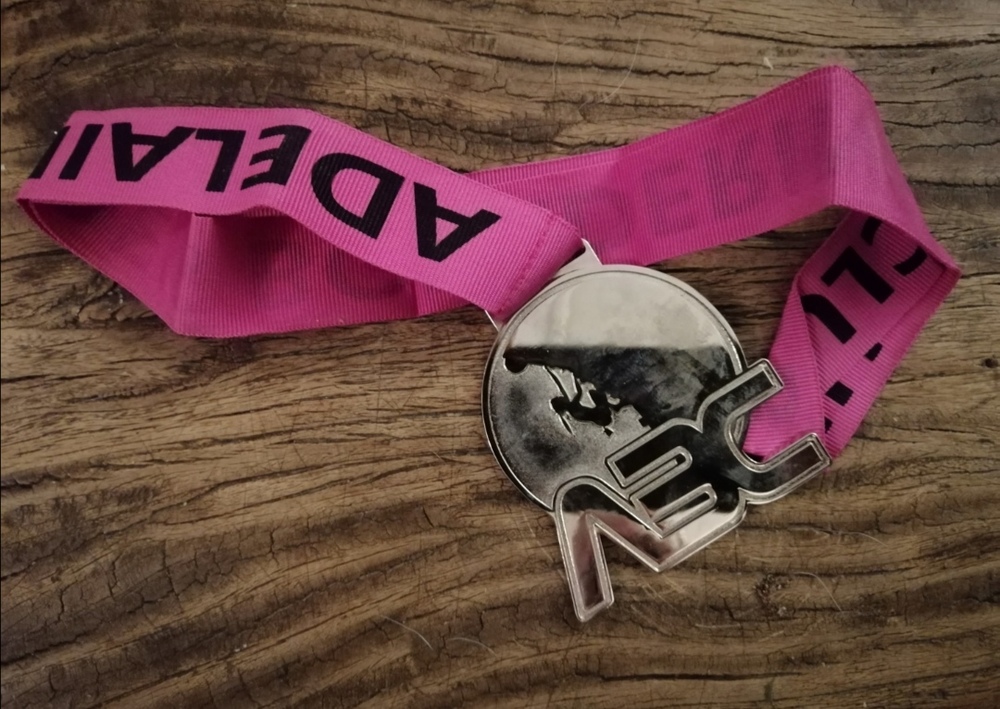
Carl Schneider wrote: I came last in the Masters' category in the bouldering comp.
I also came second.
Uh, yay? I was, and still am, quite proud that I came in 11th in my division in my first ever comp a couple years ago.
Only ten other people bothered to turn in their papers, in the citizens (lowest) division. Which means dead last, lol!
I came in third, for women, in a rodeo clipping contest a few years ago, too. Only two other women even tried.
Last is waaayyyy more fun than not at all, IMO!!
Best, Helen
|
|
|
Old lady H
·
Sep 22, 2019
·
Boise, ID
· Joined Aug 2015
· Points: 1,375
Carl Schneider wrote: Lori did you watch my video? If you watch it you get to hear me sing Carl, you and your friend have a groupie in Idaho now.....just the accent is good enuf for me!
|

 Continue with onX Maps
 Sign in with Facebook