John Byrnes wrote: Cycling is dangerous (I raced for over a decade), far more than climbing! I had knee surgery last year. It's fully recovered now and I have full ROM.
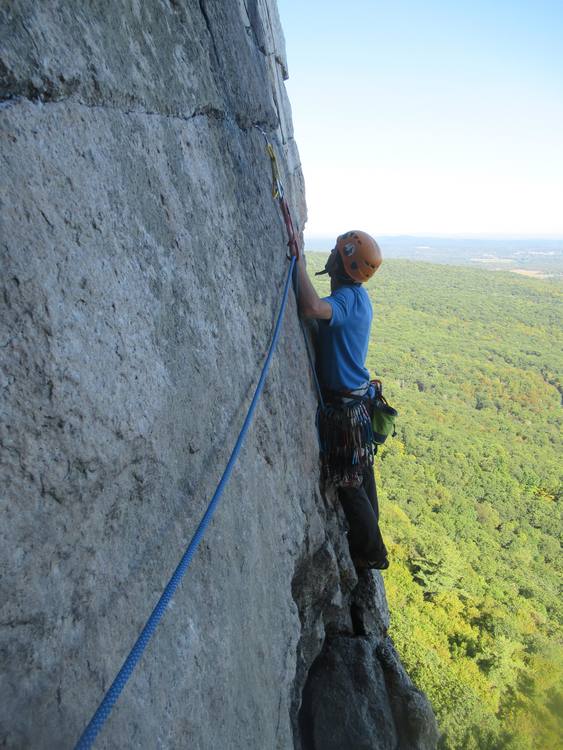
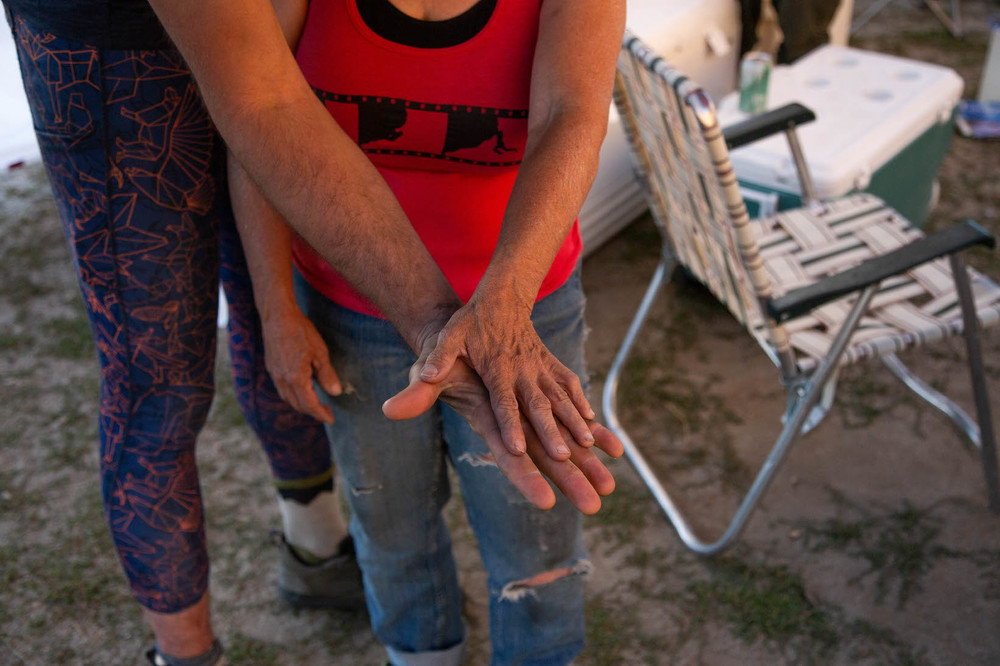
Here's a photo for L Kap from the CoR trip. Size DOES matter.
He totally rocked the tights, IMO! Sadly, I didn't have my wildly bright Lycra with me. This photo is the meeting of two outliers, myself, 62 and under 5' tall, and this wonderful, youngish climber I met. Less than half my age, and a bit taller. I'm guessing 7'? Plus?? Never asked. I did ask for this photo. Sadly, I did not get to climb with him, but I did commiserate with how hard it is to be the outlier on the tall side of the spectrum, not climbing, but life in general.
Thanks, John, and also to all the other gracious, kind, folks I met this last trip to COR!
Never mind the size. I'll buy any man who rocks those awesome tights a beer, or beverage of choice!
You clearly missed the crazy tights contest at one of the old NRG ‘vous. But I think I have a few pictures of guys who would be on your list of drink-buying, by the above criterion.
TBH I have yet to climb something outdoors which requires a dyno (or even where it would be useful, so far as I know). I've only done dynos indoors, where it's really safe. So that's for sure. And I'm not afraid at all of doing that, although it rarely happens that I find myself on a route that requires it.
Is there anyone reading this thread who could suggest an outdoor climb somewhere in NH where there's a safe dyno for a 5.8 max climber? I'd be very interested to take a look at it, at least
I had to make a dynamic move for the anchors on California Chrome in NW Territories at Rumney. I found the bottom of the route to be about 8, and only this part truly felt 9 (YMMV). I also had to make a dynamic move to stick the good incut hold in the crux of Bolt and Run at 5.8 Crag. Once again, I know it's a 9, but the 9 move is the dynamic move. The rest of the climb feels about the same as it's neighbor, which is a 5.7 (despite being named 5.8 Crack by the Road).
I'm not a great technical climber, so I'm sure you can figure out how to execute both moves in a static manner (likely no 5.8 route truly "requires" a dyno). I still think they could be good candidates for you to practice dynamic moves.
Also, I had to jump for the starting hold of Tipping Point at Main Cliff Right, but if you blew that, I think you could roll down the hill. Your head is much better than mine (100 foot run-outs you mentioned elsewhere in thread, yowza!) so you might not need it, but I think stick clipping the first bolt could allow for safe practice of a dynamic move. Plus, that route is really fun.
Alicia Sokolowski wrote: Also, I had to jump for the starting hold of Tipping Point at Main Cliff Right, but if you blew that, I think you could roll down the hill. Your head is much better than mine (100 foot run-outs you mentioned elsewhere in thread, yowza!) so you might not need it, but I think stick clipping the first bolt could allow for safe practice of a dynamic move. Plus, that route is really fun.
I stick clip almost everything (usually the second bolt too if I can) even though I am tall, even if I don't *need* to. Climbing is dangerous enough for me and it's all about having fun anyway.
I stick clip almost everything (usually the second bolt too if I can) even though I am tall, even if I don't *need* to. Climbing is dangerous enough for me and it's all about having fun anyway.
Something else I’ve noticed: being scared/nervous makes me shorter! I tend to hunch a little and don’t get the full extension possible from where I am.
I often notice this when doing a TR lap after leading something. Yesterday on Nutcracker I came up with a pretty elaborate sequence involving some delicate footwork and a questionable pseudo-ringlock to get up to a fingerlock at the start of the crux. Later I realized I could actually reach the fingerlock from the stance I’d placed from if I just stood on my toes a bit. Trying to keep this in mind for future “if only I had an inch or two more...” moments.
Etha Williams wrote: Something else I’ve noticed: being scared/nervous makes me shorter! I tend to hunch a little and don’t get the full extension possible from where I am.
Very true! My reach also shortens a lot if I’m out of breath. So If i know that there is a long move coming up, I would make a point to pause and calm down my breathing, even if I’m on relatively shitty holds and not de-pumping, just slowing the breathing improves my reach.
Etha Williams wrote: Something else I’ve noticed: being scared/nervous makes me shorter! I tend to hunch a little and don’t get the full extension possible from where I am.
Conversely, confidence helps me reach further; I can e.g. use intermediate foot holds because I am not (too) worried that my hand will blow. Some of that confidence comes from experience but some also comes from strength.
This may seem obvious, but it took me a long time to really grasp (ha ha) that just like good feet can make bad hands OK, good hands can be milked to make bad feet OK. A great example (for me) is Age Before Beauty.
You can't make yourself physically taller, but you can improve your grip strength.
This route is on my to-dos...slightly extra nervous, but still excited, now.
It's not as bad as it looks from the belay. I climbed up a couple of times from the foot ledge to get gear, but that foot rail is actually really good and by the time you move up to the pin reach is no longer an issue. Think tall thoughts and just realize that the first bit will feel more like a balance problem than a Gunks jug haul.
Despite its many twists and turns and occasional acrimonious exchanges, this thread has actually been pretty helpful for me. Thought I'd summarize some of the things I've found useful over the past couple months in case anyone else finds it useful/interesting:
Height-specific:
Training height-related weaknesses (in my case, dynamic movement). For a long time I felt it was unfair that I should have to work on this in order to climb relatively “easy” grades, and I would often try to prove to myself and others that I could do big moves statically (even when it wasn’t actually efficient to do so). Eventually reading enough comments (and the Neely Quinn post) convinced me that maybe I’d have more options on routes I want to climb if I worked on this. I also tried to reframe it to myself by telling myself that everyone has to learn this skill at some point; maybe I just get to start a little sooner than most. And the great thing about training a height-related weakness is that once you decide to, you’re likely to find lots of opportunities to do so :)
Holding off on making a judgement about a move I’m working until I get it. If my first reaction to a move is “wow, that’s a hard reach,” I try to remind myself that just like you don’t really know the grade of a route until you send, I won’t actually know if this particular move is hard-for-the-grade until I figure out the beta on how to make it. Helps a surprising amount.
Getting a stiffie quickdraw for reachy clips. I feel less stressed about reachy bolts and have more options for clipping stances; I also think having the draw makes it a bit more likely that I’ll successfully get to the anchors on hard-for-me leads. (I made the DIY draw described here, but in retrospect I wish I’d gone with the Kong Panic because it seems to have an easier-to-use mechanism for propping the bolt-side gate open.)
Trying routes where my body size gives me an advantage. My initial reaction to this advice was “but I want to be a better climber, not just tick harder grades by cherry-picking routes.” But there is still something confidence-boosting about sending/trying a grade that had seemed out of reach (pun intended), even knowing that it’s partly because of physical advantages. So far this has been mostly with hand-size advantages in cracks (on my way to ticking every .75-sized crack in the Northeast, lol), but maybe I’ll eventually find opportunities for it with face climbing as well.
Realizing that other shorter people, including some who climb at much harder grades than me, have had similar experiences/difficulties. The “but Lynn Hill”/“look at Ashima”/etc argument, inspirational though it is, never has done much for me personally because these people can seem so superhuman. But realizing that even really strong short climbers occasionally struggle due to real or perceived reach issues has helped me get rid of a counterproductive “if I were just a good enough climber, I wouldn’t be worrying about this” inner monologue that has contributed to a lot of frustration in the past.
More general:
Choosing routes I’m stoked on. I have been surprised how much more doable moves feel if I am really stoked on something, vs if I’m getting on it because I want to tick a 5.x, or because I want to be able to tell my friends I’ve sent a particular classic, or doing it just because my partner did.
Relatedly, the advice to choose your own leads, hang your own draws, and not expect a stronger climber to be willing to get gear back if you end up in over your head has helped me feel a lot happier and more confident trying hard. I won’t lie, my first reaction to this advice was “But what if one of the bolts is reachy with a sketchy fall? And what if I can’t get through the crux and I have to bail?” Luckily, these what-ifs have easy solutions: use a long draw if needed, and buy a $3 used carabiner to leave if you have to (or stick-clip, aid, etc). (Or for trad, choose a route where you can aid through the crux or rap down to retrieve gear...or decide that you’re so stoked on it that you’re willing to leave a piece as the price of admission.) I also realized that for me, what I was really afraid of wasn’t sketchy clips or bailing—deep down, it was a fear of failing (“what if I’m not ‘good enough’ to do this route?”). Getting rid of the “what if I have to bail?” excuse and recognizing that I can be self-sufficient on hard-for-me routes really changed my mindset climbing them, much more than I would have expected.
Choosing appropriate challenges, being honest/patient with myself, and recognizing that failing is part of trying hard. Probably the simplest advice but also sometimes the hardest to take. Letting go of a feeling that “I should be a solid 5.10 climber by now” has given me more mental space to choose routes I’ll actually cruise when I want to cruise and routes that will be fun to try hard on when I want to try hard. It’s also meant a lot less frustration and negative self-talk when falling off a hard-for-me move.
Actually redpointing something (and repeating routes in general). I resisted doing this in part because there’s lots of stuff I still want to try, but also because I was kind of afraid I’d keep trying and never make any progress—or even make backward progress! It’s been eye-opening to me to realize how much easier a tricky move can become with a little focus and practice. On the height-related front, it’s also helped me recognize how often refining beta, or even just getting a good rest before a hard move, can make a move that had felt reach-dependent feel totally fine.
Anyway, thanks to everyone who's chimed in on this thread. It's made harder-for-me climbing a lot more fun, and that's been pretty exciting for me!
Glowering wrote: I've also found that if I can tell the upcoming hold is a big jug I have way more reach.
I used to have an opposite issue on juggy routes...I’d manage to find the one non-jug and hang out on it convincing myself that I couldn’t reach the next actual jug until I’d pump out and fall :P Spending more time on this terrain has largely solved this issue for me.

 Continue with onX Maps
 Sign in with Facebook