
 Continue with onX Maps
 Sign in with Facebook






CMV: 'Biner Block Single Strand Rappel is the way


|
|
aikibujinwrote: It can slip if not fully weighted, but it would have to slip enough to pull the adjoining knot through the rings/links and then pull through the ATC itself for it to be catastrophic. Assuming you're using a tag line and not alternating which rope is threaded each rap. If just using a single rope with no adjoining knot I guess this wouldn't apply. If your partner is absolutely adamant that they can only rappel on a single strand, and you have an ATC, you could always just fix the single strand (like you mention) for the first person down, then unfix it for the next person who had the common sense to bring the double slotted device. (Ropes are set for a normal rappel, pull up a few feet and tie knot on strand to be rapped, clip it to the anchor, rap 1, untie fixed knot, rap 2, pull rope). No extra knot and carabiner to get stuck when pulling the rope like this. Of course, the least faffy way is still to just bring two double slotted devices (ABD or not) and do a normal rappel. This also assumes that your tag line has enough friction to do a normal rappel with - my 6mm Edelrid is. |


|
J E wrote: JE you are not helping your anecdotal arguments. One can rappel off the end of rope regardless of the device one is using. |
|
|
Depends on the multi-pitch and how many people I'm climbing with, I sometimes use a 9.8mm single, sometimes I use a 8.9mm triple rated, and sometimes I use a 8.0mm twin/double. When I'm climbing on my 9.8mm single rope, I'd happily bring my Grigri and belay/rappel with it. But for those who thinks single strand rappel is the only way and there's no other, you (J E) should try rappelling on a single strand of a 8.9mm once. It doesn't matter what device you use, it's not as enjoyable as you may think... unless you're a bungee jumper. |
|
|
aikibujinwrote: Reading comprehension. I never said single is the only way and in fact I said I more often rap on two strands using an alpine up, which is quicker and simpler than both other methods. Use the right tool for the job. A matik on an 8.9 is just as enjoyable as a grigri on a 9.5. Same with the vergo. It does matter what device you use, claiming otherwise is ridiculous. Or are you implying an 8.9 is stretchier than a thicker rope? That's also wrong |
|
|
J Ewrote: I didn't have time to go back and read everything you posted, but just from the last couple of posts it sure sounds like you think rappelling on single strand is better.
Reading comprehension there, buddy. I said the device doesn't matter. Yes, rappelling on a single strand of 8.9 is a lot more stretchy than on a single strand of 9.8. Especially when you're doing a full length rappel and the route is vertical and even slightly overhanging near the end of the rap. I know because I've done it. Try it before you say it's wrong. Otherwise you're arguing like a 20-year-old who's only been climbing for a few years but knows everything. |
|
|
aikibujinwrote: If you're not going to read my posts then maybe don't make assumptions about me. Weird that you "didn't have time" to read my posts yet have time to still be here making asinine comments You're objectively wrong vis a vis rope stretch. And this one I can prove quantitatively. My edelrid swift pro 8.9mm had 5.5% static elongation, my beal apollo 11mm 9.5%. Also, who gives a shit about rope stretch on rappel anyway? I've used pretty much every recreational belay device currently in production, and a number of industrial descenders/belay devices. On ropes from 8.9 to 11. |
|
|
J Ewrote: My Mammut eternity, which is a 9.8 mm rope, has 5.5% static elongation, while my sterling nano IXs have 7% static elongation. Beal just makes stretchy ropes. |
|
|
J Ewrote: Honestly, dude, it doesn't seem like you posted here sincerely asking people to "CMV." More like you just want to argue about stupid shit. |
|
|
Check the anchor, put the rope through the device, rappel. |
|
|
Yes, point being a thinner rope doesn't inherently mean a stretchier rope
Im not OP, goober. I never asked anyone to cmv
With the risk of cratering since you didn't add a third hand or end knots |
|
|
Brent Kellywrote: Wow, a whole day and no respose, did someone finally get farty-Marc to STFU?!?! |
|
|
J Ewrote: Ok, everyone needs to stop stealing my schtick. |
|
|
Brent Kellywrote: If you ask people to "change your view" and then they provide valid feedback (even if snarky), perhaps you should consider the motivation for posting... Do you actually want feedback, or just want people to applaud your ingenuity? I have found this technique useful in specific situations, such as the following: It allows you to reach an anchor that is (for example) 35m below with a single 60m rope. In this situation, you can lower the first climber until they reach the anchor (or toss a strand down far enough that you're sure it reaches), fix that strand using any number of knot blocks, then rappel on that single strand. As you descend you then tie cordellete(s) (and any other necessary material) to the pull strand, so that you can retrieve the rope. I've done this both intentionally (brought a 60m rope on a long route that has a single 38m rappel, to a walk off) and unintentionally (misread the info and brought a 60m rope on a route that has a series of rappels longer than 30m). As far as simplicity, the method Matt Z referred to (By the way, an ATC alone is enough to effectively block the rope. In the rare event that it slowly slips through the device, the second person can gently hold the rope in place. Using a third hand resolves this entirely. This has been tested extensively) gives you most of the benefits without the core shotting / snagging issues. I once core shot a rope using the carabiner block method with a tag line, and that descent had one small bulge before a total freehang, not a slabby wall covered in chickenheads. Additionally, if both people choose to use ATC style devices, pre-rigging the second person allows you to only have one end knotted. This is particularly helpful when you have already threaded/knotted one end through the next anchor. Then, when you pull the rope from the previous anchor and that end goes flying down past you, you don't have to pull it back up to tie a knot. If rappelling a single strand with a GriGri really seems that much more efficient/comfortable, you might as well simul-rap and get both people down at once... (I'm not actually saying that's the best method of descent as it certainly has risks and issues, just that it seems to address the priorities you mentioned). |
|
|
I've read most of this thread but not all - isn't the main reason not to do this because if you're going to screw around with a tag line, you may as well just bring another rope? I get that another rope is heavier, (about 2X compared to 7 mil cord) but that's mostly not a concern climbing as you're tagging it up anyway. Plus then you've got a second rope! And to get the full benefit, you need a 60 or 70M tagline that basically only has one use (as a tagline) - I don't own one of those and I'm not sure anyone I know does. As you've already noted, there are a few extra steps involved here to not fck this up; my default would just be a double rope rappel with ATC. Sure if I have a 3+ hour approach over hard terrain, someday I'd probably do this, but as a default? Nah. |
|
|
Climbing is fun and it's safe! |
|
|
Did I miss the pictures of knives or are we not there yet? |
|
|
J Ewrote: That's right, I don't have time to read all your posts. But I do skim the forum from time to time, and every single time I click on this thread I see some pretentious posts from you arguing with people who has been climbing longer than you have been alive. At first it's laughable, but like watching an insolent kid arguing with his parents in a public place, after a while it really started to get on my nerves. So I decided to waste a few minutes of my time to point out that yes, you're a 20-year-old know-it-all. Well... correction: a 27-year-old know-it-all. Hope that's better. It's not an assumption, it's a fact proven by your posts.
There are a lot of things you can't learn just by reading numbers posted on a label or on the manufacturer's web site, that's why experience is gained by doing, not by reading. I don't know and I don't care what the static elongation of my ropes are. Rappelling on my skinny rope is more bouncy than my thicker rope, that has been my experience using my ropes (not by looking at their numbers). If that's your "aha! gotcha!" moment you can have it. I'm not going to say it's impossible to find a thick rope that's stretchier than a thinner rope. If you have done (or claim to have done) a single strand, full length rappel on a vertical or overhanging wall (not a slab) with both your 8.9mm and 11mm ropes, and you tell me with a straight face that it's twice as bouncy to rappel on your 11mm than on your 8.9mm, I'll believe you. But that doesn't matter anyway. Using the reading comprehension you're so proud of, the point is that some ropes are a lot more stretchy than others, and for those stretchy ropes (whether it's due to thickness or other factors), rappelling on two strands is going to be a lot less bouncy than rappelling on a single strand. I personally prefer that my rope doesn't bounce me up and down like a bungee cord when I'm rappelling. Maybe after a few more years of actual climbing experience, you will give a shit about that too.
Great! I'm sure in your head that makes you an expert. Now I'm just posting purely because it's fun. How's the view from the top? 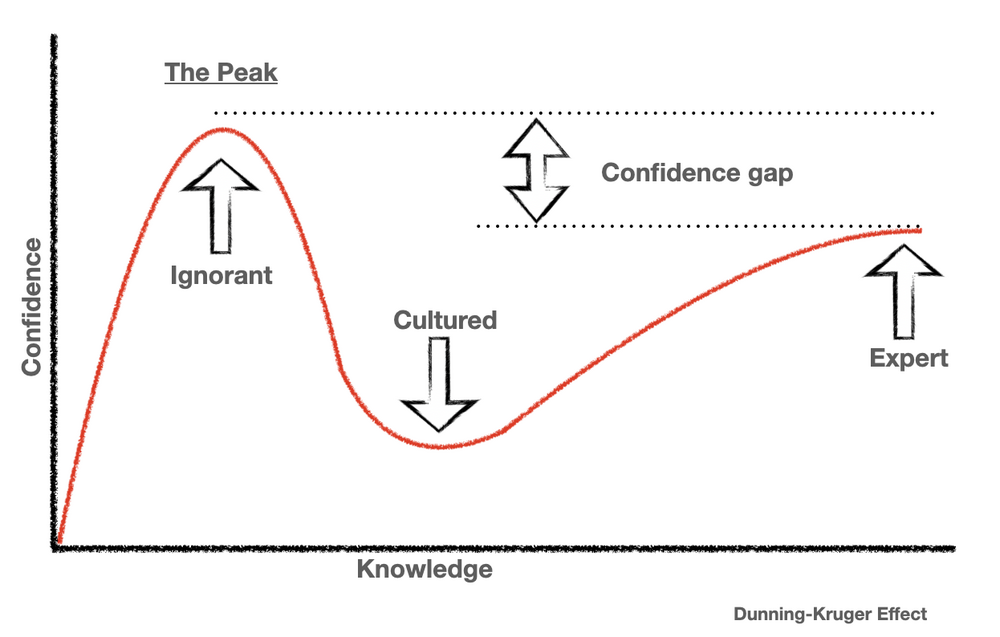 |
|
|
Back in 2013 I wrote a book on Rappelling and did quite a bit of research on rappelling accidents, so I could describe the most common accident scenarios and protocols for preventing them. The number one rappelling accident, by far, is simply rappelling off the end of the rope, in all modes: double rope rappels, single line rappels, and simul rappels. It happens with regularity, year after year after year. Ignorance, or fatigue, or complacency were contributing factors in most cases. Reepschner accidents occurred primarily for one reason: no backup on the tag line. (Easy to back up by tying a figure eight on a bight on the tag line and clipping it to the load strand with a locking carabiner). I left out the more complex releasable hitches (like Macrame/ghost-style releases used in canyoneering) because the rigging is so easy to screw up. A friend of mine died this way. |
|
|
The first time you tried rapping down a jagged limestone cliff covered with spiky bushes and had to beg me to retrieve your junk you'd know a bit more about climbing. |
|
|
aikibujinwrote: I'm sorry bouncy rope give you so much trouble. Keep practicing, you'll get there! |


