
 Continue with onX Maps
 Sign in with Facebook






New and Experienced Climbers over 50 #39


|
|
Permabeta wrote: Seeing the BS that people have to contend with in a lot of fields makes me glad to be a physicist. I mean people can convince themselves of a lot of things even when they have no background or training in a subject it but it doesn't tend to happen with physics. I think this is because a physics paper will just look like gobbledygook to non-physicists. |

|
James Harvey wrote: Oh, James! It's on my to do list for this year. But I was trying to recall any route called "Wife Cleaning Anchor"... before realizing... It will happen, I really want it to. Thank you! ---- Permabeta... I've been trying VERY hard to stand back from this discussion, first because it bores everyone to tears (as far as I can tell). Since this thread began I have broached the health/diet topic numerous times, and... crickets. It's ok. Most people don't make the connection, and so I've just decided that this is my personal area of interest. It's no one else's. So I hope the crowds just scroll on by, and forgive the indulgence. In part, I know I've mentioned, I'm interested because my friends are mostly pretty decrepit. And they expected to be. "This is the age when we just fall apart. What did you expect?" I stand in line at the supermarket am disheartened to see what is passing for nutrition these days. Worse, when I visit my doctors at Kaiser (and before that, several PPOs), what I see is hard to accept. People are really sick, frail, unable sometimes to even stand. Wait in line at the pharmacy and the room is packed... mostly for antibiotics and 'pain pills'. I took a lot of Chem and Biochem and pre-nursing classes in college, for a major in Dietetics. As far as I was concerned, it was useless, except to teach me how to vet 'studies'. My business has been working for and with medical doctors for over 40 years. So here we are, some of us, asking legit questions about longevity, avoiding landmines like sarcopenia, etc. There is only so much time for 'studies'... and I'm personally burnt out. I call it 'close enough' right now, for me... But I listened to ANOTHER 2 hour discussion about protein two weeks ago while hiking. It ruined my hike. I listened to Dr. David Alliston excruciating detail on whether protein levels above the RDA (.8 gm per kg body weight) could possibly be harmful. OMG... just STOP. The answer was.... no, it is not harmful, ever, except in possibly advanced kidney failure. They went through every possible meta analysis and credible study. Then I listened to a follow up lecture by another scientist, Dr. Ronda Patrick to discuss ' if there is no danger above the RDA, then what is the ideal amount of protein in the aging population?" This is probably the 8th such lecture I've listened to or read by various accredited scientists. (I can post all those links). The consensus was somewhere between .8 and 1 gm of protein per pound of body weight is ideal for aging adults. That's a lot of protein. (Rethinking protein needs for performance, muscle preservation, and longevity, and the mental and physical benefits of creatine supplementation and sauna use..) I'm always asking for proof, and you are right, oftentimes there is no 'proof' offered. Show me a legit study. Factors that have been mentioned in these lectures-- but how could you possibly calculate for all of these, is adjusting protein for advancing age (the need for increased protein over 65), level of activity/exercise, are you in a training or recovery phase?, need to rebuild from sarcopenia... not to mention hormone status and gender (in my opinion, that's huge), bone health, and how about someone like me who is already prone to catabolism due to T1D? Can we throw that all in the hopper and come up with a number? Obviously not. So I've just come up with my own number. Upon the advice of my RD, I shoot for that .8gm/pound... for me, if I hit 100-125 gm of protein daily, I'm golden. I really FEEL it if I fall below 80. Equally as important are the loads of veggies, fruits, whole grains, fiber, probiotic foods daily. And for me, based upon consistent labs, I have to supplement, especially iron, but also zinc and Vitamin A, copper. Maybe it's the Celiac. I don't know... no longer care. I just do it. I can say this... .compared to virtually everyone around me (maybe I just hang out with the wrong crowd), my health and vitality are STELLAR. No judgement. They are quite content being quiet and content. --- I REALLY appreciate your mention of strength training... I'm curious where you got those numbers. I would love it if that were the case. What I am thinking about now, given that I've been pretty sedentary the last two months, is how likely it might be to injure myself when I return to climbing. I think VERY. So, it's not just about checking off the minutes of resistance training that matter here, but being truly strong enough to engage in this sport. I've been thinking about what strength/resistance training I actually WANT to do. Kris Solem loves Pilates. His amazing wife, Barbara, is an actual weight lifter. I have been watching videos of Misty Copeland this week, my favorite ballet dancer. I cannot think of a training I would rather do... ballet is HARD, it emphasizes balance and coordination, and it's beautiful. My ballet barre has been sitting out in my living room this whole year, barely touched. So maybe thinking about joy in movement is a good idea. The joy of eating and movement seems to have been lost among all the 'studies'. |
|
|
Emil Briggs wrote: I dunno. I think there are lots of people who have convinced themselves of being an expert in various areas without significant background or training in a subject area, and then with a reasonably articulate piece of writing or speech, convince others of their views. Besides physics, this happens with medicine, science, biology, politics, religion...climbing. |

|
Buck Rogers wrote: Here you go! I hope that I don't get banned!!! ;)  And a photo of me at just over 20,000 feet hauling into Camp 3 on Ana Dablam!  |
|
|
apogee wrote: I wouldn't claim it never happens with physics. In particular I can think of one company that obtained over $60 million in investments with repeated claims that a new and wondrous source of power was 1 to 2 years away from commercial viability. Multiple Nobel prize winners have said it was nonsense and the fact claims of success being right around the corner were made decades ago is a pretty good indicator they were correct. Which goes to show you the belief of many Americans that being rich means you're smart isn't really the case. |
|
|
Buck Rogers wrote: |
|
|
|
|
|
Buck Rogers wrote: Or, somebody broke something!!!! |
|
|
Sheesh boys, women give birth with their sexual organs. Flap yours around however stupidly you want, we got ya outgunned in this department. In other news, it's frosted here, but not the killing frost.....yet. 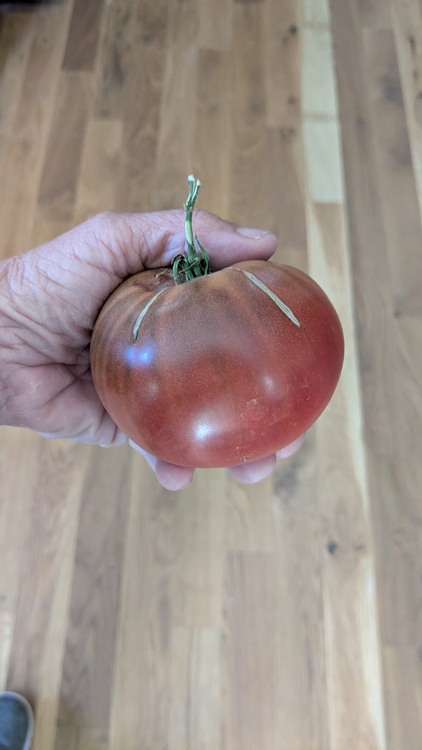 Off to pt. Wahoo. H. |
|
|
Lori Milas wrote: I had a longer reply typed out, but it got deleted. A shorter version: 1. I’m not worried about people consuming a little more protein, but the 1 gram/pound+ that seems to be the starting point nowadays is almost triple the RDA. Moreover, there’s a push for more “bioavailable” protein, which is shorthand for animal products. Food scientists are surreptitiously sprinkling whey in our lattes, for Pete’s sakes! 2. As a general rule, animal derived protein is less healthy than that derived from plants. Why? It’s rich in certain amino acids (methionine and branched-chain aa) which promote aging pathways (mTOR and IIS). This probably explains why studies like this show increased mortality in middle aged people on high protein diets, principally from cancer. Moreover, diets rich in animal products tend to be lower in fiber (to feed the microbiome) and plant-derived micronutrients. 3. On average, we already consume roughly 1-1.5 grams/kg protein in the standard American diet. For most people, that should be enough. Perhaps it’s the ultraprocessed crap and inactivity which are making people sick and frail? 4. As far as I can tell, there’s no data supporting daily protein consumption in excess of 1.0-1.6 gram/kg for otherwise healthy individuals. Sure, it might facilitate bodybuilding, healing in critical illness, and muscle sparing during rapid weight loss, but not general health. As a rule, I don’t like podcasts, but you posted one earlier that’s pretty good, where a PhD physiologist specializing in exercise and nutrition discusses the topic: 5. No long=lived population eats a high protein diet. On the contrary, all the “Blue Zones” eat lowish protein, plant-based diets. At the extreme, traditional Okinawans eat under 0.8 gram/kg daily, even less than the RDA minimum. 6. Those same populations (excluding Seventh Day Adventists) don’t typically lift weights, either. Instead, they tend to keep moving, doing stuff like walking/gardening/etc. I definitely believe in “use it or lose it”, but think sarcopenia can be staved off pretty well without dedicated strength training. Body weight exercises are probably good enough. That said, a little resistance training goes a long way. Here is the meta analysis (which look at trends from groups of well designated studies) I mentioned earlier, which shows optimal mortality benefit from only 30-60 minutes of strength training weekly. Figure 4 shows the dose-response curve, where all cause mortality actually worsens once you exceed ~2 hours per week. As I explained earlier, I think this is probably a substitution effect, where lifting replaces more important cardiovascular exercise. So my gestalt, in reading quite a bit on healthy aging/longevity, with slightly more than Holiday Inn-staying background: 1. Most of us don’t need more than ~1-1.6 g/kg protein daily, and there’s reason to believe extra may be harmful, though the threshold for harm is unclear. 2. Our diets should be plant-based. I don’t mean vegan, just mostly plants, including the proteins. 3. Both cardiovascular and strength training are important, but the former more so. A couple half hours weekly of resistance training is enough, while ~10 hours of moderate cardio is optimal. 4. Long lived populations around the world have achieved functional longevity without fixating on protein and lifting to avoid sarcopenia. We can do it too. |
|
|
Lori….. back when I played football (not soccer, real football) it was pretty common to “work till you puked” …. It did toughen one up somewhat. Our team was able to “go fast, go hard” right off the bat and we won a bunch of games in the first quarter. Re: That photo of the dude lifting weights- with no hands. Carl… yeah that is the quote. One of the best films of all time. Doc…. 20,000 feet is very impressive. Later all. Have fun |
|
|
Permabeta wrote: Woah! This is the short version??? ;) (just kidding!) And I agree with most of what you are saying! |
|
|
Guy Keesee wrote: Guy: Are you referring to my photo? I took that in the spring of 2000 as a senior medical student when I lived and worked in K'Du for the month of March for Geoff Tabin's Himalayan Cataract Project prior to heading into the mountains for a month long climbing trip in April. Crazy story! My wife and I were living in Thamel and were walking down near the Bagmati River one day and some guy comes out and says, "Hey, for (the equivalent of $5 bucks) I'll take you to my buddy who lifts huge rocks with his penis!" My wife and I looked at each other like "WTF???" but it was just too good to pass up and having no idea of how this lifting would occur, decided it was well worth $5 bucks to check it out! He took us behind a building and sure enough, there was his friend with the set up shown above and he "lifted" the rock off the ground with the cord rapped around his Johnson! Better him than me!!! As to whether he is/was sponsored for his amazing "core" strength (this was 25 years ago!), I cannot say but if he was, they were not paying him enough (and I believe this was before Viagra was developed/created/found but I might have my dates wrong on that?)! ;) |
|
|
Buck….. the photo you posted, yes. Viagra …. Introduced in 1998…. I think that man in the photo applied to be a spokesperson for the brand but was passed over because even more impressive feats of strength were demonstrated. |
|
|
Old lady H wrote: Hahaha, good thing you brought us back to a semblance of respectability. The young folks are probably thinking we’ve lost it. |
|
|
Guy, I’m glad to have some moral support for puking. I would say in every way I can think of rock climbing is just really hard and I earned that puke. I am sitting in the parking lot of a radiology lab praying that the 40 ounces of water I just drank makes it to my bladder in time for the ultrasound. It didn’t last time and they implied I didn’t follow directions. Interestingly when I said OK can you skip the transvaginal and just do the regular ultrasound? They said nope we have to do them both. That’s what the prescription says. So fine. I’m floating today and I hope it works. I have never climbed on Hunk rock but it looks beautiful from a distance. I thought I’d go up this morning and check out what looks like a perfect dihedral. Now that I am an expert dihedral climber I need to find some good ones in Joshua Tree. I don’t know about this one. It’s beautiful from a distance but up close it looks kind of sketchy.  Bob’s got a route up here too and I can see the bolts. Maybe one day he’ll throw a top rope on it for me. But overall, this rock is probably prettier to look at than to climb. Jan… I have absolutely thought there should be a route on the nose of this sphinx. I don’t know why there isn’t one. I would love to be able to say that I have climbed “the Nose”. It does appear that nose is not attached very well and I wouldn’t be surprised if it fell off one day. Actually this is a sacred rock for me – – I will feel a little funny if I ever attempt a route on it.  Nick… somehow this post of Lake Willoughby showed up on my feed. Just beautiful and I’m wondering if you have climbed those hills on the shore?  Finally… even I am bored to tears on this subject of diet. I don’t know if anyone cares exactly how much protein we need. What I care about is whether I can climb and recover and my formula is pretty subjective. You’ve gone into great lengths to explain your views. This arrived in my mailbox this morning, Dr. Stacy Sims has her PhD (in Exercise Physiology I believe) and she teaches at Stanford. She’s written some books. I get some kind of information from her every day. When I look at her suggested daily diet, whether omnivore or vegan, it’s a lot of protein. More than I could handle. But I’m still interested to know whether that excess could wind up as better muscle, bone and brain – – she says yes, it’s too much for me. Also, her total focus is on women.   |
|
|
Permabeta wrote: But we , as climbers, have goals and that includes muscle development and keeping the weight low. Many cultures are healthier than ours and have longer lives but are they sending the gnar at 60+? |
|
|
M M wrote: And I think that's the real question. Based upon so many conversations on this thread over the years, I believe lots of climbers are just naturally healthy and have no need for extraordinary measures. Guy would be one of those. 'Just toss back a couple of advil with a shot of whiskey and get back on the rock.' I think if I were just going to the gym for an hour now and then, otherwise mostly hanging out at home, I would be FINE on the diet I lived on for decades. Chicken and fish, lots of veggies, light diet. Climbing is just different for some of us. For the first couple of years I climbed here, I would climb one day, and be in bed most of the next day. It was BRUTAL. Just the fatigue, fogginess, exhaustion. It took time for me to realize I needed A LOT more food, much heavier meals, more red meat, more protein in general. BTW... I have heard (but have not seen proof) that the beloved Blue Zone Diet radically skewed the data in favor of the low protein Mediterranean-type meal. And I loved the whole concept of BZD. |
|
|
Lori Milas wrote: Yeah, it would nice to see actual proof that Med diets have skewed data. Absent that, I’d be suspicious of mis/disinformation, as many companies and pop nutrition “experts” are pushing a very different plan. Keto and carnivores immediately come to mind. And I disagree that people don’t care much about protein - we’re inundated with advertising and products advocating more of it, and sarcopenia has entered the vocabulary of nearly every aging, active person. I’m pushing back on how much protein is necessary, and highlighting too much of a good thing is possible. But you‘re right, there won’t be a study that accounts for everything. Still, I have no reason to believing aging climbers have protein requirements above those of most athletes, even sexagenarians intent on sending gnar. |
|
|
Lori, Yes I have climbed all over those cliffs. Mostly winter on the right side of the lake and both winter and summer on the left side.  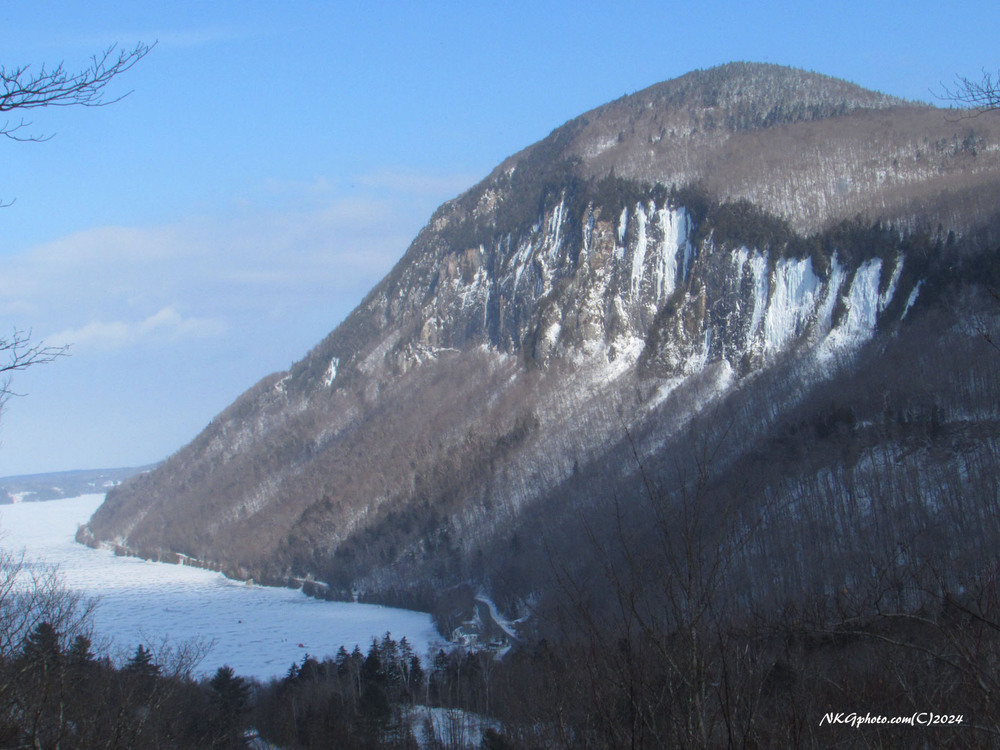 |


