
 Continue with onX Maps
 Sign in with Facebook






Normalisation of Deviance (The Two Rope People Problem)


|
|
Mike Larsonwrote:Knowing how to climb on doubles used to be normal here in the States as well. It's only fallen out of practice within the last 15 years. Not true, according to my Masters of Stone video collection. But seriously, it was never common in the US. Maybe in some niches, but not on the west coast, and not in the 21st century. |


|
Austin - thanks for that video. Wow. Exactly what I was asking about. Sobering. In the 90’s I learned to lead at Devil’s Lake and then climbed a bunch at Seneca Rocks. That was all single rope technique, and I have no memory of seeing folks using double rope techniques. I was aware of it, but didn’t use it and don’t recall knowing anyone who did. That was a long time ago so maybe I just forgot. But my sense is similar to DK, it was not super prevalent. Got to talking about this over the weekend and another climber said the fatal fall in Seneca in 2010 led him and others to start adopting double rope techniques there. Link: |
|
|
Very Not California. RG is from the gunks where half ropes work very well. My multi pitch rock is almost exclusively with doubles. Exceptions would be sport bolted for 30 or 35m rappels. Multi pitch ice is exclusively doubles. 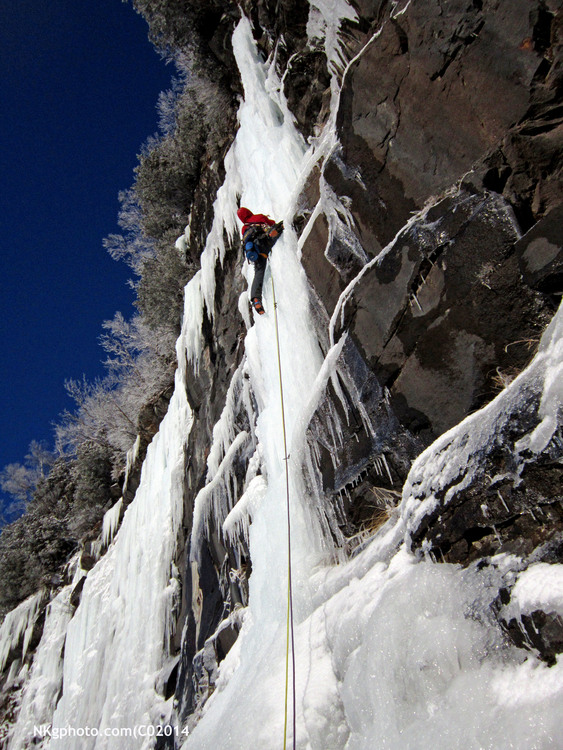 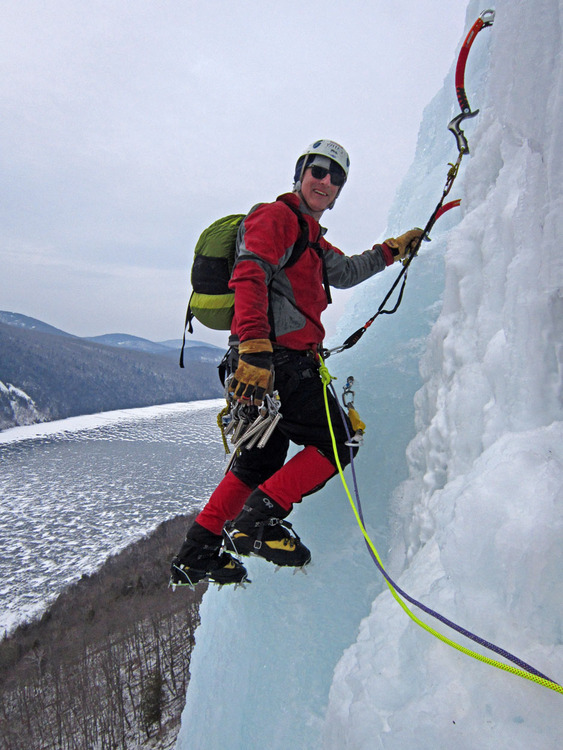 in my van at the moment is a 60m 9.8 single. 70m 9.8 single and a set 60m 8.0 half ropes. there's more ropes in the gear room. |
|
|
D Kwrote: The someone is me. I haven't found it at all hard to find partners for half ropes. I've used them on all kinds of routes, crags in the Gunks, pinnacles in Custer SP, long multipitch in Red Rocks, alpine routes in the Tetons. In the 21st century as well as the 20th. Nick is right about the East coast "very not-California" proclivity. Most of the good climbers in the Gunks were climbing with half ropes in the 1980's. Many of those who stuck around went back to single ropes, but I didn't. |
|
|
Andy Kirkpatrickwrote: Maybe Petzl/Edelrid can make an assisted braking device for double ropes? One that can handle two ropes like a GriGri or Pinch etc ie not just a tuber. I like having an ascent/decent capable device with me but my use case is somewhat unusual (new routaineering with lots of hanging about cleaning/drilling). And re the scary video with the rope cutting: A modern Kevlar reinforced rope may not have failed there. We'll never know for sure about that specific case but leader falls resulting in severed ropes (complete failure) are very, very rare on modern single ropes. |
|
|
Sprayloard Overstokerwrote: How about the giga jul? It is an ABD from Edelrid. |
|
|
 Assisted Braking Device for two half ropes. Not made by Edelrid or Petzl. |
|
|
James -wrote: James, that’s super interesting to hear. Nowadays, most DL climbers who are interested in the harder face climbs almost exclusively use double ropes. |
|
|
climber patwrote: Tried it, hated it for rappelling. Basically, still had to carry a dedicated tuber for rappelling. |
|
|
Sprayloard Overstokerwrote: To rappel smoothly you need to use a carabineer to create a handle and lever the device. Similar to lowering a second from an autoblock belay. The Edelrid slider fits really well. |
|
|
Are you two talking about the mega jul instead of the giga jul? For a giga jul, just put it into manual mode and rappel exactly as you would with an ATC. |
|
|
Alex Cwrote: Tradition is a large part of what drives the widespread use of double ropes in the uk, it's also quite uncommon to see people use alpine draws or 120 slings to extend pieces, probably a technique a lot of brits wouldn't be able to use effectively. As someone who climbs on grit, half's are only really useful on less than 10% of routes and mandatory on about 1% I'd say. On these routes a single folded in half is almost certainly safer and more practical. Disclaimer: I prefer using single ropes. Use of twins is very common in some areas like the Verdon gorge specifically because you ab in and rock fall is common, there have been plenty of severely damaged ropes in the Verdon. |
|
|
The redunancy aspect of doubles when it comes to a cut rope is getting some attention in these comments there are however other important advantages. I can think of 2 experiences that I've had in the last couple of years. One was a rope getting jammed whilst leading, and yes that was user error due to how I'd arranged protection but these things can happen, all(*) I had to do was untie that rope and continue. The other was just a cople of months ago when seconding a pitch and the leader had gone way off route, he put in a good nut and downclimbed (on horrible scrittly choss I might add) before traversing back on route. Had I followed his path to retrieve that nut I would have had to have downclimbed etc in a situation where the path the route took would have meant a fall would have resulted in swinging into the wall or maybe even the ground hard. Instead I could just unitie from one rope, sacrifice the nut, and follow completly safely on the other. Half ropes give you a lot of added versitility and often provide a quick fix to tricky situations that can occur. Addressing the issue of people learning how to belay with 2 ropes instead of 1, I don't think I've encounted anyone with enough nounce to be trusted to belay a single who couldn't get the hang of halves PDQ. * The was also a lot of swearing involved. |
|
|
that guy named sebwrote: Generally I agree, I will add that on grit though where the routes are so relativly short extending pieces does add a bit more risk of hitting the deck and mushing your ankles. |
|
|
climber patwrote: Still don't like it (I have one). |
|
|
Neil Bwrote: I've seen some atrocious use of alpine draws near the ground, but only by newbs. When to extend and when to take the drag is all part of good rope work. There is a classic route at the Roaches called the mincer, key beta to prevent the rope getting wedged in the crack is not to extend or bring doubles or whatever, it's bring a cam that tightly fits crack at the lip blocking the rope from entering the crack. |
|
|
I tried megga juls. Ok for belaying but horrible for rappelling. |
|
|
Horses for courses. I use a single rope for cragging, shorter multipitches, and when I'm sure any rappels are setup for single ropes. I use doubles most of the time in the alpine, where I might need some redundancy, flexibility to wander, or may have to do rappels where more length can make a difference. I also use doubles for climbing in a party of three in multipitch situations. There is no absolute right or wrong choosing which rope(s) to take, but there are definitely better or worse tradeoffs depending on the scenario. I suspect all the North Americans saying they never see double ropes mostly/exclusively climb at single pitch areas, or places where you can mostly get by well enough with them (e.g. Red Rocks). |
|
|
Alistair Veitchwrote: It's counterintuitive, but I find that double ropes become more necessary the shorter the route (if trad), as they reduce the fall length in case of gear failure. Gritstone climbs in the UK tend to be less than twenty metres high, but most climbers use two ropes. |
|
|
Bruno Schullwrote: The use of double ropes in the United Kingdom of Great Britain and Northern Ireland as opposed to North America or regional states or provences of North America is the nature of the climbing. Without double ropes the rope drag on the myriad of different rock types in the UK 🇬🇧 as a general rule would compromise rope safety because of the ubiquitous back and forth nature of the climbing. This is also offset by using slings as it also applies in N.A. Traversing is as ubiquitous as splitter cracks are in N.A. Nevertheless, a double rope is more functional than dragging a tag line whose only application it seems is to facilitate abseiling. The decision to use double ropes increases redundancy and is more rational. Similarly using a helmet will make it more likely than not of protecting a brain in the event of a fall. All of the above doesn't really matter because if it did homo sapiens would be rational actors. Unfortunately we are not. |


