Continue with onX Maps
 Sign in with Facebook






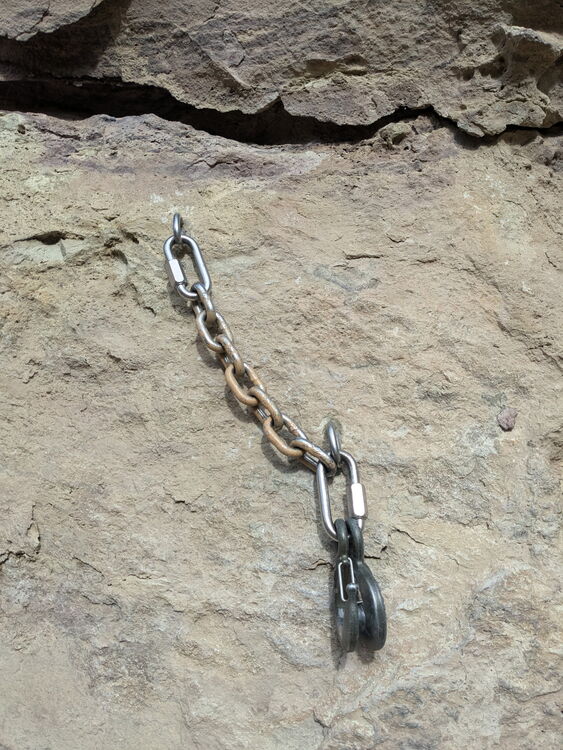
Mussy Hook Unclipped While Lowering


|
|
Max Tepfer wrote: That’s a great idea! This picture should be more popular. |


|
T Taylor wrote: Even though it is probably super good enough, two mussies on single quick link does not communicate redundancy |
|
|
amarius wrote: There are many anchor configurations that have non-reduntant components that are used all the time: 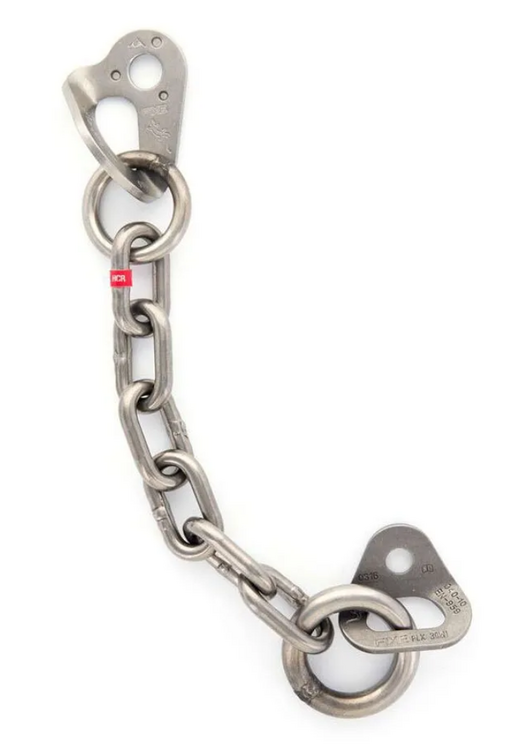 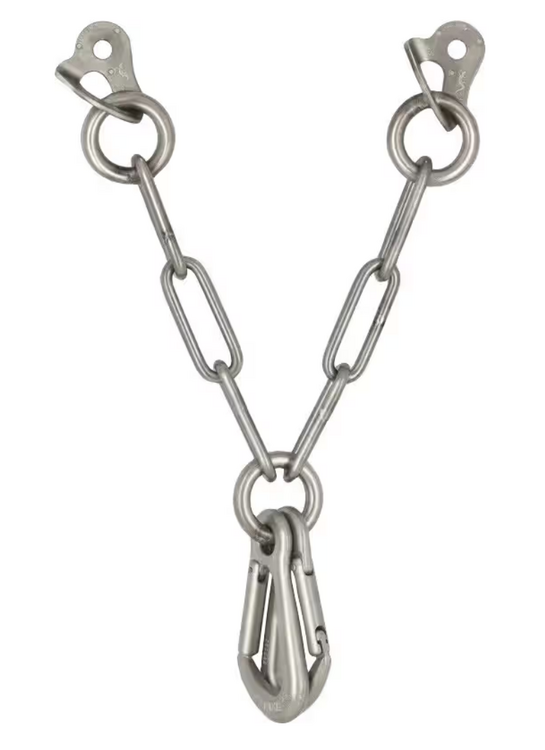 While it's true the mallion is slightly less robust because it can theoretically be opened, (which is really more of an advantage than a drawback) any concerns about it opening can be remedied with a pair of vice grips and, if you're really concerned, some loctite. |
|
|
J W wrote: I think you may be misunderstanding me? I'm not saying we should stop using mussys. I think they're great and love that we're using them. I agree with what others have said about the advantages of open anchor systems vs. closed, but am suggesting that a simple alteration to the way we use mussy hooks could literally save lives. Esoteric debate about data is academic in this case because people have literally died because of this problem. The system Tyler developed solves the problem while preserving all of the advantages of the original flawed system. (non-opposite and opposed mussys) With a fix that simple and low-cost, how many more people need to get hurt to justify making a change? |
|
|
amarius wrote: Is there even an accident or notable occurrence of a quick link failing? Actual redundancy if both max’s scenario and the scenario max is trying to prevent can be prevented with a perma on the last bolt as well. |
|
|
T Taylor wrote: Looking for the safest way to do this cheap, I imagine adding a perma would disqualify this solution |
|
|
I also agree with the argument that mussies simplify anchor management to the point that "just anybody" can use them, which is concerning for a variety of reasons. The ASCA (and their representatives here) harp on endlessly about the safety of mussies, but they are not foolproof. To that end neither are the bog standard maillons or rap rings. The existence of "top roping through mussies" paves the way for groups of newbie gym climbers to flood crags and get into heaps of trouble using a system that is billed as safer than equivalents. Like I've said before... if said group climbs up and finds rap rings, they bail. Then again, up thread someone saw a group trying to lower through a basket hitched sling, so ... better idiot and all that. |
|
|
J W wrote: I don't think anyone had the level of data you're seeking here to support transitioning to the adoption of mussys and open anchors in the first place, but the change was implemented because enough anecdotes (near misses and incidents) were observed that it seemed like a good idea. Here's the point I keep tripping on: someone is dead because they didn't properly use the anchor system we've widely adopted nationally. (adopted for good reasons because of how it helps prevent other, more common lowering accidents referenced above) There are also numerous other incidents and near misses stemming from similar misuse and a common problem with the system. We have found a simple solution that eliminates the specific mechanism leading to those negative outcomes without creating other problems and preserving the advantages of the original, flawed system. Do you have a complaint or suggestion to improve our solution or are you simply making a point about data? If we can reap the benefits of adopting mussys and open anchors in general while reducing the likelihood of the various failure mechanisms occurring, (climber above mussy hooks, mussy hooks improperly clipped, etc) without introducing other risks, why wouldn't we? |
|
|
Maybe this is a dumb question but why not one muzzy and one quick link? Get to the top, clip the hook, undo the link and you have a closed system. I don't have much sympathy for the lack of concern for new climbers who might screw up, why not just make the sport a wee bit safer? |
|
|
Max Tepfer wrote: But it's a pain in the ass to use. |
|
|
J W wrote: The current, and seems the preferred, installation of Mussies is the following - two separate Mussies on two separate bolts, usually two links, the last one orienting open gates away from the wall. It is quite simple. Using exactly the same approach to installations, but orienting one of Mussies' gates towards the wall would not add any costs or complexity. Not arguing that more education is more better. |
|
|
Closed systems don't kill. Lack of education kills. Mussys don't reduce the need for education. Mussys are not inherently safe. 5,000 mistakes take sometime to correct. The adaptation by reason of anecdotal incidents does not a rational plan make. Did I read that correctly: "...the change was implemented because enough anecdotes (near misses and incidents) were observed that it seemed like a good idea." |
|
|
You did, which is absolutely wild that the ASCA jumped onto mussies with the gusto they did. However, even I cannot argue that mussies can be considered safer as you are not introducing an entirely new system (your tie-in, the anchor, etc.), only one part of it. |
|
|
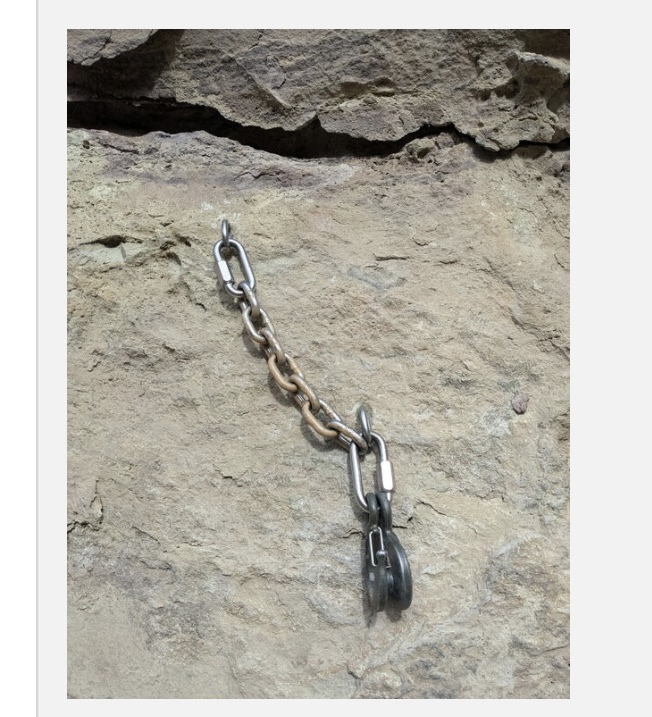 Max, I sincerely appreciate that you are using your own time and money to do something that you think will improve safety for climbers. But I do not particularly like this design. I really don’t like the single link, with two bulky things in it that reduce movement. I do not like the rounded nose and gate of the mussy facing the rock. I prefer the current installations. Your design will make it much more difficult for people who use their own draws to equalize them for the second. The sand Rock incident did not occur because the current mussy installation design is a bad one. It occured because the climber had never climbed outside. Because she was give inadequate, faulty instruction by her “experienced” partners. Because these same partners set up the toprope in a flawed way with an extra quickdraw above the plane of the mussys. I can look at your design and think of ways that similarly uninstructed and inexperienced people will use it incorrectly. |
|
|
phylp, my understanding was that at the time of the sand rock incident, common refrains were to use a biner or locker on a link above the mussies, so that wear was avoided on fixed hardware, and for ease of cleaning. That the mussy acted like a cold shut was not common knowledge at the time (in my opinion). In fact, HowNOT2 suggests this in their video testing mussies, although there are plenty of warnings in the comments against it now, and I am certain that were they to make the video again, they would caution against it. |
|
|
This thread contributes to the confusion around installing and using lowering hooks. Please do independent research to ensure you are using fixed hardware correctly. https://safeclimbing.org/lower-off-initiative “Climbing comes with high consequences if mistakes are made. Always understand the system you are using for protection and weight/re-inspect before you transfer to a new protection system.” |
|
|
phylp phylp wrote: Clip one draw into the bolt underneath the quicklink and the other into whichever chain link you prefer, we are used to that setup in Europe as it's nowadays the de-facto standard except without Mussys. |
|
|
J L wrote: This is kinda funny, since it's been something like 18 years since Peter Croft first suggested that the ASCA should focus more on adding lower-offs and less on bolt replacement, and we slowly moved that direction for more than a decade before introducing the Lower-Off Initiative! There has been a lot of push-back over those years, and lower-offs are now much more widely accepted. In any case, the take away from the initial post on this thread is a good one to keep in mind - don't force hooks (or carabiners, even lockers) into an awkward orientation. This would be the same takeaway if the hooks were setup opposite and opposed and you tried to force them into both pointed out. And even short, stiff quickdraws - especially if the bolt side carabiner is pinched under a quicklink - could also have issues if you tried to force the rope side carabiners away from how they were naturally lying. Lockers attached straight into quick-links at an anchor could also have issues if you force them into weird orientations - such as the rope running over the gate, or funky cross-loading. |
|
|
Oh for fucks sakes…can we just go back to chains? They are cheaper, and if one screws up and takes a digger, it is solely the idiot climber’s fault. I have installed a lot of lower-offs, but this handwringing about mussies/rams-horns/carabiners/shuts gets a bit tiring. |
|
|
No, we cannot go back to chains. |