
 Continue with onX Maps
 Sign in with Facebook






What is the purpose of cams in passive placements.


|
|
I've been trad climbing for 2 years but have never used a cam in a passive placement and on the BD website, there is stuff about cams and passive placements. but I find that there is no point in passive placements for cams I am wondering if you have ever used a cam like this and the pros and cons is it bad for your cam. lastly, if you got it into that spot wouldn't an active placement work just fine?  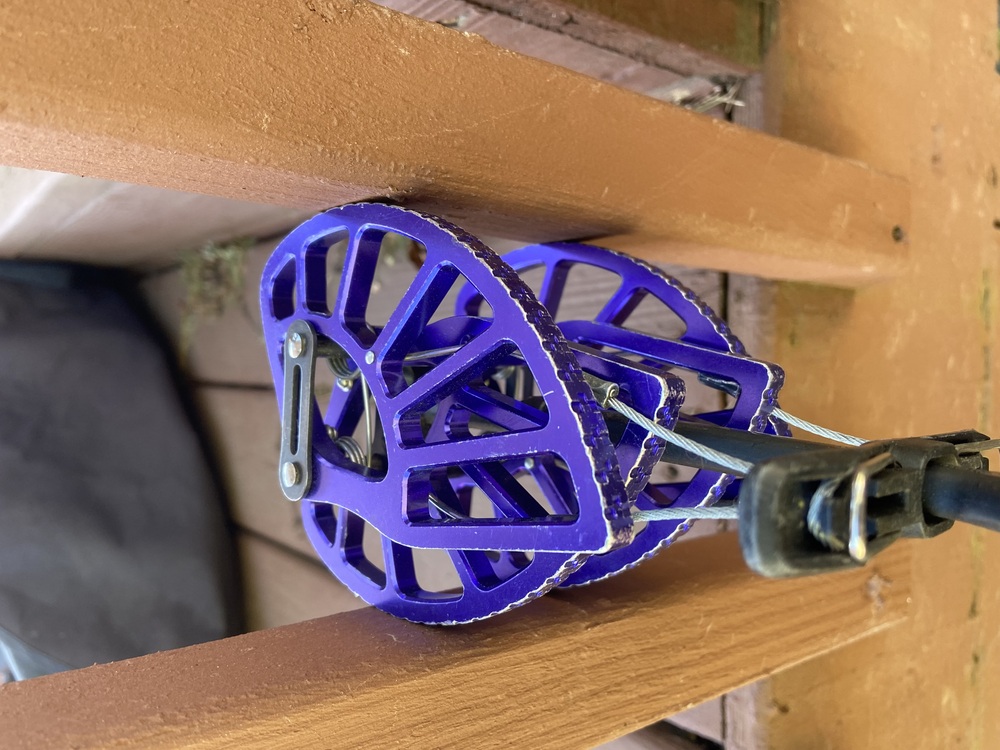  |
|
|
At my local columnar basalt crag, we have a ton of cracks that flare in the back. A cam could potentially walk its way deeper into the crack, fully open, and still catch me (at least I hope). I have yet to find a necessary passive cam placement, but I am sure they exist |
|
|
Passive cam placements aren’t common to my experience. As in, I’ve never done it purposefully. It’s more the idea if your cam somehow walked out of the placement or was pretty tipped out, it could withstand the forces and not invert, or umbrella. I’d placed a cam without cam stops tipped out in the heat of the moment before and then fell and it inverted and failed. |


|
It’s nice to have in placements where the cam might walk up a flare to full extension. Without passive strength, that placement would become worthless. With passive strength, it is only mostly worthless. Historically I believe the 2nd axle was added for range improvement only, and “passive strength” was a side effect that made for nice marketing copy. |
|
|
so the passive strength is mostly for walking up a flared crack. |
|
|
In 25 years of climbing and a whole bunch of 1000's pitches, I have used a passive cam placement once. Rare to the extreme. But as all others have mentioned, "anti-flaring" cracks can cause unintentional passivity. The hugest disadvantage of passive placement is they are super rattly and can (and will) walk all over with the slightest rope movement. Side note: It is not necessary to have double axles to be "certified" for passive placements. Most (medium-to-large) single-axle cams have something called "cam stops". This should be the first thing to consider when buying small cams as some brands of those lack "cam stops" (for example the three smallest X4 from BD). Edit: The most famous(?) passive "placement" on MP: |
|
|
but if a cam is tipped out is int that going to fail because you need the lobes to be sitting on something. |
|
|
Note that most single axle cams are passive rated. However, due to the single axle it's possible that the entire head of the cam can rotate 90deg so the tips are in line with the stem, and this makes the cam ~25% more narrow and also allows it to pivot on one lobe and rotate. If you place a single axel cam in the setup you have above, it's possible to hank it out without pulling the triggers. Hard to explain, but easy to demonstrate. Safely using a double axle cam completely open, due to a weird crack or walking is uncommon. but using a single axle cam SAFETLY while using it's passive feature is very uncommon and hard to pull off. However, at the Gunks where I climb it's not uncommon at all to find a large bomber passive hex placement, but since you didn't haul those cowbells with you, you can safely just shove a fully opened cam in there and it will work. Lots of pockets around you can slot something fist sized into. It's considerably more dangerous to do so with a single axle cam though. |
|
|
I have only used a can as passive gear when I have run out of gear that would fit the crack. |
|
|
Basically it just means your cam won't umbrella if you tip it out. |
|
|
ethan parrawrote: It’s a gimmick. |
|
|
I have a recollection of placing them on climbs at Red Rock (sandstone) - maybe once every two or three years? If you can picture a hole with a narrower shallow front and a wider back. I’m travelling so I can’t draw a picture or simulate with a cam. When you do it it seems quite secure. Usually Bd size 2 or larger. |
|
|
I've placed cams passively into pockets with a larger cavity diameter than the diameter of the pocket aperture. |
|
|
Crotch Robbinswrote: Ok that’s a much better description of what I was trying to say. |
|
|
It’s not a common placement for me but I have also used it when topping out of a crack to a ledge where I am out of cams that fit in the crack but have a large cam. Rearward flare cracks as mentioned above call for passive cams on occasion. |
|
|
Probably is bad for your cam. The only reason I can think of, but have never been in this circumstance, is that there is no other placement. If you get a spot that's too big for all the passive stuff you have and the "traditional" placement of a cam won't work because it's too flaring or irregular, then you can use a cam in "passive" mode. I've never done it and I've been climbing on gear for almost 15 years. Nice to know that it's there, but I don't think I'll ever use a cam in this way. |
|
|
Tradibanwrote: No, it isn’t. Read the post just above yours. |
|
|
Marc801 Cwrote: Meh. If you don’t know how to place cams you might get hard for that. Otherwise, it’s a gimmick. |
|
|
https://www.mountainproject.com/route/106532687/battle-of-the-bulge This route features these weird pocket/holes that flare out like a hollow globe inside. Pull the trigger, shove your cam in the hole, let go of trigger, cam is lodged inside in the passive position. |
|
|
ethan parrawrote: This is not over-cammed. There is still plenty of travel. |
|
|
Tradibanwrote: Read the post immediately below your comment ^^^. Just for once ya think you can suspend your innate condition to be an argumentative jerk? |


