
 Continue with onX Maps
 Sign in with Facebook






ATC ban


|
|
There are definitely some wingless flies here. |
|
|
pfwein Weinbergwrote: "Familiarity" in the sense that they choose a grigri over another ABD device that may actually be safer/less prone to getting dropped from user error. Thus, safety is not the overriding factor, despite claims otherwise (like the one I was responding to). "Hoping" or possibly "blissfully unaware of failures"... I say that based on observations here and other places where the grigri proponent seems to be unaware, unconcerned, or in denial that grigris can, and do occasionally "fail" as they are actually used. Maybe the grigri is a victim of it's own success and its generally good reliability has created a class of belayer that has become so trusting and complacent with it that they're negating a lot of the grigri's safety benefits. Or maybe, despite all the how to (and how not to) videos, instruction manuals, etc, many users just don't know how a grigri is "intended" to work. So now we're back to user error, which any device is subject to. Most grigri related accidents that I've heard about are from fairly experienced climbers/belayers. Most ATC related accidents that I've heard about are from the fairly inexperienced. I realize that's just anecdotal and off the top of my head... I'd love to see some data on this, especially if limited to your group (3). But really, I'm not trying to say that grigris (or any device) are "unsafe"... just that there's a lot of pretty poor arguments related to them floating around out there... like "use a grigri because rockfall could hit you on the head" said by the sport climbers not wearing helmets. |

|
Brandon Rwrote: Speaking only for myself, there's a certain point where marginal improvement in safety for proficient usage is offset by the learning curve to achieve proficiency. Certainly, there was a period of time when I learned the gri-gris, where I was equally safe using it or an ATC, despite the assisted braking element, because I wasn't proficient with it. Think about that: I was as good with a device I just bought as a device I had been using for (at that point) 5 years. 20 years after that, it makes no difference to me which I use, but dropping another $100, and being at a disadvantage for another 50 or so pitches and 10 or so caught falls? It's not worth it. Something lost in these debates about "objectively safer" devices, all else being equal: all else *isn't* equal. The principle argument for ABDs in gyms is that they are safer while becoming proficient with the device. Relative safety once proficient just doesn't enter into the conversation. |

|
OK, I’ll ‘bite’, Tom. It will be 60 years climbing next month. Started with body belays ( still think everyone who climbs outside should know how to do it—-just in case!!!). I’ve used both devices. As should be obvious for those reading this thread, I much prefer the ATC. It isn’t only the belaying, though there is that,—it is the simplicity, versatility, ease of use, easy to see wear and tear, weight, cost—those are the most obvious ones. I recognize the potential risks and drawbacks, but for me, after doing the ‘balancing test’, the choice has been clear and easy. One other factor, specific to me ( though I’m sure there are others in a similar situation); due to wrist issues, I literally cannot hold and manipulate a Grigri in the appropriate manner to efficiently feed rope to a leader ( and pull the slack back in quickly when required)—not a question of not knowing how to do it. This is not an issue at all with an ATC. The other reasons I listed above also matter, but this one by itself is determinative. I haven’t tried other ABD models, but from what I have seen, each of them show some of the same deficits as compared to the ATC. I have no problem that you, and clearly many others, prefer the Grigri—-some of my best friends…… What I do have a problem with is those Grigri users who are so adamantly and pro-actively anti-ATCs. |
|
|
ATCs are more dangerous than ABDs. ATCs are also good belay devices. They can both be true. 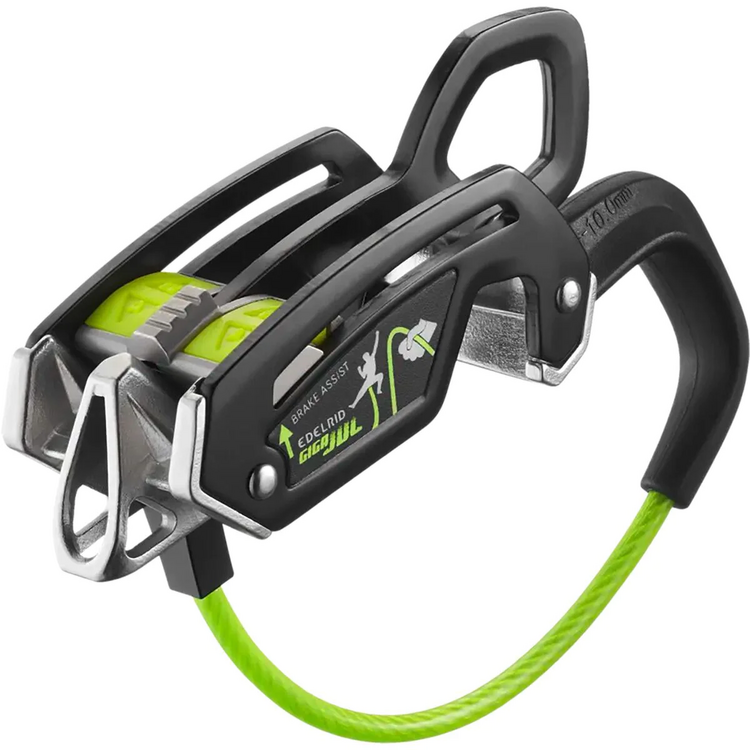 |
|
|
I'm coming up on 50 years of climbing. I started with a body belay, then a chain link. I own various ATCs, Fig 8s, a GriGri and a CT Alpine Up. The ATC-Guide is the one I use most often. CT Alpine UP is second. GriGri is third (and I do not like rapping with the GriGri at all) |
|
|
Tom Chingas wrote: Gris are the belay device most likely to be used incorrectly, their design is flawed. That said, most of the time they provide a nice back up to a fumbled belay, better than no back up like an ATC. Gyms requiring ABDs have done the math, so please don’t be that old man who just wants to argue otherwise and learn to use an ABD. Your gym staff thank you. |
|
|
Tom, I don’t recall anyone saying that Grigris are more dangerous than ATCs or that the latter are safer. I agree with you that neither is accurate. I believe the concern is that because there is an ‘impression’ among some ( reinforced by gym ATC bans) that Grigris ( and other ABDs) are ‘foolproof’ , that breeds a complacency that could result in dangerous situations. The primary ‘demographic’ that is at the heart of the concerns, especially in the gym context, are belayers with minimal or limited belay experience. They are the ones most likely to ‘screw up’ with either kind of device ( not saying that more experienced belayers can’t mess up as well, just less likely), and it us in those situations where it is believed that the ABDs will have the advantage. While not necessarily a significant danger in most gym situations, but still a problem, is that it is more likely that leaders will be short-roped by members of that demographic who are using a Grigri. ‘Mr. Beans’— your insurance analogy is ‘interesting’ . You must be aware that quite often insurance companies are reluctant to pay out and that many policyholders don’t receive as much recompense as they anticipated. Just sayin’. Mr. Rogers. Thanks for the suggestion and if at some point I need to ( or decide to) get an ABD, I’ll look into the Jul. But, from looking at the reviews, it seems to not meet the simplicity, weight, ease of use criteria as well as my trusty ATC. Tradi: Yes, as I’ve posted before, I do understand that in the end it is the gym owner/insurer’s decision for the individual facilities that will be the final word. However I am concerned to the extent that the ‘noise’ from the rabidly anti-ATC contingent might contribute to their decision-making. |
|
|
Enough about Gri gri vs ATCs. 98% of us agree on 98% of the issue. This thread really isn’t about that or the splitting of fine hairs of belay device performance. At its root, it’s really about the irresponsible and incompetent few, forcing and limiting the responsible many. Incompetence—> no personal responsibility—> lawsuit —-> insurance cost —> directed policies to limit risk exposure to —> incompetence The cycle crunches on, continually increasingly overall climber costs, eroding business margins, limiting options. As settlement, such people should be required to wear special bright orange helmets in public for at least 3-5 yrs to alert others that this person is not equipped to look after themselves (by their own admission) and requires special supervision and oversight by others. It’s for their own safety. This lawsuit would be more far more legitimate in assigning liability for harmful behavior than his. Any precedent for such a lawsuit? Anyone wanna take it pro bono? ;) |
|
|
Mark Pilatewrote: I laughed. |
|
|
So my buddy who hasn’t been climbing with me in like 10 years bc his life took a different direction wants to get back into it and met me at the gym the other day. He did a couple routes on TR we refreshed the basics and then he went to take his belay test. He passed, but he came back holding the edelrid thumb thing instead of his reverso he used to take the test. He told me they wanted him to use that instead but he didn’t have to pay for it no big deal. He didn’t even ask why. I laughed and told him there were a whole mess of people on MP absolutely losing their shit about something he barely noticed. |
|
|
Abbott Abbottwrote: From a liability standpoint this just doesn’t make sense. Did they train your friend on this new device? By doing a test with his own, and then just handing him a totally different one with different operating characteristics owned by the gym and requiring him to use it, seems silly (from a potential lawsuit defense point of view) as well bad practice. On another angle….many have mentioned (often in erroneous context here) “industry standard” as a guidepost for gym policy and lawsuit exposure. To that end, Is there an equivalent “industry” std for what constitutes a “climber” that can be referenced (UIAA, AAC, AMGA, etc) to establish the characteristics and qualifications of the “reasonable person” that would be representative of such a group. Basically in a nutshell, if you identify yourself as a “climber” per the std, then 99.9% of lawsuits would have no merit because the plaintiffs would have fraudulently misrepresented themselves and shouldn’t have been doing whatever it was they were doing —against industry standards It’s seems if industry has standards, participants should also have standards, and these standards should help in the fight against the odd money grubbing idiot trying to cynically cash in. |
|
|
Don Frijoles wrote: Lol. — Tradiban Would these guys just roll over and belay with whatever they told ya ?  Oh heyll no! Lemme hear ya say |
|
|
Maybe I'm a cynic, but I'm surprised no one has brought up this angle: Gym: "you must use a grigri... by the way, we sell grigris for $99.99 in our pro shop." Used correctly, ATCs are generally safe, and ABDs are generally more safe ("safe" being a relative qualifier for what is an inherently dangerous activity). It would be hard to argue that an accident resulting from user error renders the gym liable, and its hard to argue the point that most if not all belay device failures result from improper use. (ATCs don't just explode, and grigris are not foolproof). I don't really buy the insurance angle. Every gym I've ever been to I've had to sign a waiver that releases that gym from any liability in the event of death or injury. Seems to me these waivers should be pretty iron-clad legally speaking (disclaimer: not a lawyer or insurance broker). It also seems it would be an uphill legal battle to argue that the gym is at fault if one misuses equipment and is injured. |
|
|
Just look at it like this. Let’s say that there are a dozen gyms in your general geographic area, and all but yours require ABD use. Now, someone decks and is injured while belayed by a non-assisted tube device at your gym. At trual, Plaintiff’s attorney presents evidence that out of 12 gyms, yours is the only one that does not require ABD use. Now, let’s use the same scenario, but your gym requires ABD use, and your customer was dropped and injured while belayed by an ABD. Your attorney can argue that your gym followed the industry standards of practice and took reasonable precautions. This is a gross oversimplification, but do you see the difference? Also, waivers are useless when gross negligence is more likely than not. |
|
|
Dan Smee wrote: You are conveniently ignoring that almost all gyms require ABD use these days. Any lawyer can argue in good faith that ABD use is the standard, and deviation from said standard is in fact gross negligence. also, keep in mind that if this goes to trial, the matter will be decided by a jury. The jury knows nothing about climbing or belay devices. All they know is that all other gyms require ABDs, while yours does not. |
|
|
Frank Steinwrote: By your logic, why aren't equipment manufacturers liable for producing ATCs in the first place if it is negligent to let people use them? With a quick Google I couldn't find any instances of a gym being sued and losing for allowing people to use ATCs, and there are still many gyms that allow use of ATCs (though to your point that number is shrinking) As the devil's advocate, I could even make the argument that banning ATCs opens a gym up to more litigation because if someone does use one in such a gym and is injured, then the gym is negligent for not enforcing their own safety protocols . (Still not a lawyer). |
|
|
I’m trying to keep this real simple, not teach a tort CLE. I am also far from an expert on torts. Manufacturers can continue to sell non-assisted belay devices because non-assisted belay devices are normally sold by the industry. We are talking about gyms, which as a rule mandate assisted belay device use. If you are really curious about this, and not just being difficult, I suggest that you pick up a book on tort law. |
|
|
Frank Steinwrote: Not sure this is true, and if so not long enough to establish an industry std per se. Plus you are using “industry std” a bit out of context. That would apply to equipment and procedures by the GYM. It’s a reach to include equipment and procedures employed by the CLIMBER. It shouldn’t. Therein lies the discussion here. That is what the waiver covers. An “industry standard Climber” should be required to employ UIAA certified belay devices of their choosing and familiarity This would (should anyway) actually relieve the gym of this liability more so than forcing certain equip or techniques. In Abbot’s example above the gym provided and specified the belay device (whether or not his friend was proficient with it). This is FAR greater exposure to lawsuit and expressly assumes liability and potential negligence (unless they thoroughly trained him on using the Edelrid that they forced him to use) than if they stuck to a std waiver and kept the onus on the climber where it should be
Point is that it is likely not advancing the odds in the gym’s favor much. While perhaps reducing overall accident risk, it’s doing so at increased liability risk (taking more responsibility and oversight onto the gym and employees). they’ll still have the lawsuits but now they are on the hook for more “cuz they made me use this thing that was supposedly safe” Seems Better to have an iron clad waiver and just stick to it with the support of climber orgs to explain to a jury. Jury ignorance can work both ways. Interested to see how this plays out with years of data. If the cost benefit pays off or not. We’ll see if Vandivere wins his million dollar lawsuit this summer Edit to Don Frijoles: you may be right of course, but you are making a huge assumption on the logic and data with respect to this situation. Several insurance people here and ones that I climb with (law degree and works for insurance company ) say it’s could very well be “Kentucky windage” |
|
|
Mark Pilatewrote: Mark, this was exactly my point in my last post. In legalese, vague wording is often more protective than specific wording. Liability and negligence come into play when safety protocols are implemented, but not followed, and injury results. Don Frijoles wrote: "You aren't going to find personal injury lawsuits on google. Even if you had access to an expensive legal library system, it would be a ton of work to find the details you are looking for." Don, I was able to find many personal injury lawsuits involving climbing gyms. There are pages and pages of them, just none that involved the use of an ATC resulting in injury. Most related to auto belays, ropes and other poorly maintained equipment provided by the climbing gym. |


