
 Continue with onX Maps
 Sign in with Facebook






Communicating with out-of-sight partner


|
|
What are some ways you communicate with an out-of-sight partner and cannot hear each other? Particularly when you are the end of a pitch and need to go off belay. I was taught 3 big, obvious pulls on the rope, but I feel this could be mistaken for other movements in the rope and lead to catastrophe. Potentially doing a few windy pitches on Monday and would like to explore ideas for a better system. I thought of using a whistle, which could potentially cut through the wind and other background noise. Don’t really like the idea of walkie talkies because of the extra weight, but they seem pretty cool. |
|
|
Rocky Talkies are worth the extra weight. |
|
|
When you get to the end of the pitch yell off belay, wait 30 seconds, and start pulling up the rope. If your partner heard you they will have taken you off belay. If not, they just keep feeding out slack until there is no more rope left, then they take the belay device off and yell that's me. After waiting enough time for you to put them on belay if they still don't hear anything they can just start climbing. If the rope goes up when they do then they know they are on belay. |
|
|
Radios. The only answer these days. |
|
|
Nick Budkawrote: It's hard to overemphasize how great they are in multipitch, and honestly long single pitch, situations. There's no uncertainty whatsoever between you and your partner. Transitions are smoother, and any hangups can be communicated and dealt with in real time. |
|
|
A great little trick is this: You're at the belay pulling up the rope, then it comes tight. You then quickly throw a few meters of rope down, put the belay device on, and then pull that slack through the belay device. Explain that you do this at every belay to your climber and it will always be extremely obvious to them when they are on belay whether or not you can communicate. This pattern of rope comes tight, slack comes down quickly, pause to install belay device, then rope comes tight again slowly is very obvious for the climber. Three tugs may not be depending on many factors. But radios my dude, they rock. Buy a cheap pair for $30 (REI has a small pair for this price) and put accessory cord around the belt clips. Boom, amazing dirtbag rocky talkies. 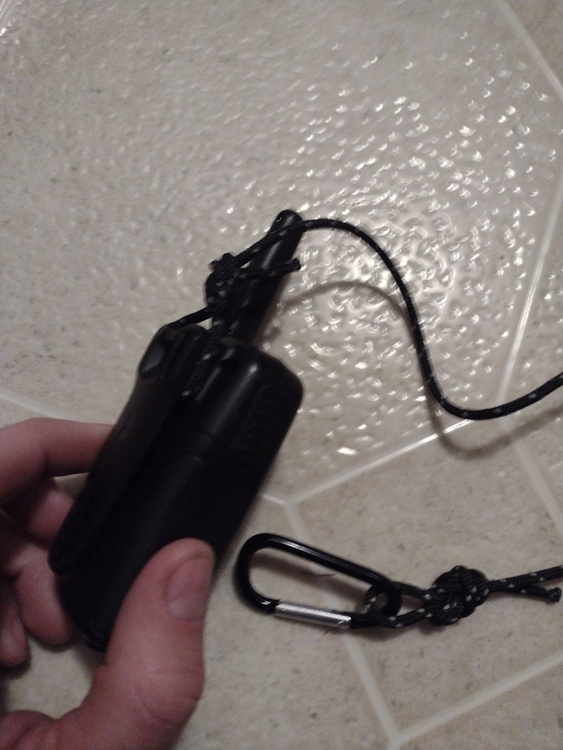 |


|
I seem to find smashed walkie talkies at the base of multipitch routes more than anything else. I guess use a long cord so you don't drop it. But also, if the rope comes tight you climb and are either simuling or on belay |
|
|
Chris Nunleywrote: Instruct your follower to pay out rope until they are out of rope, wait a bit, let go of the device and then climb when the rope is being pulled up. You don't need to come off belay and you don't need to say or do anything but make your belay. https://www.mountainproject.com/forum/topic/112160830/yelling-at-tahquitzsuicide |
|
|
Nick Budkawrote: Or having a competent partner. |
|
|
This has worked very well for me after a buddy of mine taught me this 15 years ago: After building and clipping into a belay anchor, the leader hauls up the rope. Don't just lazily lift it up. The speed of this should be at least twice that of the rope movement when you climb. The second will very easily notice this (increase in rope speed after a break while building an anchor) and after maybe 6-10ft of hauling understands that this is the "OFF BELAY!" message (no need for the leader to yell). The follower will then keep the rope down tight as he undoes the belay device. The top guy realizes the rope is tight and understands what the bottom guy is doing but the top guy still keeps a little tension in the rope. After a few seconds of removing the belay device, the rope releases (no need for the follower to yell "OFF BELAY!") and the top guy pulls up the rest of the rope. The next time the rope is tightening up, the top guy understands that is the "THAT'S ME!!!" message (no need to yell). As he puts the follower on belay, the rope will slacken a bit (just a few inches, no need to give feets of rope here) and the follower understands what's going on as the rope tightness disappears (temporarily). After putting on the belay, the top guy tightens up the rope a second time (someone has termed this as "giving a wedge belay" here on MP some time ago and I think that's a good visual description) and that's the "YOU'RE ON BELAY" message (no need to yell). The top guy keeps a little tension in the rope as the follower breaks down the anchor and when the rope is starting to move, it is the "CLIMBING!" message (no need to yell). Yes, there are a few potential troubles with this: 1) With serious rope drag or your arms are totally wasted (time to practice your footwork!) at the top of a pitch, you just don't have the strength to haul up the rope quickly. If this is the case, the follower will naturally (no need to yell) keep belaying until the end of the rope. If there is any hesitation by the follower in terms of increase in rope speed, he will keep belaying until he knows for sure (120%) that the leader is off belay. Annoying, yes, but still safe. The hauling can also be hampered if significant rope management is needed at the top. 2) If there is a super easy scramble as part of a pitch, the leader is not allowed to run up at high speed as this could be interpreted as a fast hauling. If the team is well tuned together, the leader can increase his speed as he goes. The belayer then recognizes that there never was a time break to build an anchor, so he knows what's going on and will not take the leader off belay. 3) It is important that the follower makes sure the rope runs through nicely as the top guy is hauling up the rope. If a rope tangle at the lower belay stops the rope from going up, the top guy might start to put the follower on belay before the full rope is up. Annoying, but still safe. 4) If the rope gets stuck, the whole scheme goes out the window (yelling and screaming ensues). 5) If there is simulclimbing in the plans, this needs to be known in advance. Adapt accordingly. Practice this a few times in a "safe setting" where you can preferably see each other or at least know for sure that you can hear each other as a "backup" if there is any hesitation while practicing this silent scheme. Once you as a team feel comfortable with this, use it all the time as a default. Get rid of this yelling and screaming habit. The reason for this is that the next time you hear hints of yelling and screaming (even if you don't hear exactly what it is), you know for sure that an "exception" has occured and there is some kind of trouble going on. Be vigilant and take extra care at this moment. As for rapelling: As one guy is rapelling, the one standing at the rap anchor puts a finger on the rope and feels its tightness. The rapeller makes VERY SURE to not unweight the rope until he is at the next anchor. When unweighting the rope, it is very easy for the top guy to recognize it and there's no need to yell "OFF RAPELL". Also, immediately after the rapeller unweights the rope, he feeds two feet of rope through his rap device. This makes it easier/quicker for the top guy to set up his device (unless completed before the first guy goes down). Edit: Sorry about the massive amount of text. It is really very simple once you get it going. But if any of your partners are uncomfortable about this method, don't force it upon anyone. Lots of climbers only accept methods described in books or by certified organizations/guides. There's nothing more frightening while climbing than questioning if you really are on belay. |
|
|
radios great for big wall camping, guiding and expeditions. pleasure climbing sans radio is super simple if you have just a few trusted partners. |
|
|
I've used more or less the same method Patrik describes for many years. Pull up the rope fast until no more comes up (try a few times to make sure a tangle at the belay didn't stop it prematurely), then let down several feet so that the second isn't tempted to start climbing before they are on belay. Load the belay device, take up the slack, and that's the signal for the second to climb. I don't do this with partners who aren't experienced at multipitch climbing, and of course, we agree on it all before the climb begins. I can think of a slew of times over the years when I have either been on belay without any movement of my second forever or have been at the top or at the bottom of a rappel for ages (in the dark, in a storm) with no idea whether the next step is happening. Such events are somewhat rare, but radios would have made a big difference. |
|
|
If you don't have radios, then before you lead a pitch, it's helpful to make sure the belayer knows basic info like how long it's expected to be and what the climbing is like. E.g., the first 15 meters are hard, but after that it's easy scrambling for 30 meters, and then there's a big ledge where you're going to build a gear anchor. It's like "what to expect when you're expecting." If you have this mutual understanding, then it should always be pretty clear what's going on. Often you can hear each other yelling, but you can't make out the words. But if you use the standard voice signals, there is actually only one thing that your partner could be yelling at any given time, and knowing what's expected on the pitch also cuts down on any possible ambiguity. (The main thing that can go wrong is that you could be hearing a different climbing party's signals.) This is the reason why people should really learn (or agree on) a standard set of voice signals, and not do any non-standard, unnecessary communication like "OK, thank you," or "up rope" (if the follower has already said the belay is off). The wonderful thing about radios IMO isn't so much that they eliminate uncertainty about the standard sequence of voice commands -- usually there isn't any uncertainty. What I love about radios is that when unusual things come up, they make them easy to deal with. E.g., "I placed some pro to the right, but just clean that and then move over to the left to climb the next section." Or, "Oh, shit, I just made a major clusterf*** of this lead, here's what we need to do." |
|
|
Patrikwrote: Pretty much what I do as well but curious about rope stretching pitches. I always assumed intuition would get me by but I don't have a better answer/system for that. |
|
|
Agree with most of the points here. It shouldn't be difficult for experienced climbers to recognize what's going on. Rope goes up fast, your partner is either scrambling or pulling up slack. If you aren't 100% sure you heard "off belay", do nothing except pay out slack. When the rope comes tight, yell "that's me". Give them a bit, listen to hear "on belay". If you don't hear anything, but you keep feeling tugs on the rope and the slack isn't coming back into the system, relatively safe to assume you're on belay. Give a shout of "climbing" if unsure and listen for "climb on". That being said, did my first long alpine route with Rocky Talkies for the first time Thursday. Game changer. Good to know the old-school way in the event they aren't charged, one gets dropped, etc., but holy cow do they make things more enjoyable. |
|
|
For those interested in standardization as noted upthread, much of this is covered in an AAC article: https://americanalpineclub.org/news/2017/1/19/4xm1fcsag6b7xqf1p1w1qp7vdpp1ha |
|
|
Interesting to see the return of "tension" as a proposed signal. Used that a half-century ago. Nice thought, but I think we're stuck with "take." |
|
|
I have never used radios while climbing. I know they are a very effective way to communicate with a partner and they can eliminate some hassle. But they really bother me. I have had some days climbing that would have been much more pleasant if I wasn’t constantly listing to beeps and radio chatter echoing through the canyon. If you are going to use them. At least keep the volume low and try to find an empty channel. Oh ya, and get off my lawn. |
|
|
H Luewrote: Please do share what skillset your partners have which allows them to communicate through solid rock! What's the rope tug system for "I'm being swarmed by bees, and have alpined butterflied into the center of the rope, put me on belay fucking now!"? |
|
|
rgoldwrote: I won't say I've adopted it myself, but maybe I will. It's definitely clearer in a lot of cases. When I took classes years ago, they taught us to say "I'm safe" when we've built the anchor after leading a pitch, so the belayer can relax and eat a snack or whatever. It very quickly became clear that was a bad idea, because with almost any wind or other interfering noise, "take" and "safe" sound pretty dang similar. Another thing is that at crowded crags, a neighbor's communications can get confused with your own with disastrous results. I actually am fairly insistent that my partners use names with calls in such situations, and given how common my first name is, I've even had to use Top-Gun-style call signs due to neighbors with the same name. |
|
|
rgoldwrote: Meh, I think it was an optimistic gesture from 5 years ago when that thing was written. I think certainly easier to differentiate from "slack," but I agree with you. Mostly, it just seemed easier to find that article then to rewrite more or less the same thing Patrick did everytime these threads crop up. |


