
 Continue with onX Maps
 Sign in with Facebook






What did you wish you knew when you started climbing?


|
|
Hey I’m a new climber and I was wondering if people had some wisdom to share and what you wish you knew when you started rock climbing. |
|
|
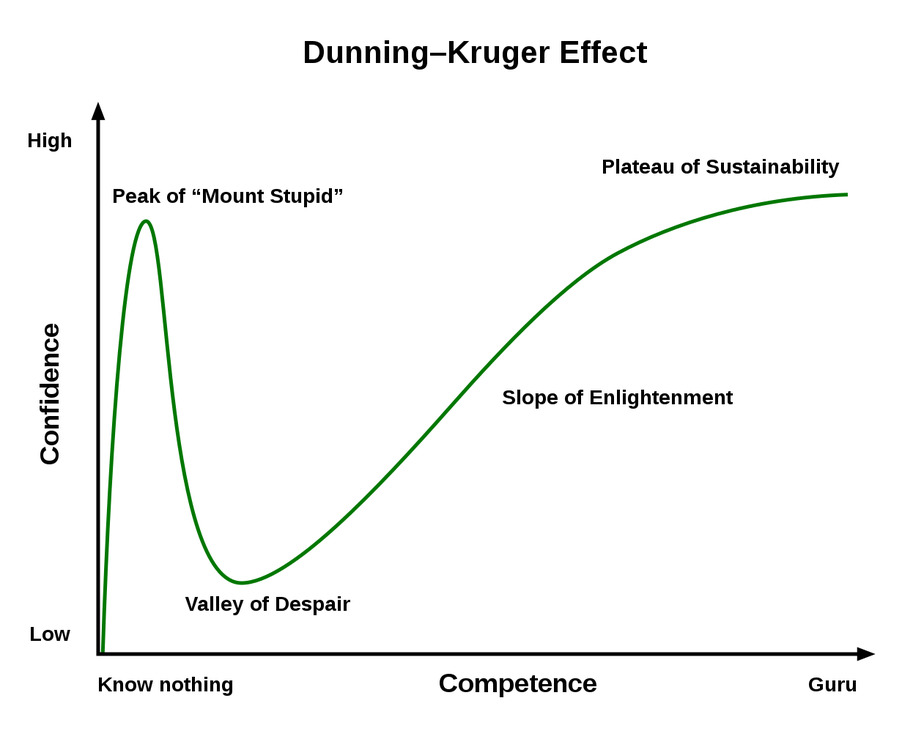 The dunning-kruger effect is real. The crusties will come at you with all sorts of "wisdom" if you actually make an effort to understand the forces and behaviour of the materials you are using you will be able to filter the "wisdom" from the wisdom. Oh yeah, progress comes really fast, then really slow. |
|
|
Let's see, what do I wish I knew...
|
|
|
Jake Jones wrote: This list is spot on. |
|
|
The value of: Rest days (can't get strong without recovery) Training/cross Training (training by climbing alone will only get you as far as a plateau) One's feet (you only get one set, if your feet hurt because you're shoes are too small, you will eventually pay the price) |
|
|
|

|
Yer gonna die. |
|
|
On a more serious note, the best question you can ask anyone is “why are you doing that?”. There is more than one way to do things and a lot of nuance. By asking them how they do something you can start to understand how to adapt the systems you use to underlying general theory AND if they understand why they are doing something the way they are. Read as many books and QUALITY blogs you can get your hands on. Climbing anchors by John long is a must, Will Gadd has a lot of quality writing, Andy Kirkpatrick, anything from Mountaineers Books, and Accidents in North American Climbing. Being taught on the rock is important, but having your own internal understanding of how they system works is how you keep yourself safe. Just because a partner says you are safe does not make it so, only you can make that call. Knowledge is power. If you ever feel unsafe with a partner, tell them, and they don’t work with you to understand how they are mitigating the risk that has you feeling unsafe stop climbing with them. There is a grey area here as some situations are just risky, so see my comments above to better understand those risks. Will Gadd has a ted talk about risk that is worth a watch. |
|
|
James M wrote: What old gear would you have to replace in a year? I have a rack of 20 year old Metolius cams, even have a rigid stem Friend that I bought for shits and giggles that I try and always place when I climb trad because I'm a sentimental moron, that thing will outlive me. I legit have no idea what one could buy when building out their rack that they'd have to replace in a year, other than maybe alpine draws? Definitely don't get those used, agree with ya there. |
|
|
1. In the name of all that is right and good DO NOT ask questions on the beginner forum that might be answered through an exhaustive google search. I’m kidding. Feel free to ask questions, just be prepared to ignore the trolls that inevitably clog up responses because something is more obvious to them then it is to someone new at this. 2. Mountain project is a great resource but it’s not a substitute for a good guidebook in most cases. 3. We do this for fun. Try not to take it too seriously. Except for safety; when it comes to safety don’t take any shortcuts. Belaying requires your full attention. 4. Gear you need to start: helmet, harness, shoes, belay device. Try to get a feel for what you want beyond this when climbing with partners who own gear. Also remember that everything can be purchased new at a discount if you are patient. Welcome to the community |

|
Everything in Training for the new alpinism |
|
|
Trad, Sport, Bouldering, Top Rope are just variations on protection. It is all just climbing. |
|
|
Ricky Harline wrote: I built my initial rack out of nuts, hexes and some pretty mank cams I got in new paltz. I really like lightweight gear tho so most of my rack is pretty modern at this point. Also, used cams sell for stupid amounts of money, so I would have been better off being patient, buying new cams on deep discounts or sales. If you can get a modern (lightweight) WC friend or C4 used at a good deal go for it. If you are buying a 1990's whipped on relic, maybe hold off instead of buying it once now and then modernizing later. |
|
|
Lessons I learned the hard way:
|
|
|
Rest doesn’t heal most injuries. |
|
|
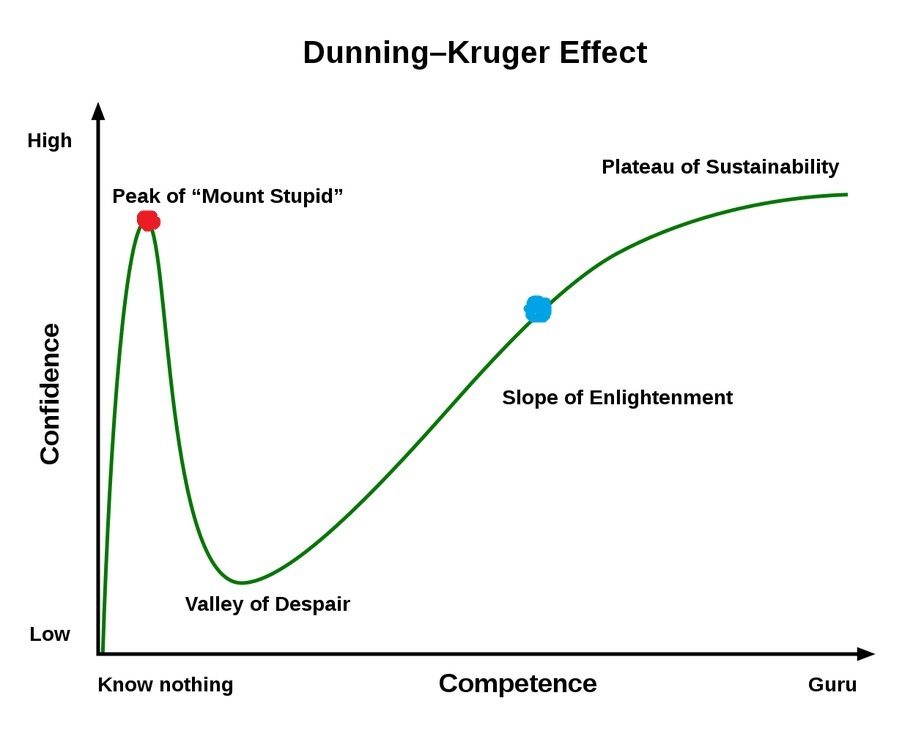 Borrowing from the image above, a lot of people who think they are somewhere near the blue dot, are in reality closer to the red dot. I make a habit of assuming everyone is at the red dot, myself included! Always be vigilant, because one stupid mistake or unforeseen mishap can permanently alter or end your life. |
|
|
James M wrote: I guess. I don't think my modern cams have anything over my ancient Metolius Power Cams, and in fact the ancient Power Cams get taken out probably an order of magnitude more often than my rack of C4s. Older gear may have less utility but that isn't necessarily the case. |
|
|
Don't put your shoe against wall and slide it down onto the hold. For the most part, you should watch yourself place every foot onto the hold and weight it. |
|
|
That 30 years later Mountain Project would redact half of my route names |
|
|
The most valuable skill you'll ever need in climbing is how to pick a suitable partner. It is your partner that keeps you alive (or not). Surprisingly, climbing at a certain (advanced) grade or decades of experience is not always a good indicator of safety. The Dunning-Kruger graph plot above labels the x-axis as "Competence". It is not labeled "time" or "climbing grade". I have met people who have climbed for 30+ years and I have met 5.12 climbers that I will not let belay me. I have met really scary people who just don't "get it" when it comes to safety. Understand that people climb for many different reasons. Not everyone is chasing the same goals as you are. At the same time, you don't need to "copy" the goals of the first few climbers you meet. There are many different styles or types of climbing (gym, sport, trad, alpinism, aid, choss, boulder, single-pitch, multi-pitch, cragging, multi-day trips, suffer fests, a couple-of-hour getting-together...). Try them out and see what's your "calling". Other people don't enjoy the same "fun" as you do. Don't judge people according to their preferences. |
|
|
Most "climbers" don't actually like climbing. When a person tells you they want to climb, it can mean a number of things, including:
|


