
 Continue with onX Maps
 Sign in with Facebook






New and Experienced Climbers Over 50 #15


|
Old lady Hwrote: Helen. I'm up early this morning just browsing, and thought about your post. I love it. I'm not sure what we REALLY are all doing here on this thread. For one, we are navigating ourselves into old age in a very subversive way with the help of friends. This is totally foreign territory, at least it is to me. "The sad reality is that the majority of the younger generation will likely not be doing what you are doing, when they are your age." Partners, friends, family 'of a certain age' are doing 'aging' the more familiar way, of sitting it out, cheering from the sidelines, or slowly fading away. I asked my doctor for some pointers on diet/exercise for rock climbing and he said (just last month) "Lori, I don't know what to tell you. Frankly you are an outlier, and we have no information on how to advise someone your age as an athlete. Just keep on doing what you do, and let us know how you did it." That's Kaisers official policy? Remember when I posted that I had asked Kaiser if they had any balance instruction or help... and they signed me up for their "Balance Class" with the instructions to bring my walker? This is their experience and EXPECTATION of aging. And here we are discussing talus-running. 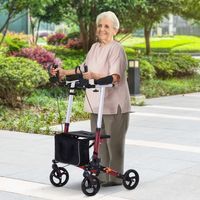 We have accumulated an enormous amount of information here, throughout these thousands of posts... besides the normal reporting in and pictures (and NONE of it is 'normal' )... whether it's technical climbing knowledge for us noobs, or advanced diet/nutrition, workout, strength, conditioning... or 'how to climb when you've just lost your son/husband/lover" information. I think it should be a book. I ascribe to "Better to burn out than fade away..." ------------------- No other place to add this but here. I feel foolish. My feet have been hurting more and more during and after climbing, and it never occurred to me that wearing my SO comfortable TC Pros like house slippers could be creating a problem. The more I wear them, the more comfortable they get... floppy, squishy, and totally unstable on rock. On Saturday Bob suggested I try out the brand new, resoled, half-size too small TC Pros that I have carried along, but wanted to save for some special occasion. OMG... I had forgotten what it was like to have an edge on a shoe, to be able to place a foot and not have it fold in on itself... to have rubber on the bottom that sticks to rock. Night and day. Maybe a note to self... if you are feeling unusually tentative and unstable on rock, check out the shoes. |
|
|
 |
|
|
Lori and Helen, your posts on aging seem very foreign to me. I can't explain why this is, but even discounting the Boulder Effect, I just haven't experienced what you have. My out-of-state family and friends (not climbers) are mostly active enough (hiking, skiing, bicycling) to put me to shame. If they're sedentary, it's usually because of a serious illness or injury. Not a lot of couch potatoes in my life. Whatever you're seeing, I'm just not seeing it. Edit to add: This has me wondering what's going on here. Is my different experience just coincidence or are there other factors at play, like class or education level, in creating people's expectations about aging? |
|
|
Old lady Hwrote: A young gal once complimented my then 70-year old mom with 'I hope I can be as active as you when I'm your age!' and my mom (always known for not having a filter) replied something like 'Well, if you want to be as active as me at my age, you'd better get started now!' Not that you can't start at an older age, but it certainly helps to have already had an active lifestyle - in my mom's case (and her point being), it didn't happen overnight. She was running marathons in her 40's and 50's, learned to swim and did her 1st triathlon after her cancer diagnosis at 58, won state cycling championships in her 60's, and even now with a pretty debilitating pulmonary diagnosis and severe hip arthritis (not a surgical candidate due to the lung condition) manages to do some form of exercise EVERY day. She's pretty much my hero. I do agree with Wendy, my mom actually isn't that unusual, and she has never been treated by a physician in the way that has been described by others here. An active lifestyle is part of our culture in Colorado, and it is reflected in attitudes among older adults as well as health care providers. When I have submitted research papers for peer review, sometimes reviewers have questioned the BMI and activity levels of my participants - Colorado is in general a very active and healthy state and perhaps not representative of the general US population. A student was once presenting our work at a national conference, and an audience member rather aggressively asked 'How did you get such a low-BMI sample? You must have cherry-picked them!' The student replied to the question without hesitation 'we did our study in Colorado' (the 'duh!' was implied). |
|
|
wendy weisswrote: Wendy I will say when I did homecare PT, it was a joy to work with people with Boulder County zip codes. They tended to be higher educated, had better health literacy, greater resources, and started from a higher base level of fitness and health. I think they also had different expectations around aging. All of these things are positive prognostic indicators and it was always really nice to work with patients who were more likely to do well. We could get into all of the additional social factors, including the fact that we weren't seeing people with lower socioeconomic status in our services due to health insurances, etc... But there was a noticeable difference as a health care provider. |
|
|
Nick Goldsmithwrote: Thanks, I hadn't considered the idea of glasses just for medium distance. I wonder when wearing these - can you see rock when 1-2' away to inspect trad gear? Can you still see 20-40' up to see the direction of the route? I also wear my long-distance(single vision) glasses for all gym climbing. |
|
|
wendy weisswrote: Wendy, Erika... in no way being argumentative, but just taking a moment here to respond to this most interesting topic. I wonder if it's our population selection. When I make comments on aging, I'm thinking of places I go to every day. I accompany Tony to Walmart a lot. He thinks I'm being judgmental. I just say I'm 'noticing' and frequently just feeling a lot of empathy for the pain and suffering. Nearly every shopping cart is loaded with chips, donuts, processed food. I get that this may be all that they can afford or know how to buy. Out of the number of people I see there, over 75% are really obese... having a hard time getting around. Not just Walmart... Stater Bros, which is our local store, when I sit in the car and wait for Tony, I can't help but see the really poor health, the disability, often hard time getting from the store to their cars... in a big majority. Or, when I stand in the pharmacy at Kaiser... to me this is frightening. Who there is aware of diet, nutrition, etc? What I see is on average 100 people who are filling up on their regular meds... lots of pills, while having a hard time just getting around. It just makes me sad, is all. I have never been asked... .not one time, what I eat by my Kaiser doc.. I've been asked to fill out the exercise form, but never once was it looked at or commented upon... even when I did a test run with 'no exercise ever'. So it's not a part of the normal mindset, I don't think. I could be looking elsewhere and coming up with different data. If I were visiting a sport medicine doctor, or maybe a PT, I might find a whole different section of the population. But what I see around me every day, including my neighbors on both sides... is not positive. |
|
|
ErikaNWwrote: Yes, we Boulderites are wonderful, though Golden probably isn't far behind. Bruce's family lives in CT and they are skiers, hikers, and kayakers, for which much credit goes to Bruce's amazing late father. I have a friend in NYC who hikes in Central Park almost every day, wearing icebug shoes now. (Mine are on order.) Edit to ad: Lori, I do think there's a class component. Walmart opened a grocery store in Boulder a few years ago and it quickly went out of business. |
|
|
Lori Milaswrote: I agree that it is really sad, and I do think a lot has to do with geography. I live in the Colorado bubble, and even more so being on the Front Range in the Golden/Boulder area. My PT students are always really shocked when they have clinical rotations in different parts of the country and see very different levels of knowledge, much higher obesity rates, lower overall health literacy etc. When I lived in a rural area of the midwest for a few years my home health patients were actually pretty active and healthy (a lot of them were farmers), but personally, I felt very much an outsider for being physically active. Riding a bike for recreation (not because you lost your driver's license!) was a pretty foreign concept to the people in that community and there were no fitness centers or gyms for us to join. It was a culture shock for us. We also noticed a much higher rate of obesity (the line of people at the local ice cream store where a 'small' size was large enough for both of us to share) and I had to explain to the grocery clerks what vegetables I had in my cart so they could ring them up (I'm talking pretty normal things like asparagus and broccoli). From what I've heard, things have changed there since I moved away in 2005. So yes, I absolutely hear what you're saying and I'm sure your experience is true for your area. It is interesting for sure! |

|
wendy weisswrote: Lol! Ummmmmm ....... You're in Boulder???? Fairly well off, easy access to outdoors, one upsmanship galore? I suspect you could go as little as twenty miles away and find a town or five with a very different picture. Or, great swathes of Denver metro. Yes, economics has quite a lot to do with it. Access to the outside stuff, access to gyms, access to even vaguely adequate healthcare, shit, even access to fresh vegetables and healthy food. The other part? Elderly old women, homeless people, children facing food uncertainty, even college age facing food uncertainty (BSU has a food pantry on campus now)? Invisible. Remember, I worked for the main library in the largest city in Idaho, downtown. And, my job sent me out to those people who were often not so well off. Some, were fine, but many were not. Yeah, my soap box again, but until only a couple years ago, I was technically part of the working poor. And? If the situation with Dave hadn't resolved so abruptly? My next step was to leave, running away. Homeless, living in a car that still had the full debt to pay off. This isn't meant to be nasty, but it is very easy to take what we have for granted, and most of us assume most people are pretty much like us, that's natural. Back when we did Cub Scouts and did a door to door food drive, hang a flyer one week, collect food the next? The poorer neighborhoods were usually the most generous. They knew hunger. If they could, they shared. Here in Boise, 1/3 of the school kids qualify for school meal programs. Boise. Get out to the smaller towns, and Idaho is even less wealthy. Except for those who are very very wealthy. Best, Helen |
|
|
Helen, you just pretty much made my point. An observation: we four are the only ones having this conversation. |
|
|
Growing up? My dad was a machinist. We mostly had canned veggies, iceberg lettuce for 'salad'. Frozen was too expensive, fresh even more so. It's a very short list of what was around, and a very long list of what we never bought. I never had anything in the cabbage family but cabbage, no asparagus, artichokes, avocados, root veggies besides carrots, on and on. Fruit, was apples, oranges and bananas. Cherries and raspberries when they were ripe at my grandparents garden. I not only didn't have most of the produce we are all familiar with in this thread...I didn't even know what they were, or what to do with them. After I left home, I became an adventurous cook (still am) and I've even bought produce I was totally clueless about, from our local ethnic market. They drove to CA every week and brought in "staples" for the the large community of other ethnicities we have in Boise. That's the other point here. The average American diet is appalling. Find almost any ethnicity at all, and there is likely a tradition of food that is much better quality, made at home, not eaten while driving the car, on and on. Americanize it? And it converts right back to kinda awful. It isn't just money, but, my opinion, money is the huge elephant in the room in our entire food, medical, insurance, and other systems. Also in my lifetime? Nutrition was farmed out of commercial food systems. Okay, food's another soap box, lol! H. |
|
|
wendy weisswrote: Well, soap box number thirteen. Girls are expected to do the housekeeping. And look pretty. And not be vocal. And play nice... I know I'll get flamed for that one! :'-D And, this is likely the post limit for me, so, have a good day, all! |
|
|
wendy weisswrote: The observations made by Lori are something many of us have seen when traveling to different parts of the country (including Yucca Valley/Joshua Tree/29 Palms). There is some deep poverty in the High Desert, despite the recent influx of Artist/Musician/Outdoor types. The inner city sees similar problems with diet and health, though in that case, it is often compounded by the lack of fresh food markets (the "food desert" phenomenon). Is it any wonder that these poorer communities has been disproportionately affected by Covid? The fast food and junk food industries are a powerful lobby and well connected politically. Free choice proponents fight any efforts to advocate, educate or regulate. |
|
|
The bubble effect is very strong. You're an active person, so you tend to spend your time with and make friends with other active people. Most of my over-70 crowd is out climbing, hiking, trail-running, biking, skiing, windsurfing, paddling, hunting, fishing, etc, and the Mid-Hudson Valley ain't Boulder. I know folks who have been limited by infirmity, but just about no couch potatoes loading their carts with chips and practicing balancing by momentarily letting go of their walkers. But we're a self-selecting demographic that might be at the top 10% of our age cohort; I'm guessing Lori, who hasn't spent the majority of her adult life with exercise fanatics, and doesn't live in an Olympic Village like Boulder has it about right. |
|
|
Hi All.... Been out Karting for 3 days, it’s hard work for this old man - at the track at 6:30a- go back to hotel at 7:30p- repeat 3x. So today is my recovery day. I have always supported women racers and their numbers are increasing every year.  Junior 100cc are air cooled 2 stroke- fast, agile and light. The class is growing, because the cost of running one is low. We had a total of 18 at this event. Juniors are 12-15 years old. I really enjoyed looking at Randy’s guide book and seeing the names and remembering all the people. Some are gone, but never forgotten. Lori- Ryan Mountain- good going!!!! You will be able to make it to Suicide this spring and enjoy the delicious granite to be found. 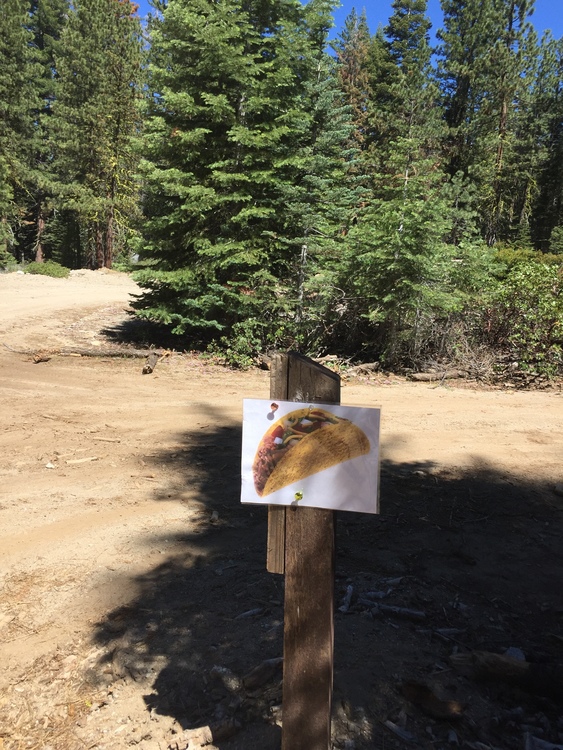 The TACO get togethers were very fun, never at places with Rangers or Reservations- Dogs always welcome. And lastly- Boulder, Bishop, Moab, New Paltz and other places like that attract people who appreciate the outdoors, athletic activities and the vibe that goes along with that lifestyle. People like to be around others who share similar attitudes and will sacrifice to be part of a community. Later |
|
|
I agree regarding the bubble observation. Overall health is very specific, almost down to communities in some places. I worked for the Army for 20+ years, traveling 6-10 times a year, all over the world. Community health and obesity on a regional scale was easy to see. The hardest hit places: Native American communities on the mainland and in small villages in Alaska. Overall wonderful people, but lacking sufficient resources for proper diet and exercise. As an aside, and as an example of Native American generosity, specifically among Yupik people. I was in a small village called Gambell on St Lawrence Island in the Bering Sea. You only get there by plane or private boat, no commercial ferry. Population: about 600. I was there for the day, at least, depending on if the afternoon mail plane could get there (weather sucks) or wanted to get there (sometimes the plane gets diverted, or all seats are reserved for elders or those with medical emergencies). Anyway, knowing I might be staying overnight in the Armory building, I brought food. I ate my lunch alone by the ocean, next to an old whale skeleton. Pretty cool. I went back to work in the Armory building, which also served as the town office/post office/mayor's office. The people working there did not know I had already eaten and made me lunch. A Stouffer's French bread pizza (remember them from when we were kids!). I had to eat to (again), of course. To refuse would be very rude. These people are living on a remote island, with almost no resources (global warming has changed the animal migration patterns, so they never get whales any longer and even seals and walrus are rare). They live on berries, supplements of elk and caribou meat from the state, some fish, and small income from ivory carving and other art work (or the rare government job). But they offered what is (for them) a prized treat of a frozen pizza to a total stranger, a white stranger at that. I love retirement. The only thing I miss about my former job is the travel, and being fortunate enough to meet people such as those in Gambell, AK. TS |
|
|
Mike Kwrote: I'd highly recommend contact lenses. I've been wearing them since I was 19. I'm extremely short sighted; I can't even rad the biggest letter on the eye chart without glasses or lenses. Now I'm old I'm also long sighted, so I have bi-focal contact lenses. Sounds weird but there are concentric circles, alternating between correction for shortsightedness and longsightedness. Your brain works out which to use. Their not perfect (I can't read small writing on labels or the date on my watch) but their certainly good enough for climbing, I can easily read the numbers on my cams. I have no problems with the wind and can wear sunglasses of course (though never do when i climb). |
|
|
I am very adapted to my middle distance readers from wearing them 8hrs a day @ work. No problem seeing the next bolt with them. I do only use them for hard rock climbs where I need to find the dime edges.... I do prefer my long distance glasses for easy rock climbs and ice.. everyone's prescription will be different though.. 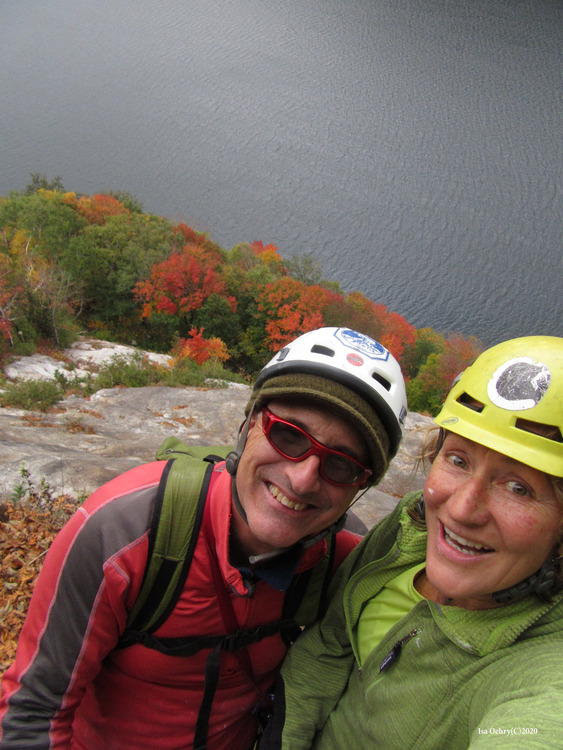 |
|
|
Mike K, I don't agree with Carl about the contacts. I did wear contacts for a while because I thought they would be great for exercise, but in the places I climb dust in the wind was always an issue. Getting a chunk of dirt in your lens six pitches up with 4 to go is a real drag. So I ended up wearing non-Rx sunglasses on top of the contacts to protect from dust and also the sun damage to the eyes. If you're going to be wearing sunglasses anyway, you might as well get Rx sunglasses. I used to get progressive sunglasses but my close vision is so good that I found them more distracting than helpful. Now my Rx sunglasses have just the distance Rx and that works for me. Once thing I will mention is to be careful about the fit of the glasses. Make sure you can shake your head around and that they don't shift. Also, if you wear a helmet, how the helmet fits can make it sit funny on your glasses, and that can be annoying, so take your helmet with you when you pick out the frames! |


