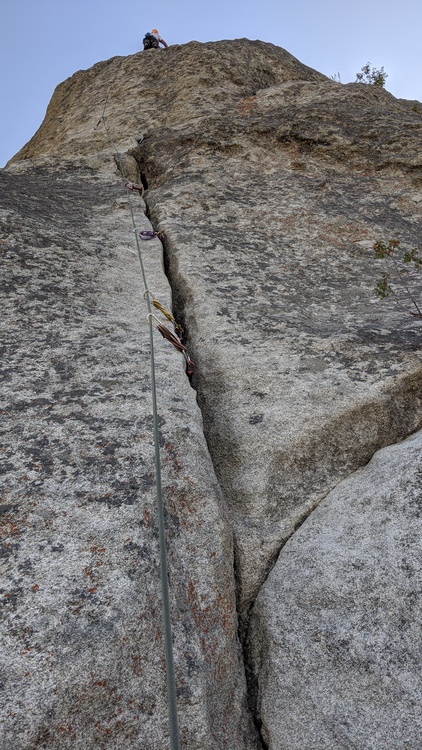
L Kapwrote: This is why I don't like the terms sport and trad. The history here is that climbs that were protected ground-up in a bold style, putting in bolts sparingly where there is no natural pro, are considered to be traditional climbs even if the only pro available is bolts. So you get a lot of really run out climbs that are totally bolt protected but considered to be trad. Not just one pitch among many, but whole multi-pitch slab climbs that are otherwise unprotectable.
Sport climbing is supposed to be a different style where the bolts are intentionally placed close enough together that you can theoretically concentrate on pushing your limits with the climbing movement and not worry about protection. Purists will argue that there are no R or X sport climbs. IMO, this is both confusing and misleading. Every year, people die or get hurt falling in the wrong place while sport climbing. You can't just whip off any sport climb at any point and be assured of your safety.
I'd prefer to do away with the labels "trad" and "sport" and just talk about bolt-protected climbs, or climbs that require gear, and use R or X as needed for either. This would also be helpful for searching the database for what you can climb with just quickdraws. Right now, there are a bunch of climbs in the database that require no trad gear yet are labelled trad for the reasons above.
Well put, well put. Nonetheless, I still feel the general labels trad and sport do help newer climbers.
In general, sport crags are well bolted, safer, do not require cams, and allow for pushing the limits, whereas trad areas are not (whether bolted or unbolted, protected or unprotected, cracks or no cracks).
Case in point: I can't tell you how many climbers have shown up to Joshua Tree 20'-spaced bolted climbs thinking "it's just a sport climb," but had to either back off the climb, or sweat it badly unnecessarily, or take a slabby rolling fall, or not notice that some small trad gear could have actually been plugged in some places. These aren't sport routes...
My biggest recommendation is for new climbers to actually buy a route book of the climbing area they are interested in and read it. The author will always describe the history of the crag and the type of climbs that are found there. This is the biggest oversight of new climbers I have noticed. These forums are great but are still not a substitute for the hard legwork of getting a book and walking the crag to learn if they are interested in climbing there. There are no shortcuts I have found.


 Continue with onX Maps
 Sign in with Facebook