|
|
Ron O
·
Sep 19, 2019
·
middle of nowhere, southern…
· Joined Apr 2018
· Points: 0
dragons wrote: Yup, tricams can be useful An understatement (Greg Lowe let me try out prototypes in 1975 when I worked as a grip for him). Well kids, I'm 65 and still looking to bag virgins. Taken a few knocks climbing but two bad drivers have done me worse.
People sound so obsessed with numbers but I never was. Having good aid skills allows me to go places the 5.15 climbers can't.
I'm still exploring Wingate canyons as cool as IC (cooler actually; no crowds). All you need is gumption (and off-road skills).
|
|
|
Mark E Dixon
·
Sep 19, 2019
·
Possunt, nec posse videntur
· Joined Nov 2007
· Points: 984
John Byrnes wrote: Not always true. A route (at any grade) can be rated for the pump factor, not the hardest single move(s). Perhaps I wasn’t clear. Since Carl can climb V4, he can find at least one, and probably many, 5.12as that he will be able to climb. I’d be surprised if he could climb every 5.12, but will bet he’d be pretty psyched to climb any, if his prior personal best is 11d.
|
|
|
Carl Schneider
·
Sep 19, 2019
·
Mount Torrens, South Australia
· Joined Dec 2017
· Points: 0
Lori Milas wrote: There. Do you feel better now? Yes thank you... Much better.
|
|
|
Mark E Dixon
·
Sep 19, 2019
·
Possunt, nec posse videntur
· Joined Nov 2007
· Points: 984
dragons wrote: Mark, you didn't ask, but here's a different data point. I climb laps for several different reasons: 1) I climb laps to train my mental state (get my head convinced that my feet really will stick - my head needs a lot of convincing). I was getting gripped with frequency for a few years. Doing laps on a single route helped me get over that (some).
2) Usually, I climb laps in very slightly different ways, so I get a different experience of the climb each time. For example: First time, on lead, I use the big nubbin as always. Second time, on TR, I avoid the nubbin, and smear, next time I eliminate the big handhold, and so on. I get to do multiple different climbs with the minimum amount of work. It's not exactly exciting, but when I don't have time, I can kind of train for harder routes without the need to set up a TR.
3) I do train for volume on single pitch to get an endurance workout, like Carl. Usually this is at the gym (which is far, far away) in the winter. But there are some weeks when we don't have time for a multipitch, and taking a short hike to do laps is just the easiest thing to do.
Now, if I stopped repeating climbs in the area where I live, I'd quickly be out of climbs that I can lead, and therefore I'd just have to stop climbing. I'd soon be driving 2 hours away, then 3 hours away, and so on, just to continue climbing. Instead, I suppose I could take up knitting or birdwatching, I suppose. It must be nice to have a multitude of routes at your level in your vicinity - so many that you never need repeat one. I'd actually prefer not to repeat some of the climbs I've done quite so much. It can get boring. Like I said, many weeks there's just not enough time, and it's climb local or not at all. It sounds like you are using the resources that you have very well. You are probably doing other training exercises already, but if not maybe try some of these?-
do your laps using a pre-set pattern, eg two foot moves for every hand move,
or hands always below your shoulders,
left hip in for every move, then right hip in next time,
or one handed climbing.
Your imagination is the limit.
Do elimination climbs with your partner- every lap, each of you eliminates a set number of holds (maybe with a small chalk mark?) and your partner tries to climb the route without them.
Honestly, a variable angle moon board is what you need.
Do you think the volume climbing at the gym (are you doing doubles/triples or something else?) helps your power/endurance or your stamina? Or both?
|
|
|
Jared Willis
·
Sep 19, 2019
·
Unknown Hometown
· Joined Jul 2019
· Points: 0
Mark E Dixon wrote: Perhaps I wasn’t clear. Since Carl can climb V4, he can find at least one, and probably many, 5.12as that he will be able to climb.
I’d be surprised if he could climb every 5.12, but will bet he’d be pretty psyched to climb any, if his prior personal best is 11d.
This is encouraging and interesting. Im 41, just started climbing a year ago. V4 - V5 boulderer but 5.10 gym, 5.9 sport leader. Im just getting into really improving technique and avoiding arm pump. Apparently I REALLY need to work on technique.
|
|
|
Dallas R
·
Sep 19, 2019
·
Traveling the USA
· Joined May 2013
· Points: 191
We kind of messed up a little. We haven't been climbing real regularly since last November. It shows in my perception of where my efficiencies in climbing should be, handling gear, rope management, anchor management. I know there is only one remedy for this, get out and climb more.
I also need to go through my gear and come up with a better anchor extension. It just seems to me that the anchors in the east are set back from the edge more than they are in the west. I know this is a huge subjective statement based on my perceptions and not based on actual fact, just seems like it. A big factor in this is the low grade climbs we do, of course there is going to be rope drag. I am not whining here, just letting you all know I have work to do.
|
|
|
Mark E Dixon
·
Sep 19, 2019
·
Possunt, nec posse videntur
· Joined Nov 2007
· Points: 984
Jared Willis wrote: This is encouraging and interesting. Im 41, just started climbing a year ago. V4 - V5 boulderer but 5.10 gym, 5.9 sport leader. Im just getting into really improving technique and avoiding arm pump. Apparently I REALLY need to work on technique. V4 inside or outside?
|
|
|
Jared Willis
·
Sep 19, 2019
·
Unknown Hometown
· Joined Jul 2019
· Points: 0
Mark E Dixon wrote: V4 inside or outside? Inside. Havent bouldered outside.
|
|
|
rgold
·
Sep 19, 2019
·
Poughkeepsie, NY
· Joined Feb 2008
· Points: 526
Dallas R wrote: We kind of messed up a little. We haven't been climbing real regularly since last November. It shows in my perception of where my efficiencies in climbing should be, handling gear, rope management, anchor management. I know there is only one remedy for this, get out and climb more.
I also need to go through my gear and come up with a better anchor extension. It just seems to me that the anchors in the east are set back from the edge more than they are in the west. I know this is a huge subjective statement based on my perceptions and not based on actual fact, just seems like it. A big factor in this is the low grade climbs we do, of course there is going to be rope drag. I am not whining here, just letting you all know I have work to do. I don't know what you are doing, but if you are using a plaquette (guide-plate device), chuck it for extensions. Simple answer: build your anchor as usual at the back of the ledge---this is an occasion for a cordelette. Clip the masterpoint with your rope, walk out to the edge and sit down, clove the rope back to you, and use a harness belay. Or better than a harness belay but almost the same, clip the device direct to your tie-in loop (not the harness belay loop), make sure your clove-hitched anchor strand is nice and tight, and belay as you would for a harness belay. With this small variation, the load goes straight to the anchor.
|
|
|
Mark E Dixon
·
Sep 19, 2019
·
Possunt, nec posse videntur
· Joined Nov 2007
· Points: 984
Jared Willis wrote: Inside. Havent bouldered outside. Don't be discouraged, but most inside bouldering grades are wildly inflated. You are young, you have plenty of time to climb 5.12 if you stick with climbing.
Or for that matter, 5.13 or 14.
|
|
|
Carl Schneider
·
Sep 19, 2019
·
Mount Torrens, South Australia
· Joined Dec 2017
· Points: 0
Jared Willis wrote: Inside. Havent bouldered outside. There is a big difference I feel. I think the new style of bouldering and indeed sports climb setting is very gymnastic and very far removed from outdoor climbs. And of course it's a lot easier to read a climb outdoors. I always take indoor grades with a pinch of salt. Even some of the outdoor boulder problems I've done I beg to differ with the grade. There's at least two V4s in the Grampians I can do laps of (here he goes on about laps again) that I reckon are V2 maybe V3. Also the fall can play on things. Falling indoors is invariably safer than falling on a crash pad in my opinion.
|
|
|
Carl Schneider
·
Sep 19, 2019
·
Mount Torrens, South Australia
· Joined Dec 2017
· Points: 0
rgold wrote: I don't know what you are doing, but if you are using a plaquette (guide-plate device), chuck it for extensions. Simple answer: build your anchor as usual at the back of the ledge---this is an occasion for a cordelette. Clip the masterpoint with your rope, walk out to the edge and sit down, clove the rope back to you, and use a harness belay. Or better than a harness belay but almost the same, clip the device direct to your tie-in loop (not the harness belay loop), make sure your clove-hitched anchor strand is nice and tight, and belay as you would for a harness belay. With this small variation, the load goes straight to the anchor. Or use the rope to create the anchor?
|
|
|
rgold
·
Sep 19, 2019
·
Poughkeepsie, NY
· Joined Feb 2008
· Points: 526
Carl Schneider wrote: Or use the rope to create the anchor? That won't work with a long extension, which is why I mentioned a cordelette. If the belayer at the edge is D feet from the back where the anchor is, then a 3-point anchor consumes 6D feet of rope, not counting any knots. Just today I had a belay at the edge with the anchor probably 20 feet back. That would have needed 120 feet of rope! As it is, my double anchor strand used up 40 feet of rope, which in this case I had. Of course you can use the rope or a cordelette and stay near the anchor, but with a longish distance to the edge you lose voice contact, can't see your climber, typically get high friction at the edge, and add a length of rope to the belay system that will increase the stretch the second experiences.
|
|
|
Carl Schneider
·
Sep 19, 2019
·
Mount Torrens, South Australia
· Joined Dec 2017
· Points: 0
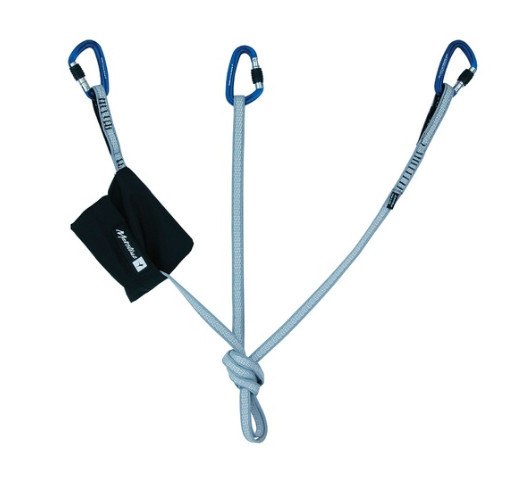
rgold wrote: That won't work with a long extension, which is why I mentioned a cordelette. If the belayer at the edge is D feet from the back where the anchor is, then a 3-point anchor consumes 6D feet of rope, not counting any knots. Just today I had a belay at the edge with the anchor probably 20 feet back. That would have needed 120 feet of rope! As it is, my double anchor strand used up 40 feet of rope, which in this case I had. Of course you can use the rope or a cordelette and stay near the anchor, but with a longish distance to the edge you lose voice contact, can't see your climber, typically get high friction at the edge, and add a length of rope to the belay system that will increase the stretch the second experiences. Hmmm. Was thinking about rope length. Reason I ask is my mentor insists on always using the rope for a belay, so that's all I've ever done. Would you recommend the Metolius Equaliser Anchor at all? https://www.climbinganchors.com.au/metolius-equaliser-anchor-16mm-3m?gclid=Cj0KCQjwzozsBRCNARIsAEM9kBNn9SAd7bsvMFVnMdW7yYxJBj7degUvU9V10Vq3T4TePGSIngkQasMaAiPaEALw_wcB
|
|
|
Rokjox Teleski
·
Sep 20, 2019
·
Boise, ID
· Joined Sep 2015
· Points: 15
This post violated Guideline #1 and has been removed.
|
|
|
Carl Schneider
·
Sep 20, 2019
·
Mount Torrens, South Australia
· Joined Dec 2017
· Points: 0
Rokjox Teleski wrote: @ Rokjox- are you sure you haven't stumbled into the wrong thread?
My observation is that this one is about being kind and supportive.
Thats funny. I thought this thread was all about being old and fat.
But I guess its all about stroking ego.
Like a 60 yo woman is going to be able to do it your way, Just a few words from you of training , and her body gonna be TONE Momma!
You want cardio, you dont do climbing, you ride or run... you want endurance, you better find something that doesnt do reps. Reps are the opposite of endurance. Reps are sprints.
I got sons that will leave you miles behind before you even get to that mountain. Maybe me, and I dont "train", I just do it.
All these years climbing and you ROMP on 5.8 trad? After being on MP since 12/17! Wow. And you can pull a 5.11 if its a sport climb... that means a half pitch?
OK guy... I got you bracket.
Oh my. Oh my oh my oh my. You're making FUN of someone's climbing ability? I'm not sure WHAT you are but you are not a climber. Climbers don't do that.
|
|
|
Mark E Dixon
·
Sep 20, 2019
·
Possunt, nec posse videntur
· Joined Nov 2007
· Points: 984
Rok, I keep trying to tell you that you are posting in the wrong thread.
Try this one-
Finally, a safe place
|
|
|
dragons
·
Sep 20, 2019
·
New Paltz, NY
· Joined Aug 2011
· Points: 978
Brian Wirtz wrote: Dragons - I did absolutely nothing for the first two weeks, except for the minimum amount of movement necessary for taking care of basic bodily functions. After that, I started moving slowly, and concentrated on how I move and stand, etc.. After a month or so, I concentrated on getting my core in better shape following advice in The Back Mechanic written by Stuart McGill - his methods focus on identifying where the pain is and what causes it, how to correct your posture/everyday movement to avoid whatever it was that caused the disc weakness to develop, and exercises to strengthen the muscles that provide the primary back support. I did not do any PT, surgery, etc., but focused on his method at home. My wife screwed her back up several months before I did, and so I had an in-house "expert" to help in my recovery.
At this point, I'm pain-free, and am fairly active. No jumping, running or other activity that could jar the back. knowing that a herniated disc isn't going to fully heal for approx. one year, I'm being really careful. When I'm at the gym, I down climb everything, avoid routes where I might fall from a height, etc. I know this is slowing my progression to harder routes, but it sure beats re-herniation! The key to avoiding a new herniation is to maintain good back health, proper posture and moving correctly. Brian, Hopefully you have the patience to wade through all these posts and find this. Thanks for the rec on The Back Mechanic. That's the 2nd rec I"ve had for that. I've bought the book and just have to read it. From what you say, it will be helpful. I already bought McKenzie's "Treat Your Own Back"; it was useful, but I didn't feel it goes far enough (i.e. most of what I learned, I'd already seen in YouTube videos. Still worth reading IMHO.)
I think in my case, the problem may have developed from 3 things: 1) I'm a desk jockey and probably have a habit of sitting improperly (not sure, since I never had back pain during my career). 2) Lifting too heavy loads of firewood over the course of 2 winters. 3) Shoveling too much/too heavy snow over 2 winters. I also didn't recognize when I was getting minor symptoms over the last two years, and kept doing the same things, thinking my body would strengthen over time, when it was just getting more injured (I think).
You said you are pain-free now, but do you still feel symptoms of the injury? I was pain-free for a while, and I recently did something which caused a very small amount of pain to return, on and off.
I have not heard that herniated discs "heal". I thought it was a toss up whether they'd move back into place over time, or whether they would stay herniated. Also, I keep hearing that many people will show a herniated disc on an MRI but have no symptoms (for every decade of life, statistics show that there are that percent of people who have a herniated disc - e.g. by age 70, 70% of the population will show a herniated disc on an MRI). Not sure how well supported that stat is.
Anyway, thanks for the additional info, and good luck healing up!
dragons
|
|
|
Dallas R
·
Sep 20, 2019
·
Traveling the USA
· Joined May 2013
· Points: 191
rgold wrote: If the belayer at the edge is D feet from the back where the anchor is, then a 3-point anchor consumes 6D feet of rope, not counting any knots. Just today I had a belay at the edge with the anchor probably 20 feet back. That would have needed 120 feet of rope! As it is, my double anchor strand used up 40 feet of rope, which in this case I had. Of course you can use the rope or a cordelette and stay near the anchor, but with a longish distance to the edge you lose voice contact, can't see your climber, typically get high friction at the edge, and add a length of rope to the belay system that will increase the stretch the second experiences. The equation is good to know. I kept either getting it too short or too long making for uncomfortable belays. I just need to practice it more. .
|
|
|
dragons
·
Sep 20, 2019
·
New Paltz, NY
· Joined Aug 2011
· Points: 978
Mark E Dixon wrote: It sounds like you are using the resources that you have very well. You are probably doing other training exercises already, but if not maybe try some of these?-
do your laps using a pre-set pattern, eg two foot moves for every hand move,
or hands always below your shoulders,
left hip in for every move, then right hip in next time,
or one handed climbing.
Your imagination is the limit.
Do elimination climbs with your partner- every lap, each of you eliminates a set number of holds (maybe with a small chalk mark?) and your partner tries to climb the route without them.
Honestly, a variable angle moon board is what you need. Hey Mark,
Sorry if my words were misleading. I have done laps in past years as I described. So it's clear, I'm not doing laps at all this year. I'm sticking on real easy stuff, because I hurt my back last winter, and it's still not healed. All the stuff I'm doing now is just to have fun, and to try not to lose the skills and technique I've developed. I'm not training (much), either, because of the injury. Hopefully, I'll get back to training one day.
In any case, thanks for the training ideas. Yeah, a MoonBoard would be nice! I don't really have the funds/house for that. I've got a woody for training in the basement. It's small but it helps. It's got one vertical panel and one slightly overhanging one. Currently, I'm mostly sticking to vertical work, since the overhanging one seems to generate problems in my back.
Despite what Rokjox said below, I do laps to train "endurance". This may be a semantics issue. So what I mean by that is that I want to be able to do a multipitch route (like 10 pitches) in a morning without my body (especially arms) tiring out along the way. The best way to train for that is to just to do multipitch, I guess. But many times I don't have time for that. So far as I can tell, the second best way to train for multipitch is to run laps on a route. It can be indoors or outdoors. I've done it indoors too, but the round trip to the gym is a 2 h 40 min drive. In contrast, there's a crag closer by with a RT drive of 40 minutes or so. We can hike in for 20-30 minutes (healthy aerobic exercise, yay!), lead a route, do some laps, maybe lead one more, and we're done. Hike back out. Nice morning or afternoon.
Do you think the volume climbing at the gym (are you doing doubles/triples or something else?) helps your power/endurance or your stamina? Or both? In the gym I've only done doubles, sometimes I downclimb to make the route longer. In my mind, "stamina" is the same as "endurance" - endurance to me means I can keep doing this thing for a long time. Anyway, I am training for stamina. So far as I can tell, training laps works for that. Last winter, the gym climbing got me much stronger than I've been in previous years when the outdoor season started. Too bad I got injured. I think you mean "power/endurance" as defined in that climbing.com article. So that's a very nice thing to have, but I need to actually get more power, first, before I even consider training power-endurance. When climbing, my arms fail when I don't have good feet or when I have to hang back on them for a while. I need to be able to pull one such move before I can think about linking them together. dragons
|

 Continue with onX Maps
 Sign in with Facebook