Continue with onX Maps
 Sign in with Facebook






"Escaping the Belay" is not a thing



|
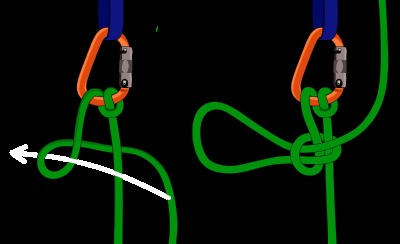
FosterK wrote: The supposed scenario is a fallen leader weighting your belay plate. The presumption is that the belay hand is occupied with securing the rope. This is an another way to secure the belay plate without using the munter mule in order to go hands free, which is the question I was directly responding to. The intention is that it would be "the same thing," so thank you for confirming. |
|
|
Anonymous wrote: Does anyone have a good article or video about escaping the belay? Not what you asked for, but this book is a good read |
|
|
Anonymous wrote: Does anyone have a good article or video about escaping the belay? I'm going to learn it. That way if HB ever falls and breaks his balls I'll be able to escape the belay and get him an ice pack. David Fasulo Self Rescue |
|
|
L Kap wrote: Chest thumping - MP desperately needs counterweights to it.. Weird to see “just use your brain when you get there” is being recommended by some to the exclusion of “also use your brain in choosing the scope of your training.” Seems a disservice to many fellow climbers. I get that some can not stomach any self-rescue training on classic fundamentals. For some of us, the dependency on the joy of just climbing is too great to spend time otherwise. I have climb partners who don’t for this reason. I also have other climb partners who literally can not learn a knot/hitch other than a figure eight - their brain is not wired that way which is ok with me. It is all part of my responsibility to know my partners. There are of course other reasons why an individual might choose to not train on the classic fundamentals. But to insist all belong in that set of “anti-training” folks ... and if you don’t you are uncool, stuck in the Boy Scout groove so to speak, PC, ... well, it reminds of the cliques that form in prisons. But I’ll stop short before naming who here are the life criminals. ;) In my experience, just a couple self-led sessions a year with partners are enough to not forget it all before the next year’s sessions come around to build the knowledge base some more. And, yes, there I am playing the probabilities game ... that it won’t be too late for me before I learn X. Yes, I would not climb at all if self-rescue training felt like it took a significant amount the time I had for X. Still, any concern that I haven’t yet practiced X .... fades as the years go by and the application of, say, this or that knot/hitch becomes natural and the collection of them sort of easily self-organizes into a viable way to accomplish X with high probability of success. Sure, a few of us are born with that ability sans training on fundamentals - but not the average climber. tl;dr? Some here do not seem to understand that this is not all about them. |
|
|
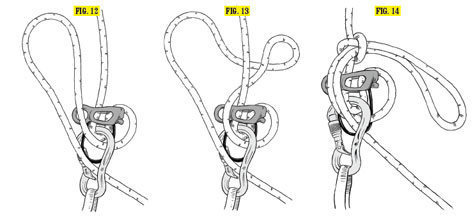
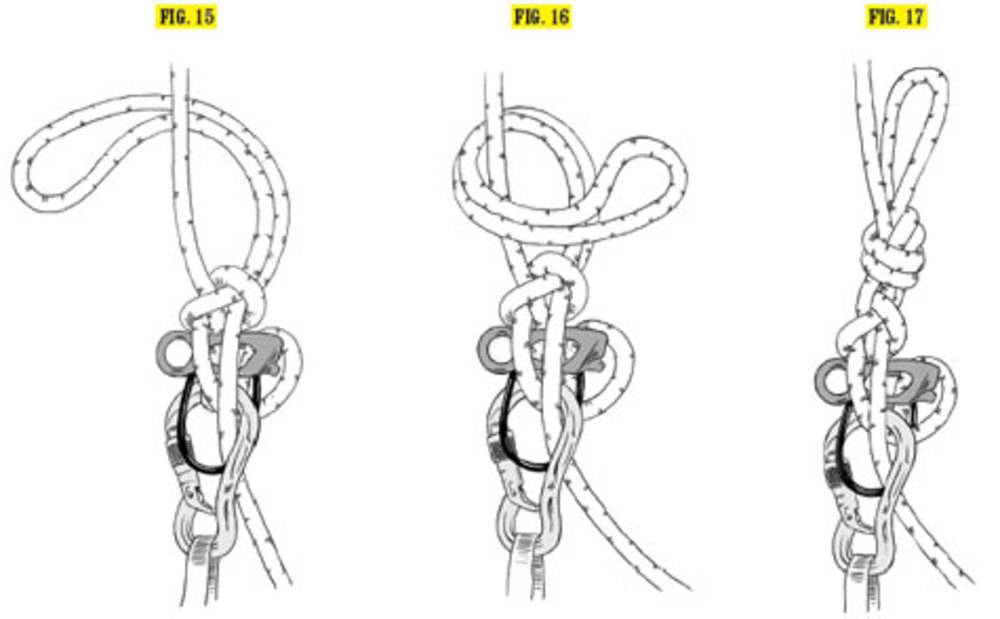
ddriver wrote: But overhand on a bight does not get you the same result - it basically sticks in your belay device and you can’t unlock it. Imagine a large weight difference between the fallen leader (heavy) and the belayer (light), and you may not be able to transfer the load, at least not without cutting the rope. I also don’t think the munter mule is that hard to tie one handed, especially if you practice it every once in a while. For most of the knot tying, the brake side is already in braking position fwiw. |
|
|
ddriver wrote: You don't have to tie the mule one-handed when you're using a tube-style belay device. Once you have bent the brake strand back under the device and through the belay carabiner (see your first figure), the brake has been applied and you just have to make sure it doesn't slip while you're tying the mule, which is two quick knots on a bight. You are using both hands and it takes like 5 seconds, 10 seconds if you're taking your time. This is easier to try out for yourself than to explain verbally. |
|
|
Bill Lawry wrote: What are the "classic" fundamentals? Not being a smart ass. What are they? Up thread it seemed like there were people advocating that you really shouldn't even go climbing unless you had a deep knowledge of "escaping the belay" and crevasse rescue and CPR and how to release pressure of a pneumothorax... I/you know that a high percentage of the new climbers out there aren't even proficient at belaying or climbing or placing gear. They learned in a gym/bouldering and are venturing outside and getting into trouble. My point is they wouldn't be getting into trouble if they knew the basics of climbing first. Maybe that means they don't do any multipitch until they know how to transfer a loaded belay to an anchor? |
|
|
are we done yet?? |
|
|
curt86iroc wrote: are we done yet?? We're only on page 10! Are you new here? |
|
|
curt86iroc wrote: are we done yet?? I feel like there's at least 10 more pages worth of calling other people idiots left in this group for this topic. |
|
|
This centers on the question "What's the best way to learn to climb?". |
|
|
Did you use your brain to write that? |
|
|
There was a situation in idaho a few years back where the leader took a bad fall, was seriously hurt and could not be lowered. In that situation the belayer escaped the belay, was able to climb up using the fixed rope, that was secured to their injured partner and stabilize as best he could until help could arrive. this was 3 pitches up the route. |
|
|
Glowering wrote: Mpech your summary is pretty close to what you would likely need to do with no help available. I like Prussiks for ascending in this case instead of jumars because they lock in both directions. If the top piece blew and you were caught by the bottom anchor, as on a lead fall, they’d hold. Any friction hitch would likely fail in this scenario, you'd be suprised how easily cord (or a sling) melts. A hard back-up knot is your best bet. |
|
|
Tradiban wrote: This centers on the question "What's the best way to learn to climb?". Guides are best utilzed as a catalyst to learning, or perhaps to hit an objective you wouldn't ordinarily be able to achieve. Otherwise, yes. Go climb and learn along the way. That isn't a debate. Infact, there is no debate here. It's unanimous: greater knowledge yields greater safety. And, everyone seems to agree with your general point, simple is best. I'd further submit that, as a climber, if you cease learning you've become complacent and it's time to retire. While on that subject, 10 pages. This horse is dead, can it be put to rest? |
|
|
I stand with #tradibrand. Now let me read what he wrote this time .... |
|
|
Buck Rio wrote:I do not have a list that is anymore illuminating than what has been discussed. My feeling is you will discover the need by mentally taking away the technological gadgets and increasing the loss of capability you have in your partner (injury). Also complicate the situation: multi pitch, single pitch, Alpine, etc.. The most rewarding thing I have gotten out of practicing is realizing a need out on a Climb and then one day going in my backyard or park with a friend and figuring it out. Well there are ways to still do multi pitch and mitigate the risk from lack of knowledge, right? Take a partner who knows those things and knows enough to likely not get into trouble with you. Or go with multiple people, safety in numbers. Or decrease the commitment of the Climbs you plan to do I know I am not addressing all your points. These are just the things that seem to work for me. And it started from the beginning for me. We had worked through escape the belay before I ever led trad. Again, I feel most climbers should commit at the beginning to whittling away at this over the years and not all at once. I like to have fun along the way too. Anyway, I don’t take the hard line that one should stay off of multi pitch until one is proficient at all of these common things you can find in a self rescue book. The minimum knowledge for following on multi pitch with experience people is a relatively short list for me.If I were looking for a sport that had no mortal risk to me, I would not be climbing. :-) So I guess at some level, I do foolish things as well. Anyway, I do not think it wise for one person to tell someone else what risks they should assume. That is probably my main pet peeve with some in this thread. |
|
|
comes in handy when you have to take a dump. |
|
|
Bill Lawry wrote: I do not have a list that is anymore illuminating than what has been discussed. My feeling is you will discover the need by mentally taking away the technological gadgets and increasing the loss of capability you have in your partner (injury). Also complicate the situation: multi pitch, single pitch, Alpine, etc.. The examples that previous posters described, up a monster climb in the wilderness, are not "beginner" type climbs. I would hope that anybody that goes into the mountains with aspirations of topping out on a big wall or formation has basic self rescue skills. Shit happens. If you take a beginner on an adventure climb, and they don't have any self/partner rescue skills, that's on you. I was beaned right between the eyes on Royal Arches (which isn't really and adventure with all the people) with something dropped(belay device?), and it could have been bad if I had been leading. As it was there was just a lot of blood and we carried on. I've had a partner that was hit in the hand by some falling rock that was scary as shit, because he lost the use of that hand, we rapped and it was really hard for him. |
|
|
Steve Levin wrote: ... The self-rescue approach of the belayer/rescuer ascending the rope to reach an incapacitated leader is really not ideal unless it's on a sport route. The fact that the top pro held the leader's fall doesn't necessarily mean that it's been tested and proven to be bombproof. It could mean instead that it was tested almost to the point of failure and could fail partway through the rescue. If the leader isn't able to set a new anchor and the top pro pops while both the rescuer and the leader have their full weights on the rope, they will both go into free-fall acceleration and slam on the next pro down with a much greater force than a "regular" leader fall, making it more likely that that next pro will fail too, etc. (in addition to the possibility of the rescuer getting injured in the fall) |