|
|
August McKinney
·
Jun 24, 2019
·
Unknown Hometown
· Joined Mar 2019
· Points: 10
A while back a guy took some test falls on a very similar bridge finger crack in Bellingham and couldn't get cams to hold for love or money. It made it into the little unofficial "Bellingham Area Rock Climbs" mini-guide.
If the rope drag is enough to rotate them around in there... Isn't that worrisome in relation to the texture? Asking as someone who has been placing cams for all of 2 months, so ya know, I know some things...
|
|
|
Michael S
·
Jun 24, 2019
·
Somewhere, USA
· Joined May 2019
· Points: 30
August McKinney wrote: A while back a guy took some test falls on a very similar bridge finger crack in Bellingham and couldn't get cams to hold for love or money. It made it into the little unofficial "Bellingham Area Rock Climbs" mini-guide.
If the rope drag is enough to rotate them around in there... Isn't that worrisome in relation to the texture? Asking as someone who has been placing cams for all of 2 months, so ya know, I know some things... I'm thinking because it's just too parallel... If there were some inconsistencies for the cam lobes to grab it would help keep from rotating. Or if it had a rougher texture. I bounced on them pretty good and they seemed to "set" solid under a load.... But I'm newer to placing cams as well, so what do I know.
|
|
|
Michael S
·
Jun 24, 2019
·
Somewhere, USA
· Joined May 2019
· Points: 30
Rick L wrote: Sounds like some extension is needed if your seeing that Thank you Rick
|
|
|
Bill Lundeen
·
Jun 24, 2019
·
Fort Bragg, CA
· Joined Nov 2013
· Points: 120
That's correct, for sure, Eric. I was the one giving the hip belay, probably around 2001 or so. Our engineer friend said it won't hold on polished concrete, but it held nicely. It was a #1 Camalot, about 60 ft off the ground. Didn't budge and barely raised me onto my toes as I caught him. So no guarantees it'll hold you, Michael, but I'd say chances are quite good it will. Just make sure it's not forced in so tight there is no expansion room on the lobes...
|
|
|
abe r
·
Jun 24, 2019
·
Boise, ID
· Joined Dec 2012
· Points: 225
that is indeed a bridge expansion joint and probably poured at 4ksi compressive strength however concrete gets considerably stronger (upwards of 6-7ksi) as it ages due to creep. You tell us its got some good texture inside (as opposed to left in formwork) so thats def a plus for good cam placements. Bury em deep enough away from any edge spalling potential and you'll be fine.
Send it brah!
|
|
|
Andrew Krajnik
·
Jun 24, 2019
·
Plainfield, IL
· Joined Jul 2016
· Points: 1,739
If you place cams in freshly poured concrete, and wait for it to cure, they should be absolutely bomb-proof. Really hard to clean, though...
|
|
|
Michael S
·
Jun 24, 2019
·
Somewhere, USA
· Joined May 2019
· Points: 30
Andrew Krajnik wrote: If you place cams in freshly poured concrete, and wait for it to cure, they should be absolutely bomb-proof. Really hard to clean, though... When cams dare to become bolts
|
|
|
Andy Novak
·
Jun 24, 2019
·
Bailey, CO
· Joined Aug 2007
· Points: 370
Michael S wrote: I accually placed them downward. They ended up rotating straght out as I pulled rope and clipped going up. Any way to keep them from rotating?? The fact that you're asking this question means you should probably seek more professional instruction. Extending gear placements with a runner or quick draw so it doesn't walk or rotate is basic trad climbing 101.
|
|
|
Jorge Pantalones
·
Jun 24, 2019
·
Colorado
· Joined Apr 2011
· Points: 85
Try checking your local buildering codes and see what the minimums are for poured concrete. If they're above 15kn you should be good to go.
|
|
|
Michael S
·
Jun 24, 2019
·
Somewhere, USA
· Joined May 2019
· Points: 30
Andy Novak wrote: The fact that you're asking this question means you should probably seek more professional instruction. Extending gear placements with a runner or quick draw so it doesn't walk or rotate is basic trad climbing 101. Ummm... Yeah That's exactly why I'm here asking questions and asking any one who I can find that does have experience. I'm also activity seeking seasoned climbing partners who will go climb with me when able to. It's called a learning curve, and yes I'm newer so I'm going to have to find these things out somehow, yes? I've gone on several outings to the crag and I'm at the gym 2-3 times a week also asking questions to those who actually know, not just say they know. Also practicing what I can, albeit sometimes by my self, and leaning by trial and error... But also safely. Like my top rope belay as I learn how to place cams. I knew that extending pro helps keep drag down on the rope and to keep rope and biners of sharp corners. I thought that's why but didn't want to assume, you know what they say about assumptions. I just didn't know that it would help in this particular situation hence why I'm hear asking questions to lean from those willing to guide and teach. I will listen and are more than willing to put in the work. But hey thanks for sending me back to pre-k.
|
|
|
Jeffrey K
·
Jun 24, 2019
·
Seattle, WA
· Joined Apr 2018
· Points: 0
The responses as to why the placement is bad aren't very clear, so here goes.
You should be clipping a quickdraw, or really an alpine draw, to the cam and clipping into that. Don't clip directly to a biner connected to the cam. Basically you're pretending your cam is a bolt; treat it as you would a bolt.
On routes where rope drag is potentially an issue by just doing that, you'd always use an alpine draw and extend it. A straight crack like this does not require an extended draw but still requires a draw, not a straight clip to the cam.
As for concrete holding a fall, I dunno. Seems like it would, considering how good the placements (should) be. But you're better off throwing a top rope and just having your belayer give you slack for a mock lead. So just tell your belayer to always keep slack in the rope.
|
|
|
Roots
·
Jun 24, 2019
·
Wherever I am
· Joined Dec 2010
· Points: 20
Everything you are doing to get educated is good but you've got to read the text books too IMO.
|
|
|
Forthright
·
Jun 24, 2019
·
Unknown Hometown
· Joined Oct 2011
· Points: 110
Jeffrey K wrote
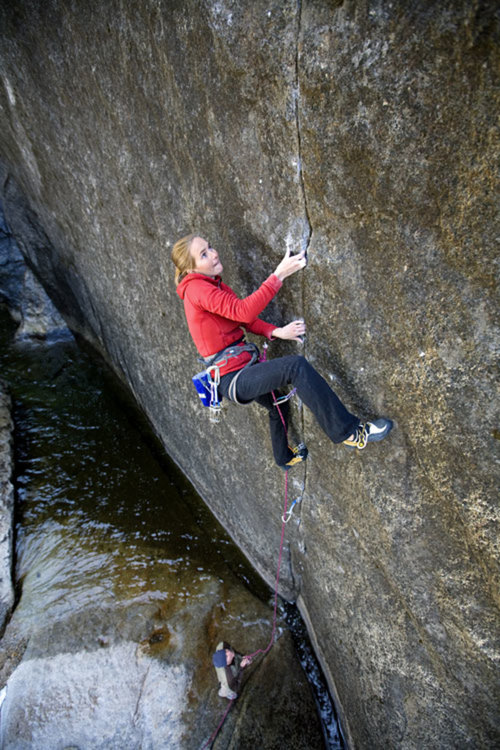
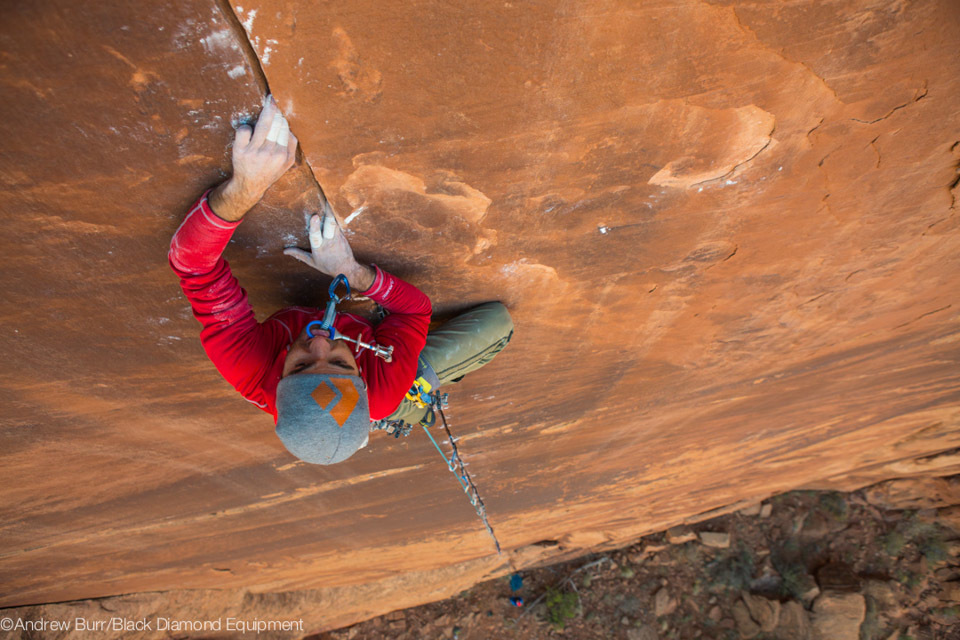
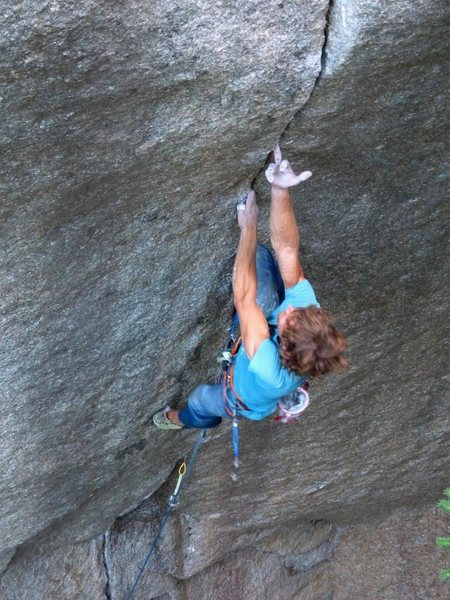
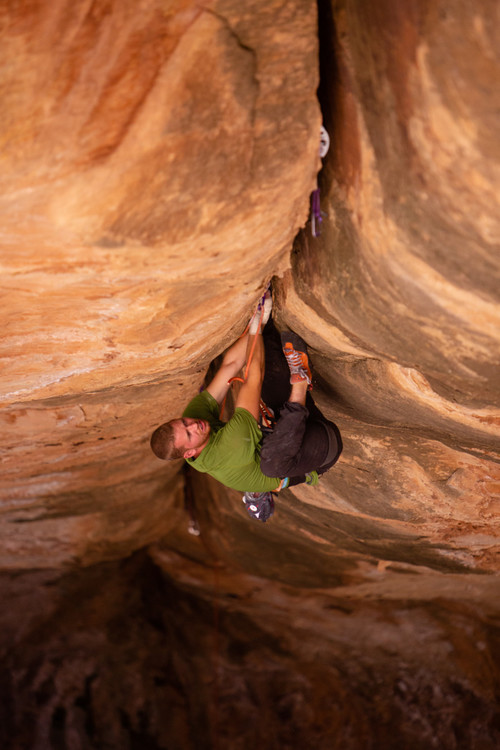
You should be clipping a quickdraw, or really an alpine draw, to the cam and clipping into that. Don't clip directly to a biner connected to the cam.....A straight crack like this does not require an extended draw but still requires a draw, not a straight clip to the cam. This is the dumbest thing I've read on MP in a while
|
|
|
Jeffrey K
·
Jun 24, 2019
·
Seattle, WA
· Joined Apr 2018
· Points: 0
Forthright wrote: This is the dumbest thing I've read on MP in a while
You're showing professional climbers with literally thousands of climbs of experience and, frankly, a very high tolerance for risk to dispute advice to a new climber? Yes, it's (generally) better to clip a draw to a cam and clip to that. It's a good, safe habit to get into.
No, the police don't arrest you if you don't and no, you won't necessarily put yourself at more risk if you don't. But in response to the OP saying his cams were rotating, a draw is one of several areas to address.
The climbers you show likely weren't because it's slower and takes more energy.
|
|
|
Eric Roe
·
Jun 24, 2019
·
Spokane
· Joined Jan 2016
· Points: 16
Jeffrey K wrote: The responses as to why the placement is bad aren't very clear, so here goes.
You should be clipping a quickdraw, or really an alpine draw, to the cam and clipping into that. Don't clip directly to a biner connected to the cam. Basically you're pretending your cam is a bolt; treat it as you would a bolt. I clip straight into the racking biner on vertical splitters all the time, haven't died yet
|
|
|
Jeffrey K
·
Jun 24, 2019
·
Seattle, WA
· Joined Apr 2018
· Points: 0
Eric Roe wrote: I clip straight into the racking biner on vertical splitters all the time, haven't died yet That's not an actual argument. Why do you clip directly into a racking biner? Do you understand when it's okay to do so and when it creates rope drag and/or potentially walks a cam? Or did you see a friend do it and your friend hasn't died so it must be correct? It's bad advice to give to a beginning trad leader. It's worse advice to give to a beginning trad leader who just said his cams are walking.
You can safely clip directly to the cam in some circumstances. You can safely clip with a draw in a lot more circumstances, including all of the circumstances where you can clip directly to a cam.
|
|
|
Steve Shen
·
Jun 24, 2019
·
Richland, WA
· Joined May 2017
· Points: 0
Jeffrey K wrote:You should be clipping a quickdraw, or really an alpine draw, to the cam and clipping into that. Don't clip directly to a biner connected to the cam. Basically you're pretending your cam is a bolt; treat it as you would a bolt. Extension is important, yeah, but the way you are explaining it makes it sound like you should always extend. Which usually won't hurt, but I've seen people extending their placements 5ft off the ground and I'm pretty sure it's probably because they were just blindly told to always extend their gear.
|
|
|
Eric Roe
·
Jun 24, 2019
·
Spokane
· Joined Jan 2016
· Points: 16
Jeffrey K wrote: That's not an actual argument. Why do you clip directly into a racking biner? Do you understand when it's okay to do so and when it creates rope drag and/or potentially walks a cam? Or did you see a friend do it and your friend hasn't died so it must be correct? It's bad advice to give to a beginning trad leader. It's worse advice to give to a beginning trad leader who just said his cams are walking.
You can safely clip directly to the cam in some circumstances. You can safely clip with a draw in a lot more circumstances, including all of the circumstances where you can clip directly to a cam. So you gave an "always do this" answer, then get called out, and backtrack your answer to add the missing nuance while casually insulting my climbing ability. MP is fun isn't it?
|
|
|
Jeffrey K
·
Jun 24, 2019
·
Seattle, WA
· Joined Apr 2018
· Points: 0
Steve Shen wrote: Extension is important, yeah, but the way you are explaining it makes it sound like you should always extend. Which usually won't hurt, but I've seen people extending their placements 5ft off the ground and I'm pretty sure it's probably because they were just blindly told to always extend their gear. Yes, the OP should always use a draw on cams until he has the experience to know when he doesn't have to. Why are people putting cams in the wall 5 feet off the ground? How would the extra 12 or 18cm cause a problem? If you're doing something that's getting you within 12 to 18 cm of decking YGD soon anyway.
I get it. It's faster & easier to clip the biner on the cam. I can be lazy, too. But it's simply not safer and not good practice as someone just starting Trad leading.
You guys would probably show up at a driving class for teenagers and tell them "Um, driving 20 MPH over the speed limit is fine and turn signals are always optional!" Technically pretty true, and it'll save you some time, but contextually idiotic.
|
|
|
Steve Shen
·
Jun 24, 2019
·
Richland, WA
· Joined May 2017
· Points: 0
Jeffrey K wrote: Yes, the OP should always use a draw on cams until he has the experience to know when he doesn't have to. Why are people putting cams in the wall 5 feet off the ground? How would the extra 12 or 18cm cause a problem? If you're doing something that's getting you within 12 to 18 cm of decking YGD soon anyway.
I get it. It's faster & easier to clip the biner on the cam. I can be lazy, too. But it's simply not safer and not good practice as someone just starting Trad leading. Hard move off the deck? Putting a sling on it can be the difference between stretching the rope and stumbling hard, and eating shit and spraining an ankle.
You're the one giving OP be-all-end-all advice while ignoring the nuances man.
edit: yeah 5ft off the ground was definitely an exaggeration, probably more like 10-15ft.
|

 Continue with onX Maps
 Sign in with Facebook