
 Continue with onX Maps
 Sign in with Facebook






How to deal with the slack in the system transitioning to rappel from bolted anchors at foot level on the edge?
|
|
The situation arises when there are bolted anchors at foot level on the edge of the cliff: 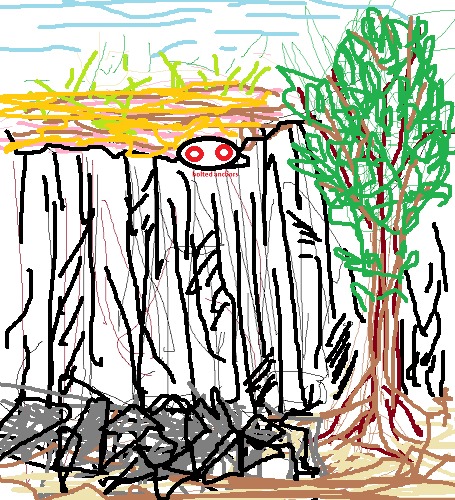 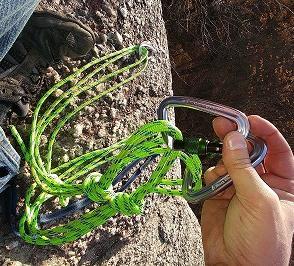 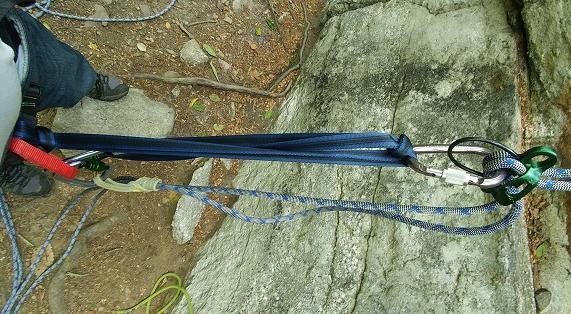 If you can't set up a static rope in the back of the ledge (say, off a tree or boulder) to lower yourself smoothly until the rappel device comes under tension, I only see two solutions to avoid downclimbing on a slack rappel setup with a possible nasty slip: 1. Set up a static rope off one of the bolts (using one of the locking biners already in use for the main anchor), and use a grigri to lower yourself until the Prusik engages the ATC and makes the rappel device taut. This would entail connecting a dynamic system and the static rope to a single biner, which is probably not a good idea. 2. Perhaps using a personal anchor system. And this is the question... Good idea? Can the Petzl device below (with progressive lengthening options) avoid a bad fall with a huge fall factor? How can the PAS be disengaged after placing the rappel system under tension? Like this... 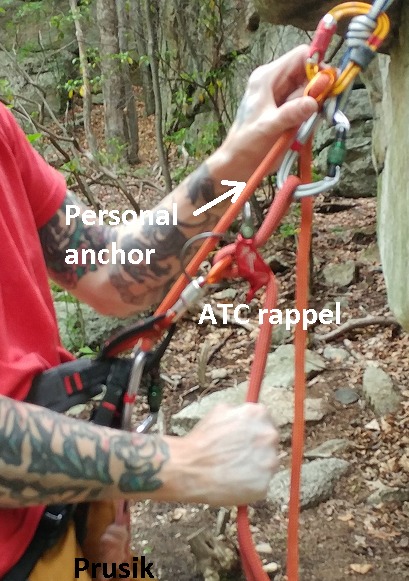 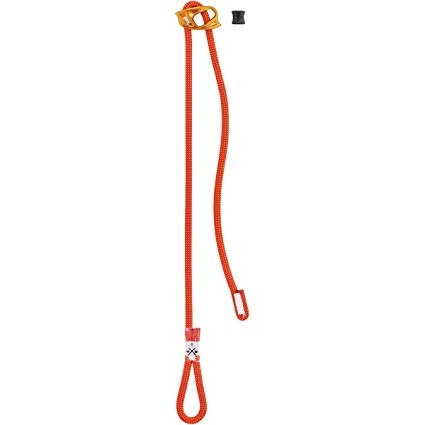 |


|
I've also found that in these circumstances it's important to make sure the descender-and-rope system is in the correct orientation for rappelling once you make the transition from facing OUT at the top of the cliff (above the anchor) to facing IN during rappel. |
|
|
If the bolts are at the ledge, would it be necessary to go above them? Using a personal anchor, to secure a hanging stance, all that work as well as cleaning the anchor and rappelling can be done with bolts at eye level. Otherwise a "sit n spin" would be in order I think. |
|
|
Sorry I didn't read your post. I'm to enamored by your art work! That's a friggin masterpiece! What medium is that? Microsoft paint? |
|
|
Mongoclimb wrote: If the bolts are at the ledge, would it be necessary to go above them? Using a personal anchor, to secure a hanging stance, all that work as well as cleaning the anchor and rappelling can be done with bolts at eye level. Otherwise a "sit n spin" would be in order I think. I think they're asking about hanging a TR from a top-access point, rather than leading up to it. |
|
|
I would usually just downclimb while pulling on whatever is through the bolts as necessary (anchor, pas or rap setup) - assuming that they are good bolts and that you're not going to load the bolts poorly in the event of a fall. If you're worried about falling on static rope/slings then either tie in with the rope as your shortest "pas" style connection, or use a more dynamic pas like the Petzl you linked. I have a buddy that has that one and likes it for whatever that is worth, personally I haven't used it. Now to answer the more specific questions: |
|
|
Did you read this very recent thread? Not exactly the situation you're asking about, but it has much good info. |
|
|
Given that there is no anchor point higher than the bolts, I think what follows is the best you can do if you don't just want to grab the anchor and lower yourself over after doing Step 1 below. |
|
|
rgold's method is about the easiest I can think of if you insist on the extended rappel situation, I think you could use your prussic instead of the overhand to hold the end of your lowering strand as well... I'd personally not extend this one just because I think that the extra faffing around is probably more unsafe than just grabbing the quad and lowering myself down... maybe clip into the quad with a locker if you want to shorten the whole thing up and you don't trust your tied off ATC. |


