Continue with onX Maps
 Sign in with Facebook






Looking for advice around pinky-side wrist pain with loaded supination
|
|
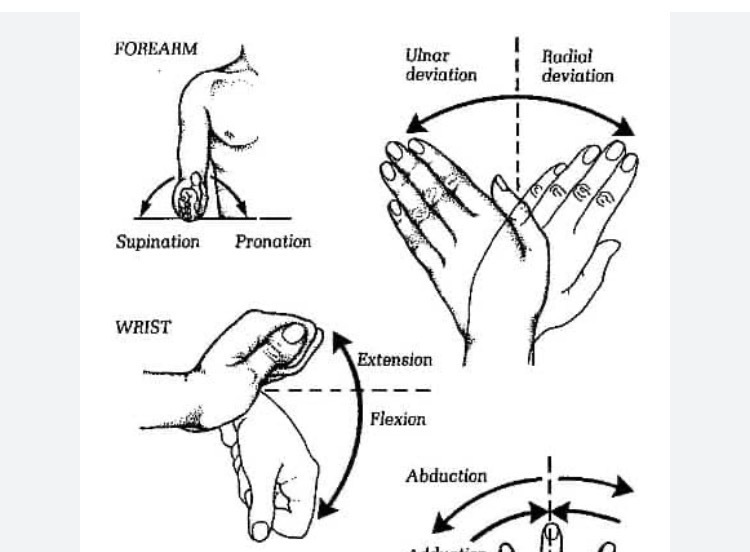
Edit: Updating this now that I have more info. Loaded supination and twisting motions trigger it. When really bad, I can't hold a milk jug. It's probably TFCC or ECU tendon irritation and inflammation. -- I've asked about TFCC injuries before but I have some different questions. Would love to hear from those who understand the injury. Both of my wrists bother me intermittently, but tonight my "good" wrist got strained the worst it ever has after just one second attempt on a "hard" move. It is very cold here, and I think I'm more prone to injury in the winter due to Raynaud's. I noticed something interesting. I could hardly bear 10% weight after it flared up, but if I climb with ZERO pronation it can bear 100% with no pain. The second there's ANY pronation though, I can't even use it for at least 24 hours (I mean, I can drive and stuff, but even steering hurts a bit). So my first question is whether the zero pronation finding means anything/changes anything. Or if that's exactly how others experience TFCC issues? Second question, I get annoying people who will basically yell at me for "climbing while injured" rather than taking an extended period of time off, but that was my original approach when I first started having issues years ago. Staying off of it completely just makes it more prone to re-injury. So I know you're supposed to wait until the pain is gone, then gradually work your way back up, but this hard because I can't find gradual - it's either hard moves that hurt, or I feel nothing on easy climbs. Any advice to "return progressively"? Sports PT or hand specialist that would actually help and understands climbing - need recommendations. I would drive a bit for a really good one, I'm in NY state. Is it worth seeing a remote one who specializes if there's no specialist within driving distance? One that takes insurance would be best. Thanks. |
|
|
Thank you! And thanks for seconding that full rest didn't help. I get so frustrated when people who haven't dealt with this tell me to stop climbing. That was the first thing I tried, years ago, because it's the obvious thing you do when you're injured. 🤦♀️ I've had newbie climbers mansplain that they're going to be perfect about their rehab and take a full rest (giving me the side eye) until their pain is 100% gone…surprise, three years later, they're doing what I do now. Because that ideal scenario they had in their head was imaginary. They just hadn't gotten to this point in their climbing. Sorry to vent. Just noticed those with less experience are the ones who like to tell me they know best. So I'm really glad you've commented with actual experience, though I'm sorry you've had to go through this injury! Progressive overload sounds right, and focusing on quality PT. It looks like training rotational strength endurance and control is key. I'm going to try that and I'll also update how it works. That's a great reminder about strength training for power, too. I lack power to begin with, so I'll keep that in mind. Thanks! I'm sure yours will increase quickly now because it sounds like you have good awareness of what you need and what works for you. I'll update with some of the things I'm doing to train rotational strength endurance and control after I try it for a week. I want to focus on form under fatigue (end on very easy climbs but maintain perfect form) to prevent joint shear when stabilizers are fatigued/when it's most likely to happen. I really appreciate your response and well wishes. |


|
I haven’t read your previous threads, so it’s bit unclear to me. - are you saying you have never seen a hand surgeon and never gotten an MRI and diagnosis? Expect 2-3 month wait time to get an appt with the right specialist. |
|
|
Alex C wrote: Ah yes, ulnar deviation is more accurate. I'm not climbing with my thumb pointed at my face. (Well, unless I'm on a compression boulder.) Moving out and away from a compression hold with supination also agitates my wrist. The most agitating move is when my locked-off arm has my wrist in ulnar deviation (it may happen with radial deviation too) on a big sloper, and I'm moving up in the opposite direction. I think the deviation is loading my wrist sideways instead of through my forearm. I'm guessing elite climbers mostly avoid this and position themselves so that load is mostly through their forearms even in the wildest positions, so maybe I need to really focus on technique at slightly lower grades. I've been trying to be more dynamic, too, and this seems to place added force on the tendon. Not to mention it's been very cold, which makes things worse. Is PT for ECU tendinopathy different? I do think mine's a combination of both. Thanks so much for your reply. I'm glad yours has gotten better! |
|
|
phylp phylp wrote: I haven't. I've had foot injuries from climbing, and even though I saw someone specialized in podiatry, the advice was always just "don't use it". So I kinda stopped going to local specialists. Worth getting an MRI and official diagnosis? My plan is to start training better wrist stability for rotational moves at the gym and at home. Modify the moves that irritate it (closer holds, bigger holds, lower angle…) so there's no pain, and work on keeping my wrist aligned and engaging my back and shoulder muscles so I don't overload the joint. I deviate more than I have to, and I put more force on it than I should. Great idea to try and find where the local sports teams go. I wasn't able to with a quick search but I'll keep looking. Thanks. |
|
|
I’ve found this helpful in rehabbing a recent tfcc injury. https://m.youtube.com/watch?v=S5Rnwp8scxQ
|
|
|
I saw a lot of relief by using wrist widgets. https://www.wristwidget.com/products/wristwidget-black
|
|
|
Hi! Sorry you are having wrist issues. I have had something similar which I sort of self diagnosed as initially a TFCC issue that led to (a few weeks later due to trying to climb through initial injury) what I believe was an ECU tendon tear. It’s possible to have both. I found that ulnar deviation like you described ( for me it was on small crimps, locking off and moving in the opposite direction) was unbearable and that motion still hurts most almost one year later. initially, twisting and things like holding a heavy skillet also hurt which I believe was the TFCC issue but the ECU pain persisted. I mostly chimed in to give my opinion that the widget- which friends swore by - did NOT help me and I think actually made it worse by putting pressure on my ECU tendon. What did help was a few weeks off altogether which sucked, rice bucket rotation, and avoiding any position while climbing that causes pain but practicing those positions in a very controlled manner ie hang board where I could control the weight I put on it. It’s come a long way. I also did see a doc who although didn’t do any diagnostic imaging aside from an X-ray, told me that ulnar sided wish pain is often stubborn and takes a long time to go away. |
|
|
The most recent episode of The Struggle podcast featured Tyler Nelson discussing wrist injuries in climbers. Tbh, I didn’t listen that carefully, but it probably has some useful info. |
|
|
Thanks Mark! |
|
|
Callie C wrote: Thanks so much for your reply. Sorry the motion still hurts for you now. Yeah, twisting the steering wheel in my car hurts. I appreciate the info about the widget! I do notice I have to take it off immediately after the climb. I'll use it to support stabilization/keeping my wrist from bending too much at the joint, but light taping almost feels better. Sometimes my wrist swells more with the widget, even if it's not on tight. Good call on the rice bucket. I have one but haven't used it in a long time…I will tomorrow when I plank/stretch. |
|
|
I have had TFCC irritations/injuries in the past and what helped me was reverse wrist curls with a dumbbell in the 15-20 rep range. Light burning and mild discomfort are okay but it shouldn't hurt. If your injury is still new you might have to start with <5lbs. I did 3 sets as part of my climbing warm up and I haven't had any wrist issues since. I'm sure other wrist exercises and tools could have a similar effect. I am not a PT. |
|
|
Alaina, I understand your reluctance to see a doctor or PT given you past negative experience(s). Still, it might be worth a try, since they sometimes know something . I had one problem (severe knuckle pain) that took me over a year to get a proper diagnosis for. It took visiting multiple specialists to get it diagnosed. Meantime, I was probably just making it worse with overuse. Finally saw a hand surgeon who took one look, properly diagnosed it, and gave me several options. It took a couple of months and the symptoms subsided. I sure wish I'd seen him from the start. I had another problem with my wrist a couple years ago. The pain got so bad that I was afraid I might have broken something. The fear of that prompted me to finally go to a doc (GP), who gave me a diagnosis of De Quervain's. I looked at the recommended treatment and said "no way am I getting surgery", started doing the PT I found in YT videos, and the problem is no longer noticeable (took about a year of doing PT to finally not notice it anymore, but meantime I certainly didn't stop climbing). BTW the diagnostic tests are pretty easy, so I could've self-diagnosed if I had a clue. The problem was that I had never heard of De Quervain's before and had no idea what to look for; it wasn't on my radar. I'm not really sure if ChatGPT is ready for prime time in doing differential diagnoses yet. FWIW I met a nice PT at the GunksFest last year. He specializes in treating climbing related issues. I didn't have a need for climbing related PT at the time (and still don't), so I can't give a thumbs-up or down based on personal experience, except that I found him pleasant and intelligent to chat with. But you might want to give him a try. His name is Miguel: https://www.climbingrehab.com/ He's in the NJ/NY area, and I think he does remote sessions as well. I just checked his site and I see you can schedule a 20-minute free virtual session to see if he can help you - might be worth a (non-cortisone) shot. |
|
|
dragons wrote: Thanks so much! I'm a sometimes Gunks climber so your recommendation is awesome and super helpful. Did your GP diagnose De Quervain’s first appointment without any expensive imaging? I ask because I finally made an appointment to see a PA at a local orthopedic center, and I don't want to cancel it, but I spent all week being passed around via phone and they still owe me an estimate. If there's a good chance they still can't diagnose it fairly certainly without a $1,000+ MRI, I'll probably cancel it. Anyone here have thoughts on that^? I don't want to waste hundreds of dollars unless I can get a definitive diagnosis that'll be useful for PT. If ulnar-side wrist stability issues are treated the same (I do have some thumb-side pain too, but it's nothing in comparison) then what's been helping is really warming up, not pushing through pain, actually taping rather than the widget, and paying closer attention to position of the wrist and load and full body muscle engagement. I am so glad to hear you were able to rehab your wrist without surgery! |
|
|
Alaina G wrote: Sorry for the delay in responding! It's been a while since this happened, so I don't recall all the details. So far as I recall, they did an X-ray of the joint, just to make sure nothing was clearly broken. No major expenses and there was no suggestion of an MRI. And I'm actually not 100% sure that the doc diagnosed me correctly on the first go-round, because I had two doctor appointments right around that time. I do remember someone saying it was definitely DeQuervain's and suggesting that I might need surgery, I looked that up, said "no way" and followed the PT advice that I found on YouTube. I am not a doctor and this is not doctor's advice, but if you search for "dequervains synovitis test" or "dequervains differential diagnosis" on YT, you will find some tests you can try on your own. |
|
|
Following. Just starting to get back into "serious" climbing after about 18months off completely to adjust to the small child that now resides with us, and recently developed a nagging ulnar side pain. Pretty sure hangboarding with way too much elbow bend in a fairly narrow grip is the culprit. Taking a deload week to see if it settles down, but I recently stumbled upon Hooper's beta on YT and he had a "bulletproof wrists" protocol I'm probably going to start incorporating into my non-rock gym workouts. |
|
|
I recently healed from my TFCC injury after a 6 week PT protocol. I am back to climbing and keeping PT involved in my warm up. I saw my friend, and DPT Rob Love, from AlpenStrong, via telehealth. Rob's a high level peformance climber/athlete and understands how to heal from injuries efficiently. Despite being restricted to online telehealth, Rob has helped me recover from two injuries now. Go book an appt! |
|
|
i dealt with something really similar a couple years ago, pinky-side wrist pain that got worse with any kind of twisting. what finally helped was NOT stopping completely (tried that, just made it worse when i came back) but switching to grip types that didn't trigger it. for me that meant avoiding underclings and gastons for a while and sticking to open hand grips and big slopers. i basically stopped thinking about grades and just asked myself "does this grip type hurt tomorrow?" — if yes, that grip type was off limits for another week. a hand therapist also had me doing light wrist supination/pronation exercises with a light weight to gradually build tolerance back up. annoyingly slow process but it worked better than rest did. also a wrist widget helped a ton during climbing sessions if you havent tried one |
|
|
Frans De Boer wrote: Thanks! Sorry you dealt with this. Was it only if your wrist bent in the direction of your pinky, with the underclings and Gastons? Just curious. Big slopers are the absolute worst for my issue! Especially if my wrist bends toward the pinky side. I'm finding not repeating the same moves is helpful, so not really projecting unfortunately, or at least switching projects. |