
 Continue with onX Maps
 Sign in with Facebook






Slackline causes helicopter crash and 4 deaths


|
Guy Keeseewrote: The line was flagged and had lights as the NOTAM filing clearly shows...... not sure to the degree those boxes were checked, but they were, at least a little.
I think since the line was flagged and lit, it surely supports that doing a check could have had a major effect on the outcome of the flight that day, required to or not. |
|
|
An old Air Force ditty we were taught back in the day, related to items to be checked before flight: “I TOLD SID to NOTe the WEATHER “.
SID=Standard Instrument Departure, i.e., any special departure procedures. NOTe=Check for applicable NOTAMs at airfields and along route of flight. WEATHER=Get a good weather brief. Then you file your flight plan. There will be an investigation, but it will take some time. What a terrible tragedy. I remember arriving at Lee’s Ferry (Arizona), below Glen Canyon Dam, right after a helo (doing recce for filming a movie, I think) had hit a cable and crashed into the Colorado River… early 80s, I think. Awful. |

|
Pete Nelsonwrote: Let me summit up for you: Mark was just riffing on the original typo, so cut him some slack. Maybe the joke just did knot land well with some, creating unnecessary tension.
|
|
|
What a horrible incident. My condolences for all involved in any way. This should be a wake up call for the slack lining community. It is extremely difficult to see wires (and presumably 1-2” wide webbing) when cruising at a hundred miles an hour. Pilots look for towers. Blinking lights are easy to see. Perhaps portable 20-40’ towers with strobe lights atop near each anchor? Maybe hang 10-20 foot pieces of flagging every so often off the slack line? If you are setting up lines on federal lands, there is probably someone in charge - an “Aviation Officer” of sorts. It would be very wise to contact this person and let them know what you are up to (in the event of a wildfire or rescue or general aviation). |
|
|
I started climbing (and keeping company with slack/highliners) well before I became a helicopter pilot. But around the time I was working on my commercial rating I saw a NOTAM (for the non-pilots out there, NOTAMs are FAA-issued notices often relating to aviation safety / warning pilots of hazards: pilots are legally required to check these prior to every flight) for a highline a few miles from the school where I was doing my training. I texted a climbing partner of mine (who happens to be an avid slackliner) and asked him about it. He said, "yeah, the line is just shy of a mile long and we called the FSDO prior to setting it up". The FSDO is the Flight Standards District Office - a regional FAA facility where you (highliners, for example) can report hazards which are then disseminated to pilots via NOTAMs. This is very easy to do and a great precautionary measure. As an aside, my friend later went on walk the line and in doing so set the US highline distance record. Just setting up this line, let alone walking it, was an incredible endeavor and for anyone interested in the details behind it, check out the short film "Return to Sender" ( filmfreeway.com/ReturntoSen…). Anyway, this is a really tragic accident and I can relate to both parties here (the highliners and the pilot). Even without lights and flagging, this line would probably be more visible than most wires pilots encounter all the time (especially in helicopters). But that doesn't mean much because against the terrain, especially in places where a pilot wouldn't expect them (such as between canyon walls in an area where a pilot flies regularly) they can still be practically invisible. I'm including two screenshots from the aforementioned movie below to illustrate just how hard these lines might be to see for a pilot. In my opinion it won't do any good to blame anyone. And in fact, I think the very title of this post and the OP's comments, as well as those of several others, are inflammatory and ignorant. At the very least blaming the highliners is misplaced: My initial read of the situation based on available facts is the highliners did their due diligence. They contacted the FSDO and a NOTAM was issued. I predict the NTSB, after conducting their investigation, will conclude the cause of this accident is failure of the pilot to check, read, and/or observe the NOTAMs... But regardless of fault the bottom line is this is a terrible tragedy for all involved. PS: As Albert Newman posted above, helicopter pilots (who typically fly much closer to terrain than fixed wing pilots) are trained to look for wires. They are a killer. One of the things we look for are pylons, towers, and posts: The things that anchor wires. We are trained to fly directly over those pylons (because if you're over the pylon itself you can't hit the wire). A highline is unique because it doesn't have anchors like this, and despite possibly being more visible thanks to the loops of webbing/cord that dangle beneath it, I can say from firsthand experience there is a high chance I would not be able to see one against the terrain while flying. Bottom line: highliners should always file with the FSDO (as these highliners did) and pilots should always check the NOTAMs. 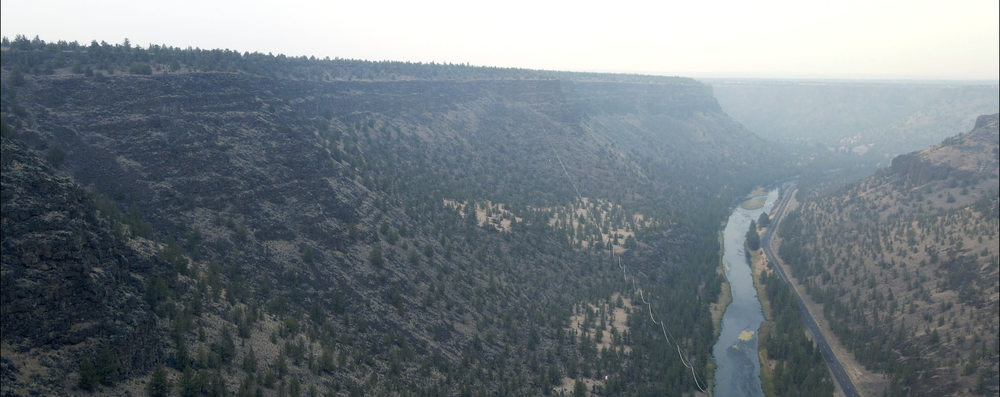 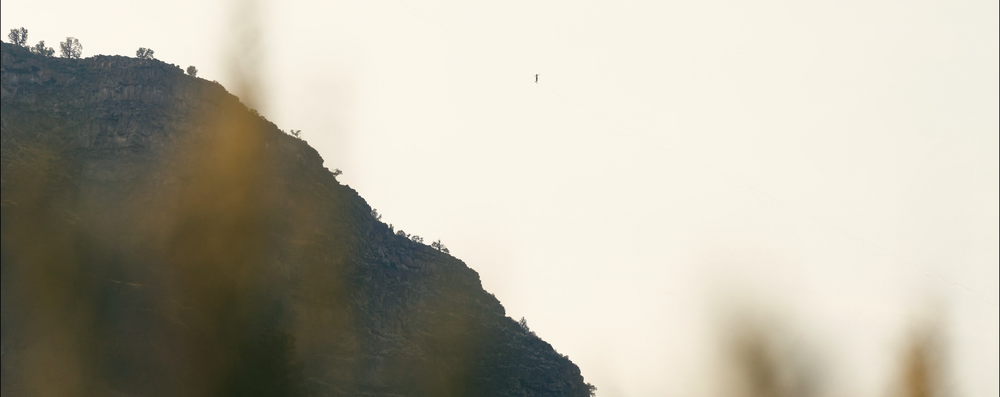 |
|
|
In case anyone is trying to decipher the text of the NOTAM that was posted earlier, here's a rough translation: !PRC 12/234 E81 OBST TIGHT ROPE WI AN AREA DEFINED AS 1NM RADIUS OF 331412N1110714W (3NM S E81) 2800FT (600FT AGL) FLAGGED AND LGTD 2512261400-2601060200
This brings up an interesting issue faced by pilots: While we're legally required to check NOTAMs, there can sometimes be dozens or even hundreds for a given airport or flightpath (234 from Prescott in the month of December alone!?). They are all coded like this and difficult to decipher (especially when you're in a rush). As a result, many pilots think the NOTAM system is broken and needs to be simplified, but it's probably not going to happen any time soon. But perhaps more relevant to this particular accident is that this pilot flew out of 5AZ3 (Pegasus Airpark) which appears to be a little single runway airstrip tucked in a residential area. This NOTAM was not listed for Pegasus Airpark. The nearest sizable airport is Mesa Gateway - 6 miles to the northwest. The NOTAM wasn't listed there, either. The only place I could find it listed was at Superior Municipal Airport (itself a tiny, gravel airstrip). It is incumbent upon pilots to check "all available information" pertaining to the safety of their flights... I do not know where this pilot's ultimate destination was, but his flight path took him near Superior Municipal and while legally he should have checked their NOTAMs it is understandable how he may have neglected to do so (since it is so tiny and in all likelihood he wasn't even flying there - just passing it 3 miles to the south). Again, this is a tragedy and I don't think assigning blame is helpful. |
|
|
Soooo as the OP, yes I posted this before the NOTAM was brought to light, my bad and I’ve edited any “inflammatory” language. However as someone who has been in the air medical industry for 14 years ans an medic on a rotor and climbing for many more I will say that in my experience the filing of a NOTAM is the exception not the norm. Some of you may have friends at the pro level who are aware of the risks and take appropriate steps, likely due to the commercial nature of projects like Return to Sender. I would hazard a guess that when they were starting out it didn’t even cross their minds. What I have seen in places like Paradise Forks, multiple areas in the flagstaff area and Sedona are unattended lines left at least overnight if not longer. I have also spoken with the pilots I fly with and DPS pilots about the risks of these unattended lines. There’s the risk of a helicopter flying directly into the line and also the risk of running a short haul or hoist that gets tangled in a line. So, while I may have been ignorant of all the facts initially, I would not say I am ignorant regarding aviation safety, operations, and rules. And as far as inflammatory, I’d say calling attention to a hazard, following regulations or not, is warranted and should, as Albert said, be a wake up call to the slacklining community. Regardless of who did what it is a tragedy. |
|
|
I agree that highliners should be aware of the hazards they create for those around them and take appropriate steps (filing NOTAMs being the least of these - also (as Albert suggested) better flagging and even lighting). This might save lives even if the NOTAM is missed. It is, however, impractical to take down a massive line like this each day or to attend it 24/7 while it is up. Lines like this take days to rig and often a full day or more just to de-rig. Small lines (I can only imagine lines at the Forks are relatively tiny) are much less of a hazard. Sedona might be a different story - especially with all the helicopter traffic. I think there are probably appropriate and scalable steps highliners could take to protect others from their lines and I agree that they should. The issue I had with your post is you clearly blamed the line (and the highliners) for this tragedy. I don't think that's fair. I think they are probably absolutely devastated that this happened and they deserve compassion and kindness as much as the pilot's family and friends. I feel for both. |
|
|
Agreed and I edited my comment to reflect a more neutral stance. |
|
|
Josh thanks for the input from a pilots perspective and for digging so deep into the accident. So we’ve come to better flagging, better lighting (especially strobes) and filing a NOTAM. I’ll emphasize again it would be prudent to contact the local land management agency and attempt to make contact with the Unit Aviation Officer. For a place like Sedona (which I assume is a very tempting area to set up a line), contact the Coconino National Forest, leave a message with the front desk and mention you are setting up a line and would like to talk with the UAO. During times of high fire activity it is not uncommon at all for an airport like Sedona to host half a dozen helicopters (with a couple dozen more staged around the State). Many of those aircraft are flying with a long line (100 to 150’ line below the ship) and bucket (125-2000 gallons of water). The UA needs to know if there’s suddenly a half mile long aerial hazard so the pilots can be briefed. Stay safe out there folks! |
|
|
Katherine Willowwrote: ...and I was riffing on Mark's self-adjust comment. LMK if you need an explanation. |
|
|
As a pilot of helicopters myself, I have wondered how long it would take for something like this to happen. Terribly sad, and honestly lucky that no one was on the line when they struck. I don't know many details of the accident, whether there was in fact a NOTAM posted about it (I doubt it, but could be wrong), and whether or not high liners think about this potential (do you?). It's a crowded and advanced world. How do we prevent this from happening again? |
|
|
I guess I should read through forums before posting, huh? Great info there from Josh Janes. |
|
|
blancolirio aviation report on the accident: youtu.be/3kMKAO_CLVQ?si=wCC… |
|
|
From - azfamily.com/2026/01/04/fam…
Some more information about the pilot, his home base, etc. -
Link to aggregating site - https://aviation-safety.net/wikibase/565162 - includes more tech info, maps, etc |
|
|
And to pour more salt on the tragedy, the news is reporting the pilot, David McCarty, 59, was due to be married later in the day of his death… Edit to add Fox10news Phoenix adds some truly heartbreaking details… Sending all the best energy to all involved in such a horrible accident. |
|
|
State law banning slack lines incoming in 3,2,…. |
|
|
One of my Nephew's was a helicopter lineman installing big power lines out west. On for 21days off for 10 days. Live in hotels. Bunch of young kids right out of lineman's school. He would get flown in to work dangling from a cable under the helicopter. Heading to work in the morning the piolets flew the same pattern that they had used the day before but unknown to them a different shift had strung more cable through that area. The bird right in front of Andrew flew his class mate right into the new power line. Andrew's piolet evaded but he watched his friend get chopped right in front of him. Another one of his class mates got chopped the following year. He only did that job for two years (mad money) before switching to a regular lineman job working for Green Mountain Power. able to live at home and not dangle on a cable from a helicopter or out on a boom from the bird. Pretty crazy videos he used to post. |
|
|
Just reading some comments and figured I'd add a personal opinion. I was an aircraft mechanic for years and I slackline as well as climb. This is just tragic all around. I am very saddened by this event. I was in Moab this last fall (IC season) and helped rig a 2km highline as well as bolted some anchors for these guys. I can tell you they are very serious and professional about making sure notams get filled and lights and flags are on the lines. Unfortunately some pilots only look for TFRs and ignore the notams... Although i do not know the AZ slack community. I know anyone dealing with this leangth of highline has their stuff together because of the technical aspect of rigging, logistics and gear etc... It's been stated they followed all official procedures and rules required to operate in the area. I really hope the slack community and aviation world can work together to avoid any more incidents such as this. |
|
|
Elsewhere I have seen posted comments from helo pilots that even when they know there is a highline, and the line is marked per legal requirements, it can be very difficult to see. |


