Continue with onX Maps
 Sign in with Facebook






What water bottle do you carry on climbs?



|
Damn! I really appreciate all your thoughts on this. My original thought of 'short trad climbs' was a climb that wasn't worth carrying a pack/haul bag. I sweat a LOT, and my current clear nalgene (with paracord replacing the cheap plastic connection) is a bit much and very bulky (though still great for leaving at the bottom). Thanks again. I will try several of these options! |
|
|
Big Redwrote: Fair, but are people worried about Gatorade bottles breaking down? Y'all have to be drinking plastic but I suppose we are all made of plastic at this point. |
|
|
Also….maybe a horrible opinion…. Don’t bring water on the climb. How long is a 4 pitch climb? 3-4 hours? I only bring water on a many pitch climb. I work in construction all day and I probably drink water at lunch and maybe before I go home. I don’t need to bring any up for a 4 hour adventure. I’m sure many people will disagree but you can definitely drink less than you think you need to. |
|
|
Jon Hartmannwrote: Peter Croft would agree. I think I remember him talking on the Enormocast about how he used to do his big solos in Squamish and see how little food or water he could get away with. Also, chugging as much water as possible right before starting a climb works pretty well. |
|
|
I've always multipitched with a hydration bladder in a small sleek multipitch backpack. I also tend to hydrate not just at belays, but also while climbing from one belay to the next. |
|
|
Another vote for Hydrapak Stow bottles. I recently punched a hole in mine doing a chimney pitch, and they warrantied it with no hassle at all! I used to not bother with bringing water up climbs, but I get headaches really easy these days when my electros start to unbalance. It was making doing whole days tough |
|
|
to all you other weirdo plastic bottle aficionados out there
 the 15oz  the 20oz (I use these for other things - these are far too strong - ie, a good thing) 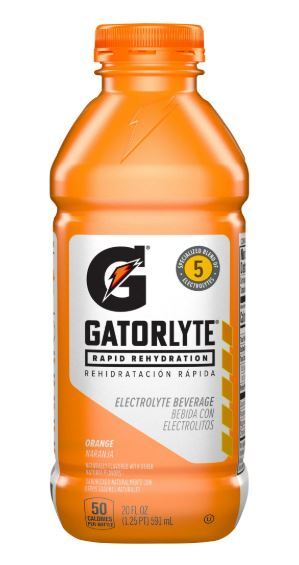 |
|
|
Anthony Altemarawrote: I started using one of these and it is a nice compromise between size, capacity, fit on the harness, and durability of disposable bottles (with cord around the mouth of course): |
|
|
TaylorPwrote: You aren't wrong about keeping plastic out of landfills, and I think that is admirable. I guess we all have to decide our level of complicity in the slow trashing of our planet verse convenience. The 16oz (.5L) HDPE Nalgene is also a really good pick that Greg pointed out. If I had to choose just two water vessels for the rest of my climbing life, I think the 16oz white Nalgene along with a 2L MSR dromedary would be my choices. The small Nalgene is a staple among many alpine climbers for it versatility. Works for morning coffee, nice size on the harness while leading, and can be put in the sleeping bag with hot liquids. |
|
|
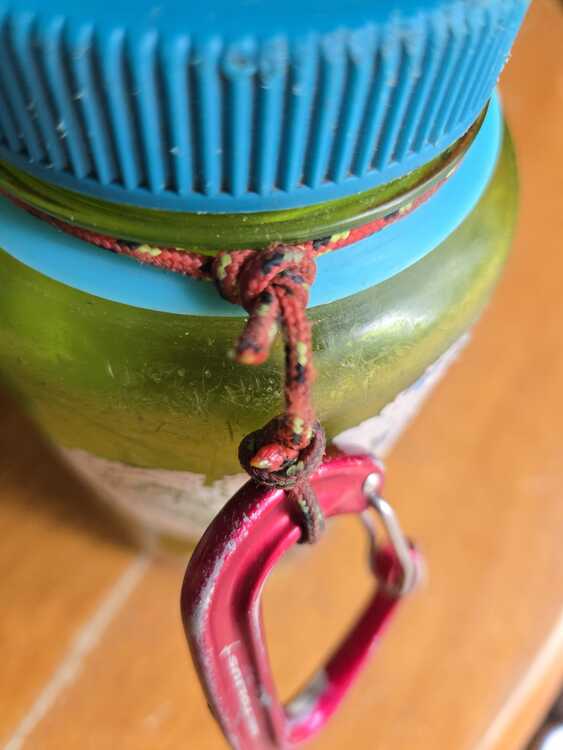
Chris Henrywrote: That's so true. Some small snow melt trickles do not offer much room for water gathering, so a wide mouthed bike bottle without an attached lid (like in the case of a Nalgene) is really the best for that. That said, I'd think most people, even climbers, are afraid to trust "wild" water like hardcore peakbaggers. For backcountry climbing/backpacking, I sometimes clip a BeFree water filter soft bottle on the bottom of my shoulder strap (clove hitched under the blue cap) for quick access to filtered water.  |
|
|
Mikey Schaeferwrote: You've put boiling water in the HDPE Nalgene? I always feel a bit nervous doing that, especially for storing hot liquids in my sleeping bag fearing it could leak. I've seen a deformed lid from that bottle before. I bring a Tritan Nalgene if I know I'm dealing with hot beverages. For 16oz, the measured weight is 73g (HDPE) vs. 91g (Tritan). A small compromise I make for peace of mind. A word of caution about the bike bottle -- do not put hot water in it; do not even wash it in a dishwasher! It cannot handle the heat. |
|
|
I use a 27 oz uninsulated kleen kanteen with a loop, like this one: https://www.rei.com/product/206559/klean-kanteen-recycled-stainless-steel-water-bottle-with-loop-cap-27-fl-oz I always hate how water tastes out of a nalgene. |
|
|
Cool, a 'Show us your bottle' thread! Great detail from Mikey as usual. I am of the "A rope, a rack, and a shirt on your back" school: My small one is .5 liter. Easy carry on the harness, takes a beating when it weights my TRS line, recycle after a season. Big one is1 liter. Wrap and duct-tape 2 clip loops around the bottom. Hangs nice and the tape makes it durable. 2 of these have lasted over 15 years each. On an older one I dropped the unattached cap, and no water spilled from the capless bottle for the rest of the day. Retape for durability and fresh fashion colors....  |
|
|
TaylorPwrote: This works for me for pretty long climbs. I have a .5L nalgene I found for shorter climbs. Took multiple sliding slab whips with it and it's just fine. |
|
|
Randy Vannurdenwrote: +1 for these. |
|
|
I’ve always loved my Nalgene, and Tahr Equipment sells a metal screw-on ring for them that I trust a lot more than the plastic strap. |
|
|
 Been using these for years. I have several of different sizes. Never had one fail. Andre |
|
|
Many people wisely have said to use a Tropicana or carbonated beverage bottle. Nice because unlike a nalgene, this can be compressed in your pack after for long climbs if needed (think polar Seltzer bottles). I'll add that a constrictor hitch around the top of these bottles is a great way to secure cord to it and create a tie off point. Very similar to a clove hitch but gets tighter the more it's pulled. |
|
|
700-ish ml non-insulated metal bottle plus some webbing. The webbing is tied in a loop with a water knot, then gaffers taped to death. I may have gone a little overboard with the tape, but it survived 10x FF1 test falls when I first made it.    |
|
|
What I call "the leader bottle"- 8oz?. For when you arrive parched at the belay and have a long wait for the follower to arrive with the pack.  |