Mountain Project Logo

Help Me Understanding This SCC Warning

Original Post
Max Tepfer · · Bend, OR · Joined Oct 2007 · Points: 3,633

I'm on a trip in Cape Town at the moment and since getting here have come across this warning: https://www.thecrag.com/discussion/12275117304 and this warning: goodbeta.co.za/list-of-arfe… The guidebook we brought also indicated that this was a problem and even had the same broken bolt photos from goodbeta.co.za

What's confusing me is this warning from Good Beta: 

"Many crags in the Western Cape were originally bolted decades ago using steel expansion bolts, also known as mechanical bolts; unfortunately, these bolts are susceptible to damage – specifically stress corrosion cracking (SCC), which can occur when stainless steel is exposed to tensile stress and a corrosive environment (like the Cape’s salty sea air)." But when you look at the photo of the new glue in they've installed, it's 316SS.  This was consistent with our first climbing day yesterday and makes no sense to me because they're replacing 316 mechanical bolts with 316 glue ins.  I come from a place where SCC and SSC aren't really an issue and other than loosely following along with David Reeve's blog posts, (lacking any sort of science background, it feels like I only absorb about 15% of what's there) have a very limited understanding of these processes.

Can someone help me wrap my head around this?  It feels confusing to be at a crag where I'm supposed to distrust a relatively shiny looking 316 expansion bolt, but be totally fine with a glued in piece of the same metal.  My sense is that the warnings are misidentifying the hazard, but given my lack of experience with these topics, I'm sure I'm missing something.

Julian J · · Kingston, JM · Joined Apr 2021 · Points: 412

The confusion comes from both bolt types being 316 stainless steel, but the failure mechanism (stress corrosion cracking, SCC) depends heavily on how the bolt is loaded and exposed, not just the alloy.

Mechanical (expansion) bolts

  • These are the old bolts — they rely on expansion force to grip the rock.

  • That means the bolt is under constant tensile stress even when no one’s climbing.

  • Moisture and salty air can get into the hole, creating a chloride-rich, oxygen-poor environment.

  • 316 stainless under constant stress in chlorides = prime conditions for SCC.

  • Result: cracks form inside the metal and the bolt can snap suddenly, even if it looks fine.

Glue-in bolts

  • The new bolts are bonded into the hole with resin.

  • They’re not tensioned — they sit unstressed until loaded.

  • The glue seals the hole, reducing chloride and moisture access.

  • The bolt is mostly in shear and compression, not tension.

  • So even though it’s still 316 stainless, SCC risk is much lower.

TL;DR

The problem isn’t just “316 stainless” — it’s 316 under constant tensile stress in salty air.
Replacing 316 mechanical bolts with 316 glue-ins solves that because the glue-ins aren’t permanently stressed and are sealed from corrosion.

Jim Titt · · Germany · Joined Nov 2009 · Points: 490

How do you know the mechanical bolts were 316?

Max Tepfer · · Bend, OR · Joined Oct 2007 · Points: 3,633

That's a fair point, I don't know that the old bolts were 316, but they looked like the same metal as the new glue ins next to them. (which are stamped 316) Below is a photo of the most common bolt I've seen here. I'm not 100% sure, but it looks to me like a 304 hanger on a 316 bolt.

The point about glue ins not being under constant stress makes great sense to me, but what I don't understand is why there aren't similarly doom and gloom warnings for expansion bolts at all seaside cliffs?  Here the directive from the LCO is to not clip any expansion bolts period.  Are they being extra conservative here in Cape Town or are communities at other seaside areas where SS expansion bolts are still widely used missing the plot and creating excessive risk?

Jim Day · · Fort Worth, TX · Joined Jan 2020 · Points: 3,149

You cant visually tell the difference between 304 and 316ss.  

A few expansion bolts (like dewalt power bolts aka 5 piece bolts) are not available in 316

But for the bolt pictured, it's anyone's guess if the bolt itself is 304 or 316

There have been lots of instances of expansion bolts failing, which were advertised as/ believed to be 316, but when samples were sent to David Reeve for testing, they were not 316.  

So, your LCO is taking a conservative approach, even though some of the expansion bolts, if truly 316, are probably fine.

Jim Day · · Fort Worth, TX · Joined Jan 2020 · Points: 3,149

Also, check out David Reeve's forum post from September 2nd about Sulphide Stress Cracking (SSC):

 https://www.mountainproject.com/forum/topic/201620710/thailand-bolt-corrosion-part-2

Regarding glue ins being "sealed from corrosion", he had this to say:

"You might assume that, given the fact that the glue wets the metal surface, there could be no space for the entry of SRB. In practice, it doesn’t take long before a crack opens between glue and metal. This is logical considering that metal-to-metal, and glue-to-glue, cohesion is greater than that of the glue-to-metal bond. Given the difference in the coefficients of thermal expansion of metal and glue, the opening of a space at this point is inevitable.


The anoxic point labelled B, where metal contacts the rock, is also a frequent point of attack for glue-in bolts."

Max Tepfer · · Bend, OR · Joined Oct 2007 · Points: 3,633
Jim Daywrote:

So, your LCO is taking a conservative approach, even though some of the expansion bolts, if truly 316, are probably fine.

To keep things clear, it’s not my LCO, but the LCO here in Cape Town where I’m traveling.  That makes sense about not being able to ID what metal the in situ expansion bolts are made of, but it still strikes me as an unusually conservative directive.  (All expansion bolts = bad)

Climbing in other seaside areas, it’s rare to unheard of to hear people say or read that all bolts that aren’t glue ins are unreliable.  I’ve read as much of David Reeves’ blog posts about SSC as I can understand (a fair bit of it is well over my head) and clearly understand how it requires an anoxic environment to occur.  What I’m trying to understand is the cognitive dissonance between the directive here and every other crag I’ve climbed at that’s within 1km of the ocean.

Greg Barnes · · American Safe Climbing Asso… · Joined Apr 2006 · Points: 3,669
Max Tepferwrote:

That's a fair point, I don't know that the old bolts were 316, but they looked like the same metal as the new glue ins next to them. (which are stamped 316) Below is a photo of the most common bolt I've seen here. I'm not 100% sure, but it looks to me like a 304 hanger on a 316 bolt.

Looks like the marking on the nut starts with A4, which is 316 (A2 is 304). Doesn't mean the bolt is definitely 316, but it probably is. I'd guess you're right that the hanger is 304 from the lack of 316 markings and that tiny bit of rust on the Y of Italy.

The Morse-Bradys · · Lander, WY · Joined Aug 2012 · Points: 4,757

So if I am understanding- 316 is perfectly fine in coastal environments as long as it is not being stressed or loaded as a mechanical bolt?  

This seems like a significant finding that I seem to have missed while trying to understand the complexity of coastal climbing.

Is there a way to prove 316 vs 304 in the field?

Just for kicks and giggles can someone who posted above cite this in a peer reviewed study?

David Reeve · · Unknown Hometown · Joined Jul 2020 · Points: 0

I'm aware of the stress cracking failures that occurred at Western Cape crags. However, I have no samples, and thus can add very little definitive to the discussion.

It is important to understand that the myth-de-jour ensures that any stainless steel part that fails through stress cracking is automatically assigned to SCC. So without having a sample in my hot little hands my response is yeah!...nah! Stress-cracking is easy to identify under the microscope, but the actual type of stress-cracking not so much.

Out of hundreds of stress-cracked samples I have looked at from various crags around the world, I have found sulphate bacteria induced SSC to be the cause. It may be that amongst the failures at the highly corrosive sea crags of Tonsai, Long Dong, and the Mediterranean there are some SCC failures, but I am yet to identify one. I distrust any failure assigned to SCC where no test has been done for metallic sulphide to eliminate the possibility of SSC.

My objection to the facile assignment of fractures to SCC isn't that I don't believe it can occur - it absolutely can - but rather that the necessary conditions don't exist in the outside environment. In the literature there are papers that do a good job of proving ambient temperature SCC is possible in the laboratory. However, much handwaving then follows with any attempt to show the outside environment matches the laboratory. Have a look here for my reasoning with respect to SCC, and here for SSC. Be warned it's a trifle geeky.

One final point with respect to expansions versus glue-ins. Yes, expansions carry axial stress because they are tightened down, but glue-ins carry plenty of residual stress from their cold-forming. Proof of this is the fact that both suffer extensive stress cracking under sulphate reducing bacteria attack.

Another factoid that might be of interest is that, as far as SCC resistance is concerned, 316 is not hugely better than 304, but for SSC it seems 316 is far superior.

Julian J · · Kingston, JM · Joined Apr 2021 · Points: 412
David Reevewrote:
Out of hundreds of stress-cracked samples I have looked at from various crags around the world, I have found sulphate bacteria induced SSC to be the cause. It may be that amongst the failures at the highly corrosive sea crags of Tonsai, Long Dong, and the Mediterranean there are some SCC failures, but I am yet to identify one. I distrust any failure assigned to SCC where no test has been done for metallic sulphide to eliminate the possibility of SSC.

Have you looked at any samples from the Caribbean? What caused if you have come across them?

David Reeve · · Unknown Hometown · Joined Jul 2020 · Points: 0
Julian Jwrote:

Have you looked at any samples from the Caribbean? What caused if you have come across them?

I have never had the opportunity to look at samples from the Caribbean, but am very confident that the active plate tectonics of the region will provide multiple marine sources of elemental sulphur, and thus, the sea cliffs of the region have the potential for high levels of sulphate. The Caymans are where it first became apparent that stainless steel was vulnerable, yet the climbing world didn't take a lot of notice.  I've seen photos from Playa Fronton in the Dominican Republic that point to sulphate reducing bacteria mediated SSC. I'm sure there will be others.
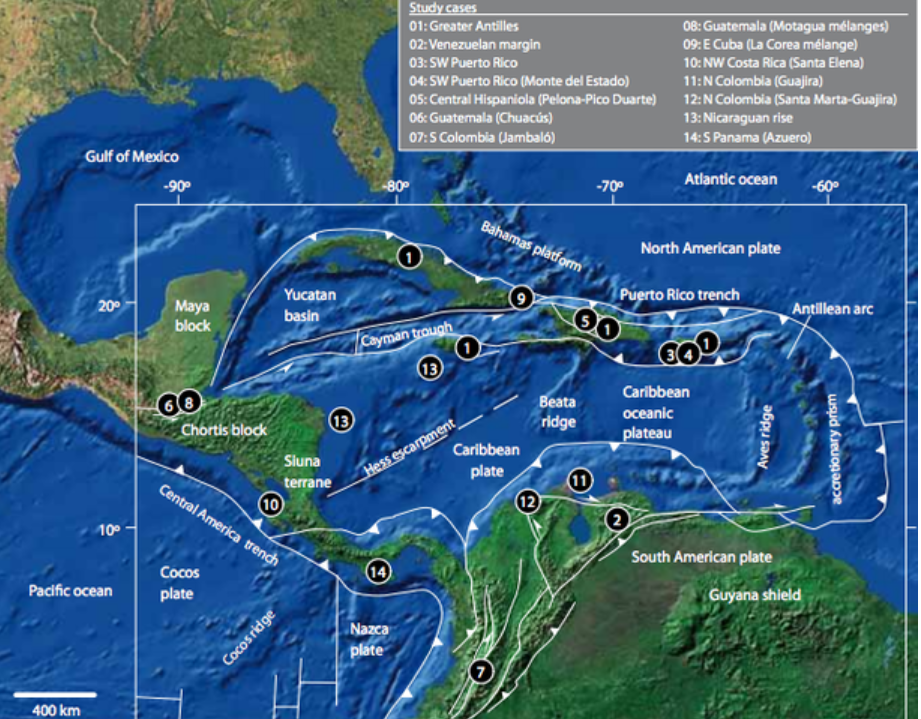
My current theory is that wherever plate tectonics gives rise to an active subduction zone, as evidenced by an active volcanic arc, then we need to be suspicious of stainless steel (especially lower grades like 304) installed on sea cliffs.

 
Max Tepfer · · Bend, OR · Joined Oct 2007 · Points: 3,633

As usual, many thanks David for chiming in and for the work you've done to broaden our understanding about this stuff!  I always find your writing interesting and educational, even if it's often way over my head.

David Reevewrote:

Out of hundreds of stress-cracked samples I have looked at from various crags around the world, I have found sulphate bacteria induced SSC to be the cause. It may be that amongst the failures at the highly corrosive sea crags of Tonsai, Long Dong, and the Mediterranean there are some SCC failures, but I am yet to identify one. I distrust any failure assigned to SCC where no test has been done for metallic sulphide to eliminate the possibility of SSC.


My objection to the facile assignment of fractures to SCC isn't that I don't believe it can occur - it absolutely can - but rather that the necessary conditions don't exist in the outside environment. In the literature there are papers that do a good job of proving ambient temperature SCC is possible in the laboratory. However, much handwaving then follows with any attempt to show the outside environment matches the laboratory. Have a look here for my reasoning with respect to SCC, and here for SSC. Be warned it's a trifle geeky.

If I'm reading this correctly, you're saying that you've never tested a stress cracked bolt that didn't test positive for SSC?  If that's the case, where is the narrative that SCC is causing these issues generated from?  When trying to decide how much to trust the bolts here in Cape Town, I came across this: https://theuiaa.org/documents/safety/09122020_UIAA_ClimbingAnchors_Update_123.pdf and it left me feeling that the local directive wasn't that unreasonable.  Now reading what you've written here makes me curious where the UIAA Safety Committee is getting their data and to what degree they're taking SSC into account in writing that directive.  Perhaps the UIAA's SCC update predates the information you brought to the table?  

It sounds like the dissonance hinges on whether or not the environmental factors required for SCC to occur actually happen outside actually happen in reality or not?  The UIAA's charts make it seem relatively simple and likely feeling while the section on SCC in your Thailand Crags - 1 post concludes otherwise, but if I'm being honest, I get fairly lost in the nitty gritty of that section.  

One final point with respect to expansions versus glue-ins. Yes, expansions carry axial stress because they are tightened down, but glue-ins carry plenty of residual stress from their cold-forming. Proof of this is the fact that both suffer extensive stress cracking under sulphate reducing bacteria attack.

Another factoid that might be of interest is that, as far as SCC resistance is concerned, 316 is not hugely better than 304, but for SSC it seems 316 is far superior.

Based on this, it sounds like the local effort to replace SS expansion bolts with SS glue ins is at least somewhat misguided?  

Jim Titt · · Germany · Joined Nov 2009 · Points: 490

Rolling the threads on mechanical bolts isn't exactly stress-free.

The Morse-Bradys · · Lander, WY · Joined Aug 2012 · Points: 4,757

Thank you David for the indepth response and taking time to run a study.  I too got a little lost in the middle but really appreciate the explanation.

This sentence near the bottom summed up my understanding of coastal anchor hazards 

"More often than not, when I analyse anchors claimed to be 316, the nickel content is below the magic 10%"

As a result it is reasonable to take the stance that steel regardless of published grade or means of attachment to the wall should be viewed as potentially suspect in coastal environments.  

David Reeve · · Unknown Hometown · Joined Jul 2020 · Points: 0
Max Tepferwrote:

As usual, many thanks David for chiming in and for the work you've done to broaden our understanding about this stuff!  I always find your writing interesting and educational, even if it's often way over my head.

If I'm reading this correctly, you're saying that you've never tested a stress cracked bolt that didn't test positive for SSC?  If that's the case, where is the narrative that SCC is causing these issues generated from?  When trying to decide how much to trust the bolts here in Cape Town, I came across this: https://theuiaa.org/documents/safety/09122020_UIAA_ClimbingAnchors_Update_123.pdf and it left me feeling that the local directive wasn't that unreasonable.  Now reading what you've written here makes me curious where the UIAA Safety Committee is getting their data and to what degree they're taking SSC into account in writing that directive.  Perhaps the UIAA's SCC update predates the information you brought to the table?  

It sounds like the dissonance hinges on whether or not the environmental factors required for SCC to occur actually happen outside actually happen in reality or not?  The UIAA's charts make it seem relatively simple and likely feeling while the section on SCC in your Thailand Crags - 1 post concludes otherwise, but if I'm being honest, I get fairly lost in the nitty gritty of that section.  

Based on this, it sounds like the local effort to replace SS expansion bolts with SS glue ins is at least somewhat misguided?  

Hi Max, you are not the only one to raise the disconnect between what I conclude, and the current opinion/advice of the UIAA Safe Com. At the outset let me say that I am grateful for the support Safe Com provided in the early stages of my project. It is important to realize that UIAA is a volunteer organization, and the only one to attempt to work across international boundaries. For that reason alone, I believe the climbing community needs to be supportive of their efforts.

So yes, they are aware of my work, and yes, their conservative view is is at odds with mine. I'm cool with that. The reason I have my own website is that I am under no pressure to come down on one side of the argument or the other. I report what I find, and people can make of it what they will. Time will reveal which of us was on the money.

Like everyone else I started with the SCC assumption, but it wasn't long before I began to see more myth-creation than physical chemistry. Don't get me wrong, there is some good basic research being done on the mechanism of SCC, but that stuff does not sit well with what we know of the world of climbing bolts. The link from lab to sea-cliff is ever a blur of hand-waving. In my world nothing happens without thermodynamic necessity, so I'm a stickler for tying things back to materials science. For many years I have watched the evidence accumulating for SSC, and finally was piqued enough by the question "why not SCC" that I burnt some hours looking into just that question. I believe I provide a sufficient formal answer in my part 1, Thailand Crags essay.

The advice Safe Com are giving, and their formal corrosion resistance classes are all predicated on chloride mediated corrosion, working from pitting, up to the full-blown propagation of stress cracks. Following on that, much of what they recommend is industry standard advice. In this sense they are taking the conservative road. I understand that.

The problem is that when you have a hammer, everything looks like a nail. When this approach is challenged, the response is "But chloride....".If the challenge is a bit more scientific and you ask for evidence of the 8M chloride concentration necessary to induce SSC at ambient temperature, then the hand-waving begins. The thermodynamic difficulty involved in maintaining such a high concentration in a natural environment demands a more exact explanation.

It would be very cool to find an example of a SCC cracked bolt, but I need to emphasize that this would involve proving it was not actually SSC. I've come across no published data that passes the latter test.

David Reeve · · Unknown Hometown · Joined Jul 2020 · Points: 0
The Morse-Bradyswrote:

Thank you David for the indepth response and taking time to run a study.  I too got a little lost in the middle but really appreciate the explanation.

This sentence near the bottom summed up my understanding of coastal anchor hazards 

"More often than not, when I analyse anchors claimed to be 316, the nickel content is below the magic 10%"

As a result it is reasonable to take the stance that steel regardless of published grade or means of attachment to the wall should be viewed as potentially suspect in coastal environments.  

My problem is that I have seen too many embrittlement failures that I now can't unsee. But yes, despite such bogey men, there are solid, logically-based reasons to be skeptical of all stainless steel hanging on a sea cliff. However, if there is going to be a problem, it will tend to be across the entire crag. If a location has a reputation for eating stainless steel, then I wouldn't trust any of it. On the other hand, there are plenty of locations that have no problem with even low grade steels like 304.

Jim Titt · · Germany · Joined Nov 2009 · Points: 490
David Reevewrote:

Hi Max, you are not the only one to raise the disconnect between what I conclude, and the current opinion/advice of the UIAA Safe Com. At the outset let me say that I am grateful for the support Safe Com provided in the early stages of my project. It is important to realize that UIAA is a volunteer organization, and the only one to attempt to work across international boundaries. For that reason alone, I believe the climbing community needs to be supportive of their efforts.

So yes, they are aware of my work, and yes, their conservative view is is at odds with mine. I'm cool with that. The reason I have my own website is that I am under no pressure to come down on one side of the argument or the other. I report what I find, and people can make of it what they will. Time will reveal which of us was on the money.

Like everyone else I started with the SCC assumption, but it wasn't long before I began to see more myth-creation than physical chemistry. Don't get me wrong, there is some good basic research being done on the mechanism of SCC, but that stuff does not sit well with what we know of the world of climbing bolts. The link from lab to sea-cliff is ever a blur of hand-waving. In my world nothing happens without thermodynamic necessity, so I'm a stickler for tying things back to materials science. For many years I have watched the evidence accumulating for SSC, and finally was piqued enough by the question "why not SCC" that I burnt some hours looking into just that question. I believe I provide a sufficient formal answer in my part 1, Thailand Crags essay.

The advice Safe Com are giving, and their formal corrosion resistance classes are all predicated on chloride mediated corrosion, working from pitting, up to the full-blown propagation of stress cracks. Following on that, much of what they recommend is industry standard advice. In this sense they are taking the conservative road. I understand that.

The problem is that when you have a hammer, everything looks like a nail. When this approach is challenged, the response is "But chloride....".If the challenge is a bit more scientific and you ask for evidence of the 8M chloride concentration necessary to induce SSC at ambient temperature, then the hand-waving begins. The thermodynamic difficulty involved in maintaining such a high concentration in a natural environment demands a more exact explanation.

It would be very cool to find an example of a SCC cracked bolt, but I need to emphasize that this would involve proving it was not actually SSC. I've come across no published data that passes the latter test.

Well yes, the great bolt debate!  This provided what seemed to be half of RC.com's traffic back in it's heyday with insults galore and more impassioned preaching than at the average revival meeting and determined dogma than the Catholic church displays.

Basically it goes back a long way when some failures in Thailand occured and the UIAA  accepted a paper on sea-water corrosion from the USA representative which (in fact correctly) recommended using forged steel bolts such as the FFME use. This kinda ruffled  feathers because the UIAA SafeCom had removed steel from the materials list in the 1996 bolt standard. 

Things plodded on until the source of Titanium bolts dried up (the USSR collapsed) and the US made alternative proved too expensive so the Thailand activists started to pressure other climbing areas to join in and force the bolt makers to produce Ti bolts and susidise them with the sales to wealthier areas. The industry looked at the numbers and the somewhat heated discussion and said no thanks, we don't need the hassle.

I was one of the lone voices that carried the flag for stainless steel, I'm an engineer and worked with stainless steel in the marine environment for a long time and couldn't reconcile any of the "science" used in the arguments with the industries experience, I'm not a metallurgist but obviously one studies it as a student and then as one works. Fortunately I have a friend who just happens to be on the European stainless steel standards commitee and knows considerably more than most, it's his job to design and asses the actual alloys we use.  Anyway we know there are lots of interesting ways stainless fails and loads about intersting stuff like bio-films, hydrrogen embrittlement and such like, boat fuel tanks are the one I have to contend with where they fail with monotonous regularity (there are bacteria which live in the accumulated condensation in the bottom of the tanks and these eat the sulphur in the diesel and produce hydrogen which eats the tanks) but other industries like brewing have the same problems.

Attempts to divert away from sea-water being the culprit fell of deaf ears, not helped by Ms Song's paper investigating the subject which gave the Ti proponents the ammunition needed to kill-off the use of 316 stainless. That she made a fundamental mistake in her research spotted later by a keen eyed research assistant working for Dr Prozek (she analysed a failed bolt from Thailand which she said was 316 but the sample she used to determine the alloy wasn't the bolt that failed, she didn't want to damage the original so went a bought a new one not knowing that in the intervening years Petzl had changed from 304 to 316) destroyed the papers credibility and the overwhelming evidence from millions of bolts not failing plus titanium  bolts being produced at cost by Titan Climbing led to a loss of interest from all involved.

Things in the manufacturing world change continously, twenty years ago 316 bolt-ins were as rare as hens teeth, then there were only two suppliers in Europe but changes in the building codes mean they are effectively the only sort available and the price difference between 304 and 316 has massively shrunk since the nickel bubble collapsed.Titanium is vastly cheaper than back then, the USSR used all their supplies to build submarines and the USA bought all the free-worlds production for a year for a planned (cancelled) fighter aircraft project and then new methods and the Chinese came along and it all changed. 

The UIAA can be slow to react!!!

Guideline #1: Don't be a jerk.

Fixed Hardware: Bolts & Anchors
Post a Reply to "Help Me Understanding This SCC Warning"

Log In to Reply
Welcome

Join the Community! It's FREE

Already have an account? Login to close this notice.


