Continue with onX Maps
 Sign in with Facebook






Should the YDS have a sustainment rating?


|
|
climber patwrote: ? |
|
|
B Ywrote: Is Mexico not North America to you? Or is the meme already real? 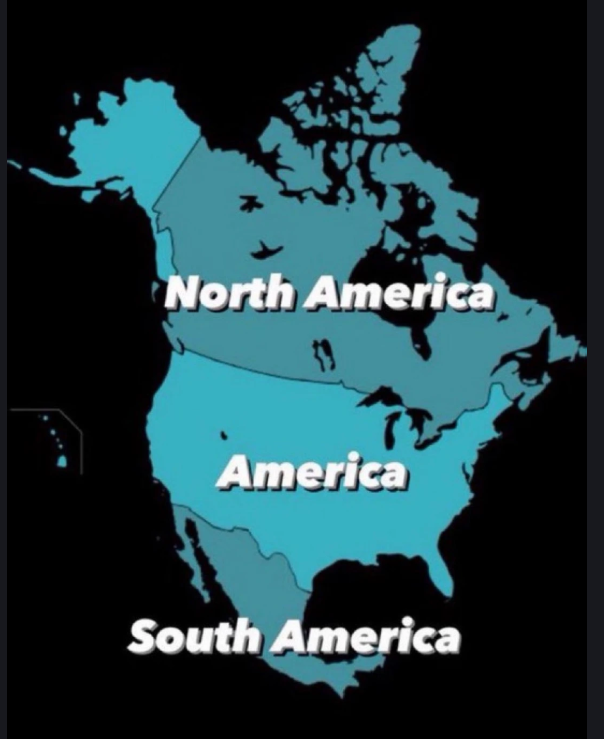 |
|
|
Redacted Redactbergwrote: Relax. Put the meme down |
|
|
John. thats interesting because my orange Ortenberger guide to the tetons uses the F9 system. |

|
Is it imperfect? Sure. Would additional measures potentially improve understanding different routes relative to each other? Sure. Would it ever make sense to add such a rating system? No. Why? You are replacing one subjective rating that is fairly easy for anyone to opine on with MANY subjective ratings that are difficult to suss out. Humans are lazy and imperfect, so while you'd ultimately get more data points out of this, 90% of them would be complete trash. Currently I'd say it's probably more like 10% are trash given the simplicity and availability of others grades (IE - you likely won't grade something 5.11a if most others have graded it 5.10a). There are problems with locality and herding effects, but it's good enough for the use give the diversity of styles of climbing. If you really wanted to go after the unicorn system, each style would get its own points (as on endless friction slab, height is irrelevant but crystal and friction type is relevant), but that would be insanely complex and incomprehensible. |
|
|
A perfectly accurate rating system would leave us with nothing to argue about over post-climb beer. Leave it alone. |

|
B Ywrote: Being wrong, sucks. I'm sorry. |
|
|
Hot take, there's no such thing as a "5.11a move," only a 5.11a route. And what does not mean? Harder than 5.10d in someone's subjective opinion, but not hard enough for 5.11b. Any attempt to refine grading more than that becomes ridiculous fast. |
|
|
Not Not MP Adminwrote: Being wrong is better than grasping at straws to prove someone wrong for forgetting to say MOST of north america. |
|
|
Aaron Kwrote: Exactly. God forbid we talk about gym "climbing" in this thread, but in routesetting circles, no one ever talks about an "11a move," but rather V2 and V3 moves. |
|
|
B Ywrote: Tomato, potato |
|
|
Nick Goldsmithwrote: True enough, Nick. But amongst the climbers - many from California - it was pretty much the YDS. A few climbers used the F system for a while. I had no problem with it but it never caught on to my knowledge. |
|
|
This post violated Guideline #1 and has been removed.
|
|
|
Aaron Kwrote: Hold up now, everyone knows 5.10d is harder than 5.11a. |
|
|
I think it's easier to judge ratings when they're somewhat below your limit, and when you're very familiar with the area, since there seems to be huge variety between the YDS in different areas. Most of us, showing up for the first time in Yosemite with some 5.11 bolted faces under our belts in other places, are shocked and dismayed that Moby Dick Center should be rated .10a. And Ahab .10b? it's a scandal! But then you climb there for a few years, you do the benchmark routes a couple of times (Sacherer Crack is the benchmark .10a), you climb every sort of crack and slab and face in the Valley, and then you get why Moby Dick Center is .10a. And Ahab is a legit .10b. Because Mental Block is .10c and is just a tiny bit harder than Ahab. But it's hard to tell those nuances apart until you've climbed a whole bunch of that stuff and your technique is good. Of course there's sandbags, but that's where word of mouth and the FA list in the guidebook come in. Was it put up by Chapman and Worrel? It's gonna be stout! Was it put up by Rick Accomatzo (sp?), it's going to be runout AND stout. Tucker? spot-on rating. Scrubby? overbolted. These are all nuances it takes time to figure out, but once you do, the Valley ratings make sense. |
|
|
RandyLeewrote: Yes, with 9+ harder still. |
|
|
Ben Zartmanwrote: Is there huge variation in the grades or the styles...? |
|
|
If this has not been mentioned above - https://darth-grader.net/
|
|
|
Michael Bwrote: 100% of all this is irrelevant if you know how to bail, and if you drill into your head that your safety is your responsibility alone. Sentiments like this that seek to both dilute and complicate climbing are not doing any favors for climbers or climbing. On grading: Even in a gym, routes and boulder problems will feel harder or easier based on myriad factors including but not limited to: Flexibility, fear, height, hand and fist size, route-reading ability, confidence or lack thereof, wingspan, ape index, endurance, etc. The same applies to outdoor routes, and add into that the era in which the FA occurred. That's why assertions like the ones you make, as well as suggestions on how to "fix" things are nonsensical and futile. Read the pamphlets on every piece of gear you buy new. ROCK CLIMBING IS INHERENTLY DANGEROUS. Act accordingly. |
|
|
IMO it's a question of what you use the grades for. If it's for grade chasing (no negative connotation) then you sort of need to arrive at a single consensus number, unless you want to define yourself as a hyper specialist (e.g. "I climb 5.14b- granite slab but 5.3+ if I have to use my biceps"), which probably takes some of the fun out of the game. Most people I know who grade-chase tend to pick something that's matches their strengths for their first of a grade, so it's the number that matters. The other most common use case for grades is to answer the question of "where on the fun/hard/safe spectrum does this fall for me". For the casual climber the extra info could be important -- saying "the 5.6 parts are run out, the hardest moves are a well-protected 5.10d sequence" or "it feels 5.8 if you climb at least 5.10 but not for the new 5.8 leader." If I've done a lot of 5.11s, I know I can hop on anything 5.10b or easier without thinking too much about it, but I might want to know a bit more before committing to a "5.11a" remote alpine route. But since this climber doesn't care about the number so much, it doesn't need to be part of the grade. In this case, the grade can be read as "if you've climbed enough routes at least 2-4 letter grades harder than this, you'll probably be fine." Therefore, the extra info doesn't need to be part of the grade. The grade-chasers just need a single number to keep the game from getting too complicated, and the rest of us can just read beta. |