
 Continue with onX Maps
 Sign in with Facebook






Rope solo self-checks

|
As per the "sketchy tope-rope solo" thread, I am starting a thread on self-checks when rope soloing. This includes anything from tope-rope to multi-pitch lead rope solo. I, for one, am most interested in self-check methods for big wall rope solo where you can have a lot of systems at play including fixing ropes, hauling, etc. As mentioned in the other thread, there's the "point and call" method employed in railways by conductors in Japan in which one points to (or otherwise engages with) the current task and then verbalizes what's being done. This can be effective when rope soloing as it forces you to be more mindful of the steps you're going through. I'm curious what other systems people use to check their systems/themselves when rope soloing. This could include pre-trip checks (am I strung out from work and have I practiced my systems at requisite levels), psychological checks (am I too fatigued to keep going), physical checks, etc. |

|
Not specific to TRS, but for rigging work we will specifically work through a system verbally and call out what we see, ex: “I have a wrap three pull two webbing anchor with a properly tied water knot around a large well rooted tree, there is a locked carabiner going to a VT prusik…” I’ve found this system handy to make very clear what is setup and what is being evaluated, I do this when doing TRS as well. |
|
|
I also find that verbalizing my setup/safety checks out loud helps. I do this with and without a partner. |
|
|
Talking through the steps of attaching devices, building anchors, checking backups, etc is definitely useful. If you're interested in LRS or TRS, then get used to talking to yourself in public. |
|
|
Biggest thing that I think is easy to mess up at awkward hanging gear belay change overs is direction of rope in the grigri or other device. Def double check that. Double adjustable daisies also make everything a little easier and safer IMO for various reasons. |
|
|
I like to click the gates of my carabiners and say "clickety-clackity", check that the rope ends are knotted, and test the braking of the devices. Same as with a partner. Not much to check, just an ATC in guide mode for toprope (tying butterfly knot backups as I go) and a clove hitch with loops through an ATC (no backup knots) for lead. 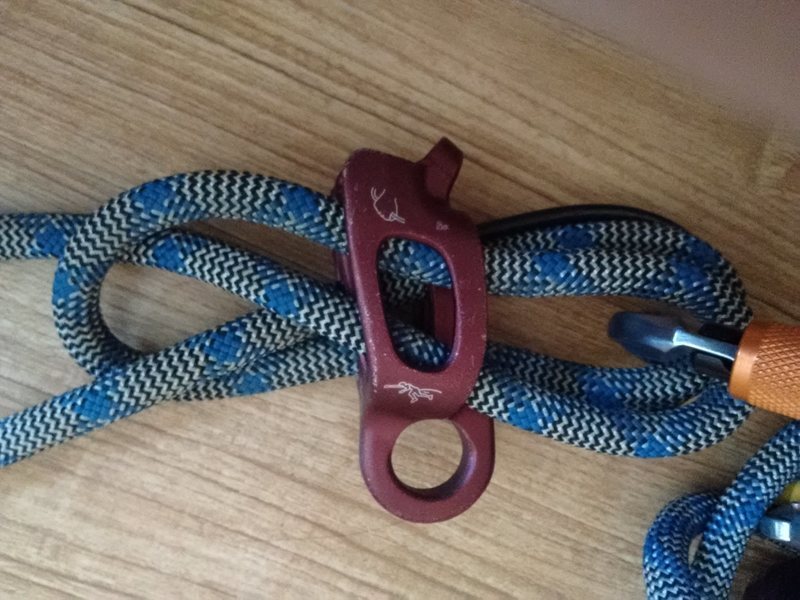 |
|
|
Eric Mosswrote: Not trying to hijack this thread, but your photo piqued my interest- can you explain the clove-ATC system for lead? What are the benefits (if any) over just a clove on a locker? |
|
|
Clayton Westwrote: Prevents the clove hitch from turning into this:  Since I don't use backups, I want to ensure the clove is "bulletproof". Maybe it's unnecessary or counterproductive I don't know |


