
 Continue with onX Maps
 Sign in with Facebook






Photos of BEAUTIFUL HARDWARE pt2


|
  One of my favorite simple, closed set ups! |
|
|
An interesting 32 dollar anchor (20% less if a member of Hownot2.com) I like the longgg Quicklink (250cm) more than the typical Quicklink, chain, Quicklink needed for this style of anchor. 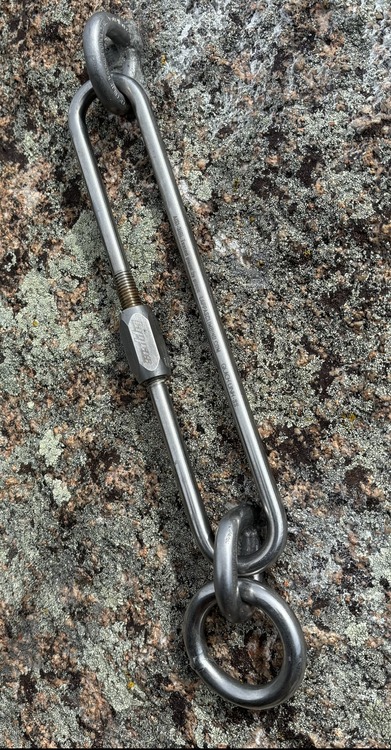 The double ring P-bolt would be ideal for lowering - this is a rather niche anchor solution for a Via Ferrata belay anchor, so was not needed. |
|
|
 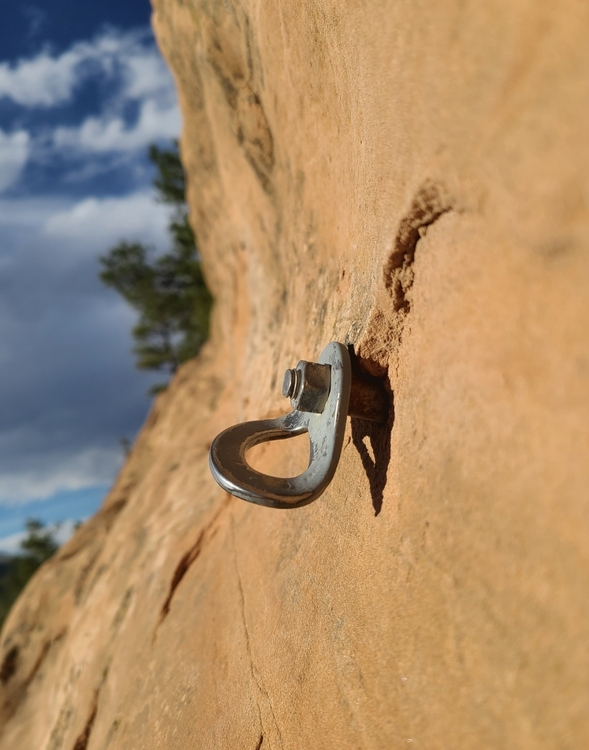  Been having some success getting these old wedge sleeve hybrid things out of our soft sandstone as to reuse the hole. Mostly spinning, light pulling and no water so you can use the hole right after you pull it. |
|
|
Sam Jones wrote: Have been able to do the same in clear creek as well - pull the nut, disengage the wedge, grab it with vise grips and just wiggle it out. Really gives you some extra to think about when whipping on them |
|
|
Sam Jones wrote: Nice work Sam! |
|
|
Very nice! Lots of adhesives are rated for damp(and even underwater) installation. |
|
|
Also check out flame to subdue the glueins. You can get a nice shade of brown with flame that will last! |
|
|
timothy fisher wrote: Are you talking about for camouflage? Can you go into more details on this/ share pictures? |
|
|
timothy fisher wrote: Thanks! Im not worried about the glue mixing with water but the rock quality itself. Greg from the ASCA recommended refraining from rebolting sandstone after a rain just like you would avoid climbing after recent precip. I supposed the same weakening of the sandstone would occur from introducing water into the hole while removing a bolt. Let me know if you know something different, bc using water would make it easier, but I currently don't. As for the flame treated glue ins, what does your process look like? Id love to see an example. |
|
|
Tal M wrote: |
|
|
Yea man, I would have liked for some of these to put up more of a fight. |
|
|
Jim Day wrote: I posted on this subject some years ago, just warm the bolt in an oxygen-rich environment (air) and stop when it achieves the tint you require. The reason for the color change is the normal chromium oxide layer is transparent as it is very thin, at higher temperatures it becomes thicker and goes through a range of colours from light straw up through dark blue and eventually black, technically this is called a heat tint. |
|
|
Kevin Maliczak wrote: I really like this, I am not a fan of permanent carabiners for the most part but this seems like a great way of avoiding the problems! I especially like the one mussy on the wear point instead of two on the same level
|
|
|
Jim Titt wrote: Thank you Jim Titt! |
|
|
Jim Titt wrote: Would you just gently warm the metal with a blowtorch to get the tint? |
|
|
Does anyone on here know where you can find some good deals on steel lower off carabiners from stores based here in the US? |
|
|
Sam Jones wrote: Gentle is a relative term! For brown as an example you need 735°F/390°C so it's a question of how big a torch you have and how much time. |
|
|
Bryan K wrote: US stainless. Stiff gates is some people gripe for the most affordable captive eye briner they offer. I'm fine with em, YMMV. |
|
|
Jim Titt wrote: I've toyed with tinting using a map gas torch, readily available at any hardware store in the US. It does the trick pretty quick with no fancy tools. I think i spent about 30 seconds a bolt getting a nice medium to dark brown. We don't have a need to camo here, but it's a nice option for discreet placements. |
|
|
Mr Rogers wrote: You are a lifesaver! This is gonna be my go-to place for hardware for now on. |


