
 Continue with onX Maps
 Sign in with Facebook






New and Experienced Climbers Over 50 #28



|
Brad Youngwrote: I too have been following this journey for a very long time. It's a beautiful thing! |
|
|
^^^ It's a little known fact that pancakes expand massively once they are in your stomach ;) |
|
|
Brad Youngwrote: Hahaha over-pancake yourself on a send day, you'll only do that twice! |
|
|
Permits finally came through for construction project. Yay. So that's what the plan is....for the next many months, lol! Looking forward to seeing some of you in June! Other than that, working on getting what little of the yard that hasn't already been savaged by equipment, back in shape, and, ever the optimist, planted. Tomatoes and such can go in, mid May, but I need flowers, so that's happening as soon as I get places for them. Almost the entire yard is starting over, so it's all up for grabs. It's been a long time since I've though about the big scale picture, so this will be fun! And yeah, hope to get climbing in, too. I'm really enjoying our jaunts to Swan Falls. Black Cliffs is just....hard. And not much fun, for me at least. H. |
|
|
Brad Youngwrote: Being a total latecomer, can you provide a link or address to your story? Well, it’s rattlesnake season here again and I am hearing of way more encounters than I did last year at this time. I got very accustomed to hiking and scrambling in shorts, but had some close encounters last summer. I don’t know if I’m going to be willing to try that again this year. Here is our resident snake wrangler, Danielle wall, who has been here for a number of years and does residential capture and relocation. And she’s cute. 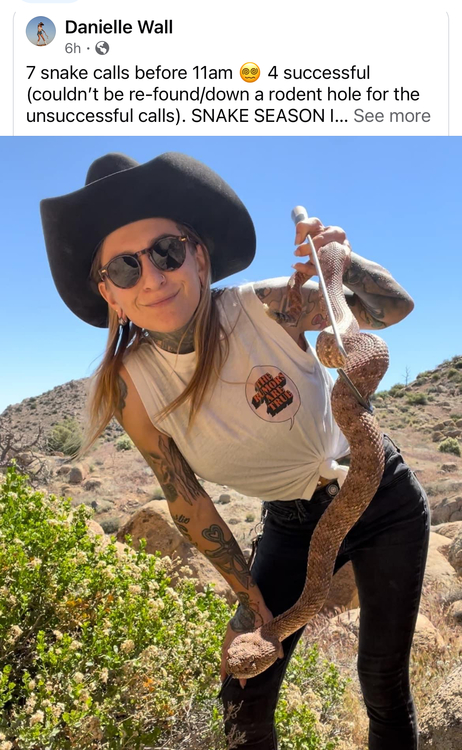 I keep the link to the Facebook group National Snakebite Support close at hand. They have doctors and vets on hand who exclusively treat snake bites across the nation. if you or a pet is bitten and you post a message they will get right back to you with advice. I received a long and detailed response to my question about being bitten and having to walk a distance to my car. 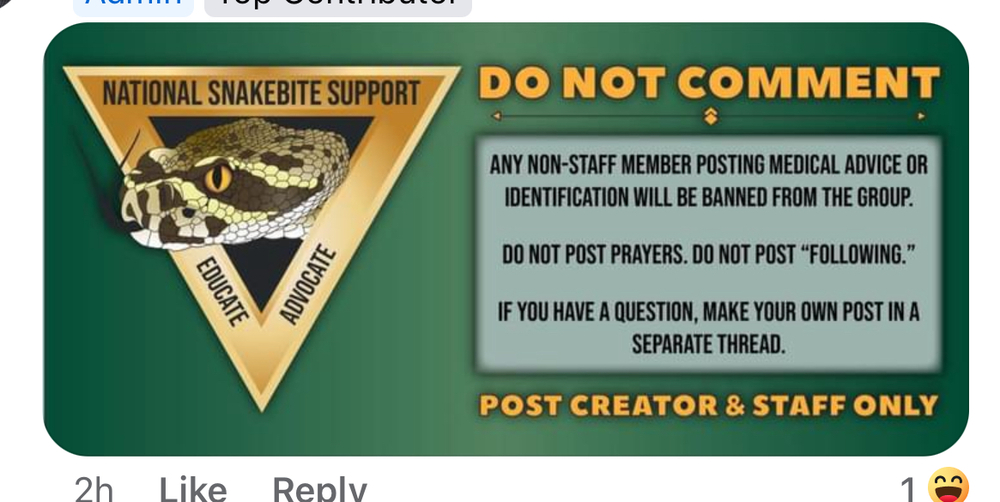 I guess it’s spring because birds are copulating on our front fence. Not just a few random birds but all of them. They are shameless. Helen, I hope you will keep us appraised of your new yard and all that’s going in it. Sounds like a lot of work, but also a great opportunity to start fresh. I just haven’t found the energy to plant stuff this year. Tomatoes could’ve gone in whiskey barrels at least a month ago. I don’t think it’s gonna happen this year. I’d be interested to hear a trip report on the trout fishing expedition. Carl, it sounds like you are having a great time! |
|
|
Lori Milaswrote: I always figured good rainfall = more plants with seeds = more rodents = good feeding for snakes = robust populations. In my experience, the sightings tend to come and go, some years more than others, and they seem to follow good spring rain years. While out mountain biking in the summer of 2020, I had at least seven sightings/encounters, including a couple of bike jumps (didn't want to hurt them) over snakes laying across trails. Been hiking, scrambling, and climbing in shorts in the summer for the last bazillion years in Joshua Tree and all over Arizona. Aside from getting a pair of high snake boots, do you think long pants will keep them from biting you? Note: I had to look it up... Google search actually says you get less venom injected if the snake goes through jeans. I'd still rather just avoid them all together. So far, they've been fairly helpful with that by making sure to alert me, or by just laying there fairly comatose because they're cold. p.s. I've probably had less than four or five rattler encounters in Joshua Tree over the years. |
|
|
“p.s. I've probably had less than four or five rattler encounters in Joshua Tree over the years.” Greg, perhaps you’re not as tasty. But half the fun of living here is being outdoors in shorts and it sounds like you enjoy that, too! Last year I jumped over two or three rattlesnakes on the path to Watergate, and two when I cut up the buttress in the comic book area. it’s a real lesson in composure if you are precariously balanced on a rock and a snake makes its presence known. I jumped back on one occasion and fell on my butt so it’s probably not the safest thing to do. I think the rattlesnake was just annoyed at that, but he could’ve bitten me easily. So the things I learned from the snakebite site are: 1) The same anti-venin is used for all vipers across the country, and there is no need to specifically identify this species. Where it matters is if a bite was from a coral snake, which has a very different effect and requires different treatment. 2) keep a pen with you and if you are bitten circle the bite and write down the time you were bitten. 3) only if it is safe, take a picture of the snake. 4) Elevate the limb above the heart. I always heard the opposite. 5) if the choice is between making a phone call or alerting through a satellite system and waiting for them to arrive, or walking out of wherever you are, start walking. The worry about mobilizing the venom is misplaced. if you’re already alarmed and heart is racing, you can’t make it worse by heading for the car. 6) if you are overcome and can’t walk further, lay down and try to make yourself obvious. 7) the usually prescribed drugs, such as NSAIDS, Benadryl, antibiotics are counterproductive and could be harmful. 8) I asked my doctor if there were any additional concerns being diabetic and he did a search for me and responded that snake venom has a pretty profound effect on blood sugars could drive them either way therefore keep a close watch on all your baseline vitals. 9) Depending upon where the bite is remove any jewelry, belts, and articles of clothing that could be difficult to remove when there is swelling. I hope I see you out there one of these days! |
|
|
I've had much the same experience as Greg. In 40+ years of tromping around Joshua Tree, encounters with rattlers have been very few. |
|
|
Same. Although my visits to Joshua Tree over the years have been typically in the cooler months (Oct-Apr), I recall seeing one rattler in that time (mid 80's on). I've seen way more in Greg's home turf of AZ. Ditto Texas (biggest I've seen a Western diamondback at Enchanted Rock...huge). Nevada but not as many in Red Rocks (the only time I've seen a sidewinder). Gobs here in Utah. The local hills especially at lower elevations in the Wasatch have a fair number of rattlesnakes. Great Basin variety. Angriest encounter was in a building at SLC-6 at Vandenberg AFB. Likely a Mojave. We captured it in a large cardboard box then released it outside. Never seen such an aggressive and pissed off snake. Anyhow...they're pretty cool and interesting...from a distance. Ha ha. |
|
|
Brian in SLCwrote: Yeah, that's exactly how I feel! |
|
|
Many interesting encounters with rattlesnakes at Josh over the years... It was perhaps in 2006, when our youngest Samantha, was still a small child. My wife, Samantha and I set up below Rubicon at Split Rocks. I led up the initial hand crack and traverse, and had just reached the base of the main arching thin crack. At this point, my wife told me that she was going to have to take me off belay as a very large snake had just slithered down, out of the hand crack I just climbed, onto the rope bag. It was a very aggressive Mojave, that deposited itself on the rope (it actually blended with our green and black rope), and refused to move away. While my wife and Sam moved away to a safe distanc, I threw a couple cams into the crack and tied myself off. The snake refused to move away for perhaps 5 minutes or more, hissing and rattling occasionally.. Eventually, after it moved around the corner and away, I was put back on belay, climbed the rest of the route, lowered off, and belayed my wife as she cleaned. Today's LA Times had an amusing picture... I added an appropriate caption.  |
|
|
Brian in SLCwrote: There was always at least one rattler or copperhead, often both, in the well house back home in KY. Fortunately, they were less aggressive because the well house was below ground and usually cool. |
|
|
I feel like if you spend any time at all moving around in environments where rattlers live, you'll see them on a regular basis. Off the top of my head I can recall coming across them in the CT woods, a giant in AZ, on a routine basis in Red Rock, a few in Joshua Tree over the years, in Yosemite Valley, in Bishop at the Happys, etc... sometimes I'll go a year or so without seeing one, then I'll see a few in one year. I'm always watching out for them. Frankly, I'm more concerned about poison oak. |
|
|
Tim Schafstallwrote: Mount Tamminy, New Jersey:  I've never been to the Red and not seen a copperhead...! |
|
|
Immediately remove any constricting articles (rings, jewelry, etc). Swelling will likely increase rapidly, making removal difficult/impossible, and placing limbs at risk. Definitive care is antivenin, at a facility that has it, and knows how to use it. Most Level 1 Trauma Centers should be capable of this- Loma Linda University Hospital is a world-renowned toxicology research hospital. It may be most expeditious to simply drive the person there yourself. As noted, the antivenin for all pit vipers (rattlesnakes, copperheads, cottonmouths) is essentially the same. Identifying the specific species is not necessary. Do NOT capture the snake, or bring it (or the head!) to the hospital. Keeping the person relatively immobile is ideal, but must be balanced against the reality that accessing antivenin is most important. In some circumstances, walking may be the best way to accomplish this (though not ideal). If an ALS/Paramedic is available to assist transport, this may be helpful with more dramatic reactions. There is some recent controversy around limb positioning (elevated/dependent). Dependent has long been the recommendation. The progression of swelling over time is useful information to the toxicologist who will treat this- this can be done either by marking on the limb the extent of the swelling and the time, or even photos with your phone. Cleaning the wound has marginal benefits in the field, and should not delay transport to a medical facility. Long term scarring does occur with some frequency, but deaths are very, very rare. (Ex: in 2004, there were roughly 2900 venomous snake bites of all species reported to various US Poison Control Centers. 1 person died that year- these stats are pretty consistent from year to year.) What NOT to do: No suction of any kind, no tourniquets/constriction bands, no ice. |
|
|
phylp phylpwrote: I just startled one up Griffith park this past weekend. Typically, run across one or two a month in the San Gabriel’s. Ran into a sidewinder 30 years ago at some dune in Joshua Tree. It was a little one and could easily have outrun us if not for us scattering our belongings to get away from it. 1/2 hour later we ventured back to see slither marks of that curious snake rummaging through most of the gear. |
|
|
I am official old. I had cataract surgery April 16. I could not do anything for a week according to the surgeon. I asked about working out the day after the surgery. He said no. He did say that I could go to Planet Fitness and do a brisk walk on the elliptical only. No hiking in the woods. No bending forward for a week. No picking up anything over 20 pounds.I have the other eye surgery on April 30th. Another week of not doing anything. We did get out to do a couple of climbs yesterday. The surgery screwed up our trip that Jean wanted to do. She had plans for going to WV to climb at Smoke Hole, Seneca Rocks and New River Gorge, Pilot Mountain in NC and Red River Gorge. We hope to do a shorter trip after Memorial Day. Since it is now a week after the 1st surgery I can now do things that need to get done. Jean and I took down the old fence around the garden and replaced it. We have 2 20 years old raised beds. Each one is 6x24 ft. I turned 2 small sections by digging up the soil with a shovel, breaking it up with a metal rake, smooth it out and then putting down a landscape cover to keep the weeds out. Once we plant, we cut holes in the landscape cover. We started to do this years ago. Less watering, weeding and fertilizing. No planting until May 15th according to Agway. We have had frost overnight for the past 2 days. We usually plant 4 different types of tomatoes, 3 types of potatoes, yellow squash, zucchini, eggplant, beets, green bean, red peppers and different herbs. We also planted another blueberry bush. We have 2 already and get a lot of blueberries. Jean has to pick them every morning before the birds get to them. Once picked, they can stay out on the counter for 2 weeks without going bad. Nothing like fresh organic food. Pictures of the garden 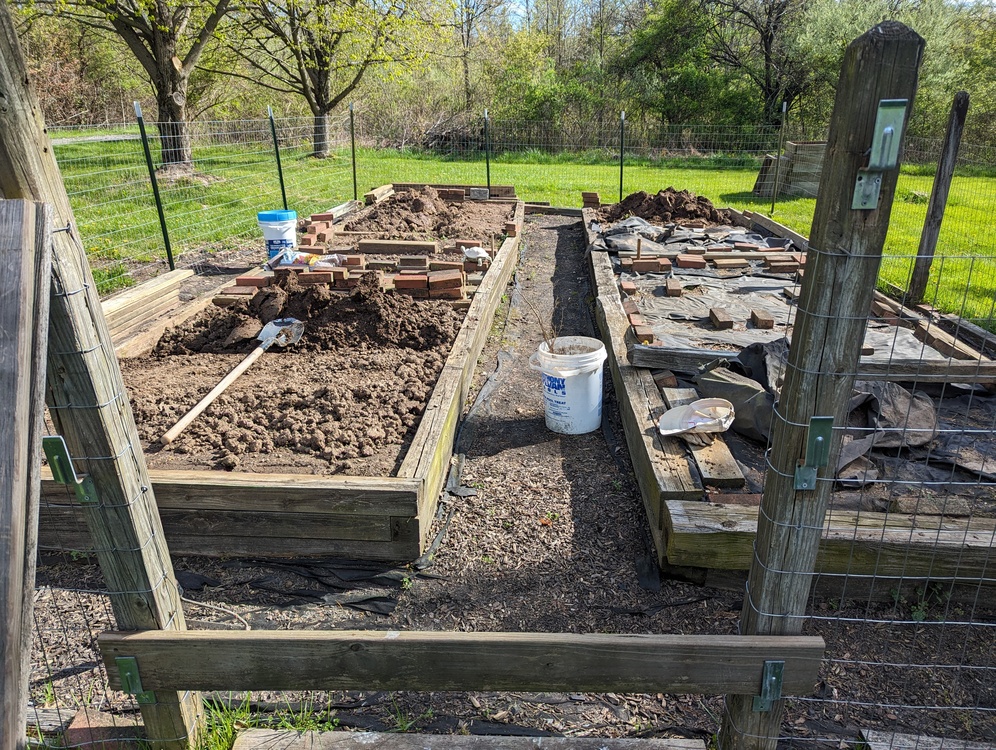 Turning over the soil. 6x8 ft section,  Racked it over  Landscape cover. Jean pulling out old weeds. 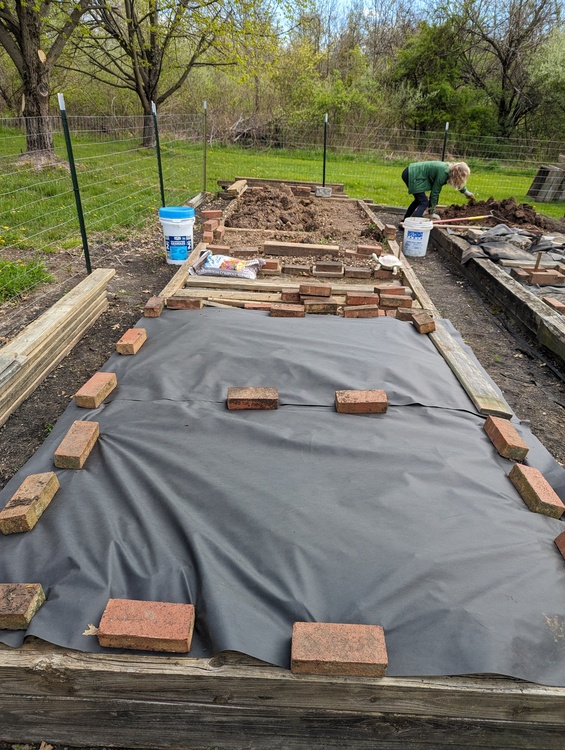 I also just got down cutting roughly 2.5 acres of grass. Jean and I will do a little bit of garden work each day until the 30th. We are going to a climbing gym called Reach Thursday to climb with some friends. 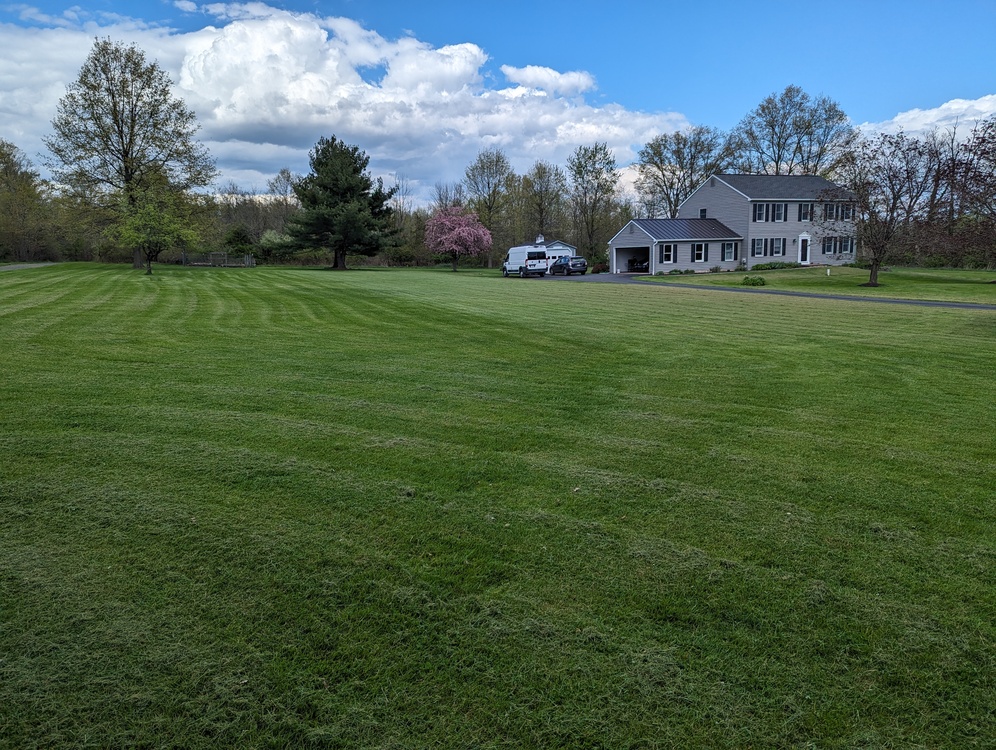 John |
|
|
I don’t mean to sound complain-y, I’m not. But I am continually struck by the amount of learning required to climb. Things,I am guessing, most people here learned in their youths. I love learning and the challenges, but sometimes I think “now? Really?” This was a pretty late start. For instance, Randy here with wife and child Climbing the Rubicon in 2006. OMG. I am still getting up to speed with diet and lifestyle requirements to have enough energy to do what I want out there. I didn’t realize how hard I was disbelieving the protein. There’s nothing natural for me consuming 100 or 120 g of protein a day. And yet night and day difference when I hit the mark. I’ve made a science of sleep and I don’t fight that anymore. (Didn’t Hulk Hogan say “eat your vegetables and say your prayers “ and something about shut up juice?) But where I was going with this is the ongoing process of learning how to climb so many different types of rock and routes. Today we were in the hall of horrors area. One climb, which looks so easy from the ground, felt impossible. Trouble With Tribbles. I got flustered just trying to find a spot for 1 foot with only very thin holds. And that called for a lesson in using fingerpads aggressively. 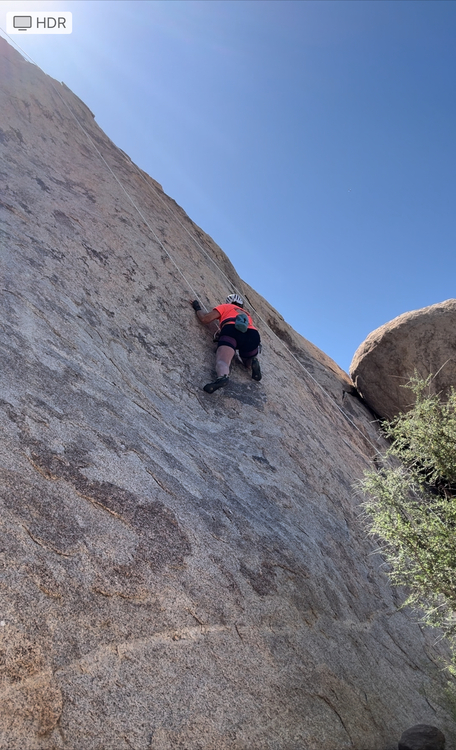

|
|
|
Lori - I wouldn't feel bad about not getting The Trouble with Tribbles. It's desperately thin; I've seen a lot of good climbers fail to get up it. Search for Klingons, the route in your other photo, is more my style. I thought it was pretty reasonable and not so strenuous. Probably you were a bit worn out by Tribbles. |
|
|
Brandt Allenwrote: Brandt, you’re not going to advise me to drink shut up juice? Thank you for your kind words and support! I have been trying to be aware of my thoughts before a fall. Heading up an adjacent slab with lots of tiny edges, I realized my hold up for me was fear. A lot goes through my brain when I try something hard. There’s no reason to fear! I have to reason with my body that it’s OK to trust my feet! On that Tribbles route doesn’t it look like a walk in the park from the ground? I Was just observing how quickly I fell apart when I couldn’t find a stable foothold. But Bob was observing that I wasn’t taking the crimping seriously. I wish I had the exact words, but it was along the lines: “ there is nothing casual about 10+ slab. Don’t expect to be relaxed. You have to bear down with everything in you and don’t let go.” I believe Jan has said the same thing and this is a new kind of macho determination that I am trying to learn. Bob demonstrated not letting go. I observed that I was afraid of ripping my fingernails off and he suggested that if I’m losing fingernails then I’m using the wrong part of my fingers. So we discussed finger pads. And finger training. I just feel so damn lucky. This small group here is such a tiny fraction of the human population. And to get to spend any time at all on the minutia of proper crimping is an enormous gift. |


