
 Continue with onX Maps
 Sign in with Facebook






New and experienced climbers over 50 # 25


|
|
I never strung together a best decade as an adult. life was pretty awesome when I was a little kid right up to the day before 7th grade started. Life was terrible for that school year. life as an adult was similar. a few good years and then a really bad one thrown in... 81-82 was amazing living in the tetons. some of the few photos I have from that era 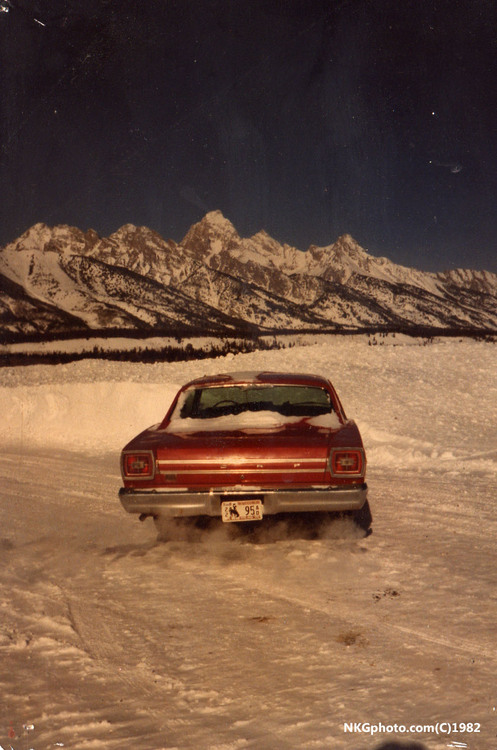 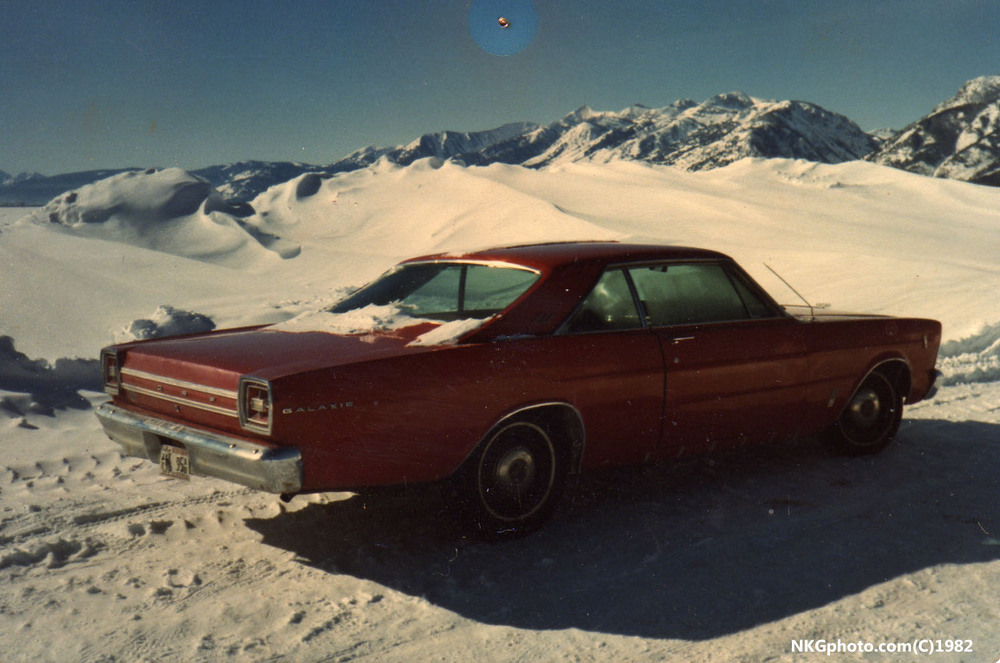 |


|
Lori, a large amount of the information that you are interested in is ‘out there’—it does require a good amount of searching to find it—guidebook histories as well as other anecdotes often embedded within the books, Internet forums ( for example there are posts about Maria Cranor in the Memorial forum here on MP), and in various books and magazine articles. But, true, as with all of history, much is in individual memories and becomes diluted over time and then lost with death. For certain climbing areas, at least some of, this information has been gathered ( ‘saving’ it all is an impossible task) and published in book form, an excellent recent example is E.C. Joe’s book on southern Sierra climbing. Such books require a great amount of effort and dedication—they are really a labor of love—no one does it for the money!!!!! But there will be an audience and, being an historian by avocation, I believe such compilations are worthwhile endeavors. But, to start, all it takes is the desire and and willingness to put in the effort—and a lot of persistence. Perhaps, this will be your ‘calling’. |
|
|
History is such a fickle thing. If it is not documented somehow did it really happen? Canyoneers have a term "first known decent". I've always liked that. Maybe climbers could retro actively refer to first ascents as first known ascents (FKA). I know I get a kick out of reading route descriptions for areas I was familiar with and seeing all the new discoveries Almost like no one had any imagination 50 years ago. . |
|
|
Lori Milaswrote: Lot of good info about Maria in this very thread when she passed. |
|
|
Favourite decade pics. For me it was probably half of one decade and half the next, ‘85 to ‘95 which was the ten years I spent in the army. I was fit, strong and confident.   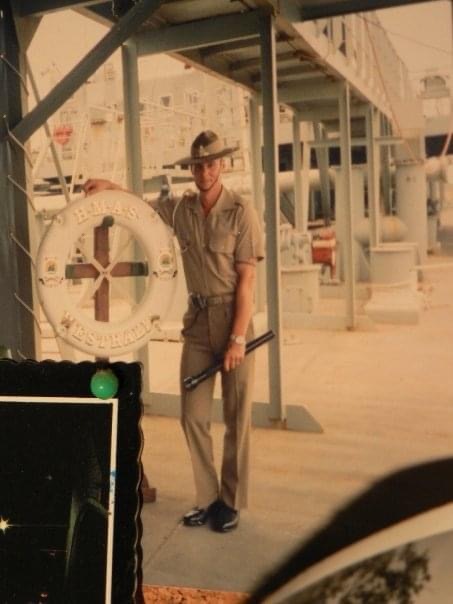 |
|
|
Alan Rubinwrote: Thank you so much for the kind words, Alan. I guess I've felt it would be presumptuous to write about a time in Joshua Tree when I was not here. However, I could compile stories. I'm giving it all thought. Maybe there need not be a large compendium of facts and routes, but a view of Josh from someone who loves this place. I will purchase the book by E.C. Joe and see what that's all about. There are plenty of good guide books, Randy Vogel's of course the best. If I were to do it today, I'd pick 30 stunning routes, and get the stories behind them--not lengthy detailed accounts but what any curious climber could thumb through and get the stoke... along with other in person accounts of the history of this place. I'd probably also include a profile of some of the current younger climbers who are discovering their own thing here. It's really old, but also really modern here.. |
|
|
Lori, that sounds like a great approach. As you do your research, you will likely find that the best stories aren’t necessarily associated with the most ‘stunning’ routes, and then will need to make your choices accordingly. Your personal profiles should include both old guard and new climbers—seeing the differences and the similarities ( probably more of the latter). Hope you take the project on. You have access to lots of good sources to start from —Randy, Bob, Todd, Guy, Jan, Kris, likely others. |
|
|
Lori? Since when is there a rule that historians are alive when something is happening? Or personally involved? Almost an oxymoron. Don't let the still aliveness of climbers put you off from story collecting. A wide eyed interested person is just what stories need, to exist in the first place! If it interests you, that's enough to persue it, and, you have in fact been doing that pretty often, in these forums. Just start compiling, expand what you do anyway (endless curiosity and enthusiasm), and get it pinned down, one way or another. Eventually, maybe already, it will start to take form, then you'll know what you want to fill in the edges to become a finished thing. Or, it morphs into an open ended format, like Luke Mehall's stuff. Oral history projects are pretty specifically to catch stories before those who have first person memories are gone, be it great grandma, or an FA. Blog posts and podcasts are pretty commonly just this, stories coaxed from people we're interested in. A slightly more formal campfire than what we do here! Best, Helen EDIT to add, start with Dave Houser. Lori and Dave: a JT love story about rocks and life. You got 24ish sets of notes to start it out! Uh, 25. Forgot where we are. And, while I'm on it, this set of threads sure seems like a bangup Reel Rock subject! I thought that a long time ago. |
|
|
I think that you imagine more went into putting up a new route than usually did. Generally when wandering around the park we would take note of lines that seemed like they would be doable. Depending on who was doing what each weekend people would head out to add a new route. In the case of Run for Your Life, Dave and I had looked at that face and the day Dave wanted to work on it I wanted to do something else with Waugh but Herb was around and so he and Dave went off to put bolts in. For the most part, that really is all there is to it. Not a lot of forethought went into them, just another day of climbing. Obviously there were a few routes with more to their stories but not for most. And why do you think Good to the Last Drop is not climbable anymore? There is not less protection than there ever was and the rock is cleaner than when the route was established. Just because people have gotten less bold does not mean the route has a problem, maybe the people do... |
|
|
While the actual first ascent process itself might not have been particularly exciting, such a climb could provide an ‘opening’ for a story about the people involved, or maybe about what else was going on in the local climbing ( or non-climbing) community at that time, or something else of interest that could, even remotely, be tied in to that climb. |
|
|
Alan Rubinwrote: Exactly. Thank you for this! I could never hope to produce a tome of all the routes with historical value... Randy already did that. Bob also wrote one or more books of the best Joshua Tree climbs. Todd wrote one for sport routes. I never thought of this thread as 'mine'... I just wrote that first post, and then kept on asking questions. But I did learn this about myself: I like pictures and stories much more than coordinates and beta. You can only say so much about approach shoes. I like the pics of Wendy, Helen's potato plants, Guy's teenage pic, comparative tomatoes, Carl's pics... all of Nick's pictures, including his new home. I like pictures of Bob's fish. (I never knew salmon could be so ugly). And I LOVE the relatively few climbing pictures posted here. Apparently, the 'shoe cam' has not completely caught on. So I would like to see a book of pictures and stories about the main offenders. And coffee-table book quality pictures of those routes. Every now and then I see a route that takes my breath away... and I'm hell bent to get to it. When/if I finally get to climb it, I usually don't know what the hell happened there--how was it found and sussed out, what inspired the FA... You're right... it may not be a stunning route, it may be a route that no one has ever mentioned. But SOMEONE was there. Someone had a really good time setting that up. (I'm thinking of a route I saw, put up by "the Kid". There's a story there!) Helen, I so wish we could have a month together, sorting through stories and pictures and traveling around through the Park and organizing material. We could collaborate. But as for springing anything on DH... I don't know if he would find it funny. I've tried to be so respectful of his need for privacy. He did tell me he liked my "Dave's Not Here" red tshirt. Jan... I almost deleted the comment about Good To The Last Drop. I could just feel you bristle. My comments are really about having to beg another good climber to figure it out so I could climb it (ok, not 'beg' but ask)--over several years. It's dangerous and risky, but even more, it just looks kind of lost and lonely back there. I realize not every route is for me. But even MP says GTTLD is "A good route that really needs the bolts replaced to make it a bit safer." I listened to Alex Honnold's round table discussion titled "Should We Make Old Routes Safer?" It's not for me to weigh in on... I will never lead an unsafe route so I don't get a vote. But for those who had rights to an opinion, they were very mixed. The consensus was 'no one owns these routes'. Alex felt fine about retrobolting unsafe routes. Others did not. I suspect JT climbers have their own distinct ethic about this, too. BTW.... for all the great stories you and everyone have passed along... I am SO grateful. They may mean more to me than to you! |
|
|
Alan Rubinwrote: No question, and I have tried to pass some of those stories along to Lori. But a lot of it was just climbing. Fun, occasionally dangerous, but just the same people doing the same thing, week after week, year after year. |
|
|
I think its a huge misconception that people dont do the poorly bolted routes because kids are all gym climbing whimps these days. its been my obsevation that the newer generations are stronger climbers and often bolder climbers. they just keep getting better and better. The cathedral traverse in the Tetons CTC in 6hrs and change is insane! I think that most modern climbers have realized that its not worth getting hurt on a poorly bolted half pitch climb when there are other option out there with much better risk reward numbers. |
|
|
Lori, it is one thing for a route to need new bolts because the old ones are old. It is an entirely different thing to want to put in extra bolts on a route just because you, or someone else, are not up to the mental challenge of climbing it. If GTTLD needs new bolts then ask someone like Kevin Powell to replace them. But never ask someone like him to add more. Besides, in this case, if more bolts were added the name would cease to have meaning and the history would be worthless. |
|
|
Alan Rubinwrote: I sometimes wonder why a route has a particular name which might seem "out of place/context", given the names of neighboring routes. |
|
|
Nick Goldsmithwrote: Nick. Maybe you have a point! The route I have been referring to I believe climbers look at it and say “Not worth it!” Not worth the risk of a dangerous fall on a sort of unimportant route. These are very strong climbers who have a different risk-assessment criteria. Could we actually be talking about the level of hazard most excellent climbers are comfortable with today? The thought process might be that there are thousands of challenging routes that don't carry the threat of death or dismemberment with them. I don’t want to speak for Bob but I do think that daring and competitive danger-seeking are not as important as they once were? I’m thinking of Bob’s explanation for how he bolts things today vs routes he bolted decades ago. Back then they were a “little bolder”. Was there also peer pressure? Maybe all the dead and mangled climbers have caused a change in attitude of “This isn’t part of the deal.” And I am yet another generation of climbers removed where I want minimum possibility of dying on the hardest possible route. I think that fear and adrenaline were part of climbing before.. So maybe things have changed. |
|
|
The thought process is often not worth getting hurt on some stupid run out pitch that is not an FA or a super desirable summit or link up. |
|
|
My friend Aga says I should write a climbing book about my nonsensical attitude to climbing… Aga and I decided I should write a book about climbing. Pre ordering now open at klettertacheorg.org How to be a Silly Climber, Nurturing Your Stupidity By Carl Illustrations by Aga Chapter One: How to use your natural hate for people to improve your climbing Chapter Two: How to lose weight by eating Doritos, peanut butter, Vegemite and cheese crumpets, chocolate and ice cream (while developing diabetes and very significant love handles) Chapter Three: How to lose a toenail Chapter Four: How to spend too much money on expensive climbing trousers so you don’t actually have enough money to climb in them but wear them while sitting eating Doritos and drinking beer Chapter Five: How to spend more time choosing your climbing costume than route reading Chapter Six: Pretending you’re German in drei easy steps Chapter Seven: Power sounds and their relationship to how annoying you are as a climber Chapter Eight: Make your climbing more dramatic by learning how to scream “TAKE!” more often and with greater conviction Chapter Nine: What lollies to eat at the crag to give you very very very very very very short bursts of energy Appendix A: Power sounds |
|
|
“Nobody comes into your life by mere coincidence. Trust your instincts. Do the unexpected. Find the others.” Timothy Leary And so we are. |
|
|
Chapter 1 is awesome Carl, I witnessed chapter 8 last weekend as a fellow near us whipped onto a low angle slab, except he screamed "take take take take" |


