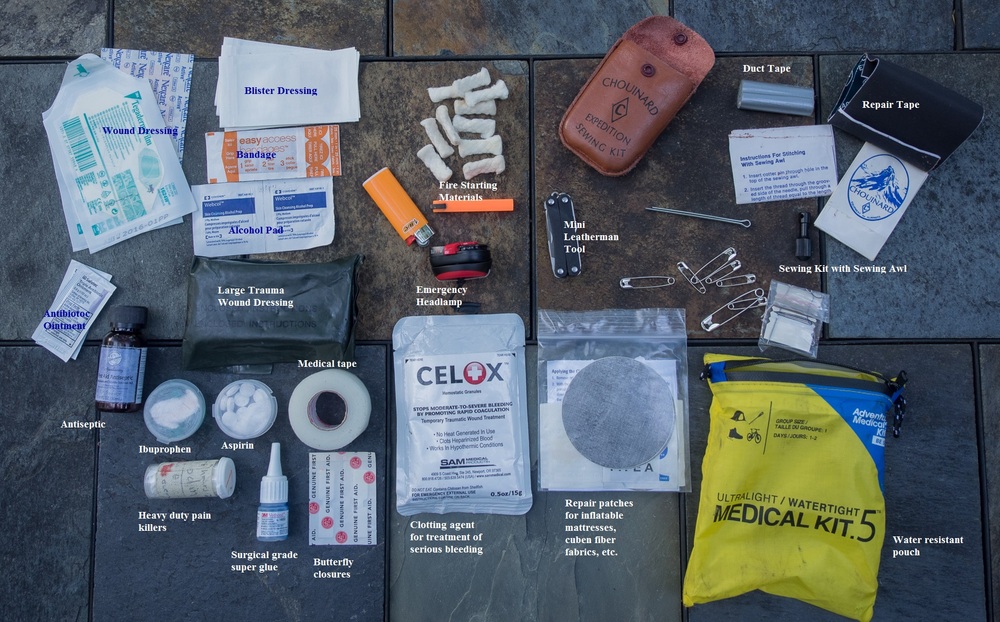
EMT/ ski patroller here. I've never found a prebuilt kit that really made sense to me. Why do you need 15 bandaids? 2x2, 3x4, AND 4x4 gauze pads? 3 antiseptic wipes and 2 alcohol pads? Just bring 4x4 and cut it to size if you need to (which you won't). Non-stick gauze pads and tape make waaaay better bandaids than a real bandaid, and why bother with antiseptic wipes AND alcohol pads? Just makes your inventory a pain.
I second the WFR course, that's honestly the single best thing you can do for you and your partners. Second is an Inreach Mini, the sooner you activate SAR the better your outcome will be and how often are we out of cellphone service?
I view my first aid kit for single/double day outings as:
What is likely to happen to us, and what do we need to:
A. Get us back to the car so we can drive home or to a drug store and get the stuff we need
or
B. Keep someone alive long enough for rescuers to show up
Rinse a cut off with drinking water, and the true cleaning (soap&water, antibiotic ointment) can wait 8-24 hrs so no sense lugging that around. Afterbite sting relief? Ya sorry bud your gonna be itchy until we get back to the car. And so on. The more stuff you have in your kit the more digging and looking around you'll do when it's time to use it so the trimmer you can keep it the happier you and your patient will be.
My personal backcountry ski first aid kit is the most comprehensive:
Gloves, rubber dishwashing gloves are best cause they won't tear but they take up more space than nitrile gloves. Bring a few pairs or nitriles because they *will* tear
1 pair trauma shears
1 orange CAT tourniquet (Stop buying black! We aren't tactical, there's no need. Orange is harder for EMS folks to miss if you forget to write "TOURNIQUET T: 9:53" on their forehead)
1 4" Israeli Bandage
2 rolls 3" gauze
2-3 4x4 gauze pad
1 or 2 bandaids
~8 steristrips
1 18" Sam splint
1 pkg triangle bandages for a shoulder sling
1 small roll med cloth tape
1 emergency blanket
1 CPR mask
1 nasophayrngeal airway sz 28 for an unconscious patient (this is an EMT/patroller thing)
1 pkg honey for diabetic emergencies
1 pkg electrolyte solution
1 dose benadryl for anaphylaxis (epinephrine is what this person needs though)
1 dose baby aspirin for cardiac events
1 dose Ondansetron (EMT thing, anti-nausea that's nice for head injuries)
800 mg Ibuprofen/1000 mg tylenol. We call this a "pain bomb," studies have show when taken together like this it has similar analgesic effects as opioid pain killers
Sharpie with duct tape wrapped around it
With that stuff I can fix anything that is fixable. I typically take way less when climbing just because space is at much more of a premium so sticks can replace the SAM splint, climbing slings can replace a tourniquet, etc.The odds of traumatic bleeding while climbing are super low. Realistically any medical situation is going to be from a nasty fall or rockfall so splinting, head trauma, and pain management are my main concerns when climbing. For those of you carrying prescription drugs, remember that it is technically illegal to roll around with prescription drugs out of their labeled container. Probably wouldn't ever be an issue unless you're getting busted for weed in Monticello, UT and they wanna throw the book at you.
I'll usually bring nitrile gloves, a space blanket, Ondansetron, pain bomb, tape, CPR mask, and 1 pkg roller gauze with me climbing if it's more than 3 pitches, or a long approach. That's fist sized and can do pretty much anything I'd want to for what you're likely to see while climbing. If it's a quick approach I often won't bring anything because I'm pretty good at bodging stuff together with sticks and jackets, and that'll get us back to the car.
Feel free to poke holes in anything I've written about here and ask any questions too. I want to improve and help others improve as much as possible.
Feedback on what I've seen in the thread:
For those of you carrying Quikclot, make sure it's the gauze and not the powder. The powder causes pretty significant tissue damage.
Consider ditching anything you don't need to get back to the car where you can then drive home or go buy the right stuff. So wound wash is really just 4 - 8 oz of sterile water that you'll never drink, use drinking water in the moment and then clean it properly with soap & tap water when you get home.
Nitrile Gloves: bring several pairs, like 3 pairs would be good. They *will* break or tear, and people are gross. That's cool you helped that guy with an arterial bleed 20 years ago, bummer you got HIV from him tho.

 Continue with onX Maps
 Sign in with Facebook