
 Continue with onX Maps
 Sign in with Facebook






Environmentalists Block Fire Management in Yosemite


|
|
The west is learning some hard lessons in forest management lately and there are some attempts to “rake” the forests to clean them up of fire fuel, but fringe groups with no answers of their own regularly stand in the way. Instead of calling on firefighters only in fire season why not keep them employed year round as fire suppression artists? The current state of affairs gives new meaning to the expression “Running around, putting out fires”. |
|
|
Seems like a scientific argument that people are trying to bring to the courts. Sounds like those opposed to the forest services plan have two main beefs: (1) worried commercial logging could be the driving motivator rather than fire fighting and (2) fire rather than selective thinning is the way to manage wild fires. Forest service wants to use prescribed burns and thinning/removal of trees. Removed wood "biomass" needs to go somewhere. As an aside, I find it super annoying that so much of the news still focuses on stuff Trump did or said, like "raking the forest", when he doesn't really play a role in the current argument. |


|
A century of fire suppression is certainly contributing to big fires. But, it is about planet management now, not forest management. Big fires are burning year round and not just in the West - that's not because of forest management. That said, I think prescribed burning is a good tool and should be used extensively. Zeke Lundor (sp?) had some great information on the positive impact of prescribed burns on some of the Caldor fire last year. That burn had been criticized because it had gotten out of control (tricky business...), but ended up making a big, positive impact. |
|
|
Jay you're mixing the Caldor Fire, which was human caused, with the Tamarack Fire, which was started by lightning and allowed to smoulder in a remote area, only to have that fire flare up into a bad one about a week or 2 later. But I think you're spot on relative to the positive impact. Time, and generations younger than mine, will certainly find out (all over again). |
|
|
Cherokee Nuneswrote: Hi Cherokee, what I remember is the Caldor fire burning into an old prescribed burn. The fire didn't progress through that area (at least not quickly) and Zeke was pointing out how effective it was. He was advocating for more prescribed burning with that as a positive example. I believe that prior prescribed burn (from earlier years) had been criticized because it had gotten out of control and threatened to get ugly. His point was that you have to take that risk and burn stuff proactively because it works. |
|
|
I have nothing especially intelligent to add to this discussion, but here's a photo of the Tamarack fire pyrocumulus cloud last summer, on the day it started flaring up severely. Photo taken from Phantom Spires. Watched it build throughout the day. 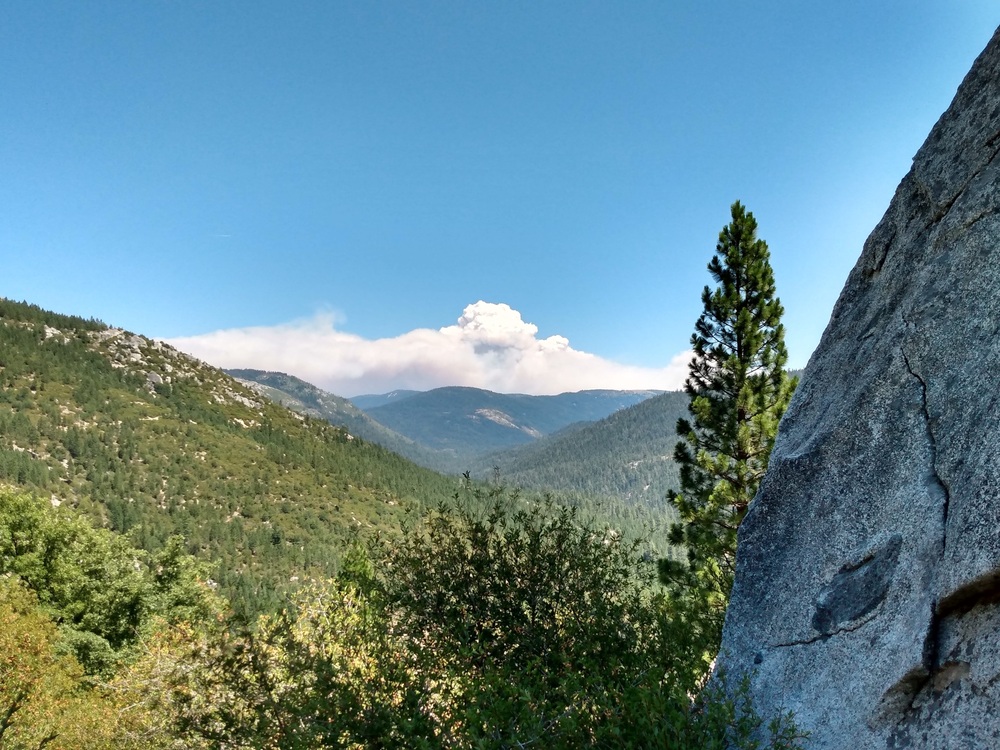 |
|
|
I’ve been arguing this for years. I have a vested interest in the subject and am very involved with the subject of Forrest management. Particularly fire mitigation. The EPA and environmentalists are a good thing. Rather, intended to be a good thing. They’re just too politically motivated and self serving. And in the case of the EPA, over bloated and wildly inefficient as well as downright corrupt. Even though we’ll intentioned, “environmentalists” need to know when to contain their emotions, step aside, and let the professionals go to work. I should take a day to drive around and take photos for you all of some of the different fire mitigation projects in my area, how they impacted wildfire, what worked, what didn’t. Then show you the “protected areas” we weren’t allowed to touch, and the slash areas which sat for years because of EPA over regulation wouldn’t allow prescribed fire. It will make you sick. |
|
|
Tradibanwrote: Might be the first time I agree with you. It's a fraught business, though, as demonstrated by firefighters getting caught setting fires to drum up some work. Americans aren't much into preventative maintenance, either (see: the healthcare industry), so it's hard to imagine a business structure that, in a way, puts itself out of business. It's reactive work, firefighting, and changing to a proactive model doesn't currently come with money bags attached. |
|
|
Jay Andersonwrote: That's correct. Zeke was talking about it in his "heat map video discussions" as the Caldor Fire progressed. The Tamarack fire was a separate matter. |
|
|
When litigation becomes the principal means of negotiation, then it's only natural that attorneys end up being the principal decision-makers. I know exactly 1 attorney who knows something about fire ecology and (surprise!) he doesn't work on either side of this issue. A casual read of the Multi-Use Act makes it clear that whenever USFS makes a decision (and doing nothing is a decision), they will be sued by at least one interest group. In this climate, the path of least resistance for any interest group is litigation rather than research and collaboration. Another consideration that escapes the public is the nature of government budgets. Fire-fighting is covered by an effectively limitless budget. Fire prevention/forest planning are covered by very limited budgets. Land management agencies cannot divert $ from one budget to the other. So they helplessly watch as fuels accumulate, then collect hazard pay once the fires start. Nobody's innocent in this game, and it won't change until Congress recognizes the problem and reforms well-meaning but poorly-conceived laws. And Congress won't lift a finger until we speak up--not about our pet issues but about systemic problems. |
|
|
It seems like they would leave more of the felled trees in the forest, cutting them into unsplit logs that sit flush on the ground so they don’t burn. Then chipping the branches to spread on the forest floor. Instead they pay $1400 per truckload to haul the wood to a power company that buys it for 2 bucks a ton and burns it. This strips so much from the forest that it kills it over time. Burning of the trees needs to happen in the forest. It’s no wonder the enviros think the thinning could be handled differently. |
|
|
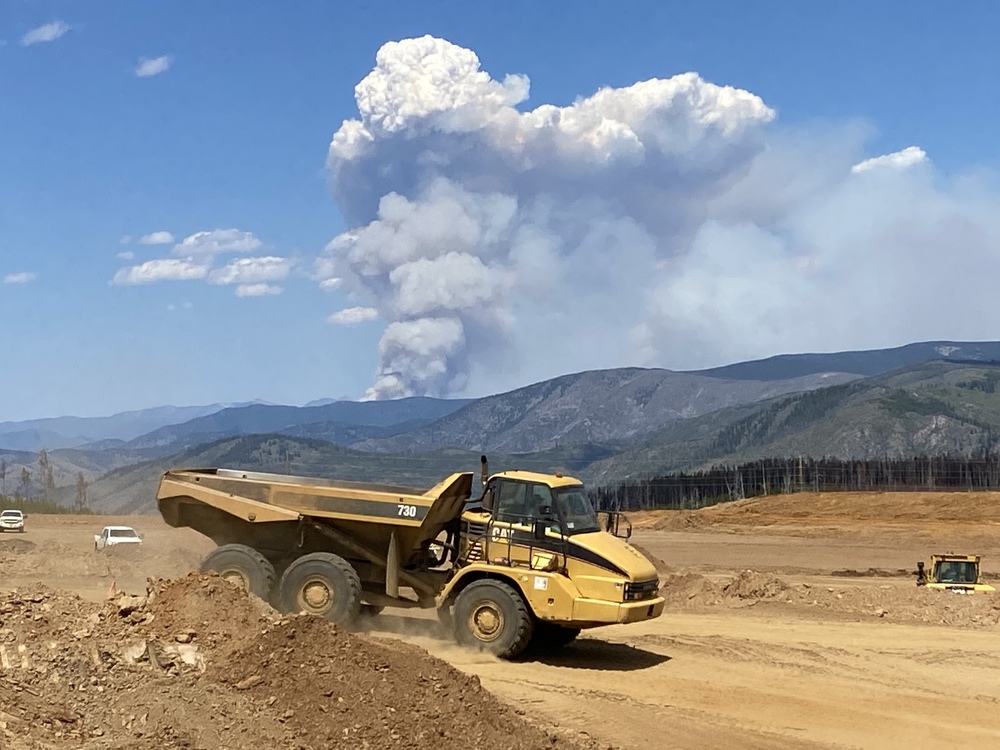 Moose fire last week |
|
|
After reading the article, this seems like Shawn Snyder's work! |
|
|
oldfattradguuy kkwrote: Helluva juxtaposition in this photo. Hey at least the foreground area won’t burn up! /s |
|
|
Lurker - wrote: Fuel on the ground does still burn. It does burn less intensely than vertical fuel, but in our modern forest fires, it still burns hot. Case in point, look at most any forest fire image and check out what is left on the ground. |
|
|
For western US forests many of you simply don't understand or fully appreciate the scope of the problem. Its all going to burn, all of it. Thin, don't thin, prescribe, don't prescribe - in the end its going to burn. Which is not to say, do nothing. We're consistently doing the wrong things though, generation over generation. What thinning can be done amounts to a drop of water in a hurricane, a hurricane that's already making landfall. Better management? That will have to wait till the next forest regrows under the watch of more intelligent and more ecologically minded folk. The most important single thing we can do for the mountain forests is get the homes out of there. People should not be living there and certainly not in mass. Places like S.Lake Tahoe are an abomination; pretty, and doomed. That city is unsustainable. Dropping home owners insurance in the risky areas is starting to do the trick. If it becomes impossible to finance construction and home loans, people will leave. Ciao! Never should have lived in those woods to begin with. A little, simple, old school mountain vacation cabin is what it used to be like. It was too hard and too risky for most sensible folk to even try to live there full time. Now look at the multi-million dollar homes around places like Truckee. My god those people are rich and stupid! We're starting to reremember just how hard it is to live in the mountains, though. Climbers should understand this better. You choose to live in a tinderbox, don't come crying to momma gov ernment when you're 5 million dollar house of twigs burns up. It was your risk. |
|
|
Cherokee Nuneswrote: They could always just require houses be built differently. I believe Malibu eventually did this after repeated fires. Now, siding, eves, decks have to be noncombustible/1 hr. fire rated etc, fire rated grates on vents, specific windows etc. Some people build out of concrete. There's also Barricade fire gels etc if someone's there to apply. |
|
|
Heyzeuswrote: I price insurance in California. Noncombustible mostly means it won't spread the fire existing in the home at least when looking at insurance claims. Clearing the land around your house, being close to firefighters, having a concrete house, sprinklers, fancy alarm systems, almost none of these are deterrents to wildfires. People have a large misconception about wildfire damage. Honestly it is better if your house burns down, what you don't want is to be the last house in the neighborhood; the water mains will be bad so your house could have no water/flood later on, smoke damage is extremely serious and hard to notice, the intangible value of your house gets destroyed (parks, curb appeal, walk ability, amenities are gone), you will be splitting hairs with most insurance carriers over livable conditions and your loss of use payout. Cherkoee is right. The most predictive aspects to wildfire loss are proximity to wildland interface, "fuel", and proximity to wildfire generation events, everything else is effectively immaterial. Even the climate change is relatively immaterial. The earth could warm up a whole degree but if every house was in LA, wildfire destruction would be near 0. However, the free market in California is not going to correct this. The department of insurance is totally detached from reality and doesn't regulate. They are so afraid of insurance becoming unaffordable in high wildfire areas, that urban consumers are effectively subsidizing lake tahoe vacation homes because the department is so inactive. Two of the ten largest carriers have effectively left in the last few years. Instead of a free market, there will be no market. |
|
|
Yeah, everyone should just live in a shithole city lol! Towering high rise apartments and sprawling suburbs for all. Or……. People could exercise their independence by being a lot more self sufficient and responsible for their own property, instead of doing nothing until a fire comes through and handing over responsibility to some over stretched, under funded government agency. And the state could help by just getting the hell out of the way. People have always lived in wooded areas. Some of the towns in the most heavily wooded areas are also some of the oldest in the western U.S. Fire has always been a threat in these areas too. The difference was, people prepared for them more proactively, rather than the suppress all fires and cross your fingers approach we have today. There are some issues for sure, but saying people just shouldn’t live there “period” is blissfully ignorant. There is no fix all solution. The issue is extraordinarily complex. Most of the views and solutions everyone is stating are true to some extent, but it’s only a piece of the puzzle. Nothing will change until there is political pressure beyond the establishment of legal precedent through various lawsuits. But people are far too preoccupied with whatever trending disaster is force fed to them through whatever media source they subscribe too. Paranoia after all writes their checks! |
|
|
Salamanizer Skiwrote: I respectfully disagree. There are issues in life where "self-sufficient" is totally impractical and inefficient; despite governmental inefficiencies, the government is still more efficient. Imagine a world where each person grew their own food. Or a world where we didn't collect water together. Or a world where you had to install your own internet, somethings are simply better managed collectively than individually. You would never go climbing if you have to precure every resource everyday. Specifically on the topic of wildfires, if people could manage that risk themselves, don't you think fires that burn through towns like paradise would have been stopped by good civilians? If wildfires could be managed effectively on a personal level, I think we would see far fewer homes burn down. If a fire is simple enough for some Telsa owner to manage, you are effectively calling firefighters idiots, lazy, or understaffed. Do you have material evidence that individual people can stop wildfires from affecting their houses? What is your solution?
In abstract yes, but there is a difference between absolute volume and growth. The wildland interface has grown by 40% in the last 30 years . There are far more homes and more people in these environments. Obviously, you can't eliminate people from living in these areas but you either have to reduce the number pf people in the interface or decrease the interface. |
|
|
Princess Puppy Lovrwrote: That’s not what I’m saying. Nobody said you don’t need need firefighters or government entities. The point is you can’t just do nothing and hand over the keys when the time comes and expect them to protect your assets. Forested communities need to be more proactive, and that starts with taking responsibility to clean and fire harden your own home/property on an individual level. That doesn’t mean fighting the fire yourself lol. I see way too many homes and even communities which are severely neglected and an absolute time bomb. Paradise was one of them and so was Greenville. Both areas had several thinning projects and prescribed burns which were put off for years because of supposed air quality issues and environmental gridlock. Even in those areas, the people who were prepared saw a much higher probability that their house was spared. So yes, taking responsibility for your own property does have an effect. Beyond that, the community and the state also have responsibility to prepare. What that looks like, and what’s involved is wildly complex and multi faceted. Not really something you can dive into in depth on a forum. I’m not saying I have all the answers, but I do know the solution starts with personal responsibility and accountability. And that the environmentalists need to know when to back off, while the government needs know when to step aside. You can’t cut a sapling or trim a bush in a protected Forrest. Then a fire comes and you can bulldoze a 150ft wide barren strip strait through wherever? You can’t cut a tree down or tiptoe around a watershead, but you can watch as millions upon millions of trees burn so hot they turn the soil into lifeless glass? How does that work? Nobody wants to cut down a tree, but you need to pick your priorities. The beetles and drought are killing them anyway. |


