
 Continue with onX Maps
 Sign in with Facebook






comprehensive objective data


|
|
I've always wonder about the grading system used for climbing and how it seems to be a subjective consensus (to me at least). Like a short climber may consider a move with a long reach harder than a tall climber who may consider the same move to be easy (like the color chart below). Has anyone considered applying actual empirical data to create a framework for both the route grade and the climbers info? It seems like having a set of comprehensive variables to plug in, would allow for a system that would be irrefutable. Some examples: climber offset system: height, weight, strength, ape index, hand size, flexibility/range of motion. Route difficulty determination: hold distances, volume, wall angle, friction, sequence possibilities. As far out as this sounds, a lidar equipped drone could potentially map out routes creating the baseline difficulty, then applying the climbers offset info to give a personalized anticipated difficulty. I just get the feeling (subjective I know) that a fundamental baseline could be created. 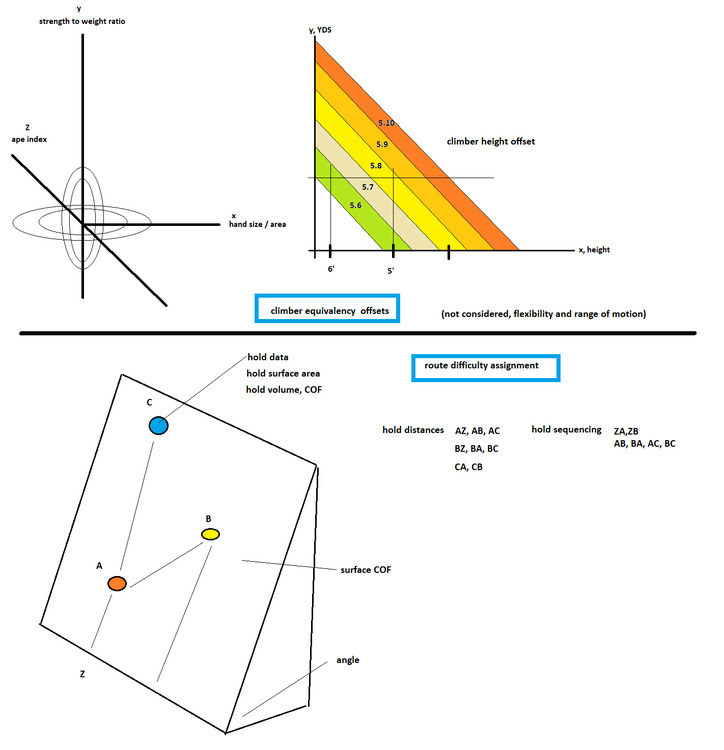 |
|
|
Thanks! It’s been a while since I laughed so hard snot flew out of my nose! |

|
Yet again, someone attempting to quantify the unquantifiable.<huge eye-roll emoji goes here> |
|
|
There may be some validity to this but it will take a TON of data. Starting with the indoors would seems reasonable but... is there really a need? Sounds expensive. |
|
|
Daniel H Bryantwrote: you forgot dat Big D energy |
|
|
What problem is this solving? |
|
|
I understand where the desire for a more precise calls is coming from. I really do. But i don't think it would ever be feasible, or wanted. |
|
|
Lena chitawrote: Not sure how grading is related to you or my specific hip flexibility. |
|
|
It is a subjective consensus because it is a subjective topic |
|
|
E MuuDwrote: I didn't come up with this, it was one of the parameters the OP was suggesting to track, in order to use for perfect grade determination (flexibility/ROM). And I was questioning how exactly this would be tracked. Obviously, if there is a route that requires a super high step, or a really wide stemming, and you don't have the hip flexibility for it, it would probably feel harder for you. I'm not disputing that all sorts of body mechanics play into how hard/easy something feels to an individual. But the idea that all of this can be tracked, quantified, and standardized is pretty funny. |
|
|
 |

|
Daniel H Bryantwrote: Perhaps if you start with one the boards - Moon, Kilter, Tension, this task could be simplified. |
|
|
I feel like using numbers really messes with our heads. It's hard not to think of climbing grades as a real measurement. Even if we throw letters in there or make 5.11 > 5.9 to show that it's not really numbers. Maybe if they'd just stuck with descriptive words in the Brit system all the way up this could be avoided. |
|
|
about 20 years ago i had to review a phd dissertation that dealt with a brazillion different variables. the final take-away from it was that everything kind-of correlates with everything else. i remember feeling kind of underwhelmed by that. |
|
|
I feel like you are massively underestimating the complexity. Consider a single-pitch route outdoors. You probably need around 1mm-resolution 3D mapping of the surface for a 3m x 40m area of rock. Now try to identify what 3D regions can function as a foothold or handhold. That 120m^2 of rock will probably have thousands of potential holds. Now try to figure out all possible sequences through those thousands of holds. I suspect that this is literally impossible with current technology and current knowledge of how climbing works. |
|
|
JonasMRwrote: "Hard Very Severe" clears things up??? |
|
|
slimwrote: 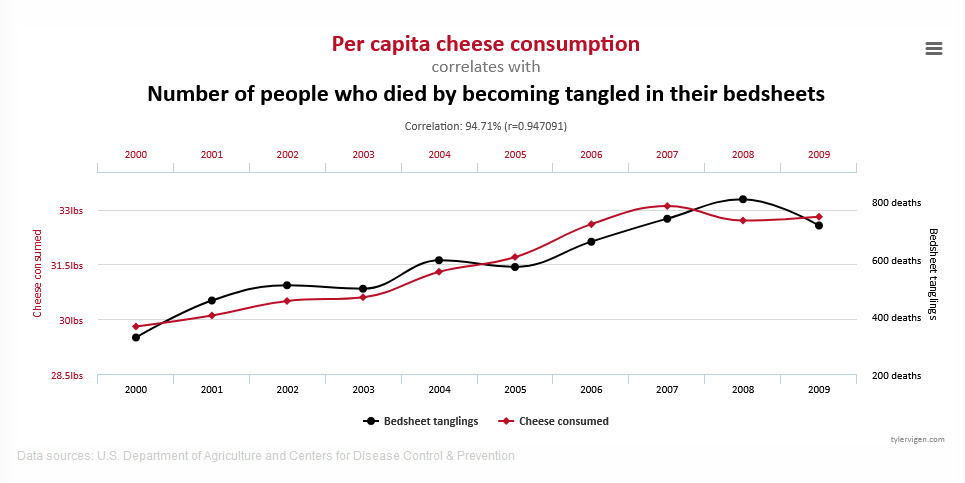 |
|
|
Marc801 Cwrote: Right?! How could that possibly be better? But then at least it's clear that we're not comparing numbers and just need a few adjustments to make it "objective." Hard Very Severe is clearly and at it's core a subjective description. It doesn't go around dressed as a number fooling people into thinking it's a measurement. It's at least honest about what it is. |
|
|
Daniel H Bryantwrote: Why are you spending time posting this when you should be working on this noble project |
|
|
Have fun spending a Ph.D. thesis' worth of work and research to design a grading system no one will use because they cant subjectively justify their failures |
|
|
Marc801 Cwrote: This is because the dataset is from the same clusterf@*k pool of Devil’s Lake top ropers. It’s a horrible way to die. |


