
 Continue with onX Maps
 Sign in with Facebook






Weekend warriors - electric cars?


|
|
Jim Tittwrote: Let's unpack that. From the power use data yesterday, California was making enough renewable to export energy from the state from ~8:30 am to 5 pm. Obviously, every day is different. So, do you plug in your car at that time? Or do you wait until later at night when off-peak rates kick in? With lower off-peak rates, the utility encourages you to level the load on the grid. |
|
|
We have two EV's and I really enjoy driving them but they are far from practical, our Tesla is the closest to being a practical vehicle because the vast network of charging stations but its still not as worry free as driving my Jeep. After we got our first EV we installed solar panels on our house, enough panels that we always create more power than we use. One thing we found while installing was that if we wanted the rebate that the city of Burbank was offering for installing solar we had to install them on the least solar efficient side of the house. We opted to forgo the rebate an install them on the most favorable aspect. The reason the city wanted us to install on the aspect they deemed best was we would create less energy and have to purchase from them. Our neighbors took the rebate, they have more panels than us but they say they run a deficit every month because the panels only get direct sun a few hours a day. Be aware of cities that talk a big green game but when it comes right down to it all they want is to get the most money out of each customer that they can. |
|
|
 |
|
|
Joseph Brodywrote: Let's unpack that. You can't look at one 8am-5pm window near the summer solstice to determine if the grid is "running on renewables". First, you have seasonality, and have to account for different renewable energy production at different times of year. Second, you have night time usage and lack of solar. So within a 24h day if you're able to be a "bet exporter" of renewable power from 8am-5pm you still have to look at the overall energy balance and are likely actually closer to being only 50% on renewables for that day. Third, you still have the massive problem with energy storage when renewables are not available to buffer for #1 and #2 above. A previous poster alluded to that with pumped hydro - which is not a net "source" of renewable energy but literally just a battery. So yes they point of the poster you quoted still seems very valid to me. We're far from running fully on renewables. |
|
|
I have solar on my van and love it. I don't get the whole solar farm thing without some way to store the power? I really don't get residences having panels but no battery bank/ inependence when the grid goes down. I would love to have an off grid system for a residence and not just the van. We just got back from a 1,200mile trip. First tank was 26.6mpg 2nd tank was 27.6mpg we have a very comfortable 600 mile range filling up when we hit 1/4 tank so in an emergency its really closer to 700. Would love to have this rig be electric if it had the range and was feasible to convert.... 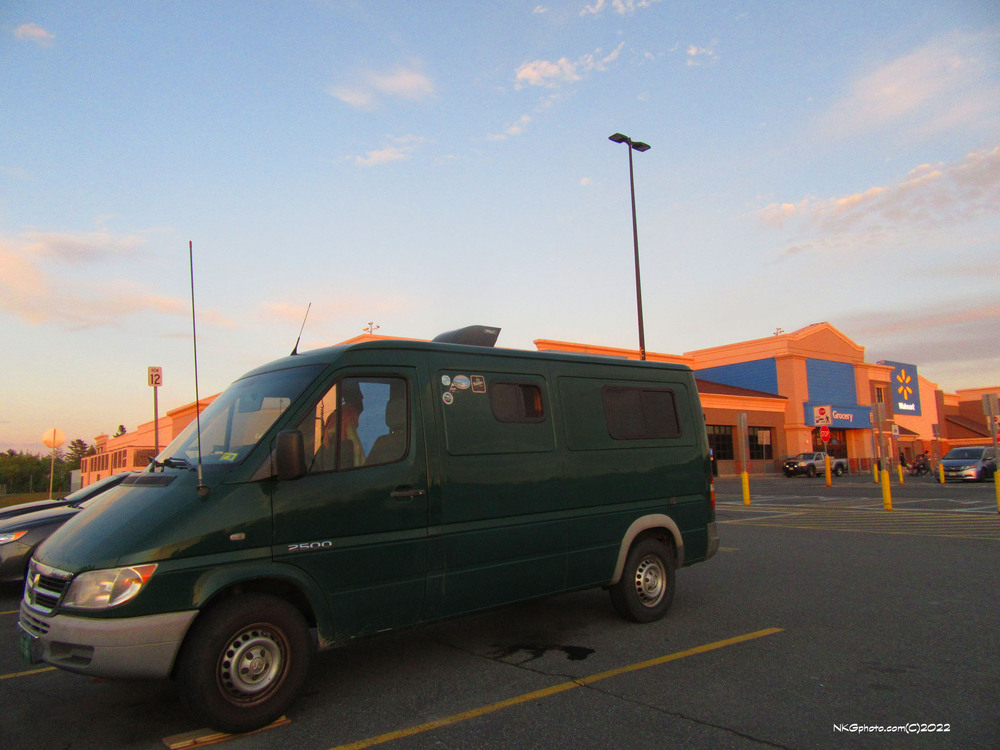 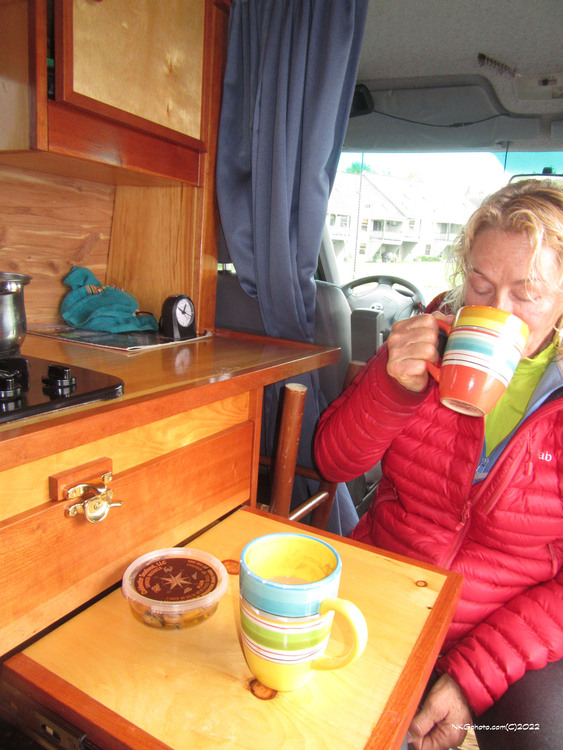
|


|
Nick Goldsmithwrote: It is a money thing, really - you looking at, very roughly, 10k on top of solar. Here is overview for residential |
|
|
The point of solar with out grid storage for now is displacing the burning of fossil fuels during the day thus avoiding putting even more carbon in the atmosphere. For now the production of renewable during the day very rarely exceeds demand so storage is not important. Soon grid level storage will become important. The point of solar without storage is that the home owner is using the grid as a battery and also avoiding more CO2 in the atmosphere. Home storage is possible but cost money. I just replaced the batteries in an off grid cabin for $4000. It would take about $30000 for enough storage to be off grid. The thing is that on grid is more efficient. When the batteries are full the energy the system could produce goes to waste on an off grid system, on grid the power company sells it to my neighbor. This is an evolving problem. Grid storage is the next step and it is already being implemented. And CO2 not added to the atmosphere is a good thing. Just because the current implementation is not perfect does not mean it is not worth doing |
|
|
amariuswrote: My friend had to have 2 installed to provide the surge current to start the AC. He now has 3 to cover his daily use, which is high compared to most. He had the powerwalls installed because his daughter has medical equipment that she must have functioning 24/7 and the daughter cannot thermally regulate her body. Edit. A lot of thought had to be given to how much you want to be off grid vs grid tied. Completely off grid can take a lot of batteries to go though periods of no sun, especially at higher latitudes and cloudy locations. Vehicles like the ford lightning had huge batteries that can power a house for days and make a lot of sense for emergency power with a smaller battery's to keep your house going until you plug the vehicle in to power your home. For example when a winter storm or hurricane takes out the grid. |
|
|
msmanskiwrote: OK, but what's the NPV of your electric bills over the life of those panels? You're presumably paying for electricity every month, right? It's a relatively simple analysis to compare the 2 cash flows to figure out which is better. Of course, in MN, you're right, there may not be a benefit without some subsidy. I'm in IL, and the only way that solar makes financial sense is by taking advantage of both federal and state incentives. |
|
|
Nick Goldsmithwrote: One way to think about it is that you're using solar and wind to pump water. Of course, you're not actually moving water uphill. But in VT where you live, 58% of in-state generated electricity comes from hydro (source). When you use solar when it's sunny and wind when it's windy, those dams can keep more water. They'll release that water during nighttime and calm winds. So the solar and wind helps the system store more water and run hydro when it's needed. |
|
|
There's also gigantic water batteries that pump water from a low lake to a high lake off peak, and then release the water through generators during high peak. This is mostly used in areas with Nuclear power as nuclear is very slow to ramp up and down power output, so they just keep it at high power and pump the water when the power isn't needed. This can also be done using a smart grid if everyone had a tesla powerwall. but that's a few decades out from being a reality. Though the powerwalls are how these EV batteries can be recycled. energy density of your powerwall isn't as important as it is in a car. So if your EV battery drops to like 70% of it's capacity, it's still totally usable in a building where space isn't a premium. |
|
|
I think it's interesting that people complain about increasing renewable energy sources without having grid storage, without mentioning that EV batteries are decentralized grid storage. The more EVs we have charging at off peak times and storing energy for use during the day the better. Note - Solar obviously only produces energy during the day. However, a well placed wind farm generates more energy at night than it does during the day. Wind and solar balance each other nicely. The debate about the environment is important to have. However, my decision to get an EV was purely based on the numbers. At the time that I got my lease, and then later on when I purchased my used 500e, the EV provided me the best balance of cost effective and functional. Seems that while this debate rages, a lot of folks are quietly realizing that for them an EV is a better financial choice. The tide is turning. I'm sure it was also difficult for people in 1905 to imagine a world with enough gas or gas stations to negate the need for horses. I think in another 100 years gas cars will also be just another hobby for the landed gentry. Edit: Grammar |
|
|
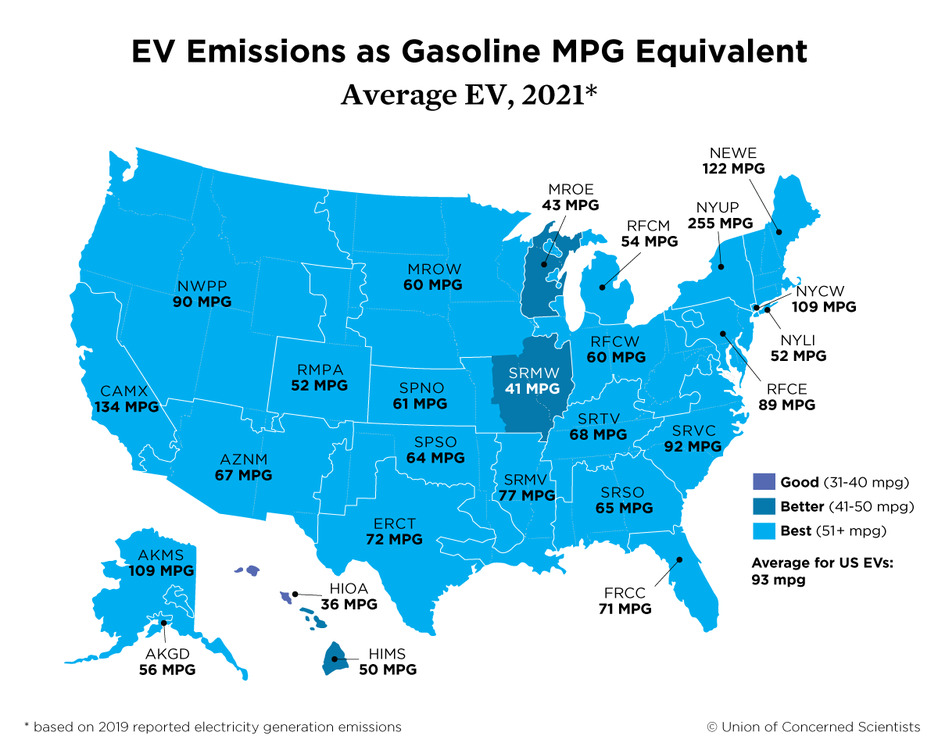
amariuswrote: I thought about storage but it would have drastically increased system cost without providing any direct benefit - my grid is very reliable and I have straightforward net metering from the utility. That does mean when I charge at night to hit the off-peak rate I'm powered (partially) by coal, but the town's grid is getting cleaner every year and it's still way less energy/mile in the first place than a gas car. Seems like storage does make sense for some people, but you need to look at your situation and decide. One of the town's big sources is currently the wind farms near Cheyenne and Laramie. So, when I drive my EV to Vedauwoo, I end up going right through the source of its power, woah. It's kinda encouraging seeing actual progress with your own eyes. |
|
|
No one is claiming we are there yet with all these changes. It's a long transition period. There are early adopters and late adopters. There are some who are willing to pay extra to help stop the fossil fuel addiction, and some who are content to keep ruining the livable climate. California utilities are installing large battery farms. Unless they shift to non-lithium batteries, since lightweight lithium is not needed for stationary power, this will further drive up the price of lithium for another 4 years. . Various pumped hydro is proposed, but those are many many years away. We should have been building these over the last 20 years since it's not new technology. EVs can also work as Vehicle to Grid, aka Vehicle Grid Integration. Two way chargers are becoming available. This is useful for those who can charge their EV with renewables. Most likely it works best with a heat pump/AC. In the winter, you heat up the tank during the day with excess power from the sun, or wind power. The renewable electricity runs the heat pump to heat freon which runs thru coils in one side to heat the fluid in the tank. And at night use the fluid to air heat exchanger in the other part of the reservoir to heat your home. There are already some zone modular systems which run the freon to heat exchangers in a few locations in the home. The improvement for energy storage is to add a large enough insulated reservoir for all your night time needs. Theoretically if you already have radiant heating/cooling coils in your floors, that could provide a partial reservoir, but the whole point is to overheat and overcool the reservoir so it lasts up to 14 hours. And it would be uncomfortable to overheat/cool your house for half the day. So the insulated reservoir has to be separate. In the summer, excess solar/wind runs the AC to chill the freon during the daytime, which cools the fluid in the tank, and at night use the cold tank to cool the home. |
|
|
As far as liveing off grid you don't need a 30k battery bank. heck I have a $350.00 battery bank in the Rv and do just fine. Isa has a $700.00 battery bank in her tiny house and it does the job. You do need to change your lifestyle as to how much power you use. a minimalistic approach would be to have a small 4 cubic ft fridge and all led lighting. gas generator back up. only use the generator for laundry day. vacuum and charge all your cordless tools while your doing laundry. gas generator if you need to run a table saw and air compressor. I had a friend who did that routine successfully. |
|
|
Ryan Never climbs wrote: Great point Ryan The only good thing Gavin has ever done! The true reality set in. This is a good thread, thx to all who have contributed thoughts. |
|
|
There is only limited pumped hydro in California. Pumped hydro energy storage means the water goes back and forth between 2 reservoirs. There are certainly locations where it could be feasible. https://en.wikipedia.org/wiki/List_of_pumped-storage_hydroelectric_power_stations Courtright/Wishon is one (aka Helms) . Wiki says "The Helms Pumped Storage project was designed to be used with the Diablo Canyon Nuclear Power Plant, also owned by PG&E, in the 1970s, when Diablo Canyon was being designed and permitted. It is connected to that power plant by a dedicated high-tension power line." So it would be a severe loss to close Diablo before replacement non-fossil energy is fully available, as was done to San Onofre. And Castaic near the Grapevine on I-5 is the only other large plant. One medium size plant is Eastwood in Fresno County at 200 megawatts. San Vicente is proposed in San Diego County would provide 500 MW for 8 hours per day. And various proposals to the FERC, most of which will go nowhere. The most interesting thing about that list at wikipedia is that there are NO plants being built now in the USA, and 35 in China. Of course many of those in China have large environmental impacts since they dam up a river valley. Ideal low impact plants are built on a large hill so they don't affect a river valley. And some plants use pumped hydro added to an existing reservoir by adding a second small hillside reservoir separated by enough vertical drop. |
|
|
Nick Goldsmithwrote: Resize your battery banks and solar panels so you don't need the generator ever. Or plug into shore power. I'M sure you come up with a bigger numbers Edit. Also get rid of the propane stove and put in an induction stove. Any hot running water in your van/tiny home then you might want a heat pump water heater. The generator is a 'cheat'and you are not accurately representing your true energy use |
|
|
Generators are aid. |
|
|
Guy Keeseewrote: FYI, John Horn a hard climber from back in the day corrected a major design flaw before it was built with the Diablo Canyon Nuclear power plant in California. John passed away in 2011, but thanks to him Califonia did not melt down. (J/K) I happen to be pro-nuclear - I'm pro- 'all of the above'- strategy. France does nuclear much better than the US. The US uses a strategy that leaves behind stock piles of nuclear waste and France is much more efficient with its nuclear fule use. If any of you folks have not driven a EV, I suggest you do. ICE cars feel sluggish and lumbering. Driving an EV is like going back to <$1/gallon gasoline as was mentioned before, I think. |


