
 Continue with onX Maps
 Sign in with Facebook






What skills/knowledge do newer (or transitioning to outdoors) climbers not know that they should?



|
Ricky Harlinewrote: Yeah, but if ya want it even shorter? Splat happens. If you can't face that fact, and that possibility isn't lodged in your mind, somewhere, go back inside. With that in mind? Be very picky who you trust with your splattable self. Always be very very sure of the next bit that will keep you safe before undoing the current bit. Everything from making sure you have what you need before the car leaves the driveway, to closing your systems. We once got up to the routes....and realized the rope was still in the car. Easily fixed....that time. When it starts getting difficult? Slow down, or at least take a breather, and let yourself think. Bailing should always be an option. If a mistake is looming? Don't allow that to become a cascade of small bad decisions. That splat thing. If it seems "off" somehow? Stop. What's your brain trying to tell you? It's a whisper thin line, to know what fear to listen to. And it takes a huge amount of experience to know when it will be set aside, that fear, and have the skills and judgement to do so. The higher the stakes, the less wiggle room, the likelihood of real challenges you can't control.... that's for the experienced. You can dabble a bit, but you better be damn sure of that person who is essentially guiding you on something way way way over your head, until you are that person yourself. That last said? Yeah, weigh how you feel about it, and if you trust them to not splat you... Then go for it. Don't let anyone tell you that you can't do that, whatever the that is. Instead, get the actual why of it. My first shot at ice was close to my 61st birthday. I didn't know jack squat about any of it, even hard shell, soft shell. But I had total trust in the person offering to get me out. And I crowd sourced wardrobing to MP, lol! Quite a team of people geared up the old lady, including boots sent from the east coast, gifted to me from kind climbers. Oh. Be grateful, and kind. Always. Best, Helen |
|
|
RopeX |
|
|
Wow. So much great information here. Someone should consider writing a book called “how to rock climb”. |
|
|
Greg Dwrote: People that want to seek information already have it. The idea is to create a highly digestible free resource that isn't too large and overwhelming that hopefully can be read in 10-20 minutes and which will get important information out there that will make climbing more enjoyable for newer climbers and others at the crag. (Perhaps in the future I will make follow up booklets to this one.) I think there is an opportunity for something like that to reach at least a moderate level of success-- I frequently meet climbers that have watched hours of How Not To on YouTube but have never bought a climbing book. If I'm keen on actually addressing this issue then I need to do something other than recommend a book. There are far better resources then what I will make, but what I will make actually has a chance to make it to folks and they can airdrop the pdf to all their friends at the gym or share the youtube video. People don't read books. Well, I do, but I'm a fuckin weirdo. Also if I told you how many climbing books I've read you'd probably think I have a mental disorder, and some of these concerns have not been addressed in any of the books I've read. |
|
|
Ricky Harlinewrote: I hate to say this, but the most effective way to reach a lot of new climbers with this information would be on Instagram/etc. If well done and funny, it would actually reach a lot of people and make an impact. As you said we see this with "How Not To". The problem I see with most of the "gym to crag" information out there, and the direction this thread is going, is that it is unbearably preachy and dull. No one is going to read a pamphlet on crag etiquette (at least not the people who need that information). If you want people to actually engage with the info you are peddling, it needs to be hidden in humor, good storytelling, or some sort of others advice people actually seek out (like training/tactics). No one likes an etiquette lecture, aside from the old crusty giving the lecture. But an Instagram account that makes fun of bad crag behavior in a lighthearted way, and slips in some lessons about how to behave better? I'd read that. Like it or not, this is the world we live in. |
|
|
The most under-rated, most poorly practiced, practically ignored, yet critical skill is DOWNCLIMBING. Yeah - I shouted it. Learn to downclimb, and you'll rarely need to fall. You'll also learn a lot about movement. On sport/toprope climbs, I will often downclimb the route rather than lower off, and I very often find that reversing sequences reveals an easier way to climb a section than I'd found on the way up. Don't take my word for it. Try it. Bonus: become adept at downclimbing, and you'll never have to worry about getting "strung out". -Haireball |
|
|
Ricky Harlinewrote: Um, you're talking about an audience that can't be bothered to do a simple Google search before asking a basic question on MP. |
|
|
I think the inclusive, equitable attitude is counter-productive. Let's keep climbing exclusive. Discourage gym-members from climbing outside. Remind them of how dangerous it all is and underscore that it is all unsupervised. Make how-to instruction as dull, complicated and self-contradictory as possible. Flood the internet with a bunch of short, summarized shalls and shall nots. Show them 25 ways to tie the same goddamned knot. Get your climbing instruction authors to invent new belay cord arrangements and give them all names and sub-names. In short, make it as difficult as possible to make the transition. Or you get what is happening at Red Rocks in Nevada, get in line; pay your entrance fee, stay on the path. |
|
|
People talk of mentors like they’re something you can go to the store and pick up. What happened to climbers teaching themselves? There are already dozens of excellent books written by extremely knowledgeable and experienced climbers on “How to Climb” and all the nuances, including etiquette, that go along with it. Curious about the basics? Why not learn from Craig Leubben? Anchors? John Long sounds all right to me. Aid? Pete Zabrok might know a thing or two. Dying to get on that route guarded by a broken glacier? Andy Selters got you covered. Grab a book, a friend and go teach yourself. Despite what you may be lead to believe it can be done safely and competently. I also feel learning this way sets you off on your journey in a style that is already honing an important skill…self sufficiency. |
|
|
JCMwrote: So your plan is amazing and probably better than mine, but if I attempt this then this will be me:
 I was thinking of doing this bit with a tree in the forest that I named Gunther: 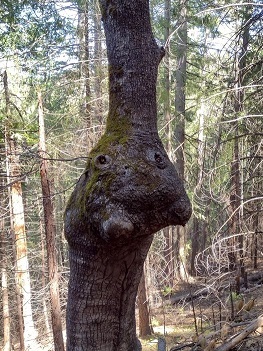 That's the sort of thing the kids are into, right? I don't know that I'm the right person to implement your suggestion but I think it's an excellent suggestion. I'll think about it. On the personality spectrum between Ryan Jenks and Bobby Hutton I'm like 70-80% towards the Bobby side, and what you need for your suggestion is a Jenks, which just isn't me. =P Maybe there's a way for me to make it more entertaining than just presenting the info. I have a feeling that just presenting the info would do alright-- the bolting bible has made its way to a surprising number of people, and several of my friends have read VDiff's stuff, so while a just the facts ma'am approach might not be the best strategy to reach people, it may be an acceptable one.
I think you're casting a rather broad net there. Also some of those people that can't be bothered to google questions before asking on MP might get airdropped a free PDF at the gym ahead of being taken outdoors for the first time for example.
I hear a lot of people propose solutions where the 'solution' is that people should be different. Put people aren't different, they are the way that they are. I intend to meet people where they are at and provide them with easily accessible information that I think they will actually digest. I wish more climbers took classes and bought books, but they don't. Rather than saying I wish people were different I'm going to try and create something that is helpful based on the needs that currently exist, and not how I wish people were. |
|
|
Maybe they shouldn't be encouraged to leave the gym? |
|
|
PWZwrote: I'm not encouraging people to leave the gym. I'm encouraging gumbies at the crag to stop unknowingly being annoying shitheads who are a danger to themselves and everyone around them. |
|
|
Accommodating them after the fact doesn't help. Sometimes the hard lessons are the ones that stick? |
|
|
PWZwrote: I think we have fundamentally different philosophies, which is fine. But I can directly see how VDiff climbing and How Not To as free climbing education projects have massively helped many people. I think there is an opportunity for something similar to what they're doing but with a bit different objective. Also one of the main sources of info for lead rope soloists is a manual a random Italian dude put together, and it's difficult for me to express how much the LRS community appreciates that manual and Andrea for making it. Everything I have observed has led me to believe that such a project is not only needed but would also be highly appreciated. I just don't see climbers becoming more knowledgeable, having better judgement, and being more aware of how common actions negatively affect others as being a bad thing. Also you can only explain how to lower from an anchor that doesn't have mussies so many times before you just want to write it down and say for fucks sake just read this and send it to all your friends. Maybe it won't accomplish anything-- i certainly don't think it will reach a How Not To size audience. But maybe it will help a little and I'll have to tell people how to clean an anchor less while rope soloing adjacent routes. Seems worth a try to me, anyway. |
|
|
Big Redwrote: +1 I would only add - do NOT bring a large group to one small crag(or one route)! I think this is one of the basics of leave no trace ethics. |
|
|
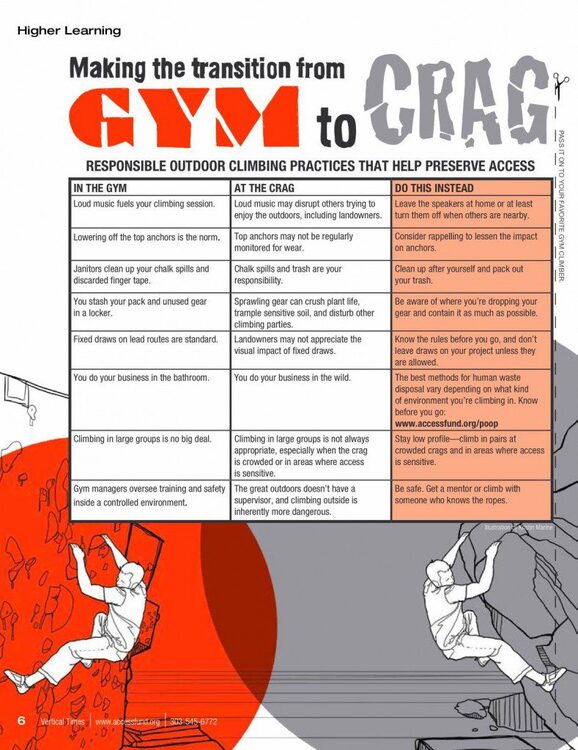 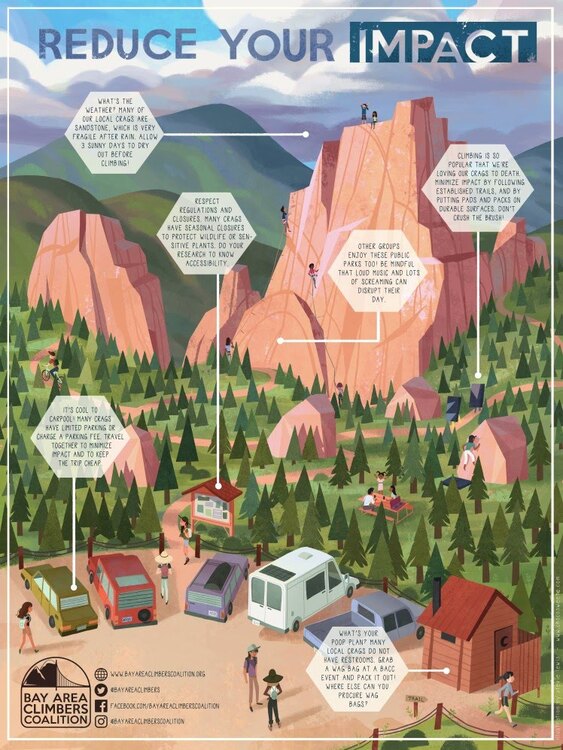 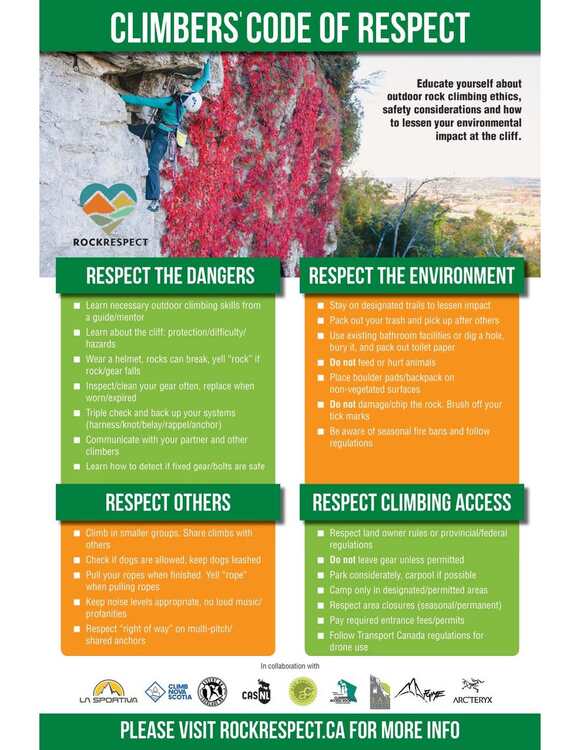 |
|
|
slimwrote: Gumbies don't realize that these routes don't just "appear magically", that somebody has put time, money, energy into them... consider donating, paypal.me/climbfairview, or patreon.com/climbfairview for example; $40 anchor set-up 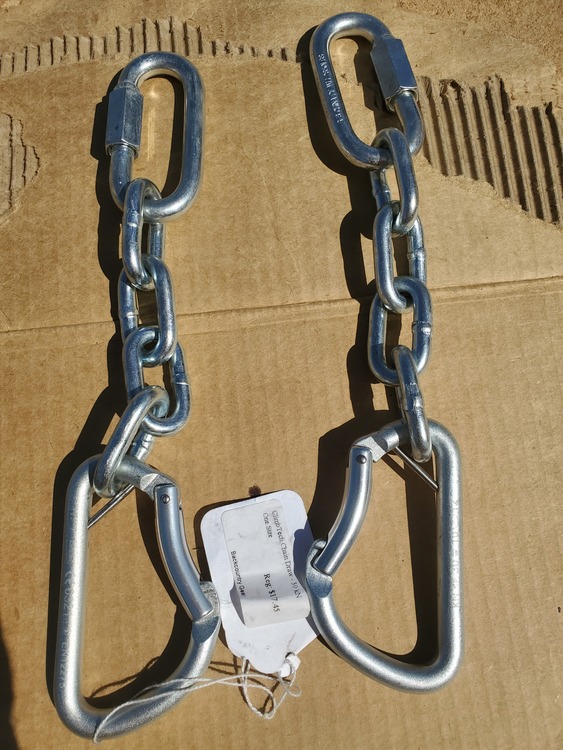 |
|
|
I'll add.... Stop learning and doing things by rote and absolute rules. Route protection - which is a system, not a bunch of individual pieces - is most similar to applied engineering to the problem at hand. Learn the concepts and apply to the situation and forget nonsense like "all belay anchors must have a master point and a shelf" or crap like SERENE when you have a pair of 1/2" bolts in good rock. |
|
|
Look, I used to do signage and displays for a living, and did an entire interpretive center for a state park here. What I tried to get through my client's heads, was the heirarchy of what catches and holds our (remarkably) short attention spans. In ascending order of return on investment:
The usefulness of fuller information is that one kid in 20 who will see the Smilodon skull....but then mashes their nose against the case to read every bit of the info you give them, because they really really would love to live in the same world that charismatic megafauna thudded around in. Have a TLDR version, at the very least. If you really wanna "How not to-ize" it? Talk to a local college outdoor program that includes climbing, a local club, any place you can think of where climbers and creatives can cross pollinate. The clip below is almost 10 years old now, but still getting hits. The people in it are the smart, creative folks...who are also farmers, musicians, etc. What you are really trying to achieve has a name. It's called marketing. My farming friends would be a different kind of dead than climbers, but it's still life and death for them. Best, Helen |
|
|
If you think it would help someone - just go ahead and do it. (There will always be detractors, but its your time!) |


