
 Continue with onX Maps
 Sign in with Facebook






What do you mean when you say “on belay”?


|
|
Greg Dwrote: 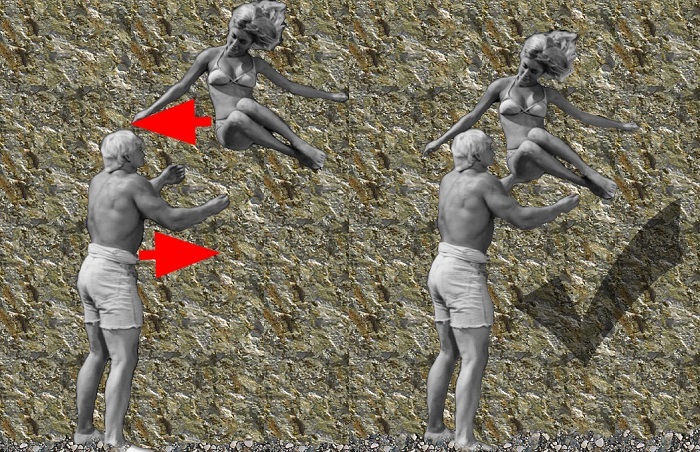 Lillian Frances wrote the book on proper belay technique for bare hands - i.e. a good catch. |


|
Greg Dwrote: Or get squashed trying. Indoors, maybe. But outdoors? Sorry, I'm not your bouldering pad. Yeah, you can "spot", sometimes, if they are at the very start. But after that? Not really. It's remarkably hard to redirect a fall, even if you're just in an approach or something, once it starts. Falling from above you? Not very realistic to expect much. You need to consider that fall zone before you fall, and be clear about it. And yes, I have spotted plenty. Including hands on (literally) helping someone reverse those first moves to downclimb. Stick clip the first bolt, or don't fall, is usually it, most of the time. Locally, you often have a solo up a broken column to start a route. My job is to hand up the stick clip with the rope rigged, if you still can't quite reach that first bolt! Once the belay is functional, with the rope clipped to something? Then it's game on, and I'll do everything I possibly can to keep you off the deck! Best, Helen |
|
|
Old lady Hwrote: Check the many bouldering videos such as Lisa Rands falling from 25 feet or more. A tiny bit of redirect could be the difference between falling on one’s back or landing on one’s feet.
I expect a lot from my partners and give the same. I choose them wisely. Old Lady H wrote: “You need to consider that fall zone before you fall, and be clear about it.”
No thanks
Sure, some routes have some “easier” terrain before the “real” climbing. And some routes have challenging moves right off the deck before the first piece. We always spot each other when appropriate. Even my 120 lb partners are willing to spot my 200 lb ass. |
|
|
Spotting, done correctly, is a real way to help prevent serious injury. Just dismissing it makes for a poor belayer. |
|
|
"Belay is on" after the partner check, before the climber starts, even without a bolt clipped. Spot until they're attached to the wall. Once they clip I pull all the slack out, assume belay position and say something like "I'm with you" to let the climber know I'm paying attention. Kinda the same thing I say after somebody hangs on the rope and then starts climbing again, I'll say "I'm with you" so there's some audible confirmation that I'm paying attention. Climbing hard is hard and I personally enjoy little bits of communication like this as the climber, so I do it when belaying. Mostly talking about single pitch here. |
|
|
Available on Amazon and select book stores. I believe the fundamentals are the same as 'back in the day'.  |
|
|
 I’m your bouldering pad. |
|
|
A belay requires an anchor point for the rope, so I don't tell them they are on belay until they are actually on belay. Of course, we have already checked each other's knots, and systems prior to this, and I have told them I am either " ready" or "ready to belay" before they even begin climbing. Sometimes this is just deliberate eye contact and a nodd after checking knots. And Of course, I am spotting them, managing the rope and imagining falls at various different spots, and my appropriate footing, and spotting stance, and obstacles to manouver around/spot them from. But I don't tell them they are on belay until they are actually on belay. Multi pitch climbing, after the initial pitch, is a different scenario; with the climber being on belay as soon as the belayer begins actively managing the rope, because the belayer is already anchored. I understand some people use the terms differently, and I am always flexible to learn or use new things ( I tried to learn the belay commands in Mandarin a few years back ... ) but to my literal understanding of the terms and their usage this seems pretty logical to me. |
|
|
Greg Dwrote: Spotting is a good way to reduce the risk of serious injuries, but as you indicated, it’s usually not going to keep someone off the deck. My comment was intended to be a joke about a climber who was surprised that the rope didn’t keep them off the ground in a situation where that obviously wasn’t possible. My bad for accidentally opening a debate on spotting, and for the 6 pages of additional discussion it will take to get to the bottom of this. |
|
|
‘What do you mean when you say “on belay”?’ It means: “My assisted-braking device is threaded and attached to me correctly. The device will catch you even if I am totally distracted. Still, I’ll at least run the rope through it in the expected direction when needed. I won’t unthread it until you call ‘Off belay.’ Otherwise, just trust the technology, partner.” Edit: And if that fails ya, talk to my lawyer. |
|
|
Greg Dwrote: Bouldering involves pads, usually. Are you really advocating that someone falling from a distance equivalent to second story or higher, on hard ground, is easily walking away? I'm not unwilling to spot, I'd probably try to grab a fistful of shirt or arm or something to keep their back or head protected, but I still don't see it going very well, once they're getting that far off the ground. Actually bouldering? That's a whole other deal! You might have enjoyed the team spot, when my partner soloed up some to grab a knotted rope we started to pull. Oops. About four of us ready to catch him, and also hands on guiding him on the down climb. We spot and help each other aplenty, bouldering! One of my boulder guys was a double digit boulderer. He not only mapped out problems specifically for me, he also worked out how to get me off the thing before I went up, and I knew I would get an actual catch if I did peel off! He became a daddy, though, and priorities changed. Glad you're a good partner! I give it my best shot. Best, H. |
|
|
Marcus McCoywrote: Thank you for verifying that I'm not the only one on MP who uses the term "on belay" in this way. This is what the previous thread kerfluffle was all about. Apparently some folks prefer to say "on belay" at the base of a first pitch to mean "ready to belay" and then say "I'm with you" (or nothing at all) at the point the first piece is clipped, the slack has been managed, and the belay is functional. |
|
|
L Kapwrote: Some people here and on the previous thread just like to argue, which is why I made this thread - to give them a space to do so. I think everyone can agree that it doesn't really matter what terms are used as long as the climber and belayer are on the same page. Sometimes that might even be nonverbal. I think everyone can also agree that a beginner should learn to spot first and then manage the rope once the first piece is clipped. Again, the terms aren't as important as understanding the concept of keeping the climber safe. But how in God's name can anyone possibly think the belay is doing anything before the first piece is clipped? |
|
|
Yoda Jedi Knightwrote: Only 48 more pages to fill..DISCUSS! |
|
|
Old lady Hwrote: Helen, I expect better from you. You know I never said anything remotely close to that. I used the 25 feet up example just to demonstrate that even at that height a spotter can mitigate serious injury. In roped climbing, 10 to 15 feet is common, more on occasion, before the first piece of protection. But, have you noticed how many experienced climbers in this thread are advocating spotting as routine before the leader clips their first piece? I envision a Far Side cartoon of you belaying. Your partner slips off from 10 feet up. You quickly sidestep to get out of the way. As you partner lies there in agony, you reach out with a stick clip to help them up. |
|
|
 |
|
|
Yoda Jedi Knightwrote: The same way that someone can operate a microwave and not understand how it works, ride a bike but have no idea what to do if the chain slips off, or make a mistake cleaning an anchor to rappel. A significant number of things can be operated without understanding how the system works, and everything is fine until it isn't. |
|
|
You're never on belay. |
|
|
I am going to take the risk of boring poor Deirdre to add one thing: I've been a bit surprised by the people invoking placed anchors and first gear placements as being mandatory for the establishment of a belay. Any reading on the history of climbing and mountaineering discusses the use of belays consisting of body weight, body position and ropes wrapped around the body - with no device or anchor. Protection was often not placed by the leader. Falls, if taken, were sometimes arrested by the features of the landscape, such as trees or rock protrusions. You might not call this a great anchor or great protection but it did indeed sometimes keep people from falling the entire length of the rope being used, or the distance you would fall without a rope, which is the point, and why the belay was invented, and why the process itself is called a belay. It is still common practice amongst me and my friends (and many other climbers I am sure) in more alpine settings (where time and weather are the most urgent factors) to have the top belay for the person who is seconding consist of the belayer sitting down on some gently sloped top-out and maybe bracing a foot against a knob or some unprotectable feature, and belaying with a rope around the back. Your body is the anchor, the friction from the angle of the slope adds a safety factor, and the fact that the person is seconding and there is no slack makes for a perfectly safe belay. |
|
|
With all due respect Phylp, Whatever standards you use to classify "first protection" or "anchor point" is irrelevant, its not a belay until there is something, anything, that one can use to belay their partner with the rope. In the end it is just the specific usage of a term, I think the funny part is everyone here probably has very similar habits and practices. |


