
 Continue with onX Maps
 Sign in with Facebook






Trundling?


|
|
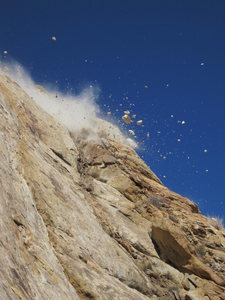 Doing new routes ground up can be a bit dodgy |


|
Glad you and your camera survived that shot apross, that's wild! I'll pose this question now since this thread got brought back up. I've been developing a few sport routes near my home. Super backwater zone but it's exciting for locals since it's one of the only things in the area that isn't sandstone. It's granite-ish (diorite monzonite, for the nerds). One line in particular stands out as being the king line of the zone, with the caveat of a huge detached block. It's almost identical looking to the Pente block, which has obviously held up for some time now, but you can't tell at all what's holding it there and it's seemingly floating in space. People have removed some big shit from this area for sure, but a small handheld crowbar wouldn't make it wiggle, drop tested cams behind it don't flex, yet it still seems like a time bomb. Bolt the line and hope it remains true to the Pente block and nothing bad ever comes of it? Don't bolt the line? Employ some heavy duty trundling technique I'm not thinking of? What would you do? |
|
|
If it's dangerous remove it. If it's not, don't worry about it. If it's a gray area, do whatever you want. You don't want to climb the route with the block there? Trundle it. You feel safe climbing with it there, but aren't sure if someone else will feel uncomfortable looking at it? You're not in charge of everyone's experience, so just leave it. Ideas for the big Trundle if you have to: car jack, bigger crow bar, drill bolts into it and pull it off, drill and chip chunks off. Drill and chip chunks off the bottom to make it unstable. Prayer. |
|
|
Question: for the locals that climb this area, how do they feel about it? |
|
|
Like Rprops says, any doubt in your mind try to take it out, especially if it's the best looking line at the crag. Because if you don't do it quickly, someone will snake the line from you ;-) I have a hefty 3ft long pry bar that works wonders on the big stuff. |
|
|
Pete Swrote: There's maybe 6 people including me who have climbed here. We're kinda out in the boonies. Anyone I've showed the line and block to says something to the effect of "yikes, that's spooky", but at the same time it's yet to even budge. If a climber pulled it off, it would probably kill both the climber and belayer. Definitely dangerous. One of those low likelihood, high consequence things. Identical to the Pente block but maybe bigger. I'll see if I can get a massive prybar like apross said. If it still doesn't move, then I guess a climber probably wouldn't make it move either, especially since you'd sorta climb around the fringe of it. But who knows, sort of a weird development ethics conundrum for me. |
|
|
Sounds like you’ve thought this through. Please video for all our viewing pleasure... and be safe! |
|
|
Matthew Tangemanwrote: If you have about a 5" gap to work with, and if you are willing to lug a very heavy jack up there, then it might be a good job for a high-lift jack. I've used one for trundles where, it seemed, nothing else would work. |
|
|
Jon Nelsonwrote: That would be considered illegal (technically) if it is on public land. A land manager might give someone permission to move it. They have some leeway. But, that clearly violates federal law if you need a jack to move it. Climb a different line or get permission to drop it. |
|
|
Sometimes.... if you can get good feet and just leverage a shoulder behind/under the lip.... gravity will do the rest. |
|
|
Airbags, high volume, low pressure airbags work amazingly well. You can slide them into very small cracks and fissures. Lighter than carrying a car jack. |
|
|
Teton Climberwrote: I bet you're fun at parties. |
|
|
I don’t really like people using X’s to mark something most of the time. Where I climb a lot of people put X’s on perfectly good holds just because it makes a noise when you touch it. Other times I understand, like the flake under pitch 4’s roof on Triassic Sands. Either way, I more often than not, don’t mess with anything loose. If it’s stayed through all the ascents before me, it’ll probably stay long afterwards also and leave the adventure for future parties. Sometimes I have trundled when it made lots of sense, but always think hard about what I’m doing and don’t take it lightly. Altering our environment is sad in a way and goes against leave no trace. I try to not climb with chalk usually either and try to reserve it for when I’m trying hard (subjective). Everyone should try to take care of the resources we have and tread lightly. And remember to smile on the trails. |
|
|
Gregger Manwrote: |
|
|
You have altered my words, Mr. Doyle. Mike McHugh dispatched a different dangerous block or two in Eldo by splitting them into multiple pieces using wedges and feather shims. Skills, but not dynamite. |
|
|
If you look into the trundling mirror and say my name three times ... Gregger speaks truth. Sometimes it's way safer and will cause less trail destruction to split and lower/raise. For bolts, 3/8" redheads and recycled hangers are perfect. Just drill the holes a little deep and tappa-tappa-tappa the hardware down when you're done. It's kind of an intense operation to anchor/split/move, but worth it in a lot of situations. And sometimes it's safer and easier to close the trail and let 'em fly. Either way, working with the climbing community and land managers is smarter and safer. 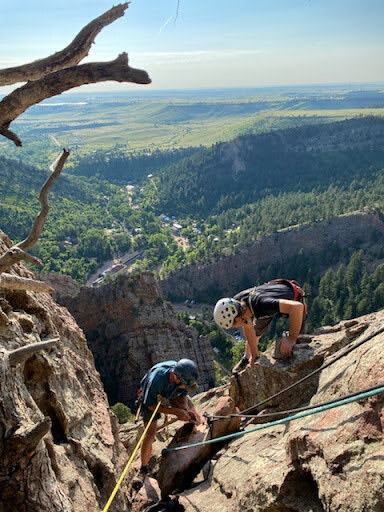 |
|
|
Gregger Manwrote: Sorry, I was in a car accident. I don't recall writing that. I actually meant micro blasters to split the rock. |
|
|
Not trad, but this block called “the refrigerator” at the local crag inches a little closer to the edge each month because people keep slinging it for top rope anchors. |
|
|
For real? Cause that's fuked. |
|
|
Garry Reisswrote: Yup. Park Service needs to sling it with one of their helicopters and lift it out of there before there’s an accident. |


