
 Continue with onX Maps
 Sign in with Facebook






Butterfly knot masterpoint?


|
|
Hi, Anyone use this anchor configuration with clowhitch + butterfly masterpoint? 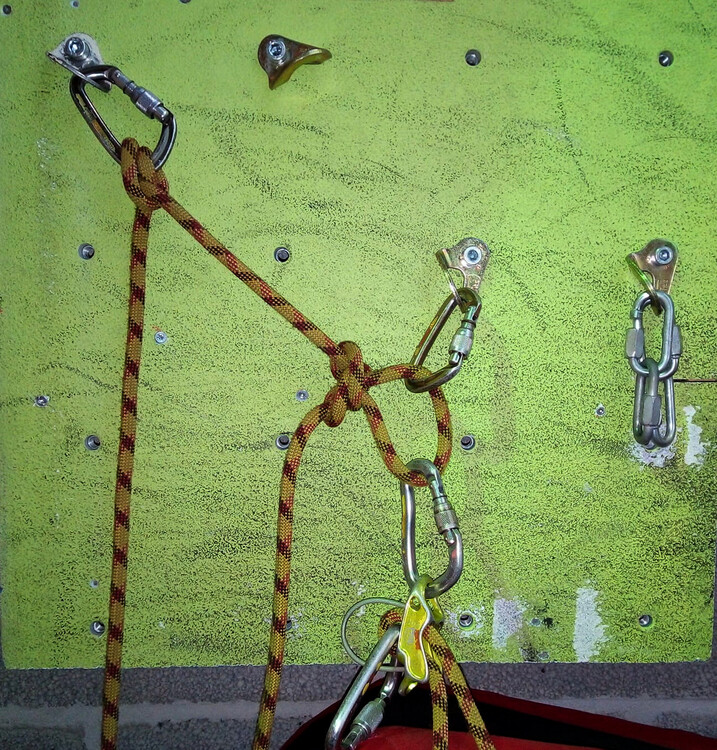 The belayer is on left side rope. |


|
Ignoring many other thoughts/concerns I have with this anchor... why? |
|
|
Gumby Kingwrote: Why not? |
|
|
John Bigroomwrote: It's not redundant |
|
|
Gumby Kingwrote: It is, it just doesn't limit extension. This is pretty standard usually made using two clove hitches rather than an alpine butterfly and no masterpoint, alpine butterfly is a solid choice here though, easy to untie after loading, solid ring load strength. I don't see any issues. |
|
|
Using this, you won‘t be able to change the lenght of your personal anchor (compared to using two clove hitches). 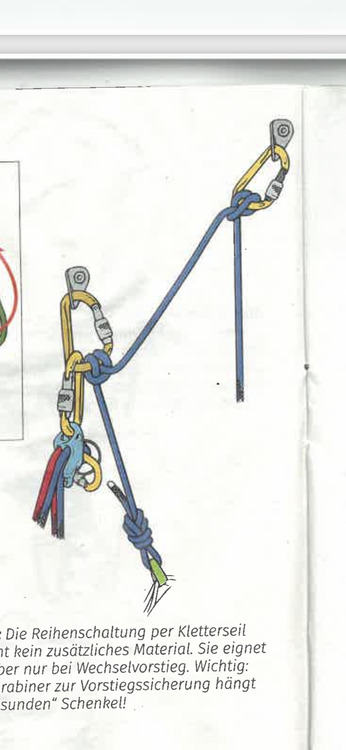 (Ignore the double ropes) |
|
|
Not exactly that, but something pretty similar has become my default for using the rope to build an anchor. Butterfly is pretty easy to adjust, easy to untie after being weighted, and very easy to modify to get two loops if redundancy is a big concern for some reason. |
|
|
Michael Bwrote: I'm with Michael. Using two cloves is more adjustable, uses the same amount of hardware, is possible to set up with one hand, is quicker to break down, and keeps the belay a little higher. |
|
|
Because in 40 years of doing this I have seen damn near every type of anchor blow out & never a rope broken, nor have I broken an ATC. For years I climbed on twins. |
|
|
Yeah I mean it would probably be simpler and more comfortable to put the belay plate on the locker on the right bolt (would give you what looks like 6" more space) but I don't see any issue with using the butterfly knot, it's plenty bomber even in multiaxial load. I would say the clove hitch is usually considered easier to tie but that's just nitpicking too. |
|
|
The butterfly master point would be better than the 2 clove hitches in the case you want to switch to a fixed point lead belay for the next pitch. I would probably belay my follower up with the device on the carabiner attached to the bolt though, just to keep as much height as possible like everybody else mentions. |
|
|
I use the setup pictured by default on bolts. I prefer clipping my belay device to the rope rather than carabiner to carabiner, because it allows me the flexibility to use non lockers on the bolts. I use a bowline on a bight sometimes. |
|
|
that guy named sebwrote: While I'm not going to argue whether this is a problem or not, I think Gumby King is pointing out that the "master point" loop of the Alpine butterfly isn't redundant--if you cut that the climber falls. |
|
|
David Kwrote: That goes for every situation with a single rope. |
|
|
There are many "single points of failure" in *most* climbing systems- especially the single pitch variety. "if the rope is cut" is the same as saying "if the carabiner breaks, if the belay device breaks, if the belay loop breaks". There are parts of a system that need to be redundant because their likelihood of failure is higher or because one simply needs to protect more the higher they climb. The only way to be fully "redundant" is to climb with doubles/halfs and have your belayer belay you with a wall harness with two belay loops and two different belay devices and carabiners on each separate loop- which is asanine. The parts of climbing systems that need to be redundant are well known, and the ones that aren't, like the rope, belay device, carabiner on the belay device, and the belay loop aren't redundant, they are components of a climbing system in which the necessary parts are redundant. Also, if you put a figure 8 on a bight, or another alpine butterfly knot below the right bolt and attach it to a locker to your NON REDUNDANT belay loop, then the rope IS redundant, but only for the belayer. The climber is fucked either way if any part of that rope gets cut or "broken", but that's always the case, as Seb mentioned in any single rope climbing scenario. |
|
|
I get cautious with single strands in the master point because of the possibility of damage while belaying the follower from the anchor. It's easy to pinch individual strands between hardware and rough rock, especially when the system is under tension. Yes it is being watched but I've seen too many people not pay close attention to consider it the same as other single point failures. I'm not saying it's not appropriate but rather that it requires diligence from the belayer. |
|
|
Jason4Toowrote: Ropes don't cut from being pinched against rough rock, they get abraded when there is cyclic loading. How would you feel about anchoring with a single wrap of rope around a large tree? |
|
|
Thank you for your kind feedback. The idea what I was looking for with this setup, was to have a flexible masterpoint so the ATC in guidemode can orient itself easily. The Michael Beerens system is better, if you need to readjust the belayers position for reason or another. Also the fact that Beerens system can build up fast with one hand is spot on. Yes, there are many ways skin the cat. |
|
|
John Bigroomwrote: I use the setup you pictured, but if I think I'll need to adjust my attachment length, I leave a bit of slack between the bolts. Be careful though, if one of them fails that shock loads the other and will rip it right out of the wall, every time. |
|
|
J Cwrote: Agreed that the rope doesn’t get cut from being pinched. When the master point is moving with a light load (as it does while belaying a follower) and you have a single strand between a carabiner and a rock surface then the abrasion can occur in a focused location on the rope. This isn’t the same concern as abrasion on the strand above the climber as the rope has some freedom to roll and also move as the climber moves such that different parts of the rope are in contact with the rock. Again, it’s not a reason to avoid a single strand at the master point but a reason to be more aware of the weakness and keep an eye on your master point if you can’t build your anchor in a way that keeps the MP off the rock when it is loaded. I wouldn’t typically build an anchor around a tree with a single strand but I wouldn’t be as concerned about abrading through the rope on a tree. I can't think of a scenario where any part of the rope would abrade on the tree while in tension and especially not while being pinched against any hardware. |
|
|
John Bigroomwrote: This is essentially my go-to setup for 2 bolt anchors while swinging leads. Only difference is that instead of an alpine bitterly, I use: 1) clove hitch both bolts, and hang the device directly on a biner (as shown in a diagram earlier in this thread). 2) clove the first bolt, then an overhand on a bight on the second, and I'll hang the device on the loop created by the overhand. I only really go with this option if hanging the device directly on the biner would place it in an awkward orientation that is less ergonomic and/or might defeat the camming action of the grigri. 3) clove hitch the first bolt, then make a bowline on a bight for the second bolt in order to give a fixed point lead belay for the next pitch. Once you wrap your head around the idea that good bolts are strong AF and are indeed the preferred method of catching FF2 using a FPLB, it becomes clear that connecting bolts in series like this is totally appropriate for all lesser forces (like hanging a device for a top belay, as shown in OP's picture). |


