
 Continue with onX Maps
 Sign in with Facebook






Flipped upside down on lead fall (how/why?)


|
Astrid Reywrote: Perhaps. I also found references to that. The implied focus on vertical CG was mine but is too narrow. Still not buying that CG plays no role. By the description, there was no angular momentum at the point of letting go:
Even so, I'd still climb with you, Astrid. :) |
|
|
Thank you, Will! That's very helpful. The first diagram is a remarkably good depiction of what happened. |
|
|
Bill Lawrywrote: Well when you sort out your references, be sure to get back to us! Try doing this with your hand under your chest. |
|
|
Astrid Reywrote: Perfect - some actual application :) Difference for Mike being where the rope attaches of course. For the middle of a vertical pipe, Mike’s config would be like holding onto the end of a rod sticking out the side of the vertical pipe (i.e., off axis so off CG … like Mike). Back to the human application, you’ll notice in the vid that the balance point is at the elbow. My elbow is at the base of my sternum (my orig ref relates). Granted, the vid config is not of a human fully stretched out … like me where I am …. or like Mike was when he let go. And note that Mike had both arms stretched out straight past his head which also puts his CG likely well into the vicinity of his sternum. So, yeah, vid isn’t truly representative of Mike’s situation. But maybe you have not posted all the videos you have in mind? |

|
Bill Lawrywrote: Typical prepared-for-impact falling posture would also have legs slightly bent, that also moves COG up the body. |
|
|
Bill Lawrywrote: lol, you keep arguing with something I'm not even saying. All I said it that the human center of gravity is not at the chest, it is at the waist. I didn't say anything about what happened during the climbing fall and am not interested in speculating. Vertical vs. horizontal doesn't matter much. Stand up straight and bend over forward at the waist. Most people can bend at a 90 degree angle and not fall over because center of gravity is still above the feet, even with arms extended out. Now stand up straight and push your butt out backwards without leaning forward. You can't go far without falling because you are moving the center of gravity from above your feet. Martial artists know this well, because that's how you knock someone over! |
|
|
amariuswrote: Bending your legs wouldn't move the center of gravity upward. There's still the same amount of weight below and above the CoG. |
|
|
1.2 Equilibrium Considerations for the Human Body The center of gravity (c.g.) of an erect person with arms at the side is at approximately 56% of the person's height measured from the soles of the feet (Fig. 1.3). The center of gravity shifts as the person moves and bends. Paul Davidovits, Physics in Biology and Medicine (Fifth Edition), 2019 |
|
|
Will Charbonneauwrote: Yes it would... CG is calculated by summing moments, and the moment arm matters. Bending your legs will absolutely shift your CG. If you and I weigh the same, and are sitting on opposite ends of a teeter totter, both the same distance from the pivot, we'd be balanced with the our collective CG centered right at the pivot point. If I then move closer to the pivot, we'd be unbalanced (our CG would no longer be located at the pivot), even though there is still the same amount of weight on either side. |
|
|
Will Charbonneauwrote: You can move your CoG by moving limbs. That's what flagging does in climbing. But there are limits to how far it will move and you would have to bend yourself in half to get it near chest level. |
|
|
Bill Lawrywrote: Sorry Bill, but you're wrong here. Don't believe everything you read on Google. First of all, the sternum (breast bone) goes from your collarbone down to the middle of your rib cage, so to say your CoG is at your sternum is very imprecise (and wrong) because there is no way you can get your CoG to your collarbone level. Second, unless you're a T-Rex, your elbow at the side of your body is not at your sternum, it is at the bottom of your rib cage (which is more in line with your belly button), and your last two ribs (floating ribs) are not connected directly to your sternum. So in that video, he is not balancing at his sternum, but a few inches below that, which doesn't sound like a lot but it makes a HUGE difference when we're talking about our movement and CoG. Generally speaking, our CoG is somewhere around our belly button to the center of our hip, depending on body shape. By moving our body around we can shift our CoG by inches, but unless you're an amputee or curl up in a ball (which will also shift your CoG forward), it's very hard to shift your CoG to anywhere along the sternum. Reference: a martial artist for over 10 years, with 4 years of experience being an instructor. |
|
|
The harness can exert force in 2 places - (a) the waist (maybe above COG, with some luck), (b) the thighs (almost certainly below COG). Both get loaded eventually, but which one gets loaded first might be important. So maybe the relative tightness of the waist / leg loops plays a role. |
|
|
Astrid Reywrote: Lol - not according to your first video. |
|
|
aikibujinwrote: Wrong about what?
Yes - sternum spans quite a bit of vertical length.
Mine does if I stand up straight. It is definitely not at the bottom of my rib cage. And I'm no freak of nature.
Ah - but I never said he was balancing at his sternum.
Maybe. Waiting for another video - the apparent proof - that CoG can never be anywhere along the sternum.
that's great |
|
|
Bill Lawrywrote: No, I'll admit that I'm wrong here. From my past engagement with you I thought you're someone who enjoys a good debate based on logic and experience, but now you argue just based on semantics.
It makes me a little sad actually. |
|
|
I really didn't want to spend any more time on this, but I just had a couple of beers, and under the buzz of alcohol, I decided that what the heck, I can spend a couple more minutes on this. Bill Lawrywrote: This statement is completely BS. There are only three possibilities: 1. your elbow is actually level with the bottom of your sternum like you said. In that case, I'm sorry to say but you're a freak of nature. 2. you don't actually know where the bottom of your sternum is. In that case you don't even have a basic understanding of human anatomy to be arguing about center of gravity. 3. you're lying. I don't want to believe this, so if your elbow is actually level with the bottom of your sternum, picture for proof? Here, I'll even post some pictures. Here's a diagram of typical male body types. The blue circle is the bottom of the sternum, and the blue line is where the elbows are. 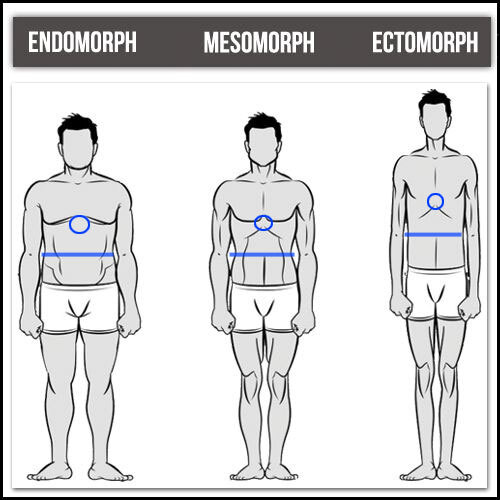 [doh! a deer, a female deer] So, picture of your t-rex arm (promise I won't laugh), or just admit you don't know what you're talking about? Edited to add, since I'm over my post limit, Yes, it's the beer in me speaking again, but since you're so into video proof, it would be MUCH easier for you to make a video and prove you can have your CoG along the sternum, than for someone to make a video dis-proving it. I envision a video of me with my chest over a pullup bar falling off over and over, and you simply say, "oh but you're faking it". If you make a video of yourself balancing your body horizontally with your chest as the pivot point, that is UNDISPUTABLE proof that you can have your CoG along your sternum. Get busy making that video now! |
|
|
It may have been not only being short roped, but perhaps your belayer actually took in or sat on the rope a touch in anticipation of your fall? That could start you swinging in for a split second while your hands on holds were the pivot point and start the flip right before the fall… |
|
|
Mike Pwrote: You were tied in through only the leg loops. That explains it. But no one will accept it as the correct answer. Because on Mountain Project it's always the belayer's fault. |
|
|
 To be clear, the context was what can be seen in the video. And the video being discussed was the horizontal person held up on one forearm. There, the elbow is not off to the side of the person. It is actually pretty well centered on the person. This significantly shortens the distance between elbow and base of sternum.
Definitely would contribute. Seems likely Mike would have realized after the drop. |
|
|
Here is a nice video discussing cog. The teeter-totter experiment is definitely quite easy to set up for those who have a plank, 6 pack and a need to fight on mountain project. One could even move limbs this or that way to see what effect it has on the positioning of cog. https://www.youtube.com/watch?v=jlXVCH5vkyo Once you done with the 6 pack for the teeter totter project, you should grab another 6 pack, and find adult supervisor |


