
 Continue with onX Maps
 Sign in with Facebook






Top 10 Best US Large Cities For Climbing


|
jdejacewrote: Regarding ice - I stopped ice climbing in 1980. Got sick of the fear, feeling like I was soloing everything. Then there was the sweating on the pitch and freezing at the belays. As far as the rest of my feelings about the northeast, it actually has almost nothing to do with the rock, either quality or quantity. It's all the other factors that are part of living somewhere, particularly in a big city. Even here in UT I don't live in SLC - we're in the suburbs of Sandy 20 miles from downtown. And as cities go, SLC really isn't all that big BUT, when people say SLC, it typically includes all of Salt Lake Valley, which is around 1.4 million people. |

|
Alan Rubinwrote: Totally agree with Alan here - I lived in Cincinnati for almost a decade and would not consider it close to being on this list. Los Angeles, San Diego, Boston, Las Vegas all beat it out from personal experience. |
|
|
Frazerwrote: She's probably a doctor if she can make that work in any given city. |
|
|
Cant' believe the first page included Moab as a city. My high school had a bigger population than the entire small-town of moab. Sheesh. |
|
|
Steven Leewrote: For sure doesn't make the general top 10 - no eastern US cities did. What about the kids-table eastern US top 5? Which 5 cities go there? Boston seems to get a lot of votes so far. What's higher - Boston or Charlotte? Atlanta vs NYC? Does Hartford get a spot on the list? |
|
|
JCMwrote: The Burgh: 3ish to the New 6ish to the Red constantly cloudy/rainy and terrible air quality.. climbers dream... even some local stuff within an hour. |
|
|
Mark Frumkinwrote: A lynyrd skynyrd song about neil young comes to mind |
|
|
SinRopa wrote: shhhh |
|
|
J Bwrote: Or any number of other professions |
|
|
Vegas has always felt like a giant patch of suburban sprawl. Incredible climbing and setting, but a city in name only. Bad walkability, poor public transport, sprawl as far as you can see, and an economy that is basically tourism and construction (to help tourism). Even in cities with famously bad public transportation (LA, ATL) I know a lot of people that don't own a car. To me, the ability to survive without a car or by sharing a car is one the defining characteristics city living. I know that's not a metric for everyone, but having lived in places where my wife and I split a car that are famously bad without a car (re: the southeast), Vegas seems completely impenetrable. Climbing city? hell yes it probably should be top five (regarding this thread). But vegas doesn't feel, behave, or live like a large metropolitan city. It's like a huge beach town but instead of the ocean you have casinos and everything that goes along with them. |
|
|
Big Bwrote: There aren't any A's in either of those names.... |
|
|
Rob Dwrote: lol...yep typed to fast |
|
|
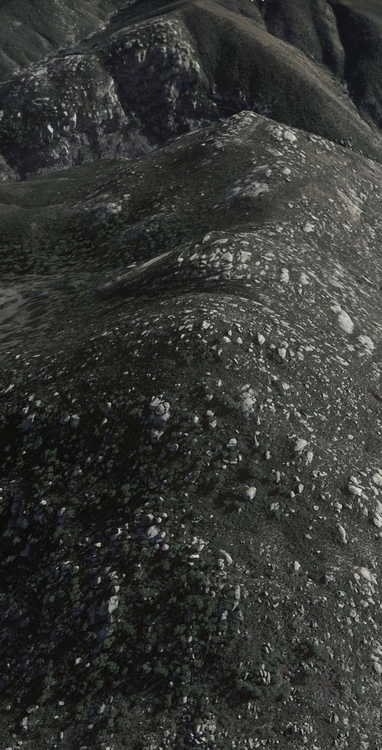
All unclimbed San Diego County
 |
|
|
There is a reason it's unclimbed. I could show hundreds of pics like that. 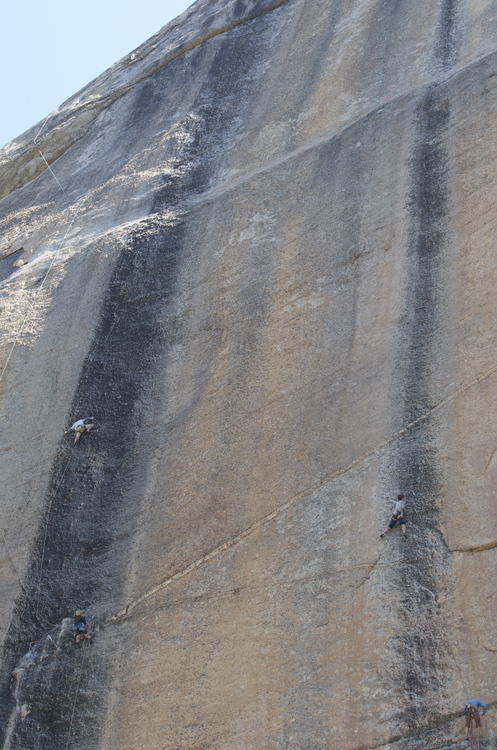 |
|
|
If you take your "Top 10 Best Us Large Cities for Climbing" and exclude the ones with a walkability score <70 (ie the burbs) it leaves you with the following:
3. Denver
7. LA (Long Beach) 8. Seattle
Personally I wouldn't want to live in a large city where I had to jump in the car to do everything and anything. So IMO Denver, Seattle, and perhaps LA are the best large, livable cities for climbing (at least based on the original top 10). You could probably resurrect Portland due to its bike-ability score. |
|
|
M Rwrote: The major flaw in this reasoning is that trying to define a walkability score for an entire metro area is a bit silly. Walkability is, by definition, very local in nature. Pretty much all major US metro areas have sections of non-walkable-sprawl (suburban hell) and areas of great walkability. For walkability, where you are in your metro area (on a very localized scale) can be much more important than which overall metro area you are in. ---- Edit: Crosspost with caughtinside. Agree 100% with what he said. |
|
|
Not to pile on, but yeah, “San Diego”, for example, is a patchwork of distinct communities, with the beach communities basically being defined by estuaries, bays and rivermouths, from Imperial Beach to Oceanside, then inland defined by canyons and fwys Each community has most of everything you need. I have probably a dozen restaurants, a food market, a 7-11, a gas station, a few bars, a bike shop, a Baskin Robbins and about 25 reef breaks within a half mile of my house. And it’s basically flat - I ride a bike everywhere. There’s even sandstone bouldering on the beach - not great, but it can be fun and the sand/moisture/sloper factor makes for a good pump! |
|
|
I stand corrected—averages of walkability are probably not a fair and accurate way to assess walkability for large cities since they can be so heterogenous, as you guys point out. How about LV and SLC? Do they have significant areas that are walkable? Or do you always have to jump into a car to go out to eat, see friends, or commute to work. (I understand many don’t prioritize walking as much as I do [when living in a large city], and some may actually see living in the suburbs as a plus. I also get that this is off topic since the ranking is more about climbing access than quality of life in the city per se) |
|
|
Born/raised in Vegas but haven't lived there in a while. I have trouble thinking of any "walkable" area. There are plenty of nice neighborhoods that are close to parks, but walking to get groceries or a coffee like you would in Boston or some parts of LA (and many other cities) is non-existent to my knowledge. Maybe arts district? Vegas is a massive suburb IMO. Driving is much easier in Vegas compared to many other cities though. |
|
|
Often the higher the wall ability score the worse the car situation is which you generally need to go climbing. San Diego, Spokane, and Manchester NH are the only cities I can think of with having access to a car being an unimportant factor. |


