Continue with onX Maps
 Sign in with Facebook






New and Experienced Climbers Over 50 #15


|
I dont take HGH but do take a ton of anti aging supplements. If you are worried about muscle loss, HMB and Vitamin C combo has studies backing it up. I dont take it because I tend to have overly muscular legs and dont want the extra weight. |
|
|
do this. our first swim of the season yesterday. 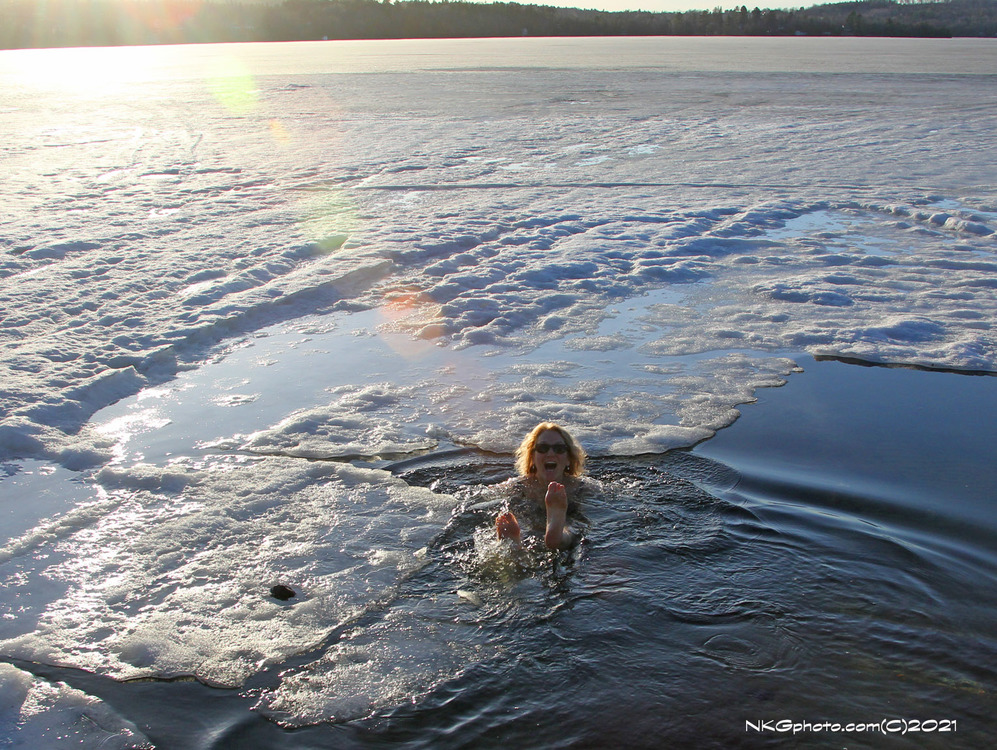 |
|
|
I did that by accident once. Almost didn't get out alive. That was enough. I'll wait 'till the ice melts, thanks. |

|
Lori Milaswrote: That's quite high and very interesting. I've always read that "regular" climbing is primarily anerobic exercise, and I never notice my heart rate going up very high when I climb. Even on overhanging things, I don't think my heart rate goes up that much, but I do have a practice of breathing deeply and slowly, deliberately, on routes like that. I got an apple watch recently, which I mostly forget about and it sits in a drawer. maybe I'll wear it next time I go to the gym and see what the range is! Would be fun to know. Is it possible that you are holding your breath inadvertently when you climb, maybe because you are concentrating so hard that you "forget to breathe"? That was what led me to start a deliberate breathing practice. Another thing that might cause it to be elevated is just having a moment of panic? |
|
|
phylp phylpwrote: BITD when I ski raced, I collapsed just after crossing the finish line in a downhill race. Coach came over, "Bob, try breathing next time". He was right! |
|
|
phylp phylpwrote: Oh boy, you do have a point! I’m a bit overwhelmed with it all today. Someone smarter than me can tease this all out but my understanding is climbing is both, aerobic and anaerobic. I’m pretty sure I’m not frightened or holding my breath... I don’t think! Today I was on a long vigorous hike for 2 hours and my Whoop Strain score was 7... the range being 0-21, and moderate exercise being 10-14. So, I went back to find out how to really calculate maximum heart rate and came up with the formula of 220 minus age (67). For me that would be 153. So Whoop set it wrong. I know when I have done cardio/endurance training (laps indoors) it has helped greatly with how long I can last hiking, scrambling and climbing. If you do bring your watch out climbing with you it will be interesting to see what you find. |
|
|
This business of breathing is interesting. Lori mentioned that she lifts weights, and activity where you hold your breath. If she is carrying this over to climbing Phyl could be onto something. Something I picked up from a Yoga teacher is to focus on the turn-around during your breathing practice, how the top of an inhale floats into the exhale, and vice-versa. By this I mean that at the bottom of each exhale, and the top of each inhale, think of the transition as the peak or dip of a sine wave. A curve. The transition is smooth and gradual. And the throat never closes. Pilates teaches us this too. Even during hard exercises, the throat never closes. I'll preface this next one by saying that despite the fact that this sounds wrong in so many ways, it's a great exercise. I played trumpet for a living in NYC for some time. I both studied with top teachers, and had my own teaching practice. Breathing is key to playing trumpet. Being able to fill your lungs quickly, without stress is vital. Many times you have to fill your lungs in a brief moment. The best way I ever found to practice this was to put one end of an empty paper towel tube (or it's shorter cousin) in my mouth and breath through it. Try it, you'll see what I mean. Don't hyperventilate, and best not to have anyone watching . I was taught this by the Principal Trumpet player in the New York Phil. He didn't demonstrate. Keep in mind that Yoga and Pilates largely breath through the nose, while the paper towel tube teaches us to breath through the mouth, but the same relaxed breathing through an open airway applies. I'm quite sure that what I learned about breath as a brass instrument player carried through to climbing. Relaxed breathing is relaxed climbing. |
|
|
Interesting Kristian! I played French horn and started as a music performance major in college for a couple of years before realizing I’d probably never be able to make a living at it. My horn teacher (principle with Denver, studied under Clevenger in Chicago) emphasized breathing exercises and yogic breath. I use those principles a lot with climbing as well as hard exercise in general to calm/slow my breath. Amazing you were able to play professionally - that is a very elite group! |
|
|
Ever since I heard the bagpipe band practicing out on the field at USC I wanted to play the pipes. This could be my chance! Kristian how wonderful you have played and taught the trumpet! I really only wanted to correct the record here... I don’t lift weights. Back in my pre-COVID gym days I did some moderate strength training... not nearly enough. I’m just very aware of that liability now and I don’t know how much I can build now. But I do know that we are capable of building muscle and strength into old age... something science believed was impossible until recently. I have taken yoga and Pilates in the past... also not consistently, and maybe breath work is something to revisit. I don’t think that’s the reason for the elevated heart rate last Monday... will find out next time I climb! |
|
|
I learned some important lessons about breathing and breath as an essential, but rather unexpected by-product of writing several pieces for woodwind quintet a few years ago. I went so far as to talk at some length with a contrabasson player long distance telephone when I decided to replace the regular bassoon with a deeper contra . Every note duration had to be considered in an highly relative context according to the breath capacity.This is true of all winds, but I discovered especially true of the contrabasson. When I composed for this instrument I would deliberately do vocal warm-up solfege beforehand . I had to devote particular attention to longer crescendo sections, sfozandos, etc. I would always feel as if I had been singing all day. For instance, I had to avoid long breathy sections followed by short note bursts. When you use a computer to compose it can do anything you tell it. Humans have lungs with limited capacities. Recently I used a Woodwind Quintet as an outro section for a popular tune and found myself utelizing a vocal warm-up technique beforehand even though I had to resort to playing all lines by finger. Changing subjects I will refer to the photo up thread of someone swimming in icy water. This can be quite good for one's mitochondria in that cold can shrink the distance electrons must travel along respiratory proteins during electron chain transport ( ECT) which is the process for creating energy in our bodies. This results in your mito operating more efficiently. Even a relatively short time in cold water can result in improved redox functioning. The same is of course true of Infrared light as well but via different mechanisms. I have a round end tank I fill with cold water and spend time in it after a demanding workout or the rare day climbing. The first minute you enter the water it's impossible not let go an involuntary howl. Disturbing to next door neighbors. LOL Oh,and by the way cold thermogenesis (as it is sometimes called ) can reduce many pro-inflammatory markers as demonstrated by pro surfer Laird Hamilton. 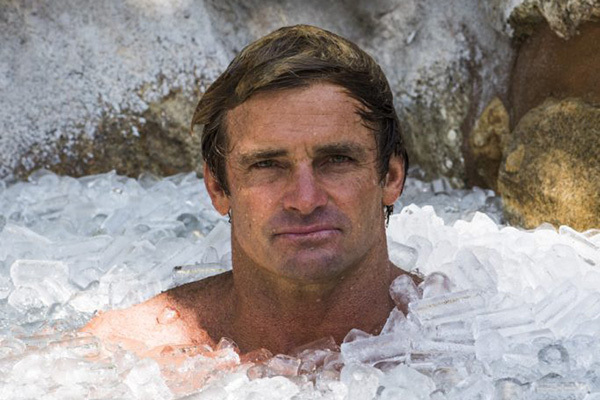 |
|
|
    |
|
|
Lori Milaswrote: I had a similar issue with Whoop - No matter how hard a training day was my strain score never got above 15. S0 I was in the "moderate" strain range almost every day (even on rest days). Maybe their algo isn't well designed for the 50+ group? |
|
|
Kristian. thats amazeing that you blew the horn in nyc. My dad went to Julliard and played doubble bass in jazz clubs in harlem when he was a teenager before moveing to Vermont in the 30s to become a dairy farmer. there is a mural of him playing Bass in a barn dance. The mural is in the Coolidge hotel in white river vt. 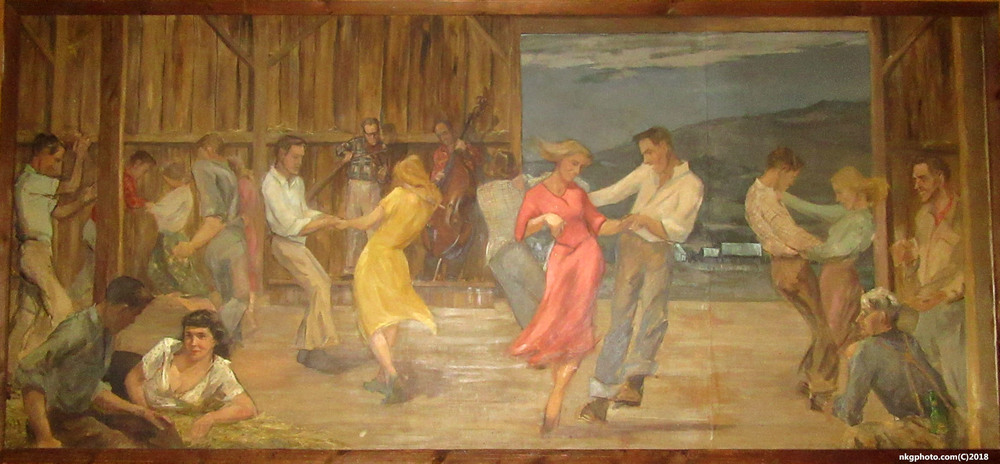 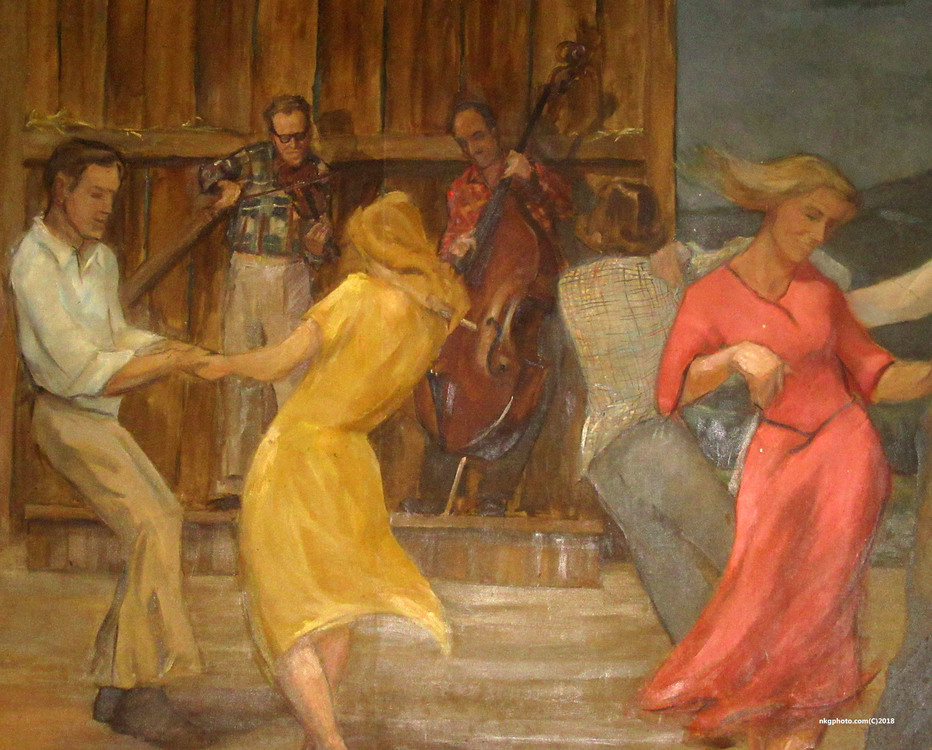 The mural is from sometime after WWll. Breath control in huge in martial arts and helps me with singing and also critical in climbing. |
|
|
Mike Kwrote: Mike... agreed. For just a few months I'm going all in with a reorg of my diet, exercise and sleep. So, good data is helpful--and the Whoop lady is committed to helping me pull it out of their band. I have found the Apple Watch to be just too much noise for me... too many apps with no big picture. I'm not looking to count steps or close rings. I want to climb hard (appropriately) and not be exhausted for days. I do want to know the amount and quality of sleep I'm getting (and I'm real surprised so far how little that is). I want some idea of how the exercise I'm doing is affecting my body and recovery. I'm working with a Registered Dietician for the next 3 months also, who is an athlete and a Type 1 Diabetic like me. So, reluctantly I agreed to log all my food on My Fitness Pal for awhile... and finding more surprises. As clean and honed in as my diet is, I'm not coming close to meeting basic daily nutrient requirements. Seeing actual numbers is enlightening--knowledge is power, imho. I've added a ton of strain to this aging body, and yet coming up short on protein, zinc, iron and even potassium--actually, everything. The potassium part surprises me... I eat a lot of fruits and vegetables. All in all... this is a really fun journey. I don't expect to pay so much attention forever... but right now it's helping me design a better program for strength and endurance. I told the RD I do NOT want to focus on weight loss... although I hope that comes along as a biproduct. |
|
|
ErikaNWwrote: Interesting. I wonder if there is some connection between brass instruments and climbing. I played the saxophone. Sold it to get my first pair of really good downhill skis. |
|
|
Idaho Bobwrote: Well, a lot of those JT slabs required brass balls, especially on the FA |
|
|
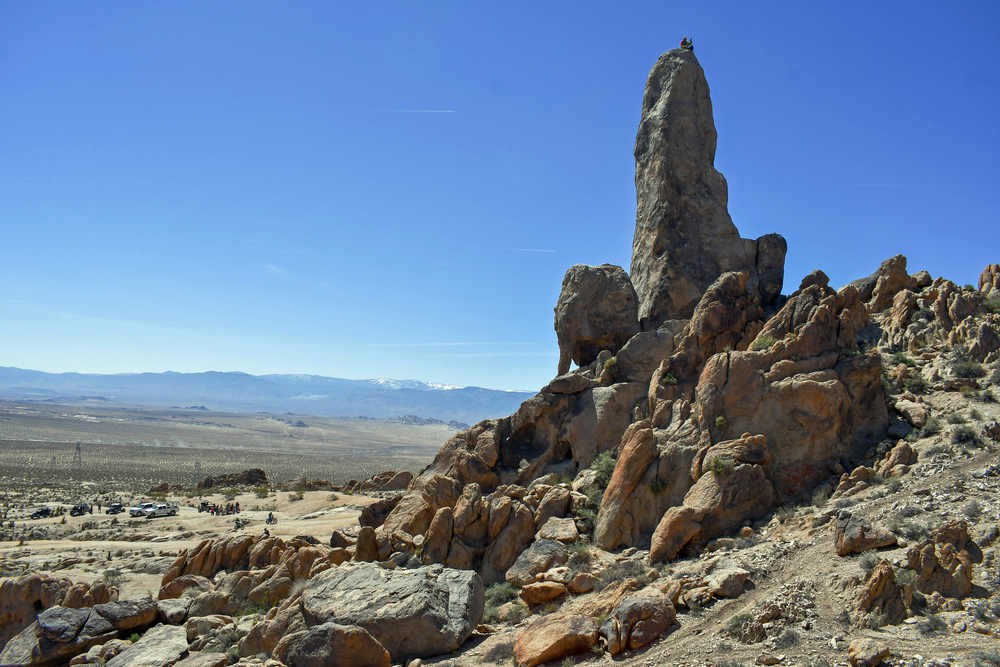
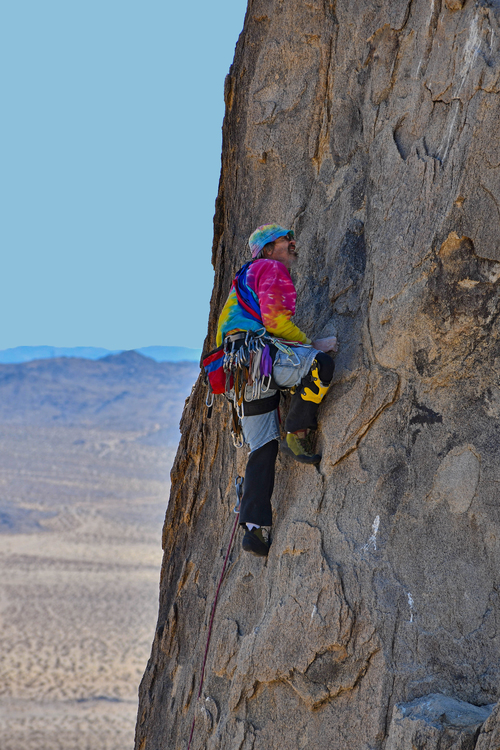
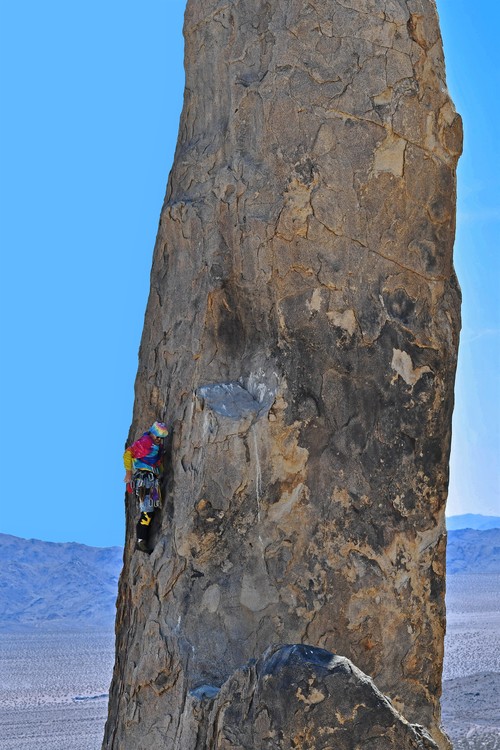
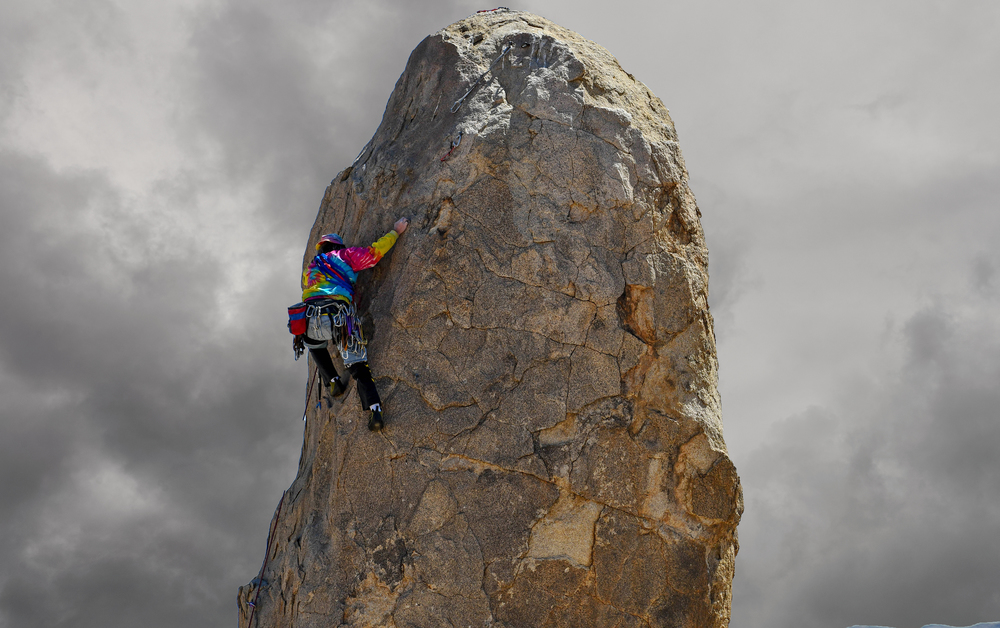
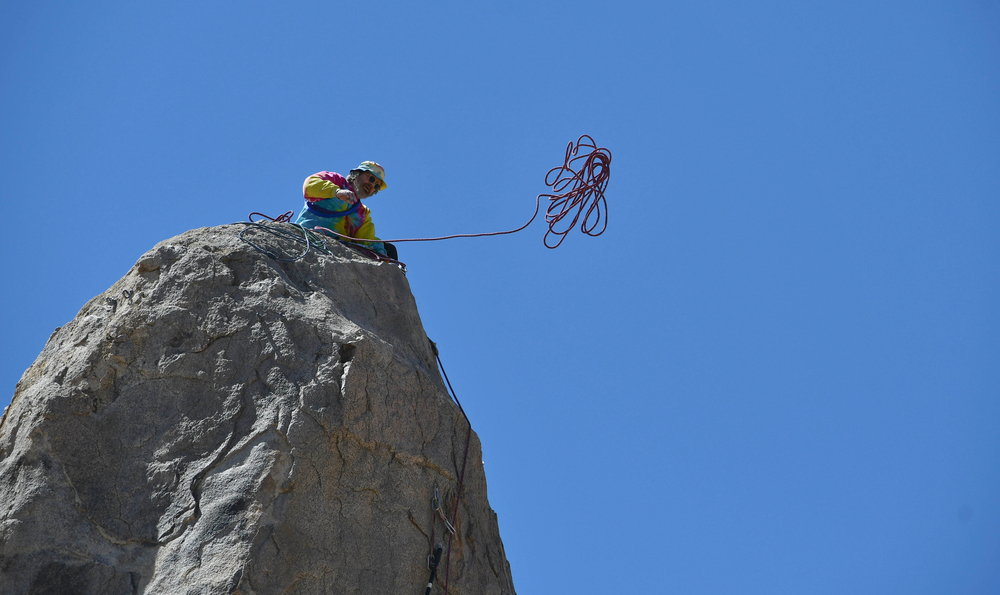
Dwain. what is that formation/ tower? |
|
|
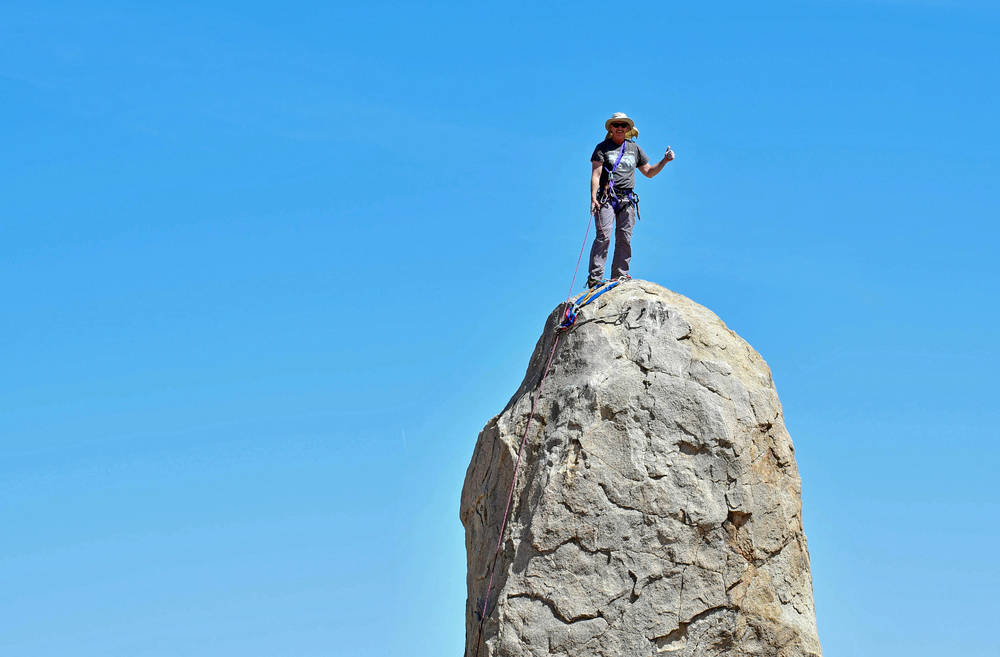
Our first rock outing yesterday on one of the climbs we FA's last spring. Forbiddin fruit 9+ 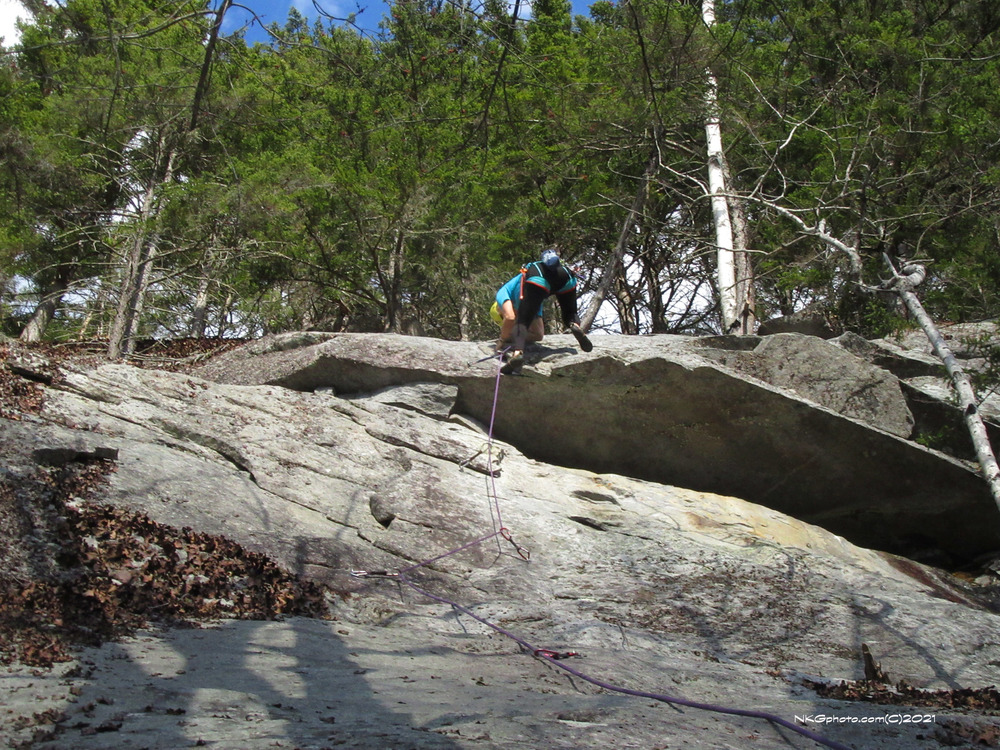 |
|
|
ErikaNWwrote: I'll never forget the night I sat in Carnegie Hall and listened to Chicago Symphony play Mahler's 5th under Sir Georg Solti. Of course Herseth, at principal Trumpet, was my hero, but Clevenger just blew the roof off the place in that 3rd movement. OMG. No hand in the bell for those solo's, just point the sucker up in the air and let fly. I'm writing a book, and of course one chapter delves into the similarity, for me, of the experiences of trumpet playing and climbing. It's a lengthy introspective piece, but it ends here: "...In climbing, being exposed means you are in a committed situation in a wild high place. A climber halfway up the sheer face of Yosemite's El Capitan is in an exposed position, over 1,500 feet from the ground and equally far from the top. A trumpet player in an orchestra is exposed because the instrument is prominent. The entire audience will hear your smallest mistake. While the consequences of failure are different, the experience of being on the edge is similar. In either case, before you begin, you feel anticipation and nervousness. Then it's time to commit, to begin the journey. Along the way, you might find yourself in an exposed section where control is vital, and mistakes have consequences. But being on this edge is your chance to be stylish, to perform, to make art of it. Of course, failing on a climb can kill you, but the great majority of climbers manage to get down alive. Failure is most often the inability to do the climb in good style, or not to get up it at all. Back safely on terra firma, the defeated climbers will be disappointed, perhaps embarrassed, and in most cases anxious to make a stronger attempt next time. Failing on the trumpet would leave me despondent, perhaps having lost the respect of my colleagues, the conductor, the audience, and even worse, myself. I could not go back in time to make it right. It was over. I'd never play that music for those same people ever again. Simply put, coming up short in a musical performance would leave me wrecked. Coming up short on a climb motivated me to go back for more." That, right there, is why I confounded those closest to me when I put down the trumpet to go climbing. It was a decision that cost me a career, a marriage, and many friends and colleagues. I even have family who, to this day, look at me like I have tail. But it was a decision that I have never once regretted. |
|
|
|