|
|
Lyle M
·
Oct 14, 2020
·
New Haven, Ct
· Joined Aug 2018
· Points: 587
Tradibanwrote: So God is the guiding force of your moral principals? Good answers but they are all still pretty subjective and lots of "if"s and "but"s. Therefore a logical framework can never be agreed upon and everything is left to people's opinion. Do you see the problem with that approach? I think the idea that bolting saves lives is a good and logical justification for doing so, but then that means we should bolt all even remotely sketchy climbing. Would you agree? If someone plans, executes, and buys the $1000 worth of equipment to go clean a route and bolt something, what right do we have as climbing internet chirpers to say they are wrong or we could do better? What if when free climbers FAd they really wish they had a bolt somewhere but never got around to installing it? To many hypotheticals in everyone’s bs.
|
|
|
Tradiban
·
Oct 15, 2020
·
951-527-7959
· Joined Jul 2020
· Points: 212
Lyle Mwrote: If someone plans, executes, and buys the $1000 worth of equipment to go clean a route and bolt something, what right do we have as climbing internet chirpers to say they are wrong or we could do better? If it's on public land, we have 100% right to question their actions. Ethics cannot be bought or sold, that is their beauty. What if when free climbers FAd they really wish they had a bolt somewhere but never got around to installing it? To many hypotheticals in everyone’s bs.
It's not about anyone's "wish", it's about their needs and the justification for their needs.
|
|
|
Claudine Longet
·
Oct 15, 2020
·
Unknown Hometown
· Joined Sep 2020
· Points: 0
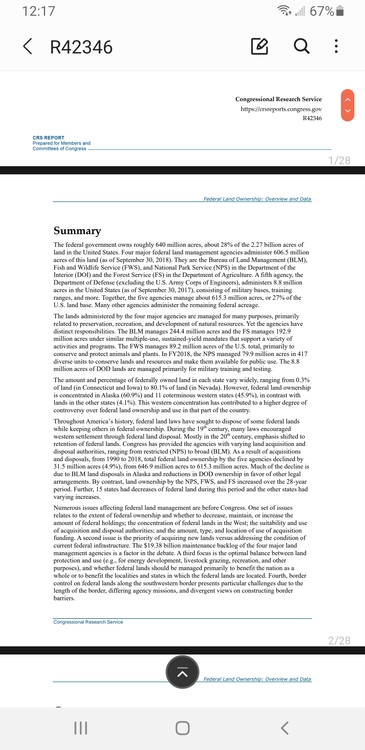
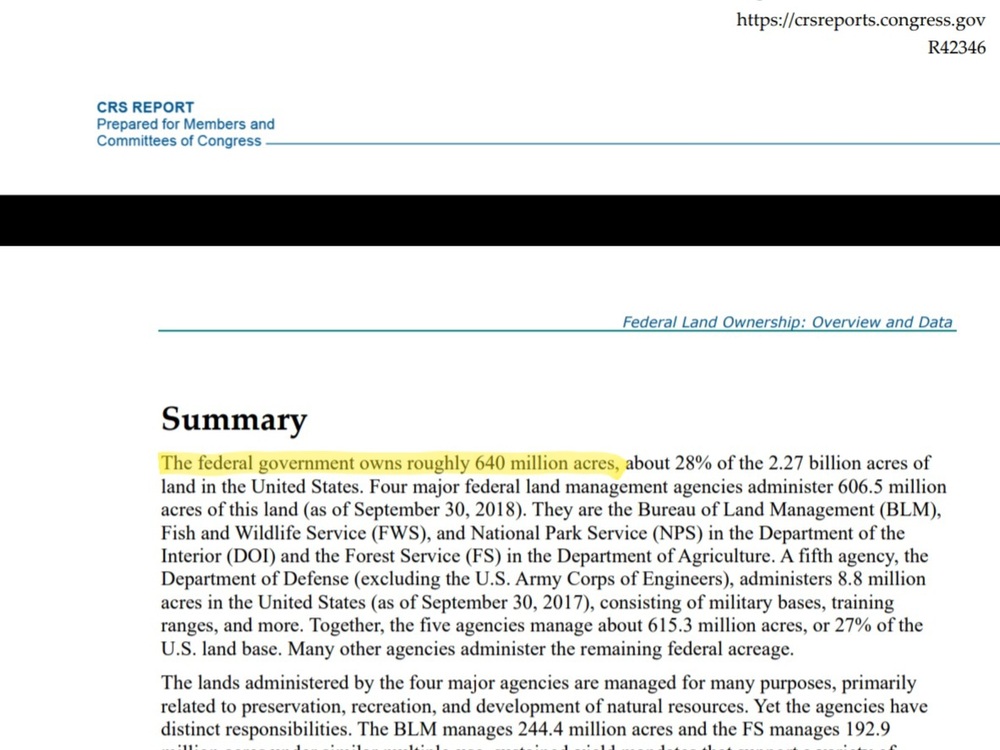
Tradibanwrote: If it's on public land, we have 100% right to question their actions. Ethics cannot be bought or sold, that is their beauty. It's not about anyone's "wish", it's about their needs and the justification for their needs. There is NO such thing as Public Land. That is a deliberate obfuscation. It is government land. Government owns it. Not us. Not the Collective. Anything you do on government land is only because government allows you access on it's property. That includes bolting. Your entire argument is invalid.
|
|
|
Tradiban
·
Oct 15, 2020
·
951-527-7959
· Joined Jul 2020
· Points: 212
Claudine Longetwrote: There is NO such thing as Public Land. That is a deliberate obfuscation. It is government land. Government owns it. Not us. Not the Collective. Anything you do on government land is only because government allows you access on it's property. That includes bolting. If you actually think that you have already been brainwashed by "them".
|
|
|
Claudine Longet
·
Oct 15, 2020
·
Unknown Hometown
· Joined Sep 2020
· Points: 0
Go ahead and ask any of the lawyers here. We actually don't even really own our own land either, but that's irrelevant to this thread.
|
|
|
Mike Preiss
·
Oct 15, 2020
·
Hobart, WA
· Joined Sep 2020
· Points: 871
Claudine Longetwrote:Go ahead and ask any of the lawyers here. We actually don't even really own our own land either, but that's irrelevant to this thread. Well technically I guess because (only) if you do not pay your property taxes the government can take your land/home. We the people are the government?
|
|
|
Claudine Longet
·
Oct 15, 2020
·
Unknown Hometown
· Joined Sep 2020
· Points: 0
Mike Preisswrote: We the people are the government? Do you really think that? Or is that idea just a quaint remnant from elementary school?
|
|
|
Mark Pilate
·
Oct 15, 2020
·
MN
· Joined Jun 2013
· Points: 25
Claudine Longetwrote:Go ahead and ask any of the lawyers here. We actually don't even really own our own land either, but that's irrelevant to this thread. Native Americans would agree with you wholeheartedly. It’s all a trick. In the U.S. government workers are grown in test tubes by former Soviet block scientists. They were just about to take over until Trump got elected. Trump is the “thin orange line” between us and slavery to a mutant race of tube people (AKA “the Deep State)
|
|
|
Tradiban
·
Oct 16, 2020
·
951-527-7959
· Joined Jul 2020
· Points: 212
Seriously though, what's the difference between chipping and bolting?
|
|
|
Dylan Colon
·
Oct 16, 2020
·
Eugene, OR
· Joined Jun 2009
· Points: 511
The difference between chipping and bolting lies in the ethical perspective through which you view the game of climbing. I'm going to vastly oversimplify things and say that climbing "ethics" are a series of rules that determine whether a climb was a "fair" ascent in terms of the type of game being played. This is different from "morals" which I consider to be more general things like preserving the environment. "Ethics" debates like bolting on rappel vs. on lead tend to focus on things non-climbers would never care about. "Style" is the even more idiosyncratic stuff like whether hang-dogging is ok. Most climbers do not hew to the extremes and make some kind of compromise, but I believe there are two extremes sets of climbing ethical rules that can be had. Most people operate under some mix of them, rather than hewing entirely to one or the other. 1: Get to the top of the thing and then leave without leaving any trace of passage. This is the "the rock is sacred, do not alter it" mentality. From this point of view, anything that leaves a visual impact, be it chalk, bolts, fixed slings, or chipped holds, is a deviation from best practices and to be avoided. Clean aid, however, is fine. This style holds a clean, no trace aid ascent of a big wall in much higher regard than something like the Dawn Wall which, while free, relies on lots of fixed gear. Under this mentality, chipping and bolting aren't all that different. Indeed, aid climbers of the Yosemite golden age thought that chiseling out edges for hooking was less of an affront than drilling a bolt, as it removed less rock, had less visual impact, and preserved the element of risk. The other main ethical purity goal is similar but different: 2: Get to the top of the thing using only the features provided by the natural rock and only one's athletic ability, no artificial aid allowed. This is the sport climber's ethos. In this case the goal is to free climb a piece of rock as it is found in nature. Artificial equipment is allowed, but never to directly aid upward progress. However, you can do whatever you want to make the activity safe, be that bolting the rock for use in protection, pulling off loose blocks, or even grading the base to make for a safer landing. In extreme cases, putting glue behind loose flakes to keep the rock in a fixed state is considered occasionally acceptable, as is gluing broken holds back on if they are key to allowing free climbing. Chipping, on the other hand, is always considered cheating, as it is a violation of the principle that the free climbing challenge set by nature should be respected. Extreme versions of this mentality occasionally shun chalk, tape gloves, and climbing shoes as artificial aid, but this is not so common. Most climbers today adhere closer to the ideals of game number 2 than game number 1, hence the disdain for chipping while bolting is considered standard practice. Mentality number 1 is still adhered to in "old-school" traditional areas where bolts are anathema, though these are rare (but worth preserving IMO).
|
|
|
Mike Preiss
·
Oct 16, 2020
·
Hobart, WA
· Joined Sep 2020
· Points: 871
Claudine Longetwrote: Do you really think that? Or is that idea just a quaint remnant from elementary school? Yeah sorry but I do not prescribe to the paranoid conspiracy theory mentality
|
|
|
Mike Preiss
·
Oct 16, 2020
·
Hobart, WA
· Joined Sep 2020
· Points: 871
Dylan Colonwrote:The difference between chipping and bolting lies in the ethical perspective through which you view the game of climbing. I'm going to vastly oversimplify things and say that climbing "ethics" are a series of rules that determine whether a climb was a "fair" ascent in terms of the type of game being played. This is different from "morals" which I consider to be more general things like preserving the environment. "Ethics" debates like bolting on rappel vs. on lead tend to focus on things non-climbers would never care about. "Style" is the even more idiosyncratic stuff like whether hang-dogging is ok. Most climbers do not hew to the extremes and make some kind of compromise, but I believe there are two extremes sets of climbing ethical rules that can be had. Most people operate under some mix of them, rather than hewing entirely to one or the other. 1: Get to the top of the thing and then leave without leaving any trace of passage. This is the "the rock is sacred, do not alter it" mentality. From this point of view, anything that leaves a visual impact, be it chalk, bolts, fixed slings, or chipped holds, is a deviation from best practices and to be avoided. Clean aid, however, is fine. This style holds a clean, no trace aid ascent of a big wall in much higher regard than something like the Dawn Wall which, while free, relies on lots of fixed gear. Under this mentality, chipping and bolting aren't all that different. Indeed, aid climbers of the Yosemite golden age thought that chiseling out edges for hooking was less of an affront than drilling a bolt, as it removed less rock, had less visual impact, and preserved the element of risk. The other main ethical purity goal is similar but different: 2: Get to the top of the thing using only the features provided by the natural rock and only one's athletic ability, no artificial aid allowed. This is the sport climber's ethos. In this case the goal is to free climb a piece of rock as it is found in nature. Artificial equipment is allowed, but never to directly aid upward progress. However, you can do whatever you want to make the activity safe, be that bolting the rock for use in protection, pulling off loose blocks, or even grading the base to make for a safer landing. In extreme cases, putting glue behind loose flakes to keep the rock in a fixed state is considered occasionally acceptable, as is gluing broken holds back on if they are key to allowing free climbing. Chipping, on the other hand, is always considered cheating, as it is a violation of the principle that the free climbing challenge set by nature should be respected. Extreme versions of this mentality occasionally shun chalk, tape gloves, and climbing shoes as artificial aid, but this is not so common. Most climbers today adhere closer to the ideals of game number 2 than game number 1, hence the disdain for chipping while bolting is considered standard practice. Mentality number 1 is still adhered to in "old-school" traditional areas where bolts are anathema, though these are rare (but worth preserving IMO). Not sure about #2.... the 1st sentence sounds great but then it it deteriorates into completely changing the rock as it was found in nature.
|
|
|
Tradiban
·
Oct 16, 2020
·
951-527-7959
· Joined Jul 2020
· Points: 212
Dylan Colonwrote:The difference between chipping and bolting lies in the ethical perspective through which you view the game of climbing. I'm going to vastly oversimplify things and say that climbing "ethics" are a series of rules that determine whether a climb was a "fair" ascent in terms of the type of game being played. This is different from "morals" which I consider to be more general things like preserving the environment. "Ethics" debates like bolting on rappel vs. on lead tend to focus on things non-climbers would never care about. "Style" is the even more idiosyncratic stuff like whether hang-dogging is ok. Most climbers do not hew to the extremes and make some kind of compromise, but I believe there are two extremes sets of climbing ethical rules that can be had. Most people operate under some mix of them, rather than hewing entirely to one or the other. 1: Get to the top of the thing and then leave without leaving any trace of passage. This is the "the rock is sacred, do not alter it" mentality. From this point of view, anything that leaves a visual impact, be it chalk, bolts, fixed slings, or chipped holds, is a deviation from best practices and to be avoided. Clean aid, however, is fine. This style holds a clean, no trace aid ascent of a big wall in much higher regard than something like the Dawn Wall which, while free, relies on lots of fixed gear. Under this mentality, chipping and bolting aren't all that different. Indeed, aid climbers of the Yosemite golden age thought that chiseling out edges for hooking was less of an affront than drilling a bolt, as it removed less rock, had less visual impact, and preserved the element of risk. The other main ethical purity goal is similar but different: 2: Get to the top of the thing using only the features provided by the natural rock and only one's athletic ability, no artificial aid allowed. This is the sport climber's ethos. In this case the goal is to free climb a piece of rock as it is found in nature. Artificial equipment is allowed, but never to directly aid upward progress. However, you can do whatever you want to make the activity safe, be that bolting the rock for use in protection, pulling off loose blocks, or even grading the base to make for a safer landing. In extreme cases, putting glue behind loose flakes to keep the rock in a fixed state is considered occasionally acceptable, as is gluing broken holds back on if they are key to allowing free climbing. Chipping, on the other hand, is always considered cheating, as it is a violation of the principle that the free climbing challenge set by nature should be respected. Extreme versions of this mentality occasionally shun chalk, tape gloves, and climbing shoes as artificial aid, but this is not so common. Most climbers today adhere closer to the ideals of game number 2 than game number 1, hence the disdain for chipping while bolting is considered standard practice. Mentality number 1 is still adhered to in "old-school" traditional areas where bolts are anathema, though these are rare (but worth preserving IMO). I like the line "free climbing challenge set by nature" but I don't agree that justifies bolting....perhaps nature didn't intend some rock to be climbed? Regardless, it seems the rock itself and nature are totally secondary to athletic achievement in your second ethos. Wouldn't it be better suited for gym climbing only? In short, sport climbers have an "out" to their bolting, they just don't care, while as trad climbers pretend to care so they limit their bolting and find excuses.
|
|
|
Dylan Colon
·
Oct 16, 2020
·
Eugene, OR
· Joined Jun 2009
· Points: 511
Nature doesn't intend anything, "intent" is a human invention. The rock just is. We decide what to do with it. The second ethos, without any input from the first, can lead to some kind of gross stuff, like overbolting. Similarly a pure first ethos would mean El Cap never got climbed (no pitons, bolts, anything allowed? would have never happened). I'd hope we can agree that would be a shame. The goal is to find a good balance of both, and different areas (an alpine wilderness vs an urban choss quarry) will have different appropriate balances.
|
|
|
Glowering
·
Oct 16, 2020
·
Unknown Hometown
· Joined Oct 2011
· Points: 16
Dylan Colonwrote:The difference between chipping and bolting lies in the ethical perspective through which you view the game of climbing. 1: Get to the top of the thing and then leave without leaving any trace of passage. The other main ethical purity goal is similar but different: 2: Get to the top of the thing using only the features provided by the natural rock and only one's athletic ability, no artificial aid allowed. I appreciate the work to break down the situation into different ethical perspectives, however I think it's more like this (some text plagiarized from other sources to speed up my reply): Rock Climbing Style and Ethics: Ethics are the actions we take which affects the rock for all climbers and sometimes other recreationalists. Style is each individual climber’s approach to how he or she approaches the challenge of moving up the rock. Ethics deals with concepts of right and wrong, which have a certain timeless quality. Style has more to do with personal preference and the prevailing trends. One of the few times ethics and style intertwine is during the first ascent. Is placing a bolt on rappel wrong? Well, that depends. It’s perfectly fine in some climbing areas, but what about a place like the Needles of South Dakota where bolts have always been placed by hand from natural stances? Of course, many of the rules governing an area may be defined not by climbers but by a third party, such as a land manager, who has clearly defined what is or is not allowed on the property. In regards to your #1 This is the "the rock is sacred, do not alter it" mentality. is a small minority viewpoint. No land manager thinks that way, although they will consider this for certain areas for certain user groups like Devil's Tower or Cave Rock in Tahoe. Trolliban and others can think this way, but it has little impact in the real world. For most trad enthusiasts it is more "alter the rock as little as possible, climb as clean as possible to preserve the rock for future climbers, and to leave as little trace as possible". Royal Robbins was a hero of clean climbing. But he would use a bolt as a last resort if no other pro was possible. This is the realistic overall trad perspective. There are a few areas where traditionally no bolts are allowed, and that's great, and people should respect it at that area. Like the Needles example of no rap bolting there. In regards to your #2. This is not an ethical purity goal, but a style goal. Sport climbing uses aid often to enable upward progress, e.g. hang dogging. The style goal is a red point, and if it's a flash all the better. Land Management Practices: For land management it makes sense to break things down like it is done in Environmental Impact Reports. Climbing provides benefits to a large number of people (and bolts facilitate that benefit by allowing more people to climb on routes they would otherwise not be capable of climbing on). Then you weigh that against the environmental impact to help guide a decision if it should be allowed or not. My point earlier on this topic is you can't just say "There's more impact because more people climb so bolts should not be allowed", you need to describe the significant negative impacts and how they impact other climbers, other user groups, the ecosystem or other species, any cultural resources, etc. and how that outweighs the benefits from climbing. You won't hear the people who want to ban all bolting do that because they can't. However in some circumstances it is justified (like a highly visible rock or a highly sensitive area) Thankfully that's the type of justified argument land managers will need to see to consider banning bolting.
|
|
|
Mike Preiss
·
Oct 16, 2020
·
Hobart, WA
· Joined Sep 2020
· Points: 871
Gloweringwrote: I appreciate the work to break down the situation into different ethical perspectives, however I think it's more like this (some text plagiarized from other sources to speed up my reply): Rock Climbing Style and Ethics: Ethics are the actions we take which affects the rock for all climbers and sometimes other recreationalists. Style is each individual climber’s approach to how he or she approaches the challenge of moving up the rock. Ethics deals with concepts of right and wrong, which have a certain timeless quality. Style has more to do with personal preference and the prevailing trends. One of the few times ethics and style intertwine is during the first ascent. Is placing a bolt on rappel wrong? Well, that depends. It’s perfectly fine in some climbing areas, but what about a place like the Needles of South Dakota where bolts have always been placed by hand from natural stances? Of course, many of the rules governing an area may be defined not by climbers but by a third party, such as a land manager, who has clearly defined what is or is not allowed on the property. In regards to your #1 This is the "the rock is sacred, do not alter it" mentality. is a small minority viewpoint. No land manager thinks that way, although they will consider this for certain areas for certain user groups like Devil's Tower or Cave Rock in Tahoe. Trolliban and others can think this way, but it has little impact in the real world. For most trad enthusiasts it is more "alter the rock as little as possible, climb as clean as possible to preserve the rock for future climbers, and to leave as little trace as possible". Royal Robbins was a hero of clean climbing. But he would use a bolt as a last resort if no other pro was possible. This is the realistic overall trad perspective. There are a few areas where traditionally no bolts are allowed, and that's great, and people should respect it at that area. Like the Needles example of no rap bolting there. In regards to your #2. This is not an ethical purity goal, but a style goal. Sport climbing uses aid often to enable upward progress, e.g. hang dogging. The style goal is a red point, and if it's a flash all the better. Land Management Practices: For land management it makes sense to break things down like it is done in Environmental Impact Reports. Climbing provides benefits to a large number of people (and bolts facilitate that benefit by allowing more people to climb on routes they would otherwise not be capable of climbing on). Then you weigh that against the environmental impact to help guide a decision if it should be allowed or not. My point earlier on this topic is you can't just say "There's more impact because more people climb so bolts should not be allowed", you need to describe the significant negative impacts and how they impact other climbers, other user groups, the ecosystem or other species, any cultural resources, etc. and how that outweighs the benefits from climbing. You won't hear the people who want to ban all bolting do that because they can't. However in some circumstances it is justified (like a highly visible rock or a highly sensitive area) Thankfully that's the type of justified argument land managers will need to see to consider banning bolting. My point earlier on this topic is you can't just say "There's more impact because more people climb so bolts should not be allowed", you need to describe the significant negative impacts and how they impact other climbers, other user groups, the ecosystem or other species, any cultural resources, etc. and how that outweighs the benefits from climbing. You won't hear the people who want to ban all bolting do that because they can't. However in some circumstances it is justified (like a highly visible rock or a highly sensitive area) Thankfully that's the type of justified argument land managers will need to see to consider banning bolting.
I agree with some of your points but it's obvious to most climbers if you add a safe bolted route anywhere (and I mean anywhere) it will be popular(up to 5.10+) and increase traffic but to do a study or even look for information on the internet to prove and have documented evidence of the impact is more work than most will go to. Also some of these types of sport climbs in the mountains are fairly new so will take time and effort to truly see the impact.
|
|
|
Rocrates
·
Oct 16, 2020
·
The Forum
· Joined Apr 2020
· Points: 15
I never intended it to go this far. I have made a huge mistake
|
|
|
Glowering
·
Oct 16, 2020
·
Unknown Hometown
· Joined Oct 2011
· Points: 16
Mike Preisswrote: I agree with some of your points but it's obvious to most climbers if you add a safe bolted route anywhere (and I mean anywhere) it will be popular(up to 5.10+) and increase traffic but to do a study or even look for information on the internet to prove and have documented evidence of the impact is more work than most will go to. Also some of these types of sport climbs in the mountains are fairly new so will take time and effort to truly see the impact. I put in some bolted climbs 5.10 climbs this summer at a crag that requires an hour approach. It will probably never be popular enough that there will be any significant impact. Impacts may be easy or difficult to document. That doesn’t usually have anything to do with if there’s bolts. Unless it’s a visual impact.
|
|
|
Claudine Longet
·
Oct 17, 2020
·
Unknown Hometown
· Joined Sep 2020
· Points: 0
Tradibanwrote: If you actually think that you have already been brainwashed by "them".
|
|
|
Claudine Longet
·
Oct 17, 2020
·
Unknown Hometown
· Joined Sep 2020
· Points: 0
Mike Preisswrote: Yeah sorry but I do not prescribe to the paranoid conspiracy theory mentality See my post above.
|

 Continue with onX Maps
 Sign in with Facebook