
 Continue with onX Maps
 Sign in with Facebook






Moon vs. Kilter vs. Tension Board



|
Of note - comparing just for the holds without lights: Moon = ~$950 Tension = ~$3600 Kilter = they are apparently afraid to post prices for their board's holds on their website which scared me into not bothering to email and ask. Holds+lights are integrated. $$$$ |
|
|
To be fair, the 2 tension hold set contain a lot more holds (comparable to the # of holds on the 2019 MB set, which cost ~$2100). But you are buying copies of a lot of the same exact holds (or many very similar holds in the case of Kilter), which I don't get. And I imagine it's much more annoying to climb a tension/Kilter problem w/o LEDs as so many of the holds are similar/the same. On the other hand, symmetry is useful if you like to project a problem (or even a move). If you just like to get a workout on as many different problems as possible, then that kind of setup reduces variety. |
|
|
Cris Garciawrote: Think of drawing a right triangle between the top of the board, the bottom of the board, and a point at the same height as the top of the board, and directly above the bottom of the board. The point at the same height as the top of the board and directly above the bottom of the board, is the right-angled corner. The angle of the wall is the bottom angle of the triangle, at the bottom of the board. The 10ft is the hypotenuse of the triangle. The height is the distance between the bottom of the board and the right angled corner, so this is the side of the right triangle adjacent to the angle of the wall. The ratio of the adjacent side to the hypotenuse is the cosine. This gives you: height / 10 = cos(angle) Multiply both sides by 10 to solve for the height: height = 10 x cos(angle) You can use this handy cosine calculator here. |
|
|
blakeherringtonwrote: This is a minor thing, so I'm not going to choose it as a hill to die on, but I'll note a few things:
|
|
|
David Kwrote: Well, you lose variety, which is a pretty big deal if it's your primary training tool (vs as a supplemental tool). Taking it to an extreme, would you put a dozen of the same hand holds on a 12x8 woody? Because that's what the tension board is (I count maybe 5 or 6 basic shapes overall): 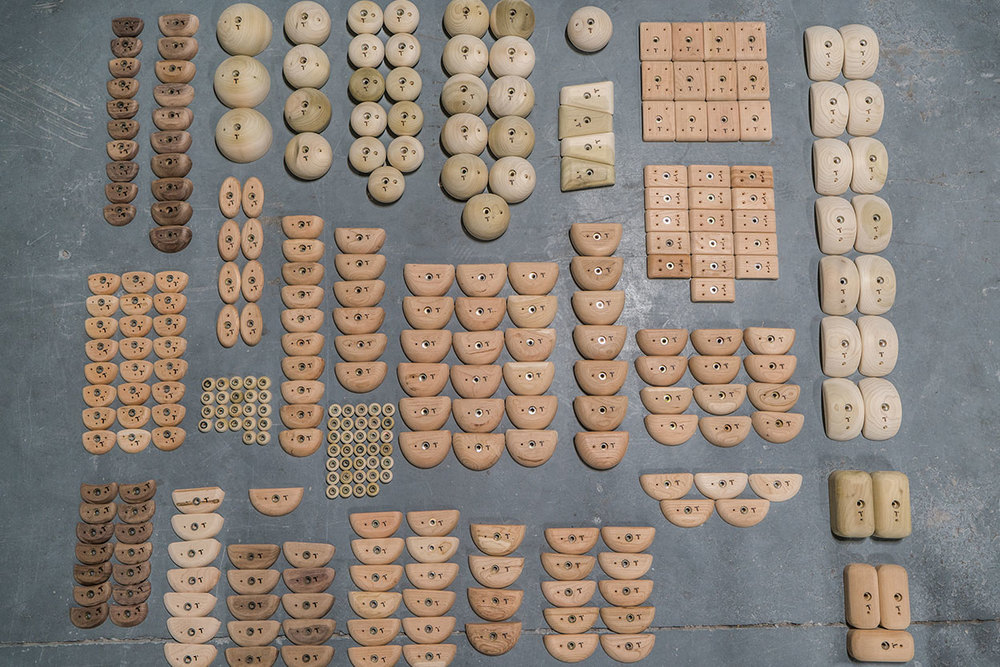 If I wanted that many of the same holds, I'd have just built a campus board. |
|
|
A lack of variety is maybe a downside to the Tension Board, but it isn't inherently a downside to symmetrical boards. Two of the same holds isn't some massive loss. On the Tension Board, I'd argue that the duplication isn't as bad as you're saying. Sure, the holds are shaped the same, but if a hold is facing down on an angle versus straight up, I'd argue that affects how it's used enough that it's effectively a different hold. What holds would you add anyway? Sharp holds like on the Moon Board aren't a benefit. |
|
|
blakeherringtonwrote: I’m not sure if Blake’s number includes shipping but I remember moon board shipping was like $350. Others have given great insight to training, but I would say pragmatically the moon board is the best for climbing outside. If you make a splash board in between the holds or on another wall I think that would be the most ideal setup. |
|
|
Princess Puppy Lovrwrote: I'm assuming "splash" board is the same as a spray wall? Btw Each of the MB sets go at about $350 before shipping and the oG hold sets are upper $100's. They're all togeather (set A,B , OG) under 1k all together. |
|
|
rebootwrote: I see what you're saying but I second davids point... Most holds we encounter even outside are similar and are just placed in various angels. Quite honestly I don't think there is a (and I know this is subjective) huge range of holds. Rather there are many variations of basic categories of holds. For hands :crimps, slopers, jugs, pinch, one could argue undercling holds and maybe a few others but still, I would say the general categories sum to be between 6-12 categories. Feet have even less variation in my estimation... |
|
|
David Kwrote: First, thank you, I believe this is very helpful. Second, call me an idiot all you want but I'm just some chimp trying to build a wall to fall off of lol for clarification, am I supposed to take the answer here and multiply by 10 hypotenuse? This should give me the height from ground to top of the triangle.... correct? 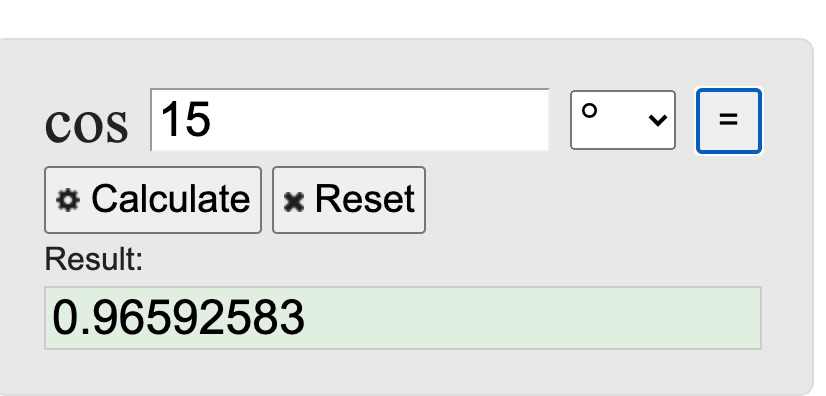 |

|
Cris Garciawrote: Correct. And then you add the height of the kickboard you are using, if any. And then, of course, leave the fudge factor for uneven floor/ceiling. |
|
|
We built a Tension board in our garden shed two winters ago and hit it hard when gyms closed for COVID. Really, we love it and the only thing getting old is me, not the board. To keep costs manageable, we started with only one of the three hold sets and added another set when we could (still haven't bought the third set!). If you want, you can approximate some of the Tension holds with any plastic holds you have lying around -- sure, it means you can't claim legit ascents of the Tension problems that use those holds, but it's still a great way to get strong. Good luck! |
|
|
Cris Garciawrote: Correct. |
|
|
Just to pile on; I own a Moonboard with the 2019 set. Given space limitations, build simplicity, and cost, it was the right call for me and my 2 partners (it's in a covered, shared outdoor space). There's no denying it's a great training tool. However, now that I'm more intimately familiar with the Moon (50+ sessions so far), I'm able to better distinguish its shortcomings in comparison to the Tension board, which I've probably used a dozen or so times in the past year. Here's why I think the Tension board is better: -Hold density. The full Tension set has -50%- more holds than the Moonboard (~300 vs. ~200). -Way more tiny crimps. The 2019 set has surprisingly few horizontal, hard, four finger crimps. Maybe a dozen or so. The yellow set is predominantly 2-3 finger scallops. I counted 32 of the Tension "small" crimp alone (in addition to all their larger crimps and edges). -Way more large holds. This makes laps/circuits much more feasible, and means there are also actual V1/V2's. -Adjustable angle. Obviously adds may more versatility. -LEDs on the kicker. Allows for much more precision wrt setting. -Dedicated, lit footholds on the main board, plus, a fourth LED color so that any other hold can be designated "foothold-only". Again, way more precision wrt problem setting. -It's wood. Thus, it's easier on the skin. I've never had so many skin issues as I have using the Moonboard in hot and humid conditions this summer. We were hoping the wood Moon holds would be a good relief from the plastic ones, but the ribbing on the plywood actually makes them less comfortable than you'd think. -It's symmetrical. Seems like such a no brainer. Being able to immediately determine strength disparities between right and left sides seems like pretty essential information to have, and literally doubles the number of available problems. The Moonboard is great for building dynamic, explosive strength, and in terms of training that specific skill set, it's tough to beat, especially when integrated into a balanced-training-diet. However, if you're looking for something that does all that and a whole lot more (say, because a global pandemic has reduced your training options to a single board), the Tension just seems like the clear winner. If I ever move, or build a dedicated training shed, it will be what I go with. |
|
|
“Mark Paulson wrote: 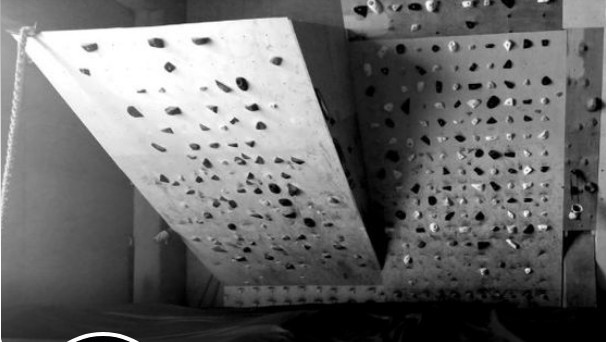 |
|
|
Got a message back from Tension. If anyone else was wondering they're 2-3 months out on their orders, at least for full set orders. |
|
|
Tension being so backed up was another factor in us going with a Moonboard. However, Moon was also backordered on several hold sets, and ultimately split our order into two shipments. The first (white and yellow holds only) shipped after about 5 weeks and only took a few days for delivery. However, the second package shipped after 8 weeks, and inexplicably got stuck in the black-hole that is US Customs for an additional -month-. I then received an additional invoice, post-delivery, from FedEx for $61 in "customs fees" (on top of the original ~$250 in shipping). I responded with a strongly worded letter that I would not be paying. I'm not saying our experience was normal-- just that we went with what we thought would be the more expeditious options and it still took three months. |
|
|
Mark Paulsonwrote: I think customs fees are pretty typical, maybe don't be too mad at Moon Climbing for that. I forget what they were for my holds, but definitely not insignificant. Somewhat related, I received some bike parts form the UK this spring/summer, and they were in the customs black hole for 11 weeks. Seems to be somewhat the luck of the draw. A proper US distribution model would be nice. |
|
|
Ryan Kwrote: There was a Moon distributer here in the US till somewhat recently. Unfortunately Moon UK managed to screw it all up. |
|
|
Ryan Kwrote: Luckily, Tension is based out of Colorado so that shouldn’t be an issue for me! |


