
 Continue with onX Maps
 Sign in with Facebook






Guidehaul
|
|
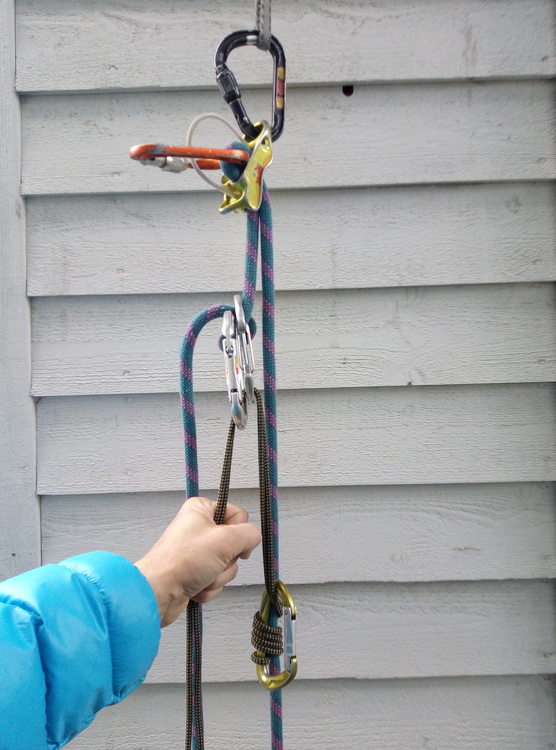 Perhaps the old news but anybody tried this haul system with ATC guide mode to assist the second on hard section? I got idea to this system from one BW hauling topic. |

|
Looks like a 3:1 that requires twice as much resetting than the typical setup. You're pulling down instead of up, but I don't think that's a huge benefit. |

|
Adam summed it up. No reason to use this And if I had to assist for a short section, I would prefer to pull up rather than down using the simpler z. |
|
|
John Bigroomwrote: I like it, especially the fact that the belayer does not have to pull - they can stand into the loop tied to that cord - make gravity work in a good way. Perhaps it is more resetting, but, less physical effort moar better! |
|
|
amariuswrote: No reason you can't redirect a typical 3:1 and use your body. You may lose a tiny bit of efficiency, but if you're hauling using a plate you clearly don't care about minimizing friction. |
|
|
Thank you for the comments. Because of the reseting, in picture I use a 'biner lock' on break hand side and 'prusik jumar' on live rope side. Those are pretty fast to reset. |
|
|
amariuswrote: Using your bodyweight is indeed efficient, but you're limited by that i.e. you can't generate more lb of pull than what you weigh. (Actually a lot less due to friction) Most strong climbers can pull up harder than they can pull down. |
|
|
John Bigroomwrote: John, where are you from? I've never heard those terms used for those techniques, but I like learning other areas' terminology. I've only heard them referred to as a Bachmann's hitch and a garda hitch/alpine clutch throughout the United States. |
|
|
Adam Flemingwrote: The hauling was a bit bad wording. I meant the case when your belaying second with ATC guide mode and you need to assist the second a lot, not too far away from hauling. Been few times there and next time I will use this system to give extra Omph. |
|
|
Adam Flemingwrote: Adam, I'm from Finland. I didn't remember those names. Yes, Bachmann's hitch and a garda hitch/alpine clutch. Now I know. Thanks. |
|
|
Hi. You have the line through the reverso under tension during the haul stroke. The friction in guide mode is very high indeed, so you would be much better doing a 2 to 1 with a separate cord or sling. The reverso then only plays the role of a locking clutch, not a pulley |
|
|
David- agree that the reverso is negating the theoretical 3:1 here, but not sure I’d bother with a separate line. As stated before, you can provide more power and oomph pulling up, and gravity resets the Tibloc like an auto ratchet. Works pretty slick and I can’t think of a faster or easier haul rig to install or dismantle - just adding a biner/Tibloc Of course can use any friction knot, but the Tibloc can auto ratchet back down most of the time. If your second is doing a route at/near their limit , might consider bringing one for that quick assist. |
|
|
This is one of the most unnecessarily complicated things I have ever seen. It takes 5 biners and twice as much resetting...why???? "If I can't look at it for 0.2 seconds and remember it, there exists a simpler, less time consuming solution." -- Edgeskier2017's Law |
|
|
i think by the time you subtract out all of the losses this thing would be more like a 1:1 |
|
|
slimwrote: I made a some test with free hanging 20kg load, Petzl Reverso 4 and old 10,5mm dynamic rope. |
|
|
It is easy enough to sit at home and dream up scenarios that require hauling the second, but their occurrence in the real world is exceptionally rare. Improvised hauling is generally the wrong approach to helping a second. Seconds who aren't incapacitated should be able to help themselves, aided by constant tension from the belay. The belay can keep them from losing ground, but, completely supported by the rope, they should be able to gain ground under their own power, either improvising aid if they can't make moves even though supported by the rope, or prusiking up the rope if that's what it takes. The reason improvised hauling is a bad solution is friction, which can quickly neutralize any theoretical mechanical advantage. As David Coley suggests, using a plaquette in guide mode as a progress-capture device is going to add so much friction to the system that there is little chance of having any mechanical advantage left at all. Yes, various tubular videos and manufacturer instruction sheets show this. One can only surmise that the recommenders never tested their system in real conditions. With the rope running over some rock edges and following a less-than-totally-straight path through protection points, the chances are good that improvised hauling will fail, and using a plaquette as the progress capture device makes everything worse. Friction just at the pulley points cuts massively into the actual mechanical advantage. Various tests seem to agree that carabiners used as pulleys lose about 1/3 of the load to friction, although I've seen numbers as high as 1/2. A standard 3:1 rigged with carabiners, assuming the 1/3 loss at each pulley point, gives you 2.1:1 at best. Redirect it so you can pull down and you're getting 1.4:1. The depicted configuration, rigged with carabiners, gives 1.8:1 at best, so it starts out being a bit less effective than the non-redirected carabiner-rigged 3:1. Put a plaquette into a standard 3:1 and it may "freeze" for the initial part of the stroke until there is enough load to overcome the plaquette friction, giving the hauler about 1.7:1 mechanical advantage to get the stroke started, and not much better after that. If the plaquette freezes in the depicted configuration, you get 0.7:1 "advantage" and would be better off just grabbing the second's rope and pulling. Note that even though you aren't getting the ideal-case mechanical advantage because of system friction, you are still paying the ideal-case stroke price. As ideal-case 3:1 systems, you have to pull 3 units of rope to get one unit of raise, and that's before any loss you get from "sag" in your progress-capture method. |
|
|
Yeah, I think the only way this system would work in practice would be with a mini-traction type device in place of the plaquette. |
|
|
I've helped a struggling second reach a hold with a 1:1 using a long sling clipped to my harness and pushing off the wall 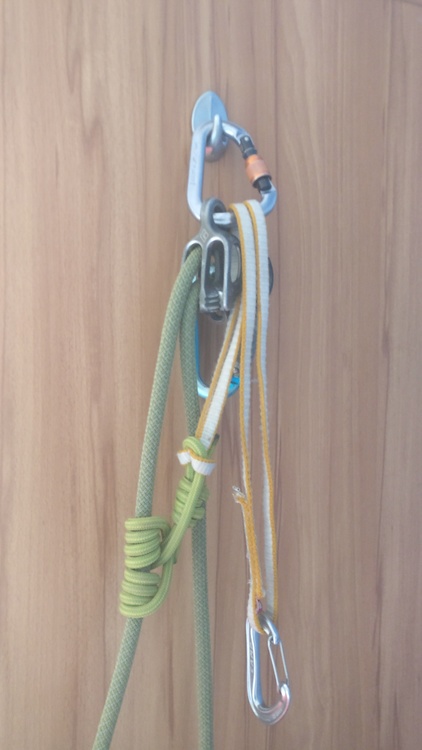 |
|
|
I think we agree here rgold, except on the usefulness. I think it happens more often than you might think when you have mismatched partners and are on something at or beyond the seconds capability in places. (Sometimes necessary to keep both partners happy domestically if you know what I mean). As I frequently use the Reverso in guide mode as shown under such circumstances, it is relatively trivial to clip the brake side rope to the climber’s rope with a Tibloc and pull up to give an almost 1.7:1 assist (measured). Now that may seem trivial, but hauling approx 75 lbs is easier than 130 lbs. and the Tibloc self-resets...So all I do is a few short ratchet hauls to get her past a tricky section. With the Tibloc in this scenario you can leave it in place for future use if anticipated as it just allows the climbers rope to glide up and through as the climb continues as normal. Those who find it un-useful obviously aren’t forcing others to push their envelopes. ;) |
|
|
in over 30 years of doing a lot of different climbing all over the place, i have never had to haul a partner. maybe give a "supportive belay", but never a full on haul. the thing with the 1.7 to 1 is you have to lift up 75 lbs. which can be a bitch if you don't have a good stance. if you belay with a redirect you can just sit and let gravity do the work. |
|
|
75 pounds is nothing for a few feet to clear a roof or get em to an ice stance. Especially if you curl these bad boys. 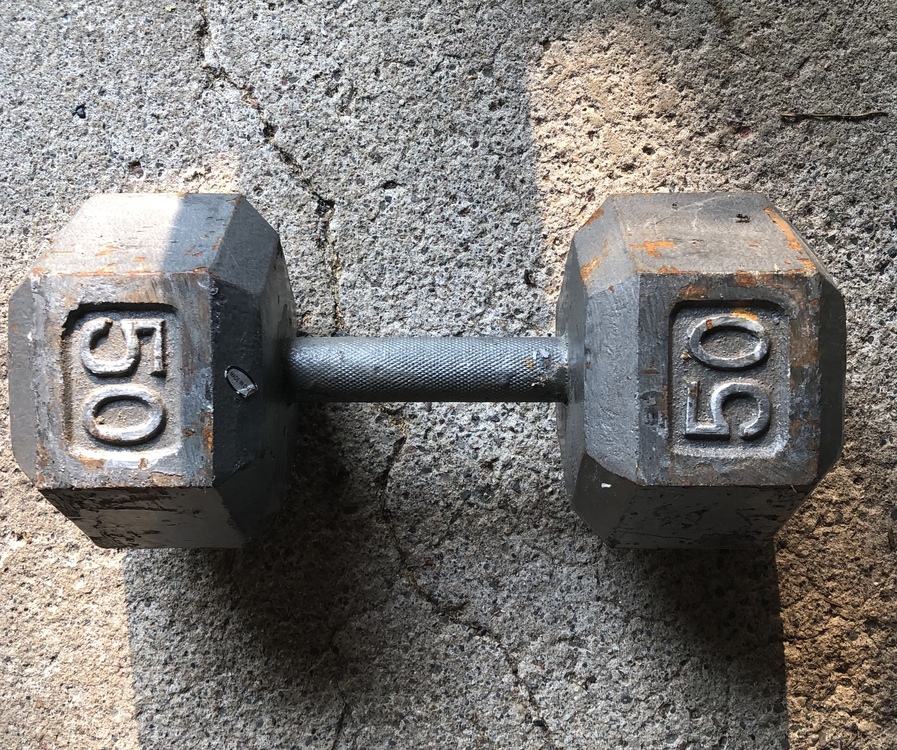 Have had to do it at least 4 times in last 15 years. Just need a good anchor. One hand on anchor, one yarding up. Not hauling up El Cap |


