Continue with onX Maps
 Sign in with Facebook






The Girth Hitch Master Point


|
|
curt86irocwrote: As soon as Sticht plates came out everybody I climbed with got rid of their eights, and switched to the plates or tubers. The only people that still use eights are hi-angle rescue, and not many of them. They had their day in the sun, and are surpassed by grigris and ATC's. Mine was accidentally dropped down the wide crack on Danger High Voltage. |
|
|
curt86irocwrote: And sometimes I put my suspenders inside my pants so they don't interfere with the belt. |


|
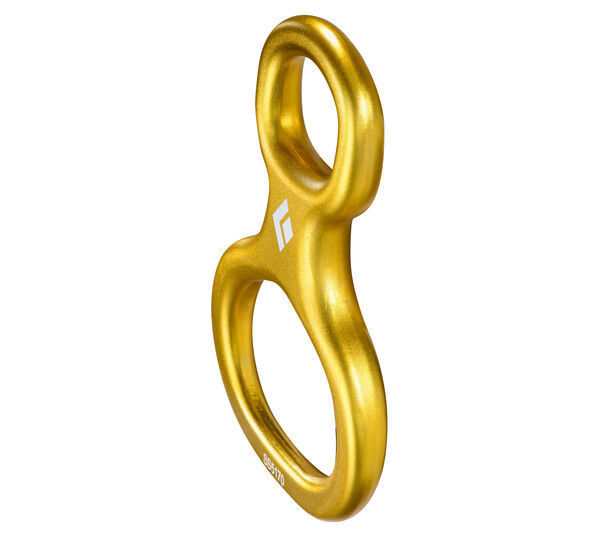
Climbers have ditched the eights for their insufficient braking power, although there are mini/micro eights that would probably work. On the other hand, a lot of canyoneering folks use |
|
|
I wore a groove in the small end of an smc 8 belaying and had to retire it. Never noticed a difference from an ATC. Very similar to the link of chain I used before that and much better than a stitch plate for ease of use. The BD ones have more of a square hole, perhaps that reduces holding power. |
|
|
Buck Riowrote: which is exactly what i use mine for. rescue 8s are NFPA rated and accept a wide range of rope diameters. they still have their place since they are much lighter than a lot of the mechanical devices out there and have higher load ratings (compared to rigs, d4's etc.). |
|
|
How to use a figure eight for the the belay as a plate. 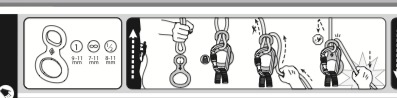 |
|
|
Gloweringwrote: If you belay with a grigri the 8 is a backup belay device and allows double rope raps. Great idea. As a backup, why not simply use a double rope Munter hitch? |
|
|
Joseph Brodywrote: I recommend you go and test this out on a short rappel close to the ground and see if you like it. Generally speaking the Munter will introduce an incredibly annoying amount of twists in the break strand and make the break strand hard to handle. Learning to do a biner-break rappel would probably be preferred as it is a much smoother experience and you only need biners which you should already have with you. |
|
|
Mikey Schaeferwrote: Thanks for the advice, I will tried the diner- break. I have actually already tried the double rope Munter hitch rappels. Yes, it twists the rope and I was expecting it. The Figure-8 device twists the rope also, so is it not as bad as the Munter? |
|
|
Mikey Schaeferwrote: I second this. You'll likely always have three biners unless literally everything has gone wrong. The Munter creates twists terribly similar to new rope twists. |
|
|
Mikey Schaeferwrote: Remember that everyone used a biner brake for rappelling BITD. It is smooth and controllable and the level of friction can be adjusted by adding crosspiece carabiners (we usually used two but I've used three for a single strand). Nowadays, with, say, thin twin ropes, three might be called for, which means five carabiners all told. Another way to add friction is to use D-shaped carabiners for the initial pair and face the narrow ends forward. There's nothing at all sketchy about carabiner brake rappels. Learn to set them up, practice, and figure out how many cross-pieces is optimal for you in safe circumstances rather than by hoping for on-the-job learning to go well.... I think gloves are a good idea for all ropework, but for carabiner brake rappels full-fingered gloves are especially helpful because the carabiners can get really hot and dismantling the brake configuration requires grasping hot metal. Speaking of dismantling, it is tempting if the rappel is fulll-length to just pull the remaining rope out the carabiner brake. This will completely detach all your cross pieces which will, with the bad luck attendant to such things, fall to the base of the cliff never to be found again. So make a habit of dismantling the carabiner brake by reversing the assembly steps, or else make damn sure you're holding onto the cross pieces when you pull the rope ends through. |
|
|
Had to use this today when making an unplanned anchor and the only option was a bundle of small shrubs. Was glad to have read through this thread because I didn't have enough material to tie a knot. |
|
|
Mikey Schaeferwrote: munters don't twist ropes as much as people think. i used it this past weekend and it was fine... |
|
|
Ironically, the ropelab link says, "The standard Munter Hitch certainly twists the host rope. This will vary with subtle changes in hand position but it is unavoidable. For this reason it is generally not the first choice for those wishing to descend or belay." |
|
|
rgoldwrote: Ironically, the ropelab link says, "The standard Munter Hitch certainly twists the host rope. This will vary with subtle changes in hand position but it is unavoidable. For this reason it is generally not the first choice for those wishing to descend or belay." agree on both points, but again the rope twist isn't bad... |
|
|
I used a Munter for belaying for a year or two. It doesn't twist the rope if it isn't loaded. Once it is loaded, how much twisting seems to depend on the rope, the carabiner, and the angle of the brake strand, This in the context that every device causes some twisting as far as I can tell. I think carabiner brakes caused the least. |
|
|
rgoldwrote: Any reason to think a half hitch doesn't secure the mule? I know an overhand is standard. |
|
|
Yesterday, I lent my ATC devise to my climbing partner to repel 35ft to the base of a climb. I tried used a Munter hitch and at that distance rope twist would not be noticed unless you were looking for it. |
|
|
j wwrote: What is standard is a slipped overhand. A single half hitch just isn't secure enough; you'd typically use two half-htiches if you were going that route. The advantage of the slipped overhand, or "mule," is that you can pop it loose and lower with the Munter even when the system is under load. With two half-hitches you're trying to untie the knot under tension and simultaneously control the resulting release of slack---good potential for losing control. |
|
|
rgoldwrote: The ropelab picture of the mule tie off has the slipped overhand. What is wrong with his picture? I see a munter, the standard slipped overhand mule, and a half hitch to secure it. I originally thought you were saying that the half hitch was wrong. 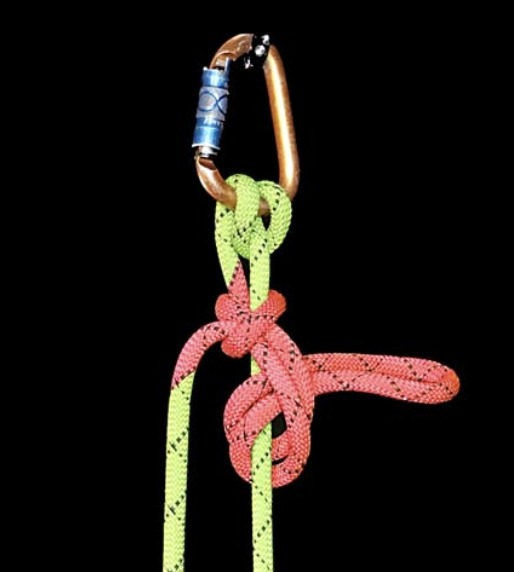 |