|
|
Short Fall Sean
·
Apr 27, 2020
·
Bishop, CA
· Joined Sep 2012
· Points: 7
Mark Pilate wrote:
Seems to be a curious dichotomy in your views. So if I stay home, or generally follow guidelines to avoid “it being on me” , then I’m a mockingbird easily herded by wolves?
Yet apparently you think the “wolves” have been putting out good info though. So what type of bird are you?
I’ve noticed one thing that has increased in correlation with Covid19 — the amount of stupid shit that people come up with All I know is that a wolf that could herd birds would be one agile motherfucker.
|
|
|
Salamanizer Ski
 ·
Apr 27, 2020
·
Off the Grid…
· Joined Sep 2005
· Points: 23,789
·
Apr 27, 2020
·
Off the Grid…
· Joined Sep 2005
· Points: 23,789
Mark Pilate wrote:
Seems to be a curious dichotomy in your views. So if I stay home, or generally follow guidelines to avoid “it being on me” , then I’m a mockingbird easily herded by wolves?
Yet apparently you think the “wolves” have been putting out good info though. So what type of bird are you?
I’ve noticed one thing that has increased in correlation with Covid19 — the amount of stupid shit that people come up with Not what I said or meant. Giving general guidelines as to how one can minimize risk is totally different than attempting to force someone to do so. Following simple procedures to minimize your own risk in a state of elevated risk is a good idea, but ultimately your personal choice. So minimizing travel, avoiding crowds and more frequently washing your hands isn’t good general guidelines? I suppose running around mimicking the half paranoid, feel good opinions of the people in your preferred bubble to slow your eventual exposure to the virus, while simultaneously tanking the economy and creating expanding government dependence is the best approach. Guess we know what kind of bird you are. I’d prefer to be a free bird, and make my own decisions, good or not. Your last statement I’d suggest you do a bit of self reflection upon.
|
|
|
Mark Starr
·
Apr 27, 2020
·
Wandering
· Joined Jun 2017
· Points: 305
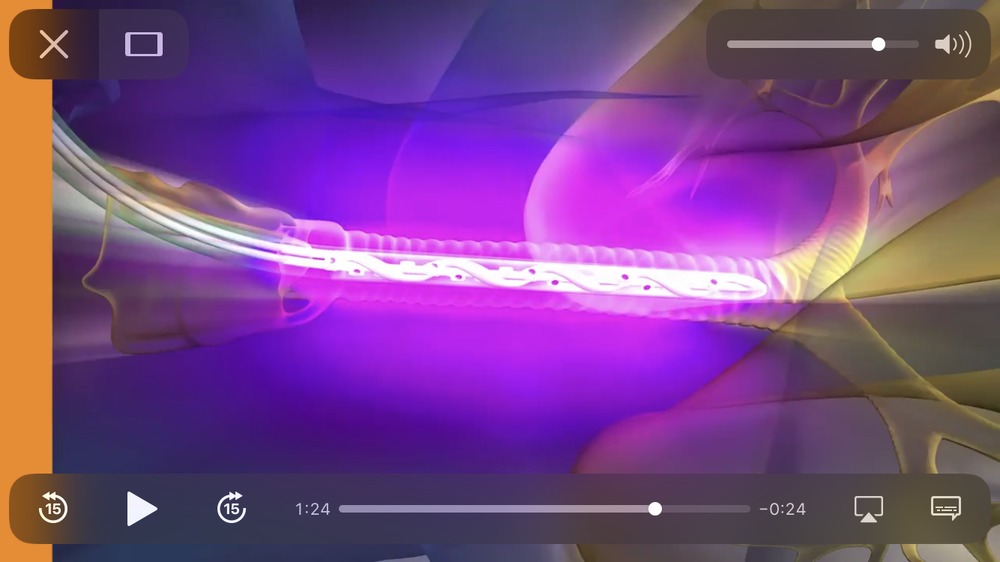
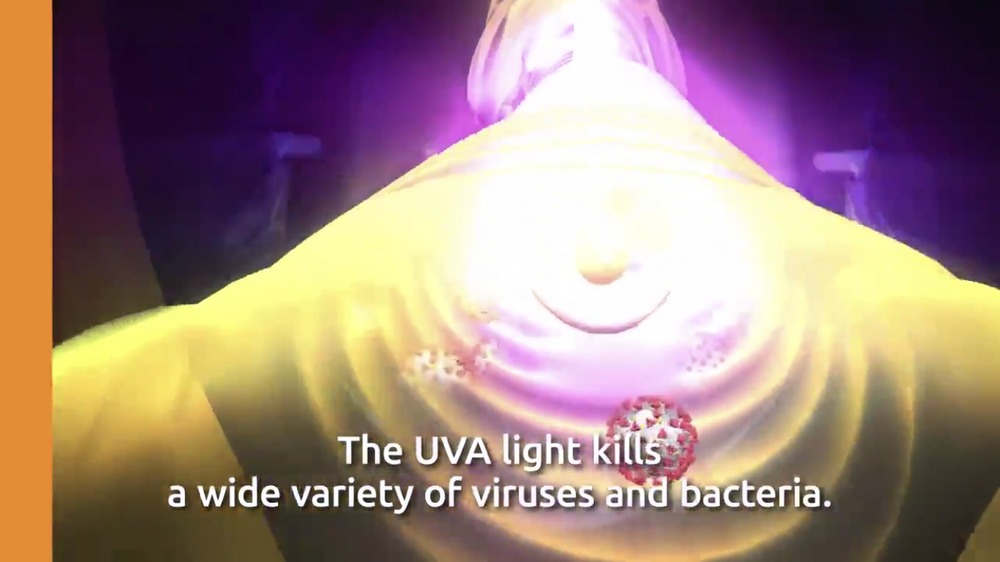
Hmm... Sunlight kills the virus...
MaYbe thEreS a WaY to sHinE It oN tHe b0dY, oR mayBE iN the BodY? SciEntiSts sHoulD looK iNto THat.
|
|
|
Marc801 C
·
Apr 27, 2020
·
Sandy, Utah
· Joined Feb 2014
· Points: 65
Salamanizer suchoski wrote: Not what I said or meant. Giving general guidelines as to how one can minimize risk is totally different than attempting to force someone to do so. Following simple procedures to minimize your own risk in a state of elevated risk is a good idea, but ultimately your personal choice. So minimizing travel, avoiding crowds and more frequently washing your hands isn’t good general guidelines? I suppose running around mimicking the half paranoid, feel good opinions of the people in your preferred bubble to slow your eventual exposure to the virus, while simultaneously tanking the economy and creating expanding government dependence is the best approach. Guess we know what kind of bird you are. I’d prefer to be a free bird, and make my own decisions, good or not. So you, too, are misunderstanding the reason for the mitigation efforts: they are not to slow your eventual exposure or to prevent you from getting it; they are there to prevent all of us from getting it at once so that we don't impact healthcare to the point of collapse.
|
|
|
Dales DeadBug
·
Apr 27, 2020
·
Unknown Hometown
· Joined Jun 2019
· Points: 1,643
Mark Starr wrote: Hmm... Sunlight kills the virus...
MaYbe thEreS a WaY to sHinE It oN tHe b0dY, oR mayBE iN the BodY? SciEntiSts sHoulD looK iNto THat. Make sure to drink that bleach martini everyone!
|
|
|
Salamanizer Ski
·
Apr 27, 2020
·
Off the Grid…
· Joined Sep 2005
· Points: 23,789
Marc801 C wrote: So you, too, are misunderstanding the reason for the mitigation efforts: they are not to slow your eventual exposure or to prevent you from getting it; they are there to prevent all of us from getting it at once so that we don't impact healthcare to the point of collapse. Not misunderstanding that point at all. Is slowing your eventual exposure not contributing to slowing the rate of exposure for all and preventing all of us from getting it all at once? Kinda the same thing don’t you think?
|
|
|
Ted Pinson
·
Apr 27, 2020
·
Chicago, IL
· Joined Jul 2014
· Points: 252
John Byrnes wrote: Isn't it absurd that things that were known long ago are suddenly "New" and a new study must be done? The fact that viruses, any virus, can't survive in direct sunlight has been known for at least 70 years. Hell, I posted the same thing a month ago and was shouted down by a bunch of uninformed paranoids who listen to the all the Media hype.
Similarly, injecting the blood or blood serum from people who have recovered into sick people in order to use the specific anti-bodies has been understood since the 19th Century, yet NBC reported it as a "new treatment" a week and a half ago. The fact that recovered people are immune (that's what "recovered" means, duh) and are not gonna get Covid-19 in the Fall, just like every other virus. That Corona virus causes toilet paper shortages... it just goes on and on.
"might be"? IS safe to climb on. There could have been people on ventilators climbing all over it, and by the time you got roped-up, it'd be fine.
One thing to be aware of is that viruses mutate. So while you’re absolutely correct that most of the time when a person gets sick they will be immune to further infections of the same disease, this does NOT mean they will be immune to future mutations of it. This is why you have to get a new flu shot every year and why people are concerned about a possible resurgence in the fall. Most models suggest that the virus will mutate much slower than something like the flu (hence why SARS didn’t come back for a few decades) but it’s possible it could be quicker.
|
|
|
Joe Prescott
·
Apr 27, 2020
·
Berlin Germany
· Joined Apr 2013
· Points: 6
John Byrnes wrote: Got any OUTDOOR, Open Air high-containment labs? Applying indoor parameters and results to an outdoor environment is disingenuous. Very similar to gym-gumbies going outside and expecting they can climb the same grade.
DUH! Which words do you not understand in the phrase "direct sunlight"?
Yup. Controlled environment with an artificial source. Why doncha just have someone infected with Corona cough onto a granite wall? In direct sunlight with a 10mph wind at 70F?
Nonsense. The sun MOVES so the angle of incidence changes and get into just about every crevice. Wind MOVES dust particles and dries out aerosols and the virus covering. Rain washes dust and other contaminants off the rock.
Fine. Here in Colorado and throughout the West, many of the climbing areas are at altitude where you need to be more concerned about skin cancer than viruses. Today will be 80F, about 25% humidity and the UV at 6000ft will be enough, without protection, to sunburn you beyond recognition. So what's your analysis?
I agree with this: catching it from a person is a risk. Catching it from the rock is probably as likely as being hit by a meteorite.
Hysteria. I forgot how uncommon common sense is. Novel Corona Virus 2019 is a member of a common virus family, including the common cold. It's not any different from any other virus. It's not Super-Virus with a stylized "S" on its chest. It's susceptible to the same things that kill/deactivate other viruses: Soap, detergents, alchohol, UV, air (dry-out) and the immune system. Healthy people should use caution and not get their first exposure to a large amount of the virus at one time (eg. in a hospital, someone coughing on you) but I haven't seen any Covid wards at the crag. It's also highly unlikely that a sick person is gonna be out there climbing.
The fact that the world population is the most unhealthy it has ever been is the root problem. With 70% of the U.S. population being over weight, 40% being obese, 20% being smokers*, and all the co-morbidity factors that go with that (heart disease, COPD, diabetes, malnutrition, etc.), they are killing themselves a little bit every day anyway. Any added stress puts them in the hospital and many die. If you are surprised by this, well, you haven't been paying attention.
* cdc.gov/nchs/fastats/obesit…
Wow. You seem pretty primed - for something... If you have time, you might want to read some actual science. Not being a jerk, you really might find some of it interesting and might cahnge some of your notions and generalizations. Hard to do science in an uncontrolled environment... And yes, I have done some of this outside, as a PhD student in NM. There, we constructed an outdoor BSL4 (so yes, done some experiments in an outdoor open-air lab) so we could work on Sin Nombre virus at the Sevilleta Nat Wildlife Refuge in Socorro (pubmed search 'Hjelle Sin Nombre virus), so I'm not just an indoor scientist... I'm trad. Sunlight/UV has highly variable efficacy for killing viruses, even when you just look at enveloped viruses. Viruses are vastly different in many ways, even closely related viruses. There are very few surfaces that would be exposed to direct sunlight at the scale of a virus particle. Chalk/dust, angle, rough surface. Even finely-grained sandpaper would likely block a lot of the radiation. This is so drastic, that pretty much all scientists have stopped using UVC (254nm) lamps that come installed in our biosafety cabinets, meant for decon, because there are so many places, even in a smooth stainless steel box for viruses to 'hide.'
The earth MOVES, not the sun, but it is all relative...
I've had sunburns too. And colds. And lived in CO. Not sure what you are getting at...
You would be amazed at what might not kill a virus. And you have to test it experimentally, not just assume. Example - we were taking 'inactivated Ebola' out of the lab for years, using a very standard and widely used commercial lysis buffer for extracting RNA from viruses, that kills cells on contact (cool to watch under a microscope). Turns out, if you have a good assay, you can detect some live ebola virus that survives this treatment and we had to modify our protocol. Luckly, after we take 'killed viruses' out of the lab, we still use a moderate level of precautions. Ebola isn't one of the tougher viruses to kill, either. You can't just assume (well, maybe YOU can?).
As I said, virus on the rock isn't the biggest concern (and sunlight has little to do with it). I'm not telling anyone they should or should not climb. For the most art, I agree with Lena above, although fomite transmission might be a bit easier than she conveys and is very common even on dried surfaces (Flu, colds, etc). FWIW, we did OUTDOOR experiments looking at fomite transmission (put an infected deer mouse in a nest box for a few days, replace with a naive animal after a time gap) and there is transmission. Same with Nipah virus in a lab. Is is not unfathomable at all to transfer any enveloped virus from a rock surface. Someone shedding any virus sneezes near a hold on one of your Front Range routes where you basically queue up for popular routes. Then someone climbs it 10-20 minutes later and grabs a hold, itches their eye, puts the rope in their mouth, eats... Unlikely, but I'd take my chances with the meteor.
I'm just trying to educate on the scientific aspects, and to correct untrue statements - I should know better here (although there have been some decent virus discussion) but I get sucked in some times.
Joe
|
|
|
Joe Prescott
·
Apr 27, 2020
·
Berlin Germany
· Joined Apr 2013
· Points: 6
Ted Pinson wrote: One thing to be aware of is that viruses mutate. So while you’re absolutely correct that most of the time when a person gets sick they will be immune to further infections of the same disease, this does NOT mean they will be immune to future mutations of it. This is why you have to get a new flu shot every year and why people are concerned about a possible resurgence in the fall. Most models suggest that the virus will mutate much slower than something like the flu (hence why SARS didn’t come back for a few decades) but it’s possible it could be quicker. Mutation is one example. For many coronaviruses, the problem is that immunity wanes pretty quickly, and re-infection occurs even in the absence of mutations. This is probably because these viruses induce poor memory B cell responses because thy don't elicit good dendritic cell or T helper cell responses. You can be re-infected with OC43 CoV, which is one of the coronaviruses that is closest to SARS-CoV2 at the amino acid level, every year. Even in the presence of detectible antibodies. Mutation in the stalk region of the spike protein is a worriesome problem too.
|
|
|
phylp phylp
·
Apr 27, 2020
·
Upland
· Joined May 2015
· Points: 1,142
I appreciate Lina Chita and Joe Prescott chiming in with their scientific opinions. As a former scientist myself, I've also been mulling over this issue of coronavirus stability on exterior, and esp. rock surfaces. I'd been interested in your ideas about the way I'm thinking about this (and of course any other scientists who are reading, especially formulation chemists, who have so much experience in areas like this).
I should probably say that my doctorate was in biochemistry with a microbiology minor but that my research career was in molecular and cellular biology, most gene regulation and expression. As such I am not a virus expert, I just used them a lot as vectors for cloning and expression.
So my experience as a scientist is the most biological reagents are pretty fragile and are either denatured or degraded in a fairly short time frame when not in a ph-buffered, salt-balanced solution, unless of course they are lyophilized. Unlike a yeast which can form spores or a bacterium which encapsulates, this is a very simple molecule - RNA, glycoprotein coat, lipid envelope. So just by drying out I feel like the viral titre is going to decrease rapidly. This excludes cases where virus stability is protected by being in an amorphous solid, much like HIV stability is increased in a dried blood. So I don't know if climbing chalk will provide a protective amorphous solid or will inactivate the virus (mechanical/ionic degradation).
I'm also thinking that viral titre would decrease rapidly on rock surfaces, and not because of temperature/heat or UV exposure, but because of mechanical (mineral/ion) or enzymatic degradation (surface flora).
Mechanical degradation:
It's already known that copper rapidly inactivates this virus. I don't know the mechanism - is it a denaturant? Zinc is now understood to help inhibit viral adhesion and thus cell infection. Whereas the virus is more stable on inert and non-chemically reactive substrates like stainless steel and plastic. We know the virus doesn't last long on cardboard and paper - I suspect that is a low pH phenomenon? What's the pH of a rock surface? So I'm feeling like rock will, just in general, be more of a inherently inactivating surface. (As opposed to plastic gym holds.)
Enzymatic degradation:
Anybody who's extracted and purified as much single stranded RNA as I have can tell you that it's the hardest thing to keep intact. There are RNAses everywhere. So if the coat gets breached, this virus is going down. I'm imagining exoenzymes from bacteria and molds in the natural environment will degrade the virus protein and lipid coat. I picture a non-nitrate preserved slice of bologna sitting out on the counter.
So bottom line, I'm really not worried about getting infected from residual virus which is sitting on rock per se. Having said that, I will be climbing with my non-household partners and until a good vaccine comes available, I intend to wear a mask outside. Sharing a car and a belay with someone is far more of a concern to me than a rock surface. And of course I will continue to practice good hand to face hygiene, because rock has all kinds of crap sitting on it.
Lena, Joe and other scientists, let me know what you think.
|
|
|
phylp phylp
·
Apr 27, 2020
·
Upland
· Joined May 2015
· Points: 1,142
Joe, you were writing a post as I was writing, so you have already addressed some things...
|
|
|
Joe Prescott
·
Apr 27, 2020
·
Berlin Germany
· Joined Apr 2013
· Points: 6
Hi phylp,
No time to write much tonight. I actually though of starting a COVID19 science thread, which might lead to good discussion, but might not.
A few things to ponder real quick. Even similarly sized enveloped viruses react very differently to inactivation (chemical, heat, humidity, pH, etc). One thought is that the envelopes are comprised of different lipids, carbs, proteins, etc, depending on the mechanisms of budding. For example, the composition of lipid rafts, maybe. Bedding through golgi, etc.
Good examples of a related phenomenon - you can take genetically identical cloned viruses, budding from 2 different cell types (human vs insect or other), and their infectivity and pathogenicity greatly differs. It's not understood why/how.
RNA - Actually, in some ways, RNA can be more stable than thought. I was shocked at the results of one of my own experiments a few years ago. I swabbed monkeys that were euthanized after developing ebola virus disease. The carcasses were kept in an environmental chamber to mimic hot/humid West African conditions. I could detect RNA for 11 weeks (then I gave up) from pretty much every surface, including internal organs (by qRT-PCR). Even infectious virus was detected after more than a week. Pubmed my name + ebola to find the paper.
I really don't know that much about rock chemistry, other than the basics. I wouldn't at all be surprised of there is some sort of reaction that decreases virus titer faster than plastics, etc. One of the difficulties with paper, carrdboard, etc, might be getting the virus out of the medium, which of course would also limit the ability of transmission. We usually soak the paper in medium and centrifuge to spin down the material and take the supernatants for titration. Would be much harder to pick it up on a porous surface on say, your hands.
joe
|
|
|
Joe Prescott
·
Apr 27, 2020
·
Berlin Germany
· Joined Apr 2013
· Points: 6
Moe Lester wrote: this thread is starting to make me feel dumb. So many nerds If only I climbed a much as I scienced...
|
|
|
Aerili
·
Apr 27, 2020
·
Los Alamos, NM
· Joined Mar 2007
· Points: 1,875
Joe Prescott, thanks for the information. Some of us definitely appreciate it.
The people who say definitive and highly simple stuff like "there's no way in hell you can get it from xyz, for sure xyz kills it, your odds of getting it are so low as to be xyz"-- particularly when "it" is new in the human popluation and hardly studied by actual experts who do this as their life's work-- are signaling that they understand science the least of anybody and should be ignored the most.
|
|
|
Alejandro T
·
Apr 27, 2020
·
Portland
· Joined May 2017
· Points: 0
John Byrnes wrote: Got any OUTDOOR, Open Air high-containment labs? Applying indoor parameters and results to an outdoor environment is disingenuous. Very similar to gym-gumbies going outside and expecting they can climb the same grade.
DUH! Which words do you not understand in the phrase "direct sunlight"?
Yup. Controlled environment with an artificial source. Why doncha just have someone infected with Corona cough onto a granite wall? In direct sunlight with a 10mph wind at 70F?
Nonsense. The sun MOVES so the angle of incidence changes and get into just about every crevice. Wind MOVES dust particles and dries out aerosols and the virus covering. Rain washes dust and other contaminants off the rock.
Fine. Here in Colorado and throughout the West, many of the climbing areas are at altitude where you need to be more concerned about skin cancer than viruses. Today will be 80F, about 25% humidity and the UV at 6000ft will be enough, without protection, to sunburn you beyond recognition. So what's your analysis?
I agree with this: catching it from a person is a risk. Catching it from the rock is probably as likely as being hit by a meteorite.
Hysteria. I forgot how uncommon common sense is. Novel Corona Virus 2019 is a member of a common virus family, including the common cold. It's not any different from any other virus. It's not Super-Virus with a stylized "S" on its chest. It's susceptible to the same things that kill/deactivate other viruses: Soap, detergents, alchohol, UV, air (dry-out) and the immune system. Healthy people should use caution and not get their first exposure to a large amount of the virus at one time (eg. in a hospital, someone coughing on you) but I haven't seen any Covid wards at the crag. It's also highly unlikely that a sick person is gonna be out there climbing.
The fact that the world population is the most unhealthy it has ever been is the root problem. With 70% of the U.S. population being over weight, 40% being obese, 20% being smokers*, and all the co-morbidity factors that go with that (heart disease, COPD, diabetes, malnutrition, etc.), they are killing themselves a little bit every day anyway. Any added stress puts them in the hospital and many die. If you are surprised by this, well, you haven't been paying attention.
* cdc.gov/nchs/fastats/obesit…
Joe Prescott gave an excellent answer to all of this (thank you Joe). I'm just curious about one thing: why do you think you have more knowledge about this than people who have been studying viruses for years? It's not really something you can figure out using "common sense".
|
|
|
phylp phylp
·
Apr 27, 2020
·
Upland
· Joined May 2015
· Points: 1,142
Joe, wonderful and interesting info! I will look up your paper later today. And thanks - it’s great to hear the ideas of a virus expert.
|
|
|
Franck Vee
·
Apr 27, 2020
·
Unknown Hometown
· Joined Apr 2017
· Points: 260
Joe Prescott wrote: Wow. You seem pretty primed - for something... If you have time, you might want to read some actual science. Not being a jerk, you really might find some of it interesting and might cahnge some of your notions and generalizations. Hard to do science in an uncontrolled environment... And yes, I have done some of this outside, as a PhD student in NM. There, we constructed an outdoor BSL4 (so yes, done some experiments in an outdoor open-air lab) so we could work on Sin Nombre virus at the Sevilleta Nat Wildlife Refuge in Socorro (pubmed search 'Hjelle Sin Nombre virus), so I'm not just an indoor scientist... I'm trad. Sunlight/UV has highly variable efficacy for killing viruses, even when you just look at enveloped viruses. Viruses are vastly different in many ways, even closely related viruses. There are very few surfaces that would be exposed to direct sunlight at the scale of a virus particle. Chalk/dust, angle, rough surface. Even finely-grained sandpaper would likely block a lot of the radiation. This is so drastic, that pretty much all scientists have stopped using UVC (254nm) lamps that come installed in our biosafety cabinets, meant for decon, because there are so many places, even in a smooth stainless steel box for viruses to 'hide.'
The earth MOVES, not the sun, but it is all relative...
I've had sunburns too. And colds. And lived in CO. Not sure what you are getting at...
You would be amazed at what might not kill a virus. And you have to test it experimentally, not just assume. Example - we were taking 'inactivated Ebola' out of the lab for years, using a very standard and widely used commercial lysis buffer for extracting RNA from viruses, that kills cells on contact (cool to watch under a microscope). Turns out, if you have a good assay, you can detect some live ebola virus that survives this treatment and we had to modify our protocol. Luckly, after we take 'killed viruses' out of the lab, we still use a moderate level of precautions. Ebola isn't one of the tougher viruses to kill, either. You can't just assume (well, maybe YOU can?).
As I said, virus on the rock isn't the biggest concern (and sunlight has little to do with it). I'm not telling anyone they should or should not climb. For the most art, I agree with Lena above, although fomite transmission might be a bit easier than she conveys and is very common even on dried surfaces (Flu, colds, etc). FWIW, we did OUTDOOR experiments looking at fomite transmission (put an infected deer mouse in a nest box for a few days, replace with a naive animal after a time gap) and there is transmission. Same with Nipah virus in a lab. Is is not unfathomable at all to transfer any enveloped virus from a rock surface. Someone shedding any virus sneezes near a hold on one of your Front Range routes where you basically queue up for popular routes. Then someone climbs it 10-20 minutes later and grabs a hold, itches their eye, puts the rope in their mouth, eats... Unlikely, but I'd take my chances with the meteor.
I'm just trying to educate on the scientific aspects, and to correct untrue statements - I should know better here (although there have been some decent virus discussion) but I get sucked in some times.
Joe Very interesting read. Nice to read someone who talks about viruses & surfaces while actually knowing what he's talking about, for change. (Sorry John).
|
|
|
jay steinke
·
Apr 27, 2020
·
Duluth, Mn.
· Joined Aug 2015
· Points: 20
I thought it was two minutes and 17 seconds?
|
|
|
Dales DeadBug
·
Apr 27, 2020
·
Unknown Hometown
· Joined Jun 2019
· Points: 1,643
Joe Prescott wrote: Wow. You seem pretty primed - for something... If you have time, you might want to read some actual science. Not being a jerk, you really might find some of it interesting and might cahnge some of your notions and generalizations. Hard to do science in an uncontrolled environment... And yes, I have done some of this outside, as a PhD student in NM. There, we constructed an outdoor BSL4 (so yes, done some experiments in an outdoor open-air lab) so we could work on Sin Nombre virus at the Sevilleta Nat Wildlife Refuge in Socorro (pubmed search 'Hjelle Sin Nombre virus), so I'm not just an indoor scientist... I'm trad. Sunlight/UV has highly variable efficacy for killing viruses, even when you just look at enveloped viruses. Viruses are vastly different in many ways, even closely related viruses. There are very few surfaces that would be exposed to direct sunlight at the scale of a virus particle. Chalk/dust, angle, rough surface. Even finely-grained sandpaper would likely block a lot of the radiation. This is so drastic, that pretty much all scientists have stopped using UVC (254nm) lamps that come installed in our biosafety cabinets, meant for decon, because there are so many places, even in a smooth stainless steel box for viruses to 'hide.'
The earth MOVES, not the sun, but it is all relative...
I've had sunburns too. And colds. And lived in CO. Not sure what you are getting at...
You would be amazed at what might not kill a virus. And you have to test it experimentally, not just assume. Example - we were taking 'inactivated Ebola' out of the lab for years, using a very standard and widely used commercial lysis buffer for extracting RNA from viruses, that kills cells on contact (cool to watch under a microscope). Turns out, if you have a good assay, you can detect some live ebola virus that survives this treatment and we had to modify our protocol. Luckly, after we take 'killed viruses' out of the lab, we still use a moderate level of precautions. Ebola isn't one of the tougher viruses to kill, either. You can't just assume (well, maybe YOU can?).
As I said, virus on the rock isn't the biggest concern (and sunlight has little to do with it). I'm not telling anyone they should or should not climb. For the most art, I agree with Lena above, although fomite transmission might be a bit easier than she conveys and is very common even on dried surfaces (Flu, colds, etc). FWIW, we did OUTDOOR experiments looking at fomite transmission (put an infected deer mouse in a nest box for a few days, replace with a naive animal after a time gap) and there is transmission. Same with Nipah virus in a lab. Is is not unfathomable at all to transfer any enveloped virus from a rock surface. Someone shedding any virus sneezes near a hold on one of your Front Range routes where you basically queue up for popular routes. Then someone climbs it 10-20 minutes later and grabs a hold, itches their eye, puts the rope in their mouth, eats... Unlikely, but I'd take my chances with the meteor.
I'm just trying to educate on the scientific aspects, and to correct untrue statements - I should know better here (although there have been some decent virus discussion) but I get sucked in some times.
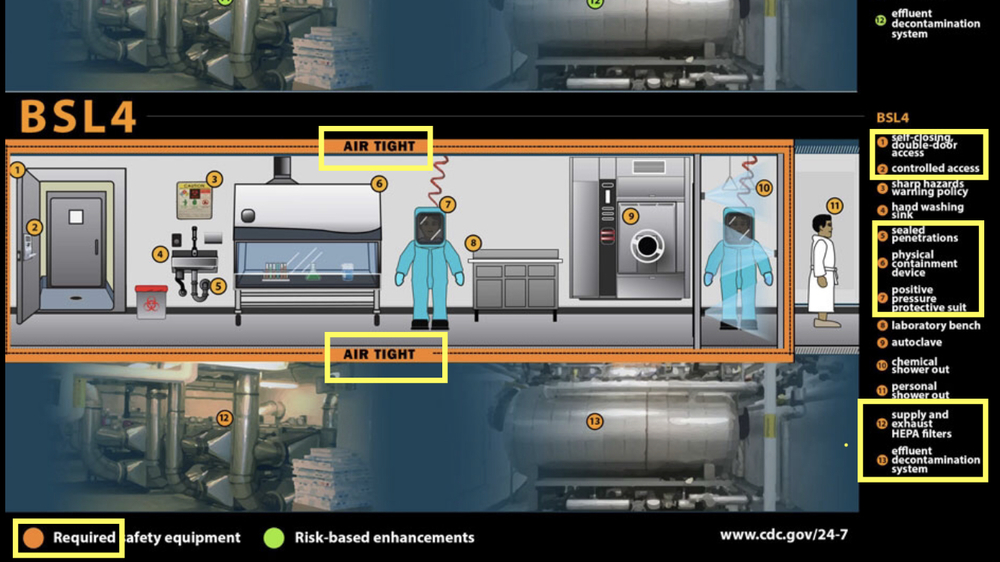
Joe Outdoor BSL4?! Such a place cannot exist while still meeting BSL4 criteria. What part of “AIR TIGHT” do you not understand? You’re either a troll, reckless, or naïve. Plum Island?
|
|
|
Joe Prescott
·
Apr 27, 2020
·
Berlin Germany
· Joined Apr 2013
· Points: 6
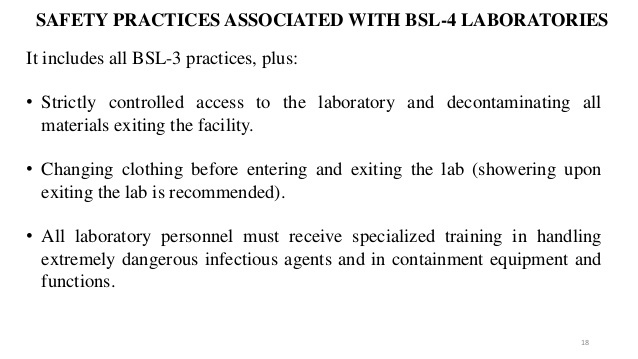
Dales DeadBug wrote: Outdoor BSL4?! Such a place cannot exist while still meeting BSL4 criteria. What part of “AIR TIGHT” do you not understand? You’re either a troll, reckless, or naïve. Plum Island? I'm a group leader (PI) in a BSL4 in Germany, Guest reacher at one in the USA, and spent 8 years as a postdoc/Research Fellow in another in the USA, so I have a fair amount of high-containment experience (11 years BSL4, 18 years BSL3+)... The outdoor BSL4 (not a lab, just a biosafety level) was in the desert on a wildlife preserve in NM. There, we could do experiments with the local fauna, and endemic viruses. We isolated Sin Nombre hantavirus from deer mice, and started a deer mouse colony in our animal lab after quarantine. In the Americas, Sin Nombre virus is a BSL4 agent when introduced into an susceptible animal, but 'only' BSL3+ in cell culture. This is a guideline from the BMBL, which sets safety levels. We call it the Bible. We were able to convince authorities that in the 'natural environment' we should be able to do these BSL4 experiments, using BSL3 safety precautions. We would bring animals to the outdoor enclosure and inoculate them there, and they were euthanized before bringing the samples back into our 'normal' enhanced BSL3. There isn't a great description of the lab that is published, and tons of work went into permits and digging hundreds of nest boxes, etc, but here is the first paper that came out of the effort to set up the outdoor BSL4: https://www.pnas.org/content/97/19/10578.long I have cool pictures from presentations that I can dig up. I had just joined the lab and had nothing to do with setting it up, but I used it for experiments. I continued this work after getting my PhD, but had to move the deer mouse colony into a BSL4 laboratory.
joe
Edit: I glanced at a few of your other posts - I shouldn't have engaged. I'll leave this up though, in case others might be interested...
|

 Continue with onX Maps
 Sign in with Facebook