|
|
John Byrnes
·
Apr 18, 2020
·
Fort Collins, CO
· Joined Dec 2007
· Points: 392
Trad Man wrote: For soft rock I glue-in sections of 1/2 threaded rod And then put on a hanger, washer and nut? Sounds like more work/cost than a commercial glue-in, resulting in an inferior anchor. 1) You have to let the glue dry before tightening the nut. The bolt is then in tension for no good reason, and/or you need to put glue on the threads to keep it from loosening.
2) As is said above, the rod is of unknown strength.
3) Glue-ins have advantages over bolts-with-hangers independent of strength: eg. they don't cut your biners, symmetric clipping, less likely to unclip, less visually offensive, etc.
Many glue-in bolts come in a long version for soft rock. Usually about 100-110mm.
|
|
|
Trad Man
·
Apr 19, 2020
·
Unknown Hometown
· Joined Mar 2018
· Points: 0
Symmetric clipping? Less likely to unclip? Huh?
If you think a 12mm rod is going to break when you fall you might want to skip the buffet once in a while (although I have to admit doing 1000ft factor two falls on static rope while weighing 2000lb is an amazing feat in itself). Maybe if you think hard enough you can come up with a dozen more reasons why hangers make you cry. I'm surprised you didn't mention that sticking your finder in a hanger and trying to do pull ups on it hurts more.
|
|
|
Brent Kelly
·
Apr 19, 2020
·
Boulder, CO
· Joined Jul 2010
· Points: 186
|
|
|
timothy fisher
·
Apr 20, 2020
·
CHARLOTTE
· Joined Nov 2017
· Points: 30
At the risk of throwing more gas on the fire blazing here;
It has been said by Jim and others that not all threaded rod is the same. There is garbage out there for sale.
I buy 316 threaded rod from a reputable source. Not 17-4 or some other thing. I use threaded rod for top anchors because it is the one type of glued in bolt that is somewhat easy to remove. Thinking long term. Cost is not the primary consideration for me. It is ok if anyone else thinks its dumb or a bad idea. I have my own ideas about "stadardisations" in climbing anchors. We are not all going to agree on everything.
|
|
|
Bill Czajkowski
·
Apr 20, 2020
·
Albuquerque, NM
· Joined Oct 2008
· Points: 101
Timothy Fisher wrote: I have my own ideas about "stadardisations" in climbing anchors. We are not all going to agree on everything. Your idea is not to standardize?
|
|
|
timothy fisher
·
Apr 20, 2020
·
CHARLOTTE
· Joined Nov 2017
· Points: 30
Ultimately i make descisions about what to do based on my own experiences. I dont adopt something solely because it is popular or that is how they do it where ever.
There is all sorts hardware that works well.
|
|
|
John Tuttle
·
Apr 20, 2020
·
Just a dude, playing a dude.
· Joined Mar 2020
· Points: 235
Get out there bois. Spring is a beautiful time and empty crags or new projects are emptier yet.
No need to defend your sound practice or costs you may or may not incur yourself. People can figure that out on their own. I for one do not have a chop saw and proper blades about nor plan on hauling 30' sections back to the barn so am thankful such fine commercially available options exist. We can't surpass that but more power to you if you want to apply some Yankee ingenuity with alternative quality components.
Just do a proper workman-like job and 100 years from now when it finally has to be replaced they can bicker about it then.
|
|
|
Brent Kelly
·
Apr 20, 2020
·
Boulder, CO
· Joined Jul 2010
· Points: 186
Timothy Fisher wrote: At the risk of throwing more gas on the fire blazing here;
It has been said by Jim and others that not all threaded rod is the same. There is garbage out there for sale.
I buy 316 threaded rod from a reputable source. Not 17-4 or some other thing. I use threaded rod for top anchors because it is the one type of glued in bolt that is somewhat easy to remove. Thinking long term. Cost is not the primary consideration for me. It is ok if anyone else thinks its dumb or a bad idea. I have my own ideas about "stadardisations" in climbing anchors. We are not all going to agree on everything. Speaking as one eager to join the route developer community once I feel fully educated and qualified, and as I'm learning from the civil dialogue and informed opinions/facts in this thread: Out of sincere curiosity, what is the long term advantage of glue in top anchors being “somewhat easy to remove”? What makes threaded rods easier to remove than something like a single leg bolt?If cost is not a primary consideration, wouldn’t you want a bolt that lasts as long as possible, so long as its not drastically harder to remove for only a marginally longer functional lifespan?
|
|
|
timothy fisher
·
Apr 21, 2020
·
CHARLOTTE
· Joined Nov 2017
· Points: 30
Glue has a life. At some point will need replacing.
Threaded rod even with an angle cut on the end, can be double nutted and unscrewed from the glue. Dramatically easier than any method of removing other glueins.
Stuff happens to anchors. People do stupid shit like run the rope through the bolt even though there is an appropriate wear point. I think it is prefferable to have an easilly maintainable connection point on anchor bolts. For high traffic routes or softer rock I use 7/16 or 1/2 rod. Both ridiculously strong for climbing.
|
|
|
Bill Czajkowski
·
Apr 21, 2020
·
Albuquerque, NM
· Joined Oct 2008
· Points: 101
Timothy Fisher wrote: Glue has a life. At some point will need replacing.
Threaded rod even with an angle cut on the end, can be double nutted and unscrewed from the glue. Dramatically easier than any method of removing other glueins.
Stuff happens to anchors. People do stupid shit like run the rope through the bolt even though there is an appropriate wear point. I think it is prefferable to have an easilly maintainable connection point on anchor bolts. For high traffic routes or softer rock I use 7/16 or 1/2 rod. Both ridiculously strong for climbing. Do you drill out the glue and reuse the hole?
|
|
|
John Tuttle
·
Apr 21, 2020
·
Just a dude, playing a dude.
· Joined Mar 2020
· Points: 235
Timothy Fisher wrote: Glue has a life. At some point will need replacing.
Threaded rod even with an angle cut on the end, can be double nutted and unscrewed from the glue. Dramatically easier than any method of removing other glueins.
Stuff happens to anchors. People do stupid shit like run the rope through the bolt even though there is an appropriate wear point. I think it is prefferable to have an easilly maintainable connection point on anchor bolts. For high traffic routes or softer rock I use 7/16 or 1/2 rod. Both ridiculously strong for climbing. Do you have any examples of this in actual practice? Not asking for "proof" per se, just want to get an idea of how much force is required or if this is some kind of theoretical?
|
|
|
timothy fisher
·
Apr 22, 2020
·
CHARLOTTE
· Joined Nov 2017
· Points: 30
Yes glue drills pretty easily.
I did a test with 1/2 inch rod 4 inch depth A7+ glue. Full overnight cure. Breakaway torque was high like 150 ft lb range. Pretty high resistance all the way out of the hole. Gave me lots of confidence in the strength of the bolt. No torch, core drill or other shenanigans.
|
|
|
John Tuttle
·
Apr 22, 2020
·
Just a dude, playing a dude.
· Joined Mar 2020
· Points: 235
Timothy Fisher wrote: Yes glue drills pretty easily.
I did a test with 1/2 inch rod 4 inch depth A7+ glue. Full overnight cure. Breakaway torque was high like 150 ft lb range. Pretty high resistance all the way out of the hole. Gave me lots of confidence in the strength of the bolt. No torch, core drill or other shenanigans. Thanks very much for that.
But it appears this may not be practical in a real world application as I am not quite sure how I am going to get a wrench capable of that up on many routes?
Perhaps this would get easier as the glue ages but not sure we have real data on that?
Regardless no better or worse irrespective of that for rebolting than other glue-ins, but the additional need for hangers would seem to negate any cost savings for most?
|
|
|
mattm
 ·
Apr 22, 2020
·
TX
· Joined Jun 2006
· Points: 1,885
·
Apr 22, 2020
·
TX
· Joined Jun 2006
· Points: 1,885
Timothy Fisher wrote: Yes glue drills pretty easily.
I did a test with 1/2 inch rod 4 inch depth A7+ glue. Full overnight cure. Breakaway torque was high like 150 ft lb range. Pretty high resistance all the way out of the hole. Gave me lots of confidence in the strength of the bolt. No torch, core drill or other shenanigans. So I guess the question remains, is the service life of glue such a concern that using a lesser system is a desirable trade off? Glue service life quotes range from 50-100+ years but it should be noted that most of those numbers are for anchors IN TENSION eg the construction world. Climbing glue ins are typically not under tension EXCEPT for the threaded rod being discussed. SMEs seem, in general, to say no, it is not but everyone's calculations are different.
|
|
|
timothy fisher
·
Apr 22, 2020
·
CHARLOTTE
· Joined Nov 2017
· Points: 30
Glue life was only one of the 2 reasons. Not sure that tension has anything to do with glue life. The tension on a fastener for climbing just needs to be tight enough to keep hanger from loostening. A small fraction of the strength of the bolt.
Having replaced a lot of bolts over the years carrying a piece of aluminum pipe for a cheater will not be a first. Not that hard to generate 150 ft lb.
|
|
|
Jim Titt
·
Apr 22, 2020
·
Germany
· Joined Nov 2009
· Points: 490
mattm wrote: So I guess the question remains, is the service life of glue such a concern that using a lesser system is a desirable trade off? Glue service life quotes range from 50-100+ years but it should be noted that most of those numbers are for anchors IN TENSION eg the construction world. Climbing glue ins are typically not under tension EXCEPT for the threaded rod being discussed. SMEs seem, in general, to say no, it is not but everyone's calculations are different. Don't get too hung up on the theories regarding glue deterioration, there are no bolt designs where if the resin strength is so low as to be dangerous they cannot simply be pulled straight out from the rock and the hole re-used. If on the other hand it is the bolt which has deteriorated then it will fail first on attempted removal whatever the design.
|
|
|
Trad Man
·
Apr 22, 2020
·
Unknown Hometown
· Joined Mar 2018
· Points: 0
mattm wrote: So I guess the question remains, is the service life of glue such a concern that using a lesser system is a desirable trade off? Glue service life quotes range from 50-100+ years but it should be noted that most of those numbers are for anchors IN TENSION eg the construction world. Climbing glue ins are typically not under tension EXCEPT for the threaded rod being discussed. SMEs seem, in general, to say no, it is not but everyone's calculations are different. I highly doubt anyone in the climbing industry has the funds (or even gumption) to check the relative weathering and degradation of chemical anchors like the construction industry does. We're talking thousands of bolts risking the lives of tens vs billions of bolts risking the lives of tens of thousands (at least). If you want to dependably follow construction grade guidelines you may as well use their kit. FWIW bolts I glued in 15 years ago look like new as any glue that initially squeezed out (not crumbly or whatever). That's not a guideline for anyone here (especially given that's NOT in an extreme heat environment like Phoenix) but if glue outside the hole is holding up I feel pretty confident about the glue inside the hole. For comparison several 3/8 expando bolts in the same kind of rock (not by me) have come loose in under 10 years and give me the willies.
|
|
|
Kevin Maliczak
·
Oct 20, 2022
·
Living in Taiwan. From Sout…
· Joined Apr 2018
· Points: 345
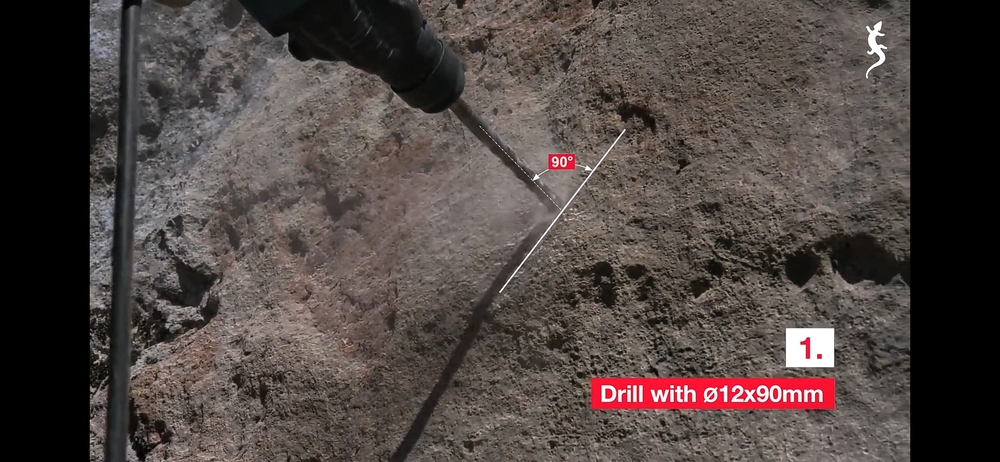
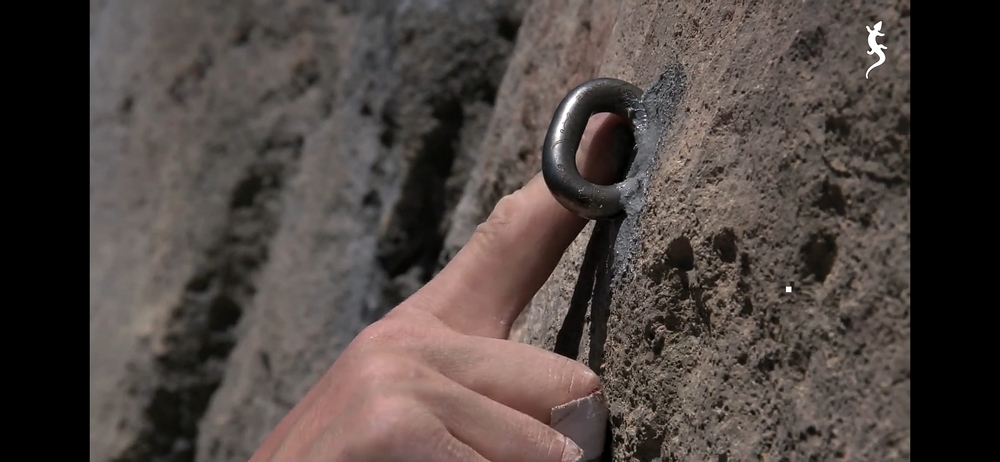
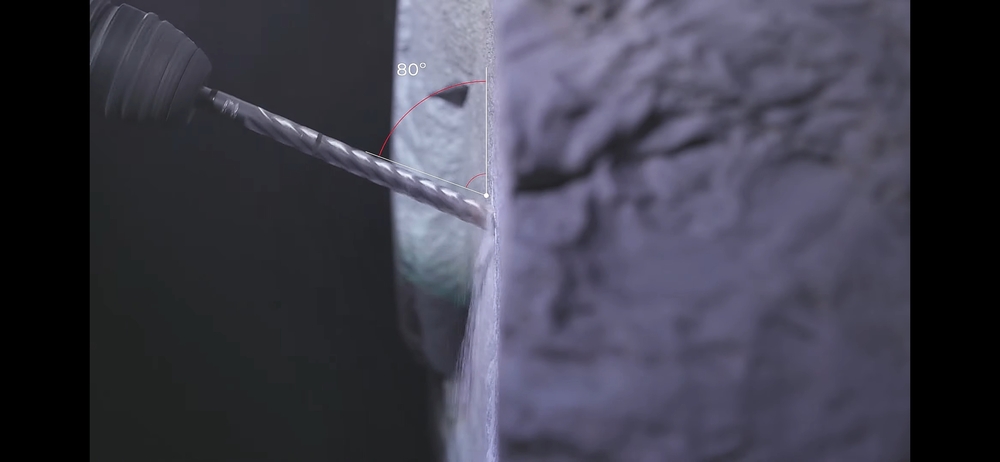
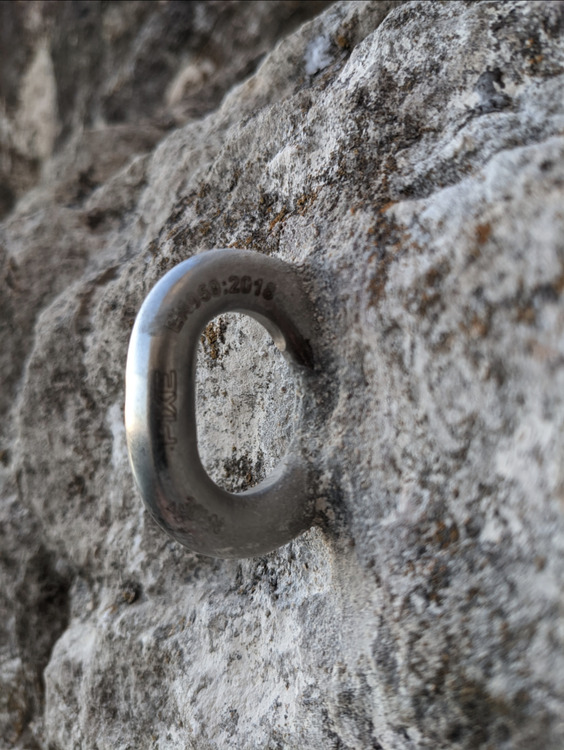
Just curious about anyone's thoughts on the difference of drilling angle shown for the Fixe welded single leg bolt. Pros/cons, doesn't really matter & all still "super good enough"?
9yrs ago, Kevin of Fixe Hardware talks about a 10° to 15° downward angle at 5min mark
https://youtu.be/RA4PaQJwFyg
5 years ago, Fixe Climbing drilling at a 90° angle
https://youtu.be/xm2lxp2ui4o
9 months ago, Fixe Climbing shows drilling at a 10° downward angle.
https://youtu.be/eOixxfepop0
For a batch of them I got recently from a friend to install in one of my lines, I just went with the 90° angle, (and notched of course to bury the weld). In hindsight, I think I'd like to have done the 10° downward angle for the lead bolts, I see a less chance of the QD (doing the rare) flipping upside down and accidentally unclipping. But would do the 90° perpendicular for the anchor bolts for a tad more space in the eyes to better accommodate hardware and carabiners.
|
|
|
Jim Day
·
Oct 20, 2022
·
Fort Worth, TX
· Joined Jan 2020
· Points: 3,164
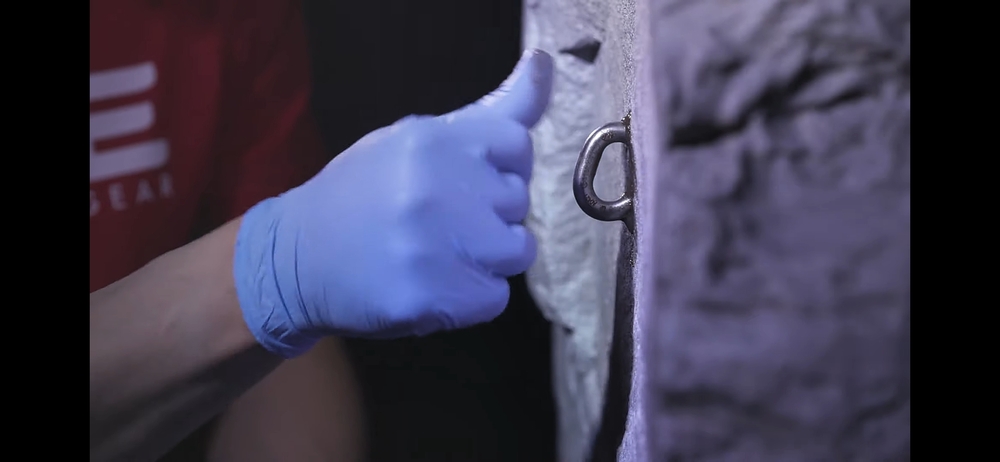
I prefer 90deg and just barely notched enough so that you're not cutting into the useable eye of the bolt. In the picture above at 80deg, the eye is so recessed, you'd struggle to get two carabiners in it
|
|
|
John Byrnes
·
Oct 21, 2022
·
Fort Collins, CO
· Joined Dec 2007
· Points: 392
Jim Daywrote:I prefer 90deg and just barely notched enough so that you're not cutting into the useable eye of the bolt. In the picture above at 80deg, the eye is so recessed, you'd struggle to get two carabiners in it I think you'd might have trouble making a fast clip with one carabiner! And it might bind if it rotated up. I did what you did above: 90 degrees and only a touch of recessing.
|

 Continue with onX Maps
 Sign in with Facebook