
 Continue with onX Maps
 Sign in with Facebook






Crack Machine Texture Ideas


|
|
I have a 10-foot crack machine, about 20 degrees overhung. Thin hands (red camalot), ringlock (green camalot) and fingers (.4). Bare wood. Kind of slippery but smooth as butta on the skin. No need for texture, just crank harder. |
|
|
Benjamin Pontecorvo wrote: Sure. It’s concentric cylinders drilled into wood. The smaller through hole is big enough to allow the nut holding the bearing in place to rotate freely and the larger cylinder is the same diameter as the bearing. I also switched it to lumber since plywood doesn’t hold up in the elements. Ill try to post a picture soon. |


|
I ended up using this vinyl, non-slip tape and it's working pretty well. It has a fine, pebbly texture and is non-abrasive, but gives enough resistance that my TC Pros grip much better than on the bare wood. It seems to help the most with adding friction on the top surface of the shoe rather than the sole, all those little edges are able to catch on the tiny bumps. I almost used this 3M tape but thought it might be too grippy when I handled it at Home Depot. I still want to have to crank a bit for my jams. I think most no-grit (no sand particles), non-slip tapes that are "barefoot friendly" might work for increasing friction without removing your skin. |
|
|
James Cho wrote: I ended up using this vinyl, non-slip tape and it's working pretty well. It has a fine, pebbly texture and is non-abrasive, but gives enough resistance that my TC Pros grip much better than on the bare wood. It seems to help the most with adding friction on the top surface of the shoe rather than the sole, all those little edges are able to catch on the tiny bumps. I almost used this 3M tape but thought it might be too grippy when I handled it at Home Depot. I still want to have to crank a bit for my jams. I think most no-grit (no sand particles), non-slip tapes that are "barefoot friendly" might work for increasing friction without removing your skin. Nice! Thanks for the idea. Yeah I find it’s more about getting the proper feet friction than fingers for me. |
|
|
I would think something that provides a friction (rubbery) type of grip as opposed to a rough/mechanical (sandy) type of grip would not be slippery like plain wood, but also not tear up your skin. |
|
|
^ This looks like a very interesting idea, I'd love to hear if anyone has actual experience with this rubber deck paint. |
|
|
I will probably try this out in the fall, but I’d also be interested to hear if anyone has experience with it. I imagine I’ll do a test crack(s) of just a foot long or so test it out before I applied it to a full crack. |
|
|
In theory, there should be a way to add enough friction without using grit, since plastic climbing holds can be pretty abrasive when brand new (unless they're intended to be smooth like those shiny slopers). I wish Walltopia either sold their wall surface treatment (probably has a complex application process), or there were flat, rectangular strip climbing holds that could be used in crack machines. |
|
|
Elijah Sheffler wrote: I'm having the same problem. I sanded the wood down with 40 grit, then a bit of 150 but the wood is too smooth. What grit did you use on it? |
|
|
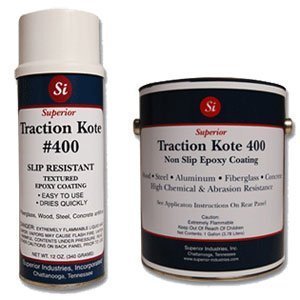 |
|
|
Glowering wrote: I would think something that provides a friction (rubbery) type of grip as opposed to a rough/mechanical (sandy) type of grip would not be slippery like plain wood, but also not tear up your skin. I had the same thought, and asked in the Woody thread: Has anyone ever tried rubberized paint, like what is used for prepping under concrete, for a crack machine? Wondering if it would get super tacky and gross.. |
|
|
Paul L wrote: Closed-cell neoprene rubber - commonly used for bearing pads below precast concrete - won’t be sticky or tacky like rubberized paints or concrete sealers. It comes in big rolls that can be cut to size. A thin one (1/16” or 1/8”) is cheaper than I expected, and some versions have a peel-and-stick adhesive on one side. https://www.rubbercal.com/sheet-rubber/neoprene-rubber/closed-cell-rubber-blend.html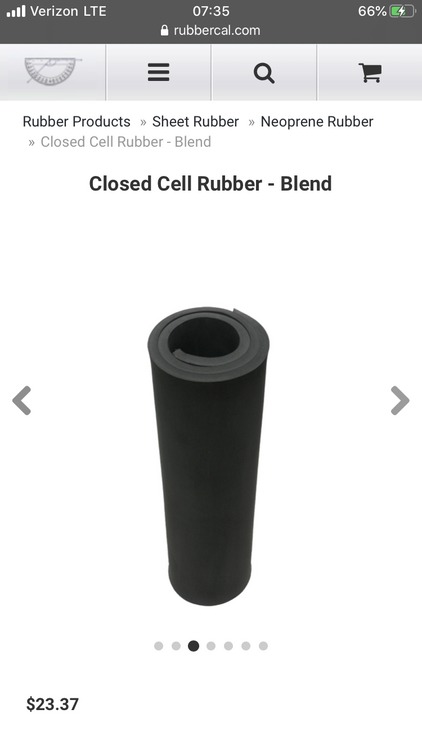 |
|
|
llanSan wrote: Fiberglass reinforced cement... Can you Explain the process to get this done? i want to build a small cave in my son's room. https://www.concretenetwork.com/glass-fiber-reinforced-concrete/ https://makezine.com/2012/04/11/how-to-mix-and-mold-gfrc/ |
|
|
Just threw this tape up on my new crack machine. I’ll have to see how it lasts long term outside, but initial impressions are that it gives great grip without being abrasive enough to tear your skin up with constant use. I wish the rolls were longer, but it beat waiting for something to ship and I’m very happy with how it feels. |
|
|
abandon moderation wrote: Are people really climbing without tape on their crack machines? Granted mine is horizontal but I fall out of jams every time I'm on it, which I think is a sure recipe to destroy hands regardless of the texture. Yeah I climb without tape all the time on a vertical machine. Getting the friction and technique right makes it possible. I usually only tape up/gloves on for long endurance sessions and sizes that just hurt me from a bones and joints perspective like most fist sizes. Horizontal is a different story tho |
|
|
|
|
|
James C wrote: I ended up using this vinyl, non-slip tape and it's working pretty well. It has a fine, pebbly texture and is non-abrasive, but gives enough resistance that my TC Pros grip much better than on the bare wood. It seems to help the most with adding friction on the top surface of the shoe rather than the sole, all those little edges are able to catch on the tiny bumps. I almost used this 3M tape but thought it might be too grippy when I handled it at Home Depot. I still want to have to crank a bit for my jams. I think most no-grit (no sand particles), non-slip tapes that are "barefoot friendly" might work for increasing friction without removing your skin. What angle is your crack machine? I am wondering if you approach would work for a horizontal roof for offwidths. At the moment, the bare wood is waaaay to slick for wider stacks. Thanks! |
|
|
Mine is vertical. Haven't tried it with horizontal or offwidths. If you do try it, I'd be interested in your experience. |
|
|
Epoxy floor paint is best, in a satin or semi-gloss finish. Water or oil base floor surface paint is second best. Like a quality deck paint or garage floor paint. You’ll need to go to an actual paint store for the quality stuff. Lowe’s and Home Depot sell budget paint under the name of a quality paint manufacturer like Benjamin Moore. It’s not the same stuff you get in their actual paint stores. Don’t go cheap on the paint. Also, prime that shit. Use a quality primer too. If using an epoxy, follow the manufacturers recommendation. If it’s oil, use an oil base primer, water base, water base primer. Mix in a grit. Not any grit will do. It mist be fine, like really fine. Sand is way too coarse. Instead, think more controlled and specific grit, like the grades of sand paper. I prefer something between 320 and 400 grit, but you might want to head to the local hardware store, get close and personal and rub up on some sand paper to get an idea of what you like. Once you have a number for the coarseness you like, head over to a store that sells sand blasting or better yet, water jet cutting supplies. A quick google search should point you in the right direction but Harbor Freight is a good place to start. You can order it online too. Check out the garnet powder (pricy but great) Aluminum Oxide, Emery Powder, Glass Powder (fantastic and similar to garnet powder, smooth yet grippy) or Silicon Carbide Powder. Shop around and see what you like. Many of these you can get a 50lb bag for around 20 bucks. It’s the secret “texture” in many of the high end climbing gyms proprietary mixtures. 1. Prime the surface. |
|
|
James C wrote: Hi James - I finally got around to giving those "stair stickers" a try on my horizontal/offwidth roof crack, and I thought it worked pretty well. I don't have any other materials/textures to compare it to, but your recommendation was waaaaaaaaaaaaay better than bare wood. It was also relatively cheap, easy to apply, and easy to cut to size if needed. |


