Mountain Project Logo

The future of travel

Joshua McDaniel · · Fayetteville, NC · Joined Jun 2013 · Points: 175
Tradiban wrote:

Carolina · · Front Range NC · Joined Nov 2010 · Points: 20

Joe Prescott,

Appreciate your posts.  Since Working in a blue color industry I have zero knowledge about this kind of stuff. Fascinating to read your perspective.

Ryanb. · · Chattanooga · Joined Mar 2014 · Points: 10

Joe Prescott,
I agree with others. I would definitely read a thread or blog post, coming from a physician in the US.

a beach · · northeast · Joined Jun 2013 · Points: 513
Joe Prescott wrote:

The vast majority of zoonotic viral infections are not linked to consuming animals. Nipah=date palm sap contaminated with urine/feces from bats, several hypothetical meant of transmission of Marburg and Ebola from bats (has yet to be demonstrated that bats are the reservoir of Ebola, constant re-emergence of MARS-CoV from camel milk or contact with infected camels, many arthropod-borne diseases (mosquitoes, ticks), hantaviruses=inhalation of peridomestic rodent excreta....

fair enough, excuse my ignorance

dave custer · · Unknown Hometown · Joined Nov 2010 · Points: 3,078
Russ Keane wrote:"vanity [interaction with] exotic wildlife in [the US] by the relatively wealthy; not anything to do with habitat destruction or survival-motivated [interaction]"

Aren't they the same, though?   In general the actions of humans in relation to the natural ecosystem is the root of the problem, whether that be cutting forests, eating too much, changing the climate, etc.

My bolded abuse of the quote above. In the US, we also contribute to the disease landscape through our own seemingly innocuous interactions with our ecosystem, for example Lyme disease, Eastern equine encephalitis, and Rocky Mountain spotted fever to name a few whose names reflect their US roots...

Joshua McDaniel · · Fayetteville, NC · Joined Jun 2013 · Points: 175
dave custer wrote:

we also contribute to the disease landscape through our own seemingly innocuous interactions with our ecosystem, for example Lyme disease, Eastern equine encephalitis, and Rocky Mountain spotted fever to name a few whose names reflect their US roots...

Let's not forget that Yersina pestis, literally the "black death", is still alive and well.

https://www.colorado.gov/pacific/sites/default/files/Final_Plague%20Fact%20Sheet_DB.pdfhttps://www.colorado.gov/pacific/sites/default/files/Final_Plague%20Fact%20Sheet_DB.pdf

However, to compare our contribution of "seemingly innocuous interactions with our ecosystem" to the novel outbreaks of SARS, MERS, COVID19 is farcical.  

When hikers/climbers/backpackers start harvesting and farming wild mice to sell at their local farmers' markets...then we'll compare.

Joe Prescott · · Berlin Germany · Joined Apr 2013 · Points: 6
a beach wrote:

fair enough, excuse my ignorance

Just trying to educate, not call anyone out. 

I'm not a physician, but a research scientist (virologist/immunologist). I'm a Guest Researcher at a large public health agency based in Atlanta, where I do experiments in the BSL4 there, but my primary appointment is in a newly-operational BSL4 in Berlin, Germany, associated with a different public health agency here, where a run a small Comparative Immunology of Maximum Containment Viruses group. Previously, I was a postdoc/Research Fellow at the NIH, in their BSL4 lab in MT.

Joshua McDaniel · · Fayetteville, NC · Joined Jun 2013 · Points: 175
Joe Prescott wrote:

Just trying to educate, not call anyone out. 

I'm not a physician, but a research scientist (virologist/immunologist). I'm a Guest Researcher at a large public health agency based in Atlanta, where I do experiments in the BSL4 there, but my primary appointment is in a newly-operational BSL4 in Berlin, Germany, associated with a different public health agency here, where a run a small Comparative Immunology of Maximum Containment Viruses group. Previously, I was a postdoc/Research Fellow at the NIH, in their BSL4 lab in MT.

Friends of yours?

Joe Prescott · · Berlin Germany · Joined Apr 2013 · Points: 6
Joshua McDaniel wrote:

Friends of yours?

Ha! Me watching that is akin to most MPers watching Vertical Limit... (but I've seen it several times)...

Chris Hatzai · · Bend, OR · Joined Sep 2015 · Points: 1,815

Worst case scenario and if the numbers stay at a 3% fatality rate, if the whole world were to come in contact with it that’s 233 million dead.
Let’s stem the spread NOW! 

amarius · · Nowhere, OK · Joined Feb 2012 · Points: 20
Joe Prescott wrote:

Ha! Me watching that is akin to most MPers watching Vertical Limit... (but I've seen it several times)...

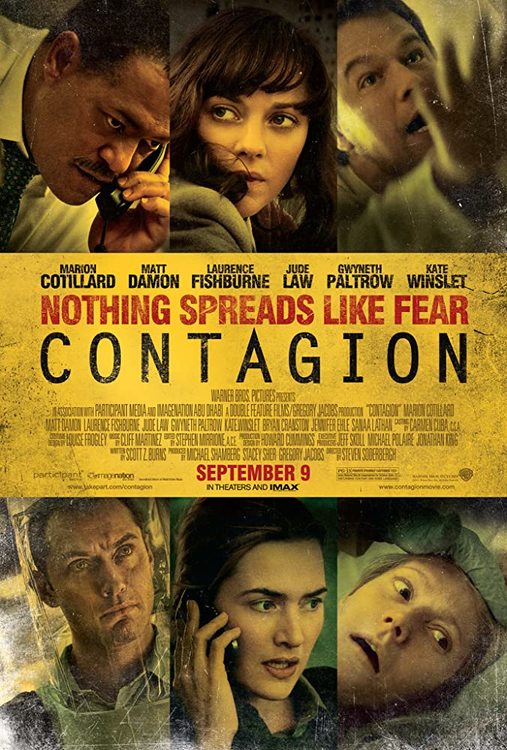
How about this one? https://www.imdb.com/title/tt1598778/
Joe Prescott · · Berlin Germany · Joined Apr 2013 · Points: 6

Better. Modeled after Nipah virus. I was Matt Damon's stunt double...

David K · · The Road, Sometimes Chattan… · Joined Jan 2017 · Points: 434
luke smith wrote: Viruses mutate rapidly, being mostly RNA that is what they do.

On average viruses mutate faster than bacteria, but the mutation rate is different for every virus, and some mutate very slowly. Smallpox and polio would be examples of viruses that mutate slowly, hence the long-term effectiveness of vaccines against those. The flu mutates much more quickly, hence the need to develop a new vaccine for the flu every year, and HIV mutates even more quickly, which is part of why it's so hard to treat. I haven't seen any evidence that we know the mutation rate of COVID-19 yet. We've identified some mutations, but the vast majority of mutations aren't meaningful for the effects of the virus.

We do know that the COVID-19 has already mutated into two strains: the L and the S strain. The L strain is deadlier, but it's believed that because people get sicker, they're more likely to be identified and to comply with quarantine measures, so this strain has largely been contained. The S strain is less deadly, which is causing people to think they're not sick, and spread the virus more, so the S strain is the one that's spreading rapidly across the world.

The mutations which don't change the effects of the virus are useful for tracking the spread of the virus. We know for example that cases in the UK and Brazil have mutations that were identified in Germany, but Brazil and UK variations don't have any other mutations in common. This allows us to see that the virus spread Germany->UK and Germany->Brazil, and not from Germany->UK->Brazil or Germany->Brazil->UK.

See here.

David K · · The Road, Sometimes Chattan… · Joined Jan 2017 · Points: 434
Chris Hatzai wrote: Worst case scenario and if the numbers stay at a 3% fatality rate, if the whole world were to come in contact with it that’s 233 million dead.
Let’s stem the spread NOW! 

More current numbers suggest a 1% fatality rate, and infection rate such that 60%-70% of the world is likely to come in contact with it. This suggests a number about 1/10 of what you're saying (still a lot).

rpc · · Portland, OR · Joined Dec 2005 · Points: 775
David K wrote:

More current numbers suggest a 1% fatality rate, and infection rate such that 60%-70% of the world is likely to come in contact with it. This suggests a number about 1/10 of what you're saying (still a lot).

And those numbers should be compared to the normal mortality we see every year.  In US (2017), cdc says that 2.8 million have people died (let's discount the accidents & suicides, ~300K, and just include the deaths by disease).  If we take David K's numbers & apply them to the current US population (~330 million), the corona total & the annual (normal) total become comparable.  Do you think that the two numbers are additive OR there's an overlap between them (maybe a great deal of overlap)?

 https://www.cdc.gov/nchs/fastats/deaths.htm


How many will die in a economic depression that will come about after 3 or more months of a complete shut down (there are some articles out there looking at this sort of estimate)?

amarius · · Nowhere, OK · Joined Feb 2012 · Points: 20

lots of mumbo jumbo​​​

Chris Hatzai · · Bend, OR · Joined Sep 2015 · Points: 1,815
https://coronavirus.jhu.edu/map.html

Doing the math on the current numbers it’s at 1.5%

Tradiban · · Unknown Hometown · Joined Apr 2004 · Points: 11,610
Chris Hatzai wrote: Worst case scenario and if the numbers stay at a 3% fatality rate, if the whole world were to come in contact with it that’s 233 million dead.
Let’s stem the spread NOW! 

That along with the effects of climate change and we've got a lot to worry about!

Guideline #1: Don't be a jerk.

General Climbing
Post a Reply to "The future of travel"

Log In to Reply
Welcome

Join the Community! It's FREE

Already have an account? Login to close this notice.