|
|
ErikaNW
·
Oct 30, 2019
·
Golden, CO
· Joined Sep 2010
· Points: 410
I can't do a single pull-up without assistance. Very few moves where lacking that type of strength is what shuts me down.
|
|
|
Victor K
·
Oct 30, 2019
·
Denver, CO
· Joined Jul 2003
· Points: 180
Last summer, I took a clinic with Eric H. for climbers over 40. I asked about the problem of training vs. climbing. I do two gym sessions a week that are exclusively climbing. Then I either climb outside or in the gym once on the weekend (usually). Due to the social nature of my climbing group, I haven't been doing anything that i SHOULD be doing, like fingerboard, antagonist exercise, stretching etc. The problem that I posed to Mr. Horst was this: when injury avoidance is so important, how do you not overdo it? I really need the recovery days between hard gym climbing sessions. His answer was somewhat brutal. Once you're past 50, you have to be very careful about conditioning. You probably have to give up some climbing in order pursue other strength training goals. there were no easy answers, you simply have to pay attention to what your body allows. As you age, it allows less.
Even with my very imperfect approach, my technique has improved in the last few seasons. My mantra is something like this: How can an old weak stiff person do that? Then I figure it out for that person. Usually, there's a way (it typically involves stemming ;-)
|
|
|
frank minunni
·
Oct 30, 2019
·
Las Vegas, NV
· Joined May 2011
· Points: 95
ErikaNW wrote: I can't do a single pull-up without assistance. Very few moves where lacking that type of strength is what shuts me down. I've known women over the years that couldn't do a pull up but climbed quite well. It's in the feet and the fingers.
|
|
|
Lori Milas
·
Oct 30, 2019
·
Joshua Tree, CA
· Joined Apr 2017
· Points: 250
Victor K wrote: Last summer, I took a clinic with Eric H. for climbers over 40. I asked about the problem of training vs. climbing. I do two gym sessions a week that are exclusively climbing. Then I either climb outside or in the gym once on the weekend (usually). Due to the social nature of my climbing group, I haven't been doing anything that i SHOULD be doing, like fingerboard, antagonist exercise, stretching etc. The problem that I posed to Mr. Horst was this: when injury avoidance is so important, how do you not overdo it? I really need the recovery days between hard gym climbing sessions. His answer was somewhat brutal. Once you're past 50, you have to be very careful about conditioning. You probably have to give up some climbing in order pursue other strength training goals. there were no easy answers, you simply have to pay attention to what your body allows. As you age, it allows less.
Even with my very imperfect approach, my technique has improved in the last few seasons. My mantra is something like this: How can an old weak stiff person do that? Then I figure it out for that person. Usually, there's a way (it typically involves stemming ;-) Victor... thanks for sharing that. A lot of us here are in the same boat. I climb Monday and Wednesday at my gym, and thought I could train Tuesday and Thursday. It’s not working out that way. I just came home from the climbing gym where I climbed non-stop for two hours. Tomorrow I’ll be thrashed and not wanting to train hard. So... I guess we just have to do what we can, huh? I gave up Thursday night climbing with a friend because it was always just too much. Love the socializing but never could give it much effort. Maybe yoga or a dance class would be better then. Funny... so far I’ve never experienced that kind of fatigue or trauma climbing on rock. Just happy happy before during and after. How about others here? Do you train, and if so how do you work it in with climbing? Do you have to make the same adjustments if you are climbing outside on rock?
|
|
|
Emil Briggs
·
Oct 30, 2019
·
Unknown Hometown
· Joined Sep 2013
· Points: 140
Lori Milas wrote: Victor... thanks for sharing that. A lot of us here are in the same boat. I climb Monday and Wednesday at my gym, and thought I could train Tuesday and Thursday. It’s not working out that way. I just came home from the climbing gym where I climbed non-stop for two hours. Tomorrow I’ll be thrashed and not wanting to train hard. So... I guess we just have to do what we can, huh?
I gave up Thursday night climbing with a friend because it was always just too much. Love the socializing but never could give it much effort. Maybe yoga or a dance class would be better then.
Funny... so far I’ve never experienced that kind of fatigue or trauma climbing on rock. Just happy happy before during and after.
How about others here? Do you train, and if so how do you work it in with climbing? Do you have to make the same adjustments if you are climbing outside on rock?
Hey Lori. I'm 58 now and I still train quite a bit. I generally climb outside on the weekend. Normally 1 day fairly hard (for me) and sometimes both days but if I do both days one of them will be a pretty easy day. During the week I'll normally climb in the gym Tuesday and Thursday. Tuesday would be a hard session while I do arc training on Thursdays.
Other training -- running or elliptical 3 times a week. I used to run up to 20-30 miles a week pretty regularly into my early 50's but I've cut way back on that and now it's rarely more than 10 miles a week. I found that I was getting too many aches and pains from it plus I only had so much energy and I would rather use it for other things.
I lift weights as well. Normally 3-4 times per week with different exercises for each workout. I do lots of warming up and light sets plus at most 1 or 2 hard sets for each exercise. Exercises include pullups, bench press, dumbbell shoulder press, dips, squats and various core exercises.
This seems to be working pretty well for me. The number of weight training workouts per week is about the same as I was doing 30 years ago but the volume of each workout is down quite a bit compared to what I did when I was younger. It seems to be enough to maintain my strength (or keep the rate of decline fairly slow) though. One thing to keep in mind though is that everyone is going to be different. I was a college athlete and started hard weight training in my early teens and while I've reduced the intensity quite a bit as I've gotten older I've never stopped for any significant length of time. If you are new to it you can probably make gains pretty easily but you might have a greater risk of injury.
|
|
|
Carl Schneider
·
Oct 30, 2019
·
Mount Torrens, South Australia
· Joined Dec 2017
· Points: 0
In regards to the conversation on training as mentioned by Victor and Lori, I've many times created a training schedule (both for what I'll do at the bouldering gym and what I'll do on non clambering days) and never done any of it. I have bought different training aids (rock rings, gymnastic rings, chin up bars, grip trainers, fit balls, kettle bells) and use them only rarely. The problem is, as mentioned in Victor's post, I don't have TIME to train. I climb Tuesdays, Thursdays, Saturdays and Sundays and need some rest days! To actually do any training I'd need to swap a climbing day for a training day. I DO sometimes do some bench presses at the bouldering gym but only rarely.
|
|
|
Lori Milas
·
Oct 31, 2019
·
Joshua Tree, CA
· Joined Apr 2017
· Points: 250
Emil Briggs wrote: Hey Lori. I'm 58 now and I still train quite a bit. I generally climb outside on the weekend. Normally 1 day fairly hard (for me) and sometimes both days but if I do both days one of them will be a pretty easy day. During the week I'll normally climb in the gym Tuesday and Thursday. Tuesday would be a hard session while I do arc training on Thursdays.
Other training -- running or elliptical 3 times a week. I used to run up to 20-30 miles a week pretty regularly into my early 50's but I've cut way back on that and now it's rarely more than 10 miles a week. I found that I was getting too many aches and pains from it plus I only had so much energy and I would rather use it for other things.
I lift weights as well. Normally 3-4 times per week with different exercises for each workout. I do lots of warming up and light sets plus at most 1 or 2 hard sets for each exercise. Exercises include pullups, bench press, dumbbell shoulder press, dips, squats and various core exercises.
This seems to be working pretty well for me. Hey Emil, When I first read through your workout routine I thought I wanna stab myself in the neck. Are you serious???
But wow. This is pretty amazing. I hope other athletes here will post their workouts, too. Really good job!!! ------------------ But after I calmed down a little and read through to the end of Horst's book... I realized you all aren't TOTALLY insane. (you're just mostly insane. ) You're working out at an Intermediate or Advanced climbing level... as it should be. In terms of 'fitness', I'm easily a Beginner. (and in this book, that's not chump change). I wish he had put his "Beginners' Climbing and Non-Climbing Day Workout Templates" right at the beginning of the book so I could have avoided the panic attack. It looks like there might be a way to train that makes sense. Horst suggests doing 15-30 minutes of core, antagonist, stabilizer and pull-muscle training AFTER a near-limit strenuous climbing session (in the gym). And then, 15 minutes stretching/cool down. That is doable. Makes sense. It beats limping into the gym the following morning, all worn out and sore, and attempting hard work then.
Honestly, I've been thinking of letting the gym climbing go... or mostly go, but I'm going to let that thought marinate a bit. There's a lot I've passed up this last two years so that I can climb at the gym. There's only so much time and energy. Skiing, hiking, yoga, pilates, and for sure, outdoor climbing... but there's no workout like a couple hours on a vertical wall.
|
|
|
Old lady H
·
Oct 31, 2019
·
Boise, ID
· Joined Aug 2015
· Points: 1,375
Honestly? I've done very little, especially this last half year plus. Somehow, though, I've not lost strength nor mobility. Apparently my "normal" activity level has carried me along. I still don't know what I could actually claim gradewise, as I'm without a gym still and our local stuff outside has height cruxes quite often. I did cruise a legit V0 onsite last winter, and had very little problem climbing everything I've tried out of town.
So, for me? Yes, I'll try to "train", especially when my gym opens! And I'll get outside, as I can.
But most importantly, I'll stay active in the ways I'm used to, which is doing things myself, and by hand. The "honey do" list is long and really satisfying, with the house neglected so long and now having the freedom to fix it back up, anyway I choose.
Maybe I'll get back to actual training. I expect I'll go for awhile....then the weights will accumulate dust and cat fur again. I'll forget what weight to use. Start over, swear I'll keep it up...
And quit. Again. I simply don't enjoy it, get bored instantly and can't keep after it. I'm that way with stuff I do enjoy, too, lol! But, a piece here, a bit of something else there....with gardening, house repair, all of that, it does add up. I've gotten a huge amount done in this 9 month stretch.
I don't have the long habit of athleticism, nor the "discipline" others have. Nor the brain wiring that seems common to many climbers. I'm not linear. At all.
So my advice on training, for the rest of you?
Probably don't take my advice, lol!
YMMV, but I'm pretty much in it for life, until I can't do anything at all. Just be as alive as I can, until I'm not. Enjoy being alive.
And, after all, I will humble spray here, that I am one of the few without much at all, ever, in the injury department.
And I also boulder. And ice climb. Neener, neener.
But, I can chop trees down with an axe, move yards of manure with a shovel, roof with a roofing hammer, swing a sledge hammer, tape drywall or pound a post. I never push hard, though, and mostly mill around from task to task, with a lot of interruptions....
Like sit under a cat for hours, watching junk tv, and/or "wasting" time making (and supporting) friends all over the country.
The lawn is actually mowed, at the moment. Mostly. Vacuuming, however...
Best, Helen
|
|
|
Andrew Rice
·
Oct 31, 2019
·
Los Angeles, CA
· Joined Jan 2016
· Points: 11
My "workout" schedule:
Cycle 4 times per week. Anywhere from 10 to 25 miles per ride. (average probably 70 miles per week).
Climb 2 days per week. Either gym or outdoors.
Yoga or pilates every couple weeks. Would like to do more. Aiming to move to 1-2 times per week this winter.
Occasional surfing, hiking, paddleboarding, swimming, etc.
Run stairs about 1 time per week.
I've done weight-based resistance programs and like them but have a hard time motivating for that.
|
|
|
rgold
·
Oct 31, 2019
·
Poughkeepsie, NY
· Joined Feb 2008
· Points: 526
I've got about sixty years of training, from my teenage years into old age. As I've aged, I've had to continually modify what I do and what I can expect. I could probably write a chapter about the various routines I've used over the years, but here's my philosophical take for old folks.
1. Less is more. Always "keep at least one rep in the tank." You don't need to achieve momentary muscular failure to make very substantial gains.
2. The older you get, the more recovery time you need. At nearly 76 now, I need two full days after a hard effort. But if after two days you are still sore, rest more.
3. Routines are for the young and ambitious. Do what you want when you feel like it---just make sure you do something,
4. Most published information about climbing assumes a high level of conditioning coming in. Think about cutting those "beginner" loads and reps in half and doubling rest times. (With something like pullups, "cutting loads in half" means deploying a counterweight pulley system to effectively reduce your bodyweight. You can also start out with lat pulldowns, but they really aren't the same ultimately.
There's a lot more I could say but this is a start...
|
|
|
Randy
·
Oct 31, 2019
·
Lassitude 33
· Joined Jan 2002
· Points: 1,285
What much of this "training" discussion implies and touches upon is that a person's past/ongoing fitness and activity level is the most significant factor in determining training as you age, particularly past 60. It is much more difficult to move into a "high" intensity level of training if you previously did not maintain such a regimen (or were fairly inactive). It is far easier to build off of a history of training than to commence one.
Of course, the X Factor in all of this is illnesses or disease or accident -- which are often "luck of the draw" life events -- that can fell even the most otherwise healthy and active lifestyle.
Ultimately, it is a competition with yourself and each of our own limitations and strengths (inherent or acquired).
While rock climbing tends to be largely an anaerobic activity (unless you are doing the NIAD or such), aerobic training and fitness are complimentary to climbing well and can provide significant results for both climbing and general health. Focusing on overall fitness and health is often lost in the pursuit of quick advancement in difficulty in the gym.
Cycling is a great activity as you age, as it lacks the impact type of injuries associated with running. I try to ride 4 to 5 days a week and climb 2. But, as I am trying to get back into better climbing shape, the time climbing will certainly increase (carefully to avoid injury).
And, as RGold points out, you need to constantly modify your level of activity as you age. Not only do you need more rest time, but, ironically, you also seem to get out of shape more quickly as well. So, damned if you do, damned if you don't.
|
|
|
Lori Milas
·
Oct 31, 2019
·
Joshua Tree, CA
· Joined Apr 2017
· Points: 250
Just once I'd like to be an attack dog on the rock. I say 'just once' because I always feel like I'm facing a clock and the day is coming when the opportunity to go all out, to leave nothing on the table, will be over. I'd like to have a few times in my memory when I can say I gave it my all and did something truly fabulous.
It helps to know motivation.
For that I need a little more strength and fitness. Each time I go out (to Donner or to Joshua Tree) I return home with a little more sense of where I need to physically be, what strengths I need. Last time I could have used more endurance.... for hiking and scrambling. A little more strength for those cracks. A little more all-over stability for the slab...
Rgold... you're reading my mind. "With something like pullups, "cutting loads in half" means deploying a counterweight pulley system to effectively reduce your bodyweight." I've been doing 'assisted pullups" on the machine at the gym... started with an 80 pound offset, then 70, today I dropped it to 60 pounds and could do 4 pullups with a lot of groaning. So, now I either have to lose 60 pounds, or keep on getting stronger along the way until I can get to 0. You said there is a lot more you could say... I hope you do.
Senor, Randy... maybe others? I know we talked about biking some thousands of posts ago... can you please tell me a little more? I have an old, cheap bike from Target sitting in my garage, which was nothing but trouble before, and I don't want to ride it now. Where do you ride? Do you have a bike you would recommend? I'd also like to be able to throw it in the car. For instance, heading back out to the desert in December, I'd love to be able to bike in the Park on non-climbing days. Do you have any suggestions or favorite bikes?
PS. Senor... 'run stairs'?
|
|
|
Lon Harter
·
Oct 31, 2019
·
Reno NV
· Joined May 2018
· Points: 441
|
|
|
Tim Schafstall
·
Oct 31, 2019
·
Newark, DE
· Joined Nov 2007
· Points: 1,364
Lon Harter wrote: Get a good gravel bike fast on the road and can still do some single track best for adventures I use a specialized Crux they can get pricy but worth every cent. https://www.specialized.com/us/en/shop/bikes/road-bikes/cyclocross-bikes/c/roadcyclocross Technically that is a cyclocross bike, not a gravel bike (not that it would not work for gravel w/some possible mods), but the suggestion of a gravel bike would be a good one, especially if you want to ride the many miles of gravel roads at Josh.
|
|
|
Tim Schafstall
·
Oct 31, 2019
·
Newark, DE
· Joined Nov 2007
· Points: 1,364
Lori Milas wrote: Just once I'd like to be an attack dog on the rock. I say 'just once' because I always feel like I'm facing a clock and the day is coming when the opportunity to go all out, to leave nothing on the table, will be over. I'd like to have a few times in my memory when I can say I gave it my all and did something truly fabulous.
It helps to know motivation.
For that I need a little more strength and fitness. Each time I go out (to Donner or to Joshua Tree) I return home with a little more sense of where I need to physically be, what strengths I need. Last time I could have used more endurance.... for hiking and scrambling. A little more strength for those cracks. A little more all-over stability for the slab...
Rgold... you're reading my mind. "With something like pullups, "cutting loads in half" means deploying a counterweight pulley system to effectively reduce your bodyweight." I've been doing 'assisted pullups" on the machine at the gym... started with an 80 pound offset, then 70, today I dropped it to 60 pounds and could do 4 pullups with a lot of groaning. So, now I either have to lose 60 pounds, or keep on getting stronger along the way until I can get to 0. You said there is a lot more you could say... I hope you do.
Senor, Randy... maybe others? I know we talked about biking some thousands of posts ago... can you please tell me a little more? I have an old, cheap bike from Target sitting in my garage, which was nothing but trouble before, and I don't want to ride it now. Where do you ride? Do you have a bike you would recommend? I'd also like to be able to throw it in the car. For instance, heading back out to the desert in December, I'd love to be able to bike in the Park on non-climbing days. Do you have any suggestions or favorite bikes?
PS. Senor... 'run stairs'?
Yeah, ditch that thing (donate) if you really want to cycle. There is a reason you don't ride it, and you already mentioned it. Poorly made, heavy, never work right, and uncomfortable.
|
|
|
Lon Harter
·
Oct 31, 2019
·
Reno NV
· Joined May 2018
· Points: 441
Most people ride cross bikes at gravel events they are fairly similar some have slightly different frame geometry or tire size. My cross has 38 for tires and I ride a lot of single track on it. They are fairly interchangeable IMO. The Crux is very common bike at gravel events. Some people even convert mountain bikes depending on event and event rules or categories.
|
|
|
Carl Schneider
·
Oct 31, 2019
·
Mount Torrens, South Australia
· Joined Dec 2017
· Points: 0
Lori Milas wrote:...It helps to know motivation...
Do not go gentle into that good night,
Old age should burn and rave at close of day;
Rage, rage against the dying of the light.
And you, Lori, there at that great height,
Curse!, Curse that sloper, that wicked crimp,
Do not get lowered from that great height!,
Climb! Climb on! fight, fight!
|
|
|
Emil Briggs
·
Oct 31, 2019
·
Unknown Hometown
· Joined Sep 2013
· Points: 140
rgold wrote: I've got about sixty years of training, from my teenage years into old age. As I've aged, I've had to continually modify what I do and what I can expect. I could probably write a chapter about the various routines I've used over the years, but here's my philosophical take for old folks.
1. Less is more. Always "keep at least one rep in the tank." You don't need to achieve momentary muscular failure to make very substantial gains.
2. The older you get, the more recovery time you need. At nearly 76 now, I need two full days after a hard effort. But if after two days you are still sore, rest more.
3. Routines are for the young and ambitious. Do what you want when you feel like it---just make sure you do something,
4. Most published information about climbing assumes a high level of conditioning coming in. Think about cutting those "beginner" loads and reps in half and doubling rest times. (With something like pullups, "cutting loads in half" means deploying a counterweight pulley system to effectively reduce your bodyweight. You can also start out with lat pulldowns, but they really aren't the same ultimately.
There's a lot more I could say but this is a start... Good points but I would add that a lot depends on what your goals are. If you want to maximize your performance in any sort of athletic pursuit you need to push yourself close to your limits at some point in your training. That goes for any age not just the over 50 set. It's just that the limits tend to be a lot higher for those in their 20's. I know a guy who is in his early 70's and has held powerlifting age group records. To do that he has to train to muscular failure sometimes. It's doubtful that pushing that hard in weight training is relevant for a climber but attempting moves at your limit (where you will sometimes fail) probably is relevant.
|
|
|
Randy
·
Oct 31, 2019
·
Lassitude 33
· Joined Jan 2002
· Points: 1,285
Lon Harter wrote: Most people ride cross bikes at gravel events they are fairly similar some have slightly different frame geometry or tire size. My cross has 38 for tires and I ride a lot of single track on it. They are fairly interchangeable IMO. The Crux is very common bike at gravel events. Some people even convert mountain bikes depending on event and event rules or categories. Probably a "gravel" or "cyclocross" bike would be a good suggestion, provided you like riding a "road" type bike with no suspension. They are best suited to road and dirt road riding (which may make sense for Josh or Donner). The somewhat bigger tires and set up make riding on dirt roads more forgiving/reasonable that a pure road bike. They are reasonably fast on pavement as well. Even so, make sure that a drop bar, rigid bike is going to be the best idea for you. If you are not used to cycling, you might find the ride to be a bit harsh if you venture off the pavement at all. For this reason, you might also want to consider a light hard-tail MTB, with 29 inch wheels. You can run low profile tires and still enjoy road riding, but will not get beat up if you venture off the pavement.
Don't get a Hybrid (comfort) bike. They don't do anything well and you'll end up having to buy something else later.
I ride a carbon road bike (only sometimes - mainly when trails are wet or for millage), a carbon hard-tail MTB, a couple carbon Full Suspension MTBs [a Trail bike and Cross-Country bike], (and an older aluminum framed "classic" MTB, etc. - you get the picture, a bike nut).
Aluminum frames are a reasonable alternative and less expensive, but make sure that the components are not bottom of the barrel. A decent bike is not cheep, but in the long run, a good investment.
Frankly, I ride 90% of the time on dirt as the paved roads are full of texting and distracted drivers (and I have access to an amazing variety of great singletrack and fireroad right from my house).
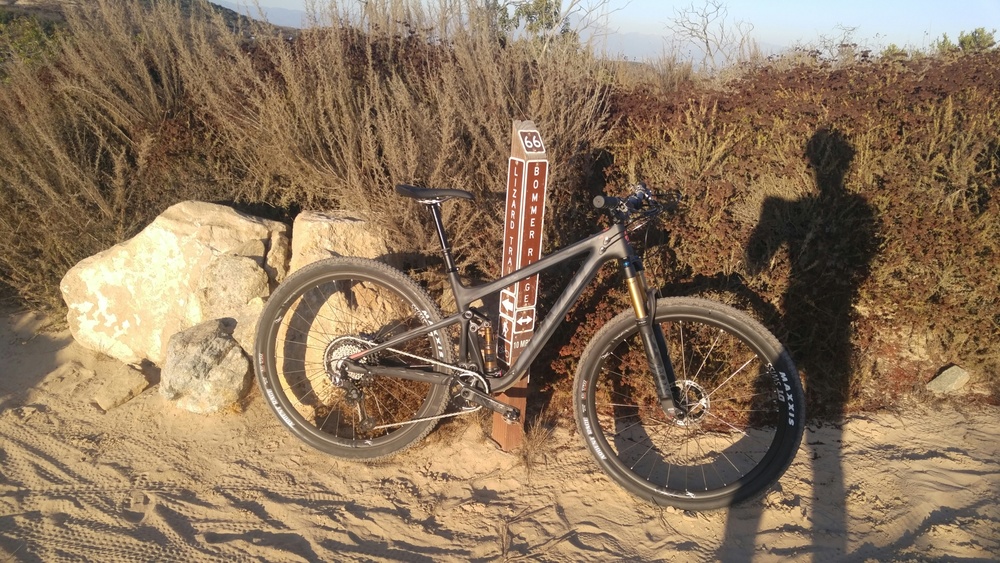
My newest bike, fast, light and fun.
![]()
|
|
|
Emil Briggs
·
Oct 31, 2019
·
Unknown Hometown
· Joined Sep 2013
· Points: 140
Lori Milas wrote: Hey Emil, When I first read through your workout routine I thought I wanna stab myself in the neck. Are you serious???
But wow. This is pretty amazing. I hope other athletes here will post their workouts, too. Really good job!!! ------------------ But after I calmed down a little and read through to the end of Horst's book... I realized you all aren't TOTALLY insane. (you're just mostly insane. ) You're working out at an Intermediate or Advanced climbing level... as it should be. In terms of 'fitness', I'm easily a Beginner. (and in this book, that's not chump change). I wish he had put his "Beginners' Climbing and Non-Climbing Day Workout Templates" right at the beginning of the book so I could have avoided the panic attack. It looks like there might be a way to train that makes sense. Horst suggests doing 15-30 minutes of core, antagonist, stabilizer and pull-muscle training AFTER a near-limit strenuous climbing session (in the gym). And then, 15 minutes stretching/cool down. That is doable. Makes sense. It beats limping into the gym the following morning, all worn out and sore, and attempting hard work then.
Honestly, I've been thinking of letting the gym climbing go... or mostly go, but I'm going to let that thought marinate a bit. There's a lot I've passed up this last two years so that I can climb at the gym. There's only so much time and energy. Skiing, hiking, yoga, pilates, and for sure, outdoor climbing... but there's no workout like a couple hours on a vertical wall.
Hey Lori, Randy touched on this but training history is really important in what your body can handle as you get older. Another really important thing is finding something that you like (or can at least tolerate) doing. We all like climbing or we wouldn't be here so that part isn't a problem but it's not so simple for other types of training. I'm fortunate in that I've always enjoyed running outside and I don't mind weight training. I did spend a few months swimming for aerobic exercise. I hated every minute of it. The only reason I did it was because of a stress fracture in my leg that ruled out running. I don't think I could have done it long term but I knew it was only temporary (It was years ago and I haven't been back in a pool since).
|

 Continue with onX Maps
 Sign in with Facebook